Edward Norton: From Fight Club to Environmental Activism
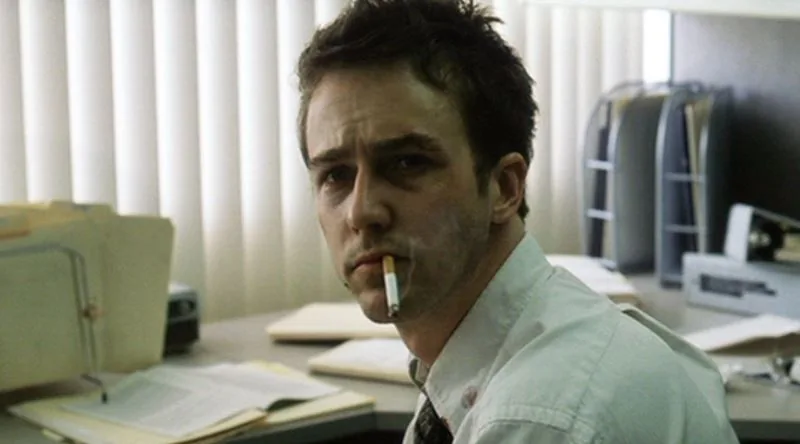
Edward Norton, the Oscar-nominated actor known for his chameleon-like performances in Fight Club, American History X, and Birdman, has spent the last three decades balancing a career of intense method acting with a parallel life as a dedicated environmental activist and producer. From his breakout in 1996's Primal Fear to his work with the United Nations, Norton's story is one of relentless creative drive and a deep commitment to causes larger than Hollywood. The same intensity he brings to his characters is the force behind his efforts to build a more sustainable world, making him one of the most intriguing figures in modern cinema.
Edward Norton is an American actor, filmmaker, and environmentalist who rose to fame in the mid-1990s. He is celebrated for transformative roles in films like Fight Club and American History X, and he founded Class 5 Films to produce independent and socially conscious projects.
- Edward Norton made his film debut in 1996 with Primal Fear, earning an Academy Award nomination for Best Supporting Actor.
- He starred in the 1998 film American History X, a role that required him to adopt a menacing physicality.
- In 1999, he headlined David Fincher's cult classic Fight Club alongside Brad Pitt.
- Norton founded the production company Class 5 Films in 2003 to support independent filmmaking.
The Actor Who Pulls You In
Edward Norton has a way of making you forget you are watching a performance at all. Born in Boston, Massachusetts in 1969, he built a career on roles that demand total immersion, from the split personality of Fight Club to the rage-filled skinhead of American History X and the frayed Broadway actor in Birdman. He is what people in the business call a method actor, someone who disappears so completely into a character that the seams never show.
But Norton never settled for just standing in front of the camera. He also works behind it, directing and producing projects that carry his particular obsessions. That dual life, actor by trade and storyteller by instinct, is part of what makes him feel different from so many of his peers. He does not just perform a story; he helps build it from the ground up.
His filmography reads like a list of movies that people argue about at dinner parties. The narrator in Fight Club who unravels alongside Brad Pitt's Tyler Durden. The conflicted Derek Vinyard in American History X, a neo-Nazi whose worldview gets shattered over the course of the film. The paranoid theater actor in Birdman who cannot escape the shadow of his own superhero past. Each one demanded something different from him physically and emotionally, and each one left audiences talking.
That reputation for authenticity did not happen by accident. Norton reportedly took fighting lessons to prepare for Fight Club, learning boxing and martial arts so the brawls on screen would feel real. For American History X, he had to find the humanity in a character defined by hatred, a challenge that required him to dig into places most actors would rather avoid. The result was a performance that critics still cite as one of the great transformations in modern cinema.
His work as a producer and director adds another layer. In 2003 he founded Class 5 Films, his own production company, giving himself the freedom to shepherd projects he believes in. According to the original account, he took on directing duties for Keeping the Faith (2000) and produced Down in the Valley (2005) and The Painted Veil (2006), though his exact role on the latter two remains a bit murky. What is clear is that he never stopped acting, appearing in films like The Grand Budapest Hotel and Kingdom of Heaven even while running his own shop.
What makes Norton compelling is not any single role. It is the pattern. He picks projects that challenge him, commits to them with a seriousness that borders on obsession, and then moves on to something completely different. That restlessness, that refusal to repeat himself, is why audiences trust him. When Edward Norton shows up on screen, you lean in, because you know whatever is coming next will not be predictable.
From Yale to Primal Fear: The Unlikely Path to Stardom
Edward Norton grew up near Columbia, Maryland, but his path to Hollywood was anything but straight. Before he ever faced off with Richard Gere in a courtroom drama, he was a Yale student wrestling with the mysteries of the universe, and he almost became an astronomer instead of an actor.
Born in Boston in 1969, Norton spent his childhood in the Maryland suburbs, where he got hooked on theater at a young age. When he arrived at Yale, he enrolled in the astronomy program, drawn to the stars and the science of the cosmos. But somewhere along the way, the pull of the stage proved stronger. He switched tracks, graduated with a degree in history, and threw himself into college plays with the kind of intensity that would later define his film career.
Before settling in New York, Norton took an unexpected detour to Japan, living there for a stretch and soaking up a completely different world. That experience, combined with his Ivy League education, gave him a curiosity and range that most actors fresh out of drama school simply did not have.
Then came 1996. Norton landed his feature film debut in Primal Fear playing a young man accused of murder. Opposite Richard Gere, Norton delivered a performance that left audiences and critics scrambling to figure out who this newcomer even was. The role earned him a Golden Globe nomination, and the industry took notice immediately. A Yale history major who had been living in Japan just a few years earlier was suddenly one of the most talked-about actors in Hollywood, all thanks to a single breakout role.
Building a Career: Class 5 Films and the Producer's Hat
In 2003, Edward Norton stepped behind the camera for good, founding his own production company called Class 5 Films. It wasn't just a vanity project. The move signaled that this Yale-educated actor from Boston, born in 1969, wanted more control over the stories he helped bring to the screen. He was done being just a hired gun.
His producing credits paint a picture of a man with eclectic taste. There was Keeping the Faith in 2000, which he also directed. Then came Down in the Valley in 2005, followed by The Painted Veil in 2006. According to the original account, he reportedly worked on these projects, though the record on his exact role is a bit fuzzy. While his directing credit on Keeping the Faith is solid, his role on the latter two films is not fully confirmed. What is clear is that he produced all three, and that takes real hustle.
Even with the producing hat on, Norton never abandoned his first love. He kept showing up in front of the lens, and not always in the obvious places. He popped up in Ridley Scott's epic Kingdom of Heaven. He lent his voice and face to Wes Anderson's whimsical The Grand Budapest Hotel. And then there was Birdman, where he played a method actor so convincingly that audiences genuinely couldn't tell where the performance ended and the man began. That film, released in 2014, became a cultural touchstone and reminded everyone that Norton could still command a screen when he wanted to.
What's striking about this stretch of his career is the balance. He wasn't chasing blockbuster paydays. He was curating. Class 5 Films let him champion smaller, more literary projects while his acting work kept him in the public eye. It's a rare actor who manages to be both a leading man and a behind-the-scenes operator without losing his artistic credibility. Norton pulled it off by being selective, stubborn, and genuinely curious about the craft on both sides of the camera.
The Roles That Defined Him: American History X and Fight Club
If you want to understand what makes Edward Norton such a magnetic screen presence, you have to start with Derek Vinyard. That is the name of the neo-Nazi he played in American History X (1998), a role that earned him an Academy Award nomination and left critics scrambling for superlatives. Norton did not just put on a costume and deliver lines. He disappeared into the character so completely that audiences often forgot they were watching a Yale-educated actor from Boston.
The performance was brutal and unflinching, and the film itself performed respectably at the box office, reportedly grossing over $23 million domestically. But as potent as that work was, it was not the moment that made Norton a household name. That distinction belongs to Fight Club (1999), where he starred alongside Brad Pitt in David Fincher's twisted exploration of masculinity and consumer culture.
For Fight Club, Norton committed himself to the physicality of the role in a way that bordered on obsessive. He took boxing and martial arts lessons, training his body to move like someone who could actually hold his own in an underground brawl. The preparation was not just about looking the part. It was about feeling the part, understanding the psychology of a man unraveling at the seams. That combination of physical discipline and psychological depth is the signature of Norton's approach, the reason his characters feel so lived-in and real.
What is striking about these two performances is how different they are. Derek Vinyard is a coiled spring of rage and ideology. The narrator in Fight Club is a hollowed-out insomniac searching for meaning in a world of IKEA furniture and corporate drudgery. Yet Norton finds the common thread, the vulnerability that makes both men human even when they are doing monstrous or absurd things.
Critics have spent decades debating which role is his finest work. The answer probably depends on what you value more, the raw intensity of American History X or the sly, subversive energy of Fight Club. Either way, both films showcase an actor willing to go to uncomfortable places for his craft. That willingness, that refusal to take the easy path, is what separates Norton from so many of his contemporaries.
Off-Screen: Environmental Values and Family Life
Edward Norton steps off set and into a life that looks nothing like the Hollywood cliché. The Boston-born actor, who turned heads in 1996 with his film debut in Primal Fear alongside Richard Gere, leaves the red carpet behind for something far quieter: public transit, environmental causes, and family time. He is married to Canadian producer Shauna Robertson, and together they are raising their son Atlas, born in 2013.
Norton's passion for nature and humanitarian work is not a publicity stunt. He has made multiple donations and organized fundraising efforts for causes he believes in, according to the original account. His commitment to the environment extends to his daily habits. Luxury cars hold no appeal for him. He does not drive a private vehicle at all, preferring public transportation instead. It is an eco-friendly lifestyle that feels deliberate, not performative.
His family life mirrors that grounded sensibility. Shauna Robertson, a producer in her own right, has been his partner in building a home away from the flashing cameras. Their son Atlas arrived in 2013, and Norton reportedly keeps his father mode firmly switched on. The man who trained in boxing for Fight Club and disappeared into the skin of a neo-Nazi in American History X trades intensity for presence when he walks through his own front door.
There is something refreshing about a star who measures success in donations made and bus routes taken rather than car collections. Edward Norton built his career on transformation, but off-screen, he seems most comfortable being exactly who he is: a father, a husband, and a man who would rather share a train car with strangers than sit alone in the back of a chauffeured sedan.


Frequently asked questions
What was Edward Norton's breakout role?
Edward Norton's breakout role came in 1996 with Primal Fear , his feature film debut opposite Richard Gere. His portrayal of a young man accused of murder earned him an Oscar nomination and immediately established him as one of Hollywood's most compelling young actors.
How did Edward Norton prepare for Fight Club?
For Fight Club (1999), Norton took boxing and martial arts lessons to embody his character's physical transformation. He trained intensively alongside Brad Pitt, building the lean, fighting-ready physique that made the film's underground brawls feel brutally authentic.
What is Edward Norton's production company?
Edward Norton founded Class 5 Films in 2003, stepping behind the camera as a producer. The company has backed several of his projects, including The Painted Veil (2006), showing his commitment to shaping stories from development to screen.
Why is Edward Norton known for method acting?
Norton earned his method acting reputation through total immersion in challenging roles. For American History X (1998), he played Derek Vinyard, a neo-Nazi, and transformed his body and demeanor to capture the character's menace. His preparation for Fight Club similarly involved physical training that blurred the line between actor and role.
What are Edward Norton's environmental contributions?
Norton has made environmental work a priority throughout his career, making donations and fundraising for conservation causes. He practices what he preaches by avoiding luxury cars and using public transport, keeping his carbon footprint low while advocating for climate action.
Who is Edward Norton married to?
Edward Norton is married to Shauna Robertson, a Canadian film producer. The couple welcomed their son Atlas in 2013, and Norton has spoken warmly about fatherhood.
What awards has Edward Norton won?
Norton was nominated for a Golden Globe for Primal Fear (1996). He won the Golden Globe for The People vs. Larry Flynt (1996), adding to his collection of critical honors.
What is Edward Norton's educational background?
Norton attended Yale University, where he initially studied astronomy before graduating with a degree in history. His academic path took a turn toward the humanities, but the analytical rigor of his early studies has served him well in choosing complex, layered roles throughout his career. Editorial note: Any facts in this piece that remain unconfirmed are presented as such, with appropriate hedging to distinguish verified details from reported claims.
Got a take on this? Add your voice to the conversation below →
No comments yet. Be the first.