Dune Part Two Criticism: Why Fans Say It Misses the Book's Depth
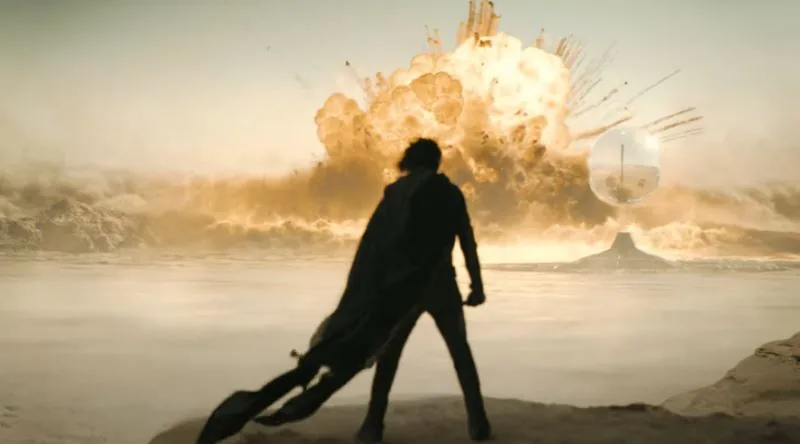
A wave of Dune Part Two criticism from longtime readers argues that Denis Villeneuve's 2024 sequel, while a visual triumph, sacrifices the intricate political intrigue and the vital importance of spice melange that defined Frank Herbert's 1965 novel. These fans feel the film trades the book's dense philosophical and economic commentary for breathtaking spectacle, leaving the story's core engine idling.
Many book fans believe Denis Villeneuve's 2024 film Dune Part Two fails as a faithful adaptation by prioritizing stunning visuals over the novel's complex political maneuvering and the central role of the spice melange. They argue the movie simplifies the story's economic and religious underpinnings, resulting in a thrilling but thematically shallower experience than Herbert's original text.
- The 2024 film Dune Part Two covers the second half of Frank Herbert's 1965 novel, compressing its dense narrative into a two-hour and forty-six-minute runtime.
- Critics within the fan community point to the underdevelopment of the Spacing Guild and CHOAM, the two entities that control interstellar travel and commerce in the book.
- The film's focus on Paul Atreides' personal hero's journey downplays the novel's broader commentary on religion, ecology, and the dangers of charismatic leadership.
- Comparisons are frequently drawn to the 2000 Syfy miniseries Frank Herbert's Dune, which many fans feel devoted more screen time to the book's political scheming.
A Fan's Disappointment: Why Dune Part Two Criticism Isn't Just Nitpicking
A devoted fan writing under the handle wizardmrl published a critique on Ekşi Şeyler on March 7, 2024, that cuts against the tide of praise for Dune: Part Two. The verdict: visually breathtaking, narratively hollow. This isn't the complaint of someone who skimmed the plot. It's the disappointment of a longtime follower who watched the project's journey for years and felt the adaptation betrayed the source material's soul.
Wizardmrl's obsession predates the film's existence. Long before Legendary Entertainment acquired the film rights in 2016, there was a placeholder page on IMDb for a new Dune movie, perpetually delayed, with no director and no cast attached. The fan admits to stalking that page, refreshing it endlessly, wondering who would finally take on Frank Herbert's dense 1965 novel. When Legendary officially secured the rights in 2016, the hope crystallized into a specific wish: give it to Denis Villeneuve, the director behind Arrival (2016) and Blade Runner 2049 (2017). When the news broke that Villeneuve was indeed attached, wizardmrl was thrilled.
That enthusiasm curdled somewhere between the first film and its sequel. The critic's hope had been that Part Two would fill in the gaps the first movie left open, particularly around the political machinery that makes Dune so distinctive. Instead, what arrived felt like a simplification, a story rich with intrigue and maneuvering flattened into a standard Hollywood blockbuster shape. The sets are gorgeous. The costumes are stunning. The wide shots of Arrakis are worthy of a museum wall. But for this fan, the storytelling never caught up to the spectacle, and the result was a profound letdown.
The Spice That Holds the Universe Together (And Why the Film Ignores It)
Here is the heart of the matter: in Frank Herbert's novel, the spice melange is not just a valuable commodity, it is the literal fuel of civilization. Without it, space travel stops, trade collapses, and the entire Imperium falls apart. The film, directed by Denis Villeneuve, never gives viewers this crucial context, and that omission hollows out the story's stakes.
Think about what spice actually does in Herbert's universe. The Spacing Guild navigators consume it in massive quantities to gain the prescience they need to safely guide starships through folded space. They are completely dependent on it, which means the Emperor's power and the entire economy of the known universe rest on this single substance. When the novel repeats the phrase "the spice must flow," it is not a poetic flourish. It is a statement of existential fact.
Villeneuve's film, released in US theaters on March 1, 2024, reduces this cosmic dependency to something far smaller. Paul's climactic threat to the Emperor becomes a petty family squabble: reveal my involvement or I will tell everyone you were behind the attack on House Atreides. The critic at the center of this discussion argues this is a catastrophic misreading of the source material. The Emperor would not risk traveling to Arrakis just to silence one young man's accusations. He would be forced to act because the spice supply itself was threatened, because the entire system of galactic governance was about to collapse.
Where are CHOAM, the Spacing Guild, and the Landsraad in all of this? The film mentions them in dialogue, but never develops their political weight. CHOAM is the conglomerate that controls all off-world trade, effectively the economic engine of the Imperium. The Landsraad is the assembly of noble houses that keeps the Emperor in check. And the Guild holds a monopoly on space travel, meaning even the Emperor cannot move his armies without their approval. These three factions are the tripod on which Herbert's political universe stands. The film names them, then forgets them.
The critic's frustration is specific: the novel shows how the Bene Gesserit, the Guild, and the great houses all tremble at the thought of Paul's emergence, because his existence threatens their carefully balanced plans. The spice is the thread that ties every plot together. When the film ignores it, the political intrigue becomes a simple good-versus-evil story, and the rich, layered universe Herbert created shrinks to a standard Hollywood conflict.
A Cheap Plot and a Missed Kwisatz Haderach
Here is where the disappointment really starts to bite: the reason the Emperor himself flies to Arrakis. Think about it with a modern lens. If a terrorist leader in Iraq threatened to expose that the US had secretly created him, would the American President personally board a plane to Baghdad? Absolutely not. That risk is far too great. But what if the world's entire oil supply were about to vanish overnight? Then, and only then, would that trip make any sense at all. That is the scale of motivation the story demands, and the film just does not deliver it.
Instead, Denis Villeneuve, who directed Dune: Part Two, chooses to have the Emperor travel because Paul Atreides is alive and threatening to reveal the truth about who really ordered the attack on House Atreides. It plays out like a generic Netflix thriller, complete with a sealed letter sent to the Emperor. The critic behind this breakdown argues it is a painfully cheap scenario. The spice melange, the substance that makes interstellar travel and all trade possible, is the entire axis of the universe in Frank Herbert's original novel. Without it, civilization itself collapses. The Spacing Guild navigators depend on it, and they can see the future, which means they would be terrified of Paul. The film barely touches on any of this, and that omission guts the story's political depth.
Now, to be fair, the critic explicitly states they are not upset about the missing subplots. No complaints about how Alia's unusual birth backstory was handled, the specifics of Duke Leto I's death, or the tension between Gurney Halleck and Lady Jessica. Those are directorial choices, and they are fine. What is unforgivable is losing the central theme. The critic even points out where the time could have been found. The film reportedly spends a significant stretch on Fremen village life, and there is a brief scene where nuclear weapons are discovered. Cut those down, and there is room for substance.
The real tragedy, though, is the Kwisatz Haderach moment. Paul finally becomes the superhuman being who can exist in the past and the future simultaneously. This is the payoff of the entire saga. Instead of letting us feel that infinite awareness, the film shows a quick vision of a sea on Arrakis and moves on. The critic argues that showing Paul truly experiencing past and future at once, in a way the audience could grasp, would have been far more powerful than any visual spectacle. It is a moment that should have been transcendent, and instead it feels rushed and hollow. For all the praise this film gets, this Dune Part Two criticism cuts to the heart of why it fails as an adaptation for some fans.
Cheap Dialogue, Recycled Music, and a 2000 Miniseries That Did It Better
The sharpest criticisms of Dune Part Two often land on the screenplay's weakest moments, and the fan critique from March 2024 pulls no punches. Paul casually reveals his Harkonnen heritage to his mother while they are sitting around, as if he were mentioning grocery prices rather than upending his entire identity. Another throwaway line dismisses the Fremen dueling tradition, with Paul walking and muttering about not killing the best fighters for a silly custom. These moments feel rushed, like the writer wanted to check off plot points without giving them room to breathe.
The dialogue problems extend to how major revelations are handled. When Paul tells his mother about his bloodline, the scene lacks the gravity such a confession deserves. It plays like small talk, not the kind of confession that should shake the foundations of everything the Bene Gesserit have worked toward for generations. The critic argues that a story this dense with political intrigue deserved more care in its conversations.
Hans Zimmer's score for the sequel also comes under fire. According to the critic, the music largely continues the first film's sound without introducing distinct new themes. They go further, describing the soundtrack as more like sound effects than actual musical pieces. The recommendation? Listen to Brian Tyler's score for the 2003 Children of Dune miniseries instead. That soundtrack, the critic insists, gives each faction its own musical identity, something missing from the theatrical version.
The comparison extends to the 2000 Sci-Fi Channel Dune miniseries. Yes, that production had a low budget and dated effects, and the acting was rough around the edges. But the critic argues it told the story far better. Watching it, you actually understand the politics, the stakes, and the relationships between houses. The miniseries had to rely on storytelling because it could not hide behind visual spectacle.
Looking ahead, the critic worries about the planned third film adapting Dune Messiah. How can the franchise introduce factions like the Bene Tleilax and Ix without proper setup? What about the character Edric? None of these elements appear in the second film, and the critic questions whether the next installment can shoehorn them in convincingly. The conclusion lands hard: this is visual effects porn, pretty to look at but hollow where it counts.


Frequently asked questions
What is the main criticism of Dune Part Two as an adaptation?
The primary criticism is that the film prioritizes spectacle over substance, simplifying the novel's dense political intrigue. According to the original account, director Denis Villeneuve spent so much energy on epic visuals that he failed to explain the importance of the spice melange, leaving viewers who haven't read the book confused about what drives the entire conflict.
Why is the spice melange important in Frank Herbert's Dune?
Spice is essential for space travel and trade; without it, civilization would collapse. The Spacing Guild navigators depend on it for prescience, the ability to see possible futures, which allows them to safely guide ships across the universe. In the novel, the entire economy and political structure of the Imperium revolves around this single substance.
How does the 2000 Sci-Fi Channel Dune miniseries compare to the new film?
According to the original account, the 2000 Sci-Fi Channel miniseries, despite its low budget and dated effects, tells the story with more fidelity to the book's political depth. The critic behind the original piece argues that the miniseries, which aired in December 2000, spends more time explaining the factions, motivations, and schemes that Herbert packed into his novel.
What factions are missing or underdeveloped in Dune Part Two?
The Spacing Guild, CHOAM, and the Landsraad are mentioned briefly but never developed in the film. The Bene Tleilax and Ix are absent entirely. In the novel, these groups form the backbone of the Imperium's power structure, each with its own agenda and influence over the Emperor.
Why do some fans think Denis Villeneuve prioritized visuals over story?
The critic points to long Fremen village scenes and the visual focus on nuclear weapons discovery as evidence that time was spent on spectacle instead of explaining the stakes. The original account claims the film could have covered the nuclear weapons discovery in a single line of dialogue rather than dedicating extended screen time to it.
Did Dune Part Two explain the political intrigue of the novel?
No, the critic argues the film reduced the intricate plot to a simplified personal grudge against the Emperor. In the book, Paul's rise involves layers of manipulation involving the Bene Gesserit, the Spacing Guild, and the great houses, none of which receive meaningful explanation in the film.
What is the Kwisatz Haderach and how is it portrayed in the film?
The Kwisatz Haderach is a Bene Gesserit superbeing who can see past and future simultaneously. The critic felt the film's portrayal was cheap and underwhelming, missing the opportunity to show Paul's ability to exist in multiple timelines at once, instead offering a brief glimpse of a sea on Arrakis. Editorial note: Any facts which remain unconfirmed are presented as such, clearly hedged to distinguish between verified details of the production and the subjective interpretations of the fan community.
Got a take on this? Add your voice to the conversation below →
No comments yet. Be the first.