Drive (2011): The Stuntman Who Couldn't Be the Lead
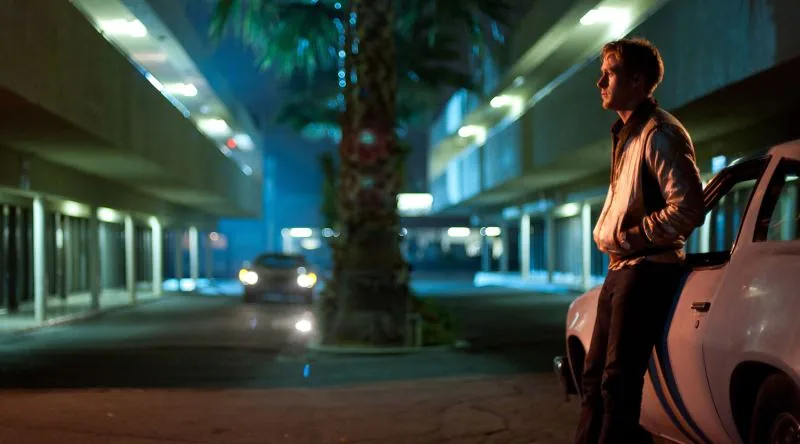
Drive, released in 2011, is a film about a Hollywood stuntman, played by Ryan Gosling, who works nights as a getaway driver in Los Angeles. He has no name, no past, and almost no dialogue. That emptiness is the point. Nicolas Winding Refn made a movie about a man who only exists when he is driving, and the moment he tries to become the hero of his own story, everything falls apart.
Drive (2011) follows an unnamed stuntman and getaway driver in Los Angeles who falls for his neighbor Irene. When her husband returns from prison, the driver helps him with a robbery that goes wrong. The fallout forces him to protect Irene and her son, and it costs him nearly everything.
- Ryan Gosling plays an unnamed driver who works as a Hollywood stunt performer by day and a getaway driver by night in Los Angeles.
- The film was directed by Nicolas Winding Refn and released in 2011.
- The driver develops a quiet bond with his neighbor Irene and her young son Benicio.
- Irene's husband Standard returns from prison and is forced into a pawn shop robbery that the driver agrees to help with.
- The heist goes wrong, and the driver spends the rest of the film trying to protect Irene and Benicio from the men who set the job up.
Drive (2011) Isn't an Action Movie. It's a Drama About a Man With No Life of His Own
Nicolas Winding Refn's Drive arrived in 2011, and the first thing worth saying in any honest Drive film analysis is this: it is a drama. Not a drama with action sprinkled on top, but a drama first, and a very good one. It hands you a single man's life without muddying the water with big speeches about love or family. And it does not deserve the word "boring," because its tempo is enormous.
Ryan Gosling plays the lead, credited only as Driver. He earns his money one way in daylight: he drives cars on Hollywood sets, doubling for actors who get the close-ups. At night he sells the same skill to criminals, chauffeuring them away from whatever they just did. That is the whole setup, and it is not told flatly.
Think about what that job means. A stunt driver is a man paid to stand in for somebody else. He has no life that belongs to him. The only thing in his week that is truly his own is the illegal work after dark, and even that comes with rules. The best known of them are a five-minute window and no gun, and one account adds that he never sees the people he works with again. Hold onto that last part, because the film leans on it hard.
Then a neighbor and her young son move into the picture, and something shifts. Around them he stops feeling like a stand-in and starts feeling like the lead of his own story. The film says this quietly, through parallel tracks: the more human contact he builds, the more his real role comes forward. The more he sits in the center of his own life, the more attached he becomes to the woman who caused it.
Which is exactly when the investment scheme and the racing money blow up.
Shannon is a verified presence in this story, the man who gives the Driver work, and his death lands like a door slamming. When the Driver finds him, he understands that things have gone completely wrong and will never be put right. So he secures a safe place for the woman, and he leaves the city.
The Flatness Is the Point: Why the Driver Can't Connect to Anyone
Ryan Gosling's unnamed Driver in Nicolas Winding Refn's Drive (2011) barely smiles, barely speaks, and barely reacts. That is not a performance failure. The character is emotionally disabled by design, a man who cannot get close to a second human being other than Shannon, the mechanic and handler who hands him his stunt work and his night jobs. Critics who complain that Gosling "has no facial expressions, he's so flat" are describing the symptom, not missing the diagnosis.
Think about what that flatness buys the film. The story keeps side characters like Shannon deliberately shallow so the whole thing collapses down to the protagonist's point of view. Give Shannon a rich inner life, and the audience starts splitting its sympathy. Keep him a sketch, and there is only one pair of eyes to look through. It is a structural choice, and it is why a Drive film analysis that stops at "the acting is wooden" never gets past the surface.
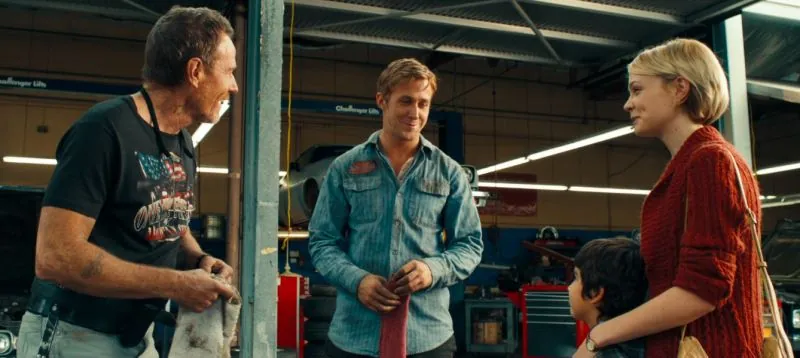
Then Irene moves in down the hall, and her son Benicio tags along behind her. Something shifts. The bond with the neighbor and her boy pulls the Driver toward the "family" he has clearly been starving for, and for a stretch of the film he starts living like a leading man instead of a stand-in. He is a stunt driver by trade, a man who earns his living by putting himself in other people's places, and here he finally feels like he owns a life of his own.
That gift gets yanked away. Standard, Irene's husband, walks out of prison, and the reunion the Driver had quietly been building toward is over before it starts. Everything that follows, the heist, the betrayals, the bodies, grows out of that single disruption. The one rule he breaks to protect Irene and Benicio is the one he was never supposed to touch, and the cost lands on Shannon, whose death is the moment the Driver understands nothing here can be repaired.
The Stuntman Who Wants to Be the Leading Man
Ryan Gosling's Driver earns his living by standing in for other people. That is the whole job. He straps himself into cars that belong to someone else, crashes them on cue, and walks away when the cameras stop. A stuntman has no face of his own on screen. He is a body doing the work of another body, and the film reads that as a man with no life he can call his own.
His only private territory is the night work. The illegal jobs are his, and there he keeps rules. The ones we can pin down are a five-minute window and no gun. One account adds a rule about never seeing the people he works with again, though that specific rule is contested and the film's own rules point elsewhere. Either way, the man lives behind a wall of conditions.
Then Irene and her son Benicio move in down the hall, and the wall starts to crack. He is a stuntman who suddenly feels like the leading man of his own life. Watch what happens in parallel. The moment he settles into that role, the investment and racing subplot blows up around him. The two movements are the same movement. As his human ties deepen, his place in his own story moves forward, and as he sits in the lead role, he binds himself tighter to the woman and child who put him there.
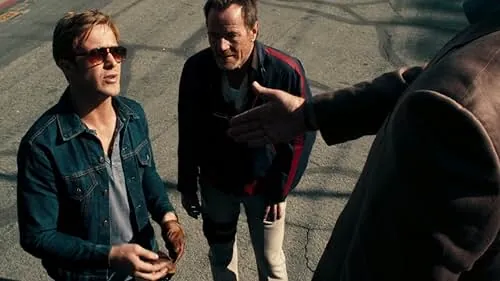
The bar scene is not there by accident. A man approaches him, and he turns him down flat. That refusal is the wall drawn in a single gesture. Yet for Irene and her son, he breaks it. He takes work with a man he calls a friend, because he cannot bear to lose them. To stay a leading man, he has to tear down his own wall. He does, and it costs him. Shannon's death is the critical scene. When the Driver finds the body, he understands that things have gone completely wrong and will never be set right. He secures a safe place for Irene, then leaves the city.
And he does not suffocate the final antagonist, whatever you may have heard. Bernie Rose dies by a knife in the parking lot. It is a small correction, and it matters, because the Driver's violence was never about winning. He crushes a man's skull in an elevator to keep Irene safe, not to climb. The motivation was never money, fame or glory, and the last scene proves it when he walks away and leaves the cash behind.
The Moment the Mask Slips: Shannon's Death and the Club Confrontation
Shannon's death is the hinge on which everything in Drive turns. When the Driver finds the body of the man who gave him work, the one person he could actually get close to, he understands that things have gone completely wrong and will never be fixed. The mobsters killed Shannon, his throat cut by an associate of Bernie Rose, and that image lands like a door slamming shut. So the Driver does the only thing left that makes sense to him: he secures a safe situation for Irene, then leaves the city behind.
Here is where the film quietly dismantles its own tough-guy mythology, and it is the sharpest piece of Drive film analysis the story offers. Watch the confrontation in the club-like setting, though just how club-like that room is remains hard to pin down. The Driver walks in wearing the hardened man like a borrowed coat, all stillness and menace. Then he realizes who is on the other end of the phone, someone genuinely experienced, someone who has done this far longer than he has, and he panics. He makes a mistake. The point is precise: the Driver is a stunt double, not a leading man, and the "badass" image he projects is just a facade, a cardboard cutout. That is why he is not and cannot be a "bad man."
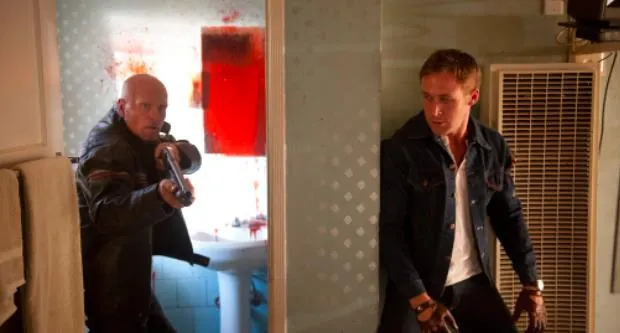
None of the violence that follows contradicts this. In the elevator, he kills a hitman to protect the woman he loves, stomping the man's head until the skull crushes, and it is brutal and it is desperate, not cool. It is a man doing something terrible because he has no other way to keep her alive. The motivation was never money, fame or glory. It was always the people he was about to lose.
One detail worth correcting plainly: the final antagonist Bernie Rose is not suffocated. He dies by a knife stabbing in the parking lot. The ending still carries the same meaning, though. The Driver walks away and leaves the money behind, because the cash was never the point.
The Ending That Is Also the Beginning
Where the Driver came from is a blank the film never fills in. The only clue arrives through Shannon, and even that is secondhand: he reportedly says the Driver once walked in and asked for work, and that he took him on at half pay. Whether that was five or six years back, and whether the half-pay detail holds up, is not something we can confirm. Treat it as reported, not settled.
But sit with the logic of it. A man who can slide a car through traffic like water does not just materialize out of nowhere, unemployed, ready to work cheap. Skills like that cost something to build. The implication the film quietly plants is that he has lived this before, gotten close to people, and paid a price for it. Has he been through it already? Will he go through it again? The film leaves both questions open, and that refusal to answer is the point of a good Drive film analysis.
Because when you try to be a normal person, when you try to step out of the shadows and into the lead role, disaster follows. You hurt the people standing near you. So the Driver stays where it is safe. In the dark, behind the wheel, always the double and never the star.
Why He Walks Away From the Money
Then comes the final scene, and it tells you everything the dialogue never did. The Driver leaves the bag of cash behind and walks off without it. He does not take a single bill. That single gesture settles the whole argument about what he was after.
It was never money. It was never fame, never glory. A man who wanted any of those things would have picked up the bag. He leaves it sitting there and disappears down the road, and the film ends on that image.
The One Thing Missing
If there is a single regret in the whole reading, it is this: apart from one bed scene, we never see the little boy again after his father dies. The child simply vanishes from the frame.
That absence matters, because a child figure is the classic way to test a character who is hardening and brutalizing himself. The boy could have reappeared while the Driver was wearing his coldest mask, and the contrast would have done the work for us. It is a familiar move, sure, but a good one. The film chooses not to make it, and you feel the empty space where it would have been.
Frequently asked questions
What is the deeper meaning of Drive (2011)?
At its core, Drive is a drama about a man who only exists as a stand-in for other people. His attempt to step out of that role and become the lead in his own life ends in disaster. That tension between stuntman and leading man is the whole engine of the film.
Why is Ryan Gosling's character considered a stuntman in his own life?
He earns his living standing in for other people, working as a Hollywood stunt driver by day and a getaway driver for criminals at night. He has no life of his own. His only private territory is the illegal night jobs, where he sets his own rules.
How does the ending mirror the beginning?
The Driver's origin stays unknown throughout. He ends exactly where he started: in the shadows, always a stuntman, never the leading man. The film closes the circle rather than breaking it, leaving him in the same anonymous position he occupied when it opened.
What does Shannon's death signify?
It marks the critical turning point. When the Driver finds Shannon's body, he understands that everything has gone irreversibly wrong. He secures Irene's safety and then leaves the city, accepting that the life he reached for is gone for good.
Was the Driver actually a bad man?
The film suggests no. In the club confrontation his badass image collapses into panic the moment he faces someone genuinely experienced, because that image was only a facade. He leaves the money behind, showing his motive was never money or fame.
Why does the Driver leave the money behind?
To underline that his motivation was never money, fame or glory. He was never chasing a payday or a reputation. What drove him was protecting the people he loved, and walking away from the cash makes that plain.
Did the Driver have a past life before the events of the film?
The film leaves it unknown. Shannon reportedly mentions the Driver came to him years earlier asking for work and accepted half pay, which suggests he had lived through something like this before and paid a price for getting close to people. Editorial note: Any plot points or production details that remain unconfirmed are presented as such, and nothing here should be read as a claim beyond what has been verified.
Got a take on this? Add your voice to the conversation below →
No comments yet. Be the first.