Dollars Trilogy: 10 Surprising Facts About Leone's Spaghetti Westerns
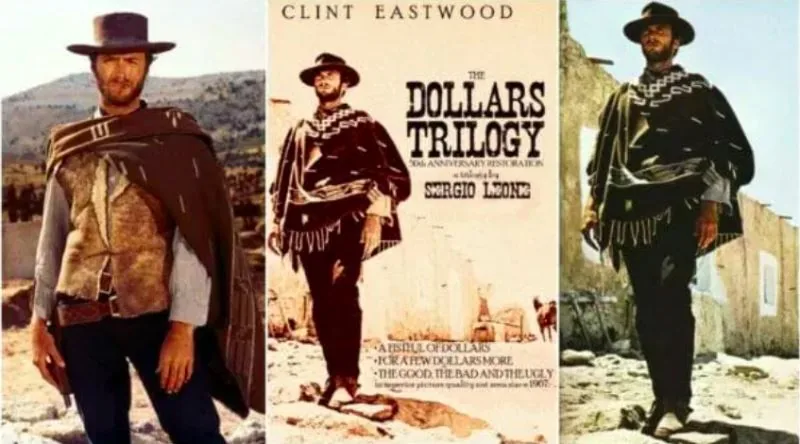
The Dollars Trilogy, Sergio Leone's iconic spaghetti western series starring Clint Eastwood, transformed cinema between 1964 and 1966. These three films, A Fistful of Dollars, For a Few Dollars More, and The Good, the Bad and the Ugly, turned a television cowboy into an international legend and rewrote the rules of the western genre. What makes this story so compelling is how much of its magic happened by accident, from a casting loophole to a lawsuit that nearly stopped production before it began.
Sergio Leone directed Clint Eastwood in three spaghetti westerns filmed in Spain and Italy from 1964 to 1966. The series began when Eastwood, under contract for the TV show Rawhide, found a legal loophole that let him work abroad. The films made Eastwood a star and defined the genre, though not without legal trouble from Akira Kurosawa over the first film's plot.
- Clint Eastwood was cast in A Fistful of Dollars in 1964 after the role was offered to another actor who turned it down.
- The first film was shot in Spain, where a replica western town was built for the production.
- Eastwood's character was renamed Joe, Manco, and Blondie across the three films because the first film's producer did not allow the character's continuation.
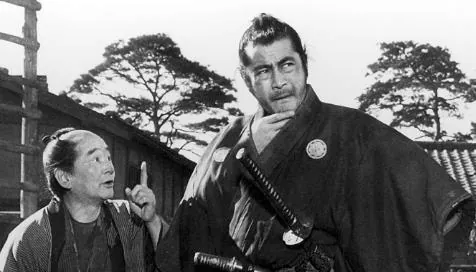
- Akira Kurosawa's studio successfully sued the filmmakers, claiming A Fistful of Dollars was too close to Yojimbo.
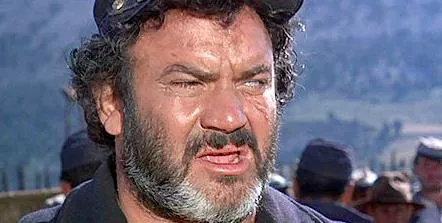
- Gian Maria Volonte, who played the villain in the first two films, was a committed political actor who disliked the western genre and refused to make more of them.
The Accidental Star: How a TV Contract Loophole Created a Legend
Clint Eastwood was riding the range on television when his movie career took an unexpected detour to Europe. In 1964, he was in the middle of his run on the Western series Rawhide (1959-1965), a job that kept him busy and made him a familiar face in American living rooms. But his contract carried a curious restriction: he could not make films in the United States. Europe, however, was wide open.
That loophole became the doorway to everything. Eastwood packed his bags, crossed the Atlantic, and found himself working with an Italian director named Sergio Leone on a low-budget Western that would upend the genre. The first film, A Fistful of Dollars, hit screens in 1964 and introduced a new kind of antihero, a quiet stranger wrapped in a poncho, squinting through clouds of cigar smoke. Two sequels followed, forming what fans now call the Dollars Trilogy, and Eastwood never looked back.
What makes the story even stranger is how little fanfare surrounded the original production. Leone was a relative unknown, and the crew worked with modest resources. No one involved could have predicted the cultural earthquake it would trigger. The TV contract that kept him out of American movies accidentally pushed him into the role that would define his legend.
The Yojimbo Lawsuit: Kurosawa's 15% Share and a Friendly Rivalry
When Sergio Leone's first western hit screens in 1964, Akira Kurosawa noticed something familiar. The Japanese master filed a copyright lawsuit against Leone, claiming the Italian director had borrowed too heavily from his 1961 film Yojimbo. The case settled with Kurosawa receiving 15% of the film's Far East screenings, a deal that would prove surprisingly lucrative for the legendary filmmaker.
The accusation had real teeth. Leone had indeed structured his story around a wandering gunfighter who plays two rival gangs against each other, a premise nearly identical to Yojimbo's plot. Toho, Kurosawa's production company, pursued the matter seriously, and the resulting settlement gave Kurosawa and Toho that 15% cut of the film's profits from Far East territories.
Here is where the story gets genuinely delightful. Kurosawa later admitted, with evident amusement, that the money he earned from this settlement exceeded what he made from Yojimbo itself. The film that inspired Leone's work ended up being less profitable for Kurosawa than the lawsuit it spawned. Leone, for his part, never publicly resented the outcome, and the two directors maintained mutual respect despite the legal friction.
The settlement money flowed from a film that became the foundation of the Dollars Trilogy, the series that would define the spaghetti western genre and turn Clint Eastwood into an international star. Leone's first entry, titled A Fistful of Dollars in English, launched everything, and Kurosawa's 15% stake meant he profited from that success in a way he never anticipated when he filed his complaint.
What makes this episode remarkable is how it ended. Rather than bitter litigation, the lawsuit became a footnote in a friendly rivalry between two of cinema's greatest visual storytellers. Kurosawa's films influenced Leone's style, and Leone's success eventually circled back to benefit Kurosawa financially. The Japanese director's dry comment about earning more from the settlement than from his own film captures the strange, circular nature of artistic inspiration and legal consequence.
The Man Who Refused the Genre: Gian Maria Volonté's Exit
Gian Maria Volonté walked away from the Dollars Trilogy after just two films, and his reasons had nothing to do with money or scheduling. The Italian actor, a committed left-wing activist in his home country, openly dismissed the entire western genre as having no subtext, and he refused to make another one. That decision, made in the mid-1960s, left Sergio Leone scrambling to fill the villain's boots for the trilogy's final chapter.
Volonté was already a major name in Italian cinema when he signed on to play the antagonist in A Fistful of Dollars (1964) and For a Few Dollars More (1965). He was also a passionate political figure, and the gap between his serious theatrical work and these dusty shoot-em-ups bothered him more than it pleased him. He reportedly crushed Clint Eastwood and everyone else on set with his sheer acting force, but the genre itself embarrassed him.
According to the original account, the "Bad" role in The Good, the Bad and the Ugly (1966) was offered to Volonté, and he turned it down flat. He said western films had no subtext, and he was done with cowboy movies. Lee Van Cleef, who had already appeared in the second film, stepped into the role instead.
That refusal says a lot about how the Dollars Trilogy was viewed at the time. Today it is celebrated as the ancestor of the spaghetti western, but back then, many serious actors saw it as beneath them. Volonté went on to build a career in politically charged dramas, becoming one of Italy's most respected performers. He never looked back at the dusty plains of the trilogy, and his absence in the third film gave the series a different kind of energy, one that leaned harder on Eastwood's stoic presence and Eli Wallach's manic charm.
Joe, Manco, Blondie: The Many Names of Eastwood's Character
Clint Eastwood's nameless gunslinger actually had a name in the first film: Joe. The credits say so plainly. But that name never appears again in the Dollars Trilogy, and the reason has become one of those Hollywood stories that everyone repeats and nobody can quite verify.
The story goes that the first film's producer wouldn't allow the character to continue into the sequels. Since that producer had no stake in the later pictures, the name Joe was simply dropped. It's often said this was a rights issue, but no reliable source has ever confirmed it. What we know for certain is that Eastwood's character gets a fresh identity in each installment. In For a Few Dollars More (1965), he's Manco, which translates to "one-armed man." By the time The Good, the Bad and the Ugly (1966) rolls around, he's Blondie, named for his straw-colored hair.
The timeline of these films is wonderfully tangled. A tombstone in the first movie, A Fistful of Dollars (1964), bears the date 1872. The third film, however, takes place during the American Civil War, which ran from 1861 to 1865. So the trilogy jumps backward in history rather than forward. Eastwood wears the same costume and poncho in the first two films, and at the end of the third, he picks up that iconic poncho from a wounded soldier. That single garment ties the whole loose trilogy together, even when the names and the years don't quite line up.
The Reluctant Star and the Ferrari: Eastwood's Demands for The Good, the Bad and the Ugly
Clint Eastwood never warmed to the third film in the Dollars Trilogy, and he made his displeasure known in the most practical way possible: he asked for more money and a Ferrari. The producers of The Good, the Bad and the Ugly (1966) accepted his terms without argument, and Eastwood showed up to shoot anyway.
The reluctance ran deeper than the contract negotiations. Eastwood was reportedly annoyed that the script painted Tuco, the "Ugly" of the title played by Eli Wallach, as the more sympathetic character. He felt the balance had tipped away from his own Blondie, the "Good" of the trio, and he did not hide his irritation.
The numbers tell part of the story. Eastwood's actual screen time in the finished film runs shorter than Wallach's, a fact that still surprises people who remember the movie for its three-way standoff. Wallach's Tuco gets more minutes in front of the camera, and Eastwood, who had carried the previous two films as the silent stranger, found himself sharing the spotlight more than he wanted.
What makes this even more striking is how the Dollars Trilogy had built Eastwood's career in the first place. He had arrived in Italy almost by accident, thanks to a quirk in his contract for the TV series Rawhide (1959-1965), which barred him from making films in America but left Europe wide open. By the time Sergio Leone came calling for a third film, Eastwood knew his value, and he priced it accordingly.
The Ferrari demand has become part of the legend, and it was not a small ask. Eastwood wanted a luxury car as part of his deal, and the producers, eager to keep the trilogy's momentum going, simply said yes. He got his car, his higher fee, and he still carried a grudge about the script.
There is a certain irony in all of this. The film Eastwood approached with so little enthusiasm became the most celebrated entry in the trilogy, and his reluctant performance as Blondie is now studied as a masterclass in minimalism. He barely moves his face, barely raises his voice, and audiences have spent decades reading meaning into every pause.
The tension between Eastwood and the production never fully disappeared, but it produced something remarkable. He gave less of himself on screen, and somehow that restraint became the very thing that made the character iconic. The man who wanted a Ferrari and a bigger paycheck ended up delivering a performance that money could not really buy.
The Ancestor with a Crowded Family: The Trilogy's Place in Spaghetti Western History
Calling the Dollars Trilogy the ancestor of the spaghetti western is only half the story. More than 20 western films had already been made in Italy before Sergio Leone's first entry, A Fistful of Dollars, hit screens in 1964. The trilogy didn't invent the genre so much as it electrified it, turning a modest Italian tradition into a worldwide phenomenon.
That distinction matters. When people talk about the Dollars Trilogy as the starting point, they overlook the Italian filmmakers who spent years cranking out cowboy adventures in the decade prior. Those earlier efforts were largely forgettable affairs, often cheap imitations of American westerns. Leone changed the formula with his signature close-ups, operatic score from Ennio Morricone, and morally gray characters. But he stood on ground that others had already broken.
The trilogy's real contribution was commercial and stylistic. It proved that an Italian western could compete with Hollywood on its own terms, and it launched Clint Eastwood into stardom along the way. So when historians trace the genre's family tree, they place the Dollars Trilogy as the charismatic heir who made the family famous, not the lonely pioneer who started it all. The distinction is worth keeping straight, especially for anyone who loves the dusty, sweaty, morally ambiguous world these films created.
Frequently asked questions
Which actors appeared in all three Dollars Trilogy films?
Three actors appeared in all three Dollars Trilogy films: Clint Eastwood, Mario Brega, and Benito Stefanelli. Aldo Sambrell and Antonio Molino Rojo did not appear in the first film, A Fistful of Dollars (1964). Mario Brega played memorable supporting roles in each movie, though his characters did not die in every installment.
Did Orson Welles predict the failure of The Good, the Bad and the Ugly?
According to the original account, Orson Welles reportedly called director Sergio Leone to warn that a western set during the American Civil War would flop at the box office. However, this anecdote is widely repeated but lacks primary verification. It remains a story told about the 1966 film, not a confirmed historical fact.
What is the chronological order of the Dollars Trilogy?
The Dollars Trilogy does not follow chronological order. The first film, A Fistful of Dollars (1964), is set in 1872, as shown on a tombstone in the film. The third film, The Good, the Bad and the Ugly (1966), takes place during the American Civil War, which ran from 1861 to 1865, making it chronologically earlier than the first film. Editorial note: This piece presents verified production history; any details that remain unconfirmed are clearly hedged as such within the narrative above.
Got a take on this? Add your voice to the conversation below →
No comments yet. Be the first.