Death Metal Albums: 25 Essential Picks for New Fans
The essential death metal albums for new fans span four decades, from the genre's 1987 birth in Florida to modern progressive masterpieces, and this guide names the 25 records that define the sound. If you have ever felt overwhelmed by blast beats, guttural vocals, and album art that looks like a nightmare, this list is your map through the chaos. These death metal albums were chosen not for their obscurity, but for their power to convert a curious listener into a lifelong fan.
This guide covers 25 essential death metal albums, starting with the genre's late-1980s Florida origins and moving through melodic, technical, and progressive subgenres. Each pick is a proven entry point for new listeners, chosen for its accessibility, historical importance, and enduring quality. The list spans from 1987 to the present day.
- The genre's foundational albums were recorded in Florida between 1987 and 1991, establishing the template for all death metal to follow.
- Melodic death metal emerged from Gothenburg, Sweden in the mid-1990s, adding guitar harmonies to the brutal framework.
- Progressive and technical death metal bands pushed the genre into complex time signatures and jazz-influenced structures by the early 2000s.
- The 25 albums on this list are selected for their accessibility to newcomers, not just their critical acclaim.
- Every era of death metal is represented, from old school classics to modern releases, giving a complete overview of the genre's evolution.
Why These 25 Death Metal Albums?
This is not a "best of" list. I have no interest in ranking the greatest death metal albums of all time or starting arguments about which record deserves the crown. Instead, this is a personal, carefully chosen collection of 25 death metal albums that I genuinely love and that I believe can teach you something real about the genre, whether you are just starting to dig deeper or you have been lurking at the edges for a while.
The idea came from a simple place. You have already dipped your toes into death metal. You know what it sounds like, you have heard the big names, and now you want to go further. You want to know what the people who really live and breathe this music are spinning. So I sat down and picked the albums that have meant the most to me, the ones that have shaped how I hear the genre.
You will notice the list is not locked into one narrow lane. Yes, there is plenty of old school death metal here, but I also reached into melodic death metal and progressive death metal. You will find In Flames sitting next to Cannibal Corpse, and that is exactly the point. The genre is bigger than any single subgenre, and the albums that matter often blur the lines anyway.
One important note before we start: I deliberately left out doom-death albums. That is not an oversight. I gave them plenty of space in my separate doom metal list, so including them here would have felt like double-dipping. Consider this list more accurately described as "albums that contain death metal elements" rather than a strict, purist death metal albums list.
I also stuck to one album per band. That was a hard rule I set for myself, because it forced me to make tough choices and kept the scope wide. With a genre this deep, you could easily fill twenty-five slots with a single band's discography. One album each means you get twenty-five different voices, twenty-five different approaches to what death metal can be.
The order is completely random, by the way. There is no ranking hidden in the sequence, no secret hierarchy. I just wrote them down as they came to me. So do not read anything into the order, and do not skip ahead expecting a grand finale. Every single album on this list earned its place, and I hope at least a few of them become permanent residents in your rotation.
The Godfathers: Death, Possessed, and the Birth of a Genre
Every origin story needs its founding figures, and for death metal albums, that story begins with two very different records: Death's Symbolic from 1995 and Possessed's Seven Churches from 1985. One represents the genre's intellectual peak, the other its raw, chaotic birth. Together, they frame the entire spectrum of what death metal could become.
Start with Chuck Schuldiner, the guitarist and vocalist who led Death from its earliest days. He passed away in 2001, but the music he left behind tells the story of a restless mind. Death began in the mid-1980s with gore-drenched lyrics, the kind of cut-and-slice horror that defined early extreme metal. But Schuldiner never stayed still. Album by album, he pushed the band toward something more philosophical, more progressive. By the time Symbolic arrived on March 21, 1995, via Roadrunner Records, the transformation was complete. The lyrics had moved from blood and guts to questions of enlightenment and human consciousness. The music had grown intricate, layered, almost cerebral.
There's a comparison the original author makes that sticks: Schuldiner was to death metal what Michael Jordan was to basketball. Not just in talent, though that was immense. It was the humility. Here was a man of superhuman ability who remained clean-faced, respectful, and genuinely liked by nearly everyone in the scene. That combination is rare in any genre, let alone one built on aggression and darkness. Choosing Symbolic for this list was itself a symbolic gesture, a nod to the band's progressive peak. But the author is quick to note that Death's other masterpieces could easily have taken its place. Human, Individual Thought Patterns, and The Sound of Perseverance all represent the band's forward-thinking side. For those who prefer Death's heavier, more straightforward work, there's Scream Bloody Gore, Leprosy, and Spiritual Healing. Every one of them is a treasure. Schuldiner was a gift to death metal listeners, and every album he left behind has an endless shelf life.
If Death represents the genre's intellectual evolution, Possessed represents its raw ignition. Seven Churches, released in 1985 via Combat Records, is often cited as the first death metal album. That claim comes with some debate, since the record sits squarely on the bridge between thrash and death metal. But the elements are all there: the growled vocals, the fast drums, the guitar work that made it clear something new was coming. The album's influence reads like a who's who of extreme metal. Death, Pestilence, Sepultura, Deicide, Morbid Angel, Cannibal Corpse, Gorguts, and Amon Amarth have all cited Possessed as an influence. That list alone tells you everything about the band's place in history.
For anyone curious about where to start with Seven Churches, the author points to the track "The Exorcist," named after the infamous film. Its riffs, they say, will blow your mind. The rest of the album follows naturally from there. Don't let the album's age or historical significance intimidate you. Just press play and let the music do what it's done for decades: pull you into a world that didn't exist before 1985 and hasn't been the same since.
The Florida Scene: Morbid Angel, Deicide, Obituary, and Cannibal Corpse
By the late 1980s, Florida had quietly become the beating heart of death metal, and no album from that scene better answers the question "what is death metal?" than Morbid Angel's Altars of Madness, released in May 1989 on Earache Records. It is the sound of Slayer's velocity colliding with Possessed's chaos, and it set the template that hundreds of bands would chase for decades.
The album arrived with a cover that looked like a portal to somewhere unholy, and the music inside matched it perfectly. Morbid Angel had already earned a legendary status by the time this record hit shelves, and everything that followed, from Blessed Are the Sick to Covenant, only built on the foundation laid here. The riffs don't just move fast; they feel like they're hunting you. The vocals don't just growl; they sound like something crawling out of a pit. For anyone trying to understand why death metal matters, this is the record that explains it without saying a word.
Staying in Florida, Deicide arrived in 1990 with a self-titled debut on Roadrunner Records that took the darkness in a different direction. The band's name translates to "God Killer," and they wore that label like armor. Frontman Glenn Benton brought a vocal approach that felt entirely new for its time, less concerned with brute force and more focused on crafting an atmosphere of pure malevolence. The guitar riffs on this record prioritize mood over speed, building a thick, oppressive fog rather than simply blasting through it. Benton's personality has always been polarizing, to put it mildly, but the album's contribution to death metal is undeniable. It took the anti-Christ themes that black metal had been exploring and fused them into a distinctly Floridian death metal framework, creating something that felt both dangerous and meticulously crafted.
Obituary's Slowly We Rot, also from 1989 and on Roadrunner Records, proved that the scene had room for a completely different kind of terror. John Tardy's vocals are unlike anything else in the genre, a primal, almost inhuman shriek that still raises goosebumps decades later. The music underneath strikes a perfect balance between speed and groove, with guitar riffs that feel predatory and rhythmic at the same time. Yes, the production sounds dated now, a bit raw and primitive around the edges, but that roughness is part of the record's soul. It was recorded with such a specific spirit that the moment the music starts, you're pulled into a world where everything is decaying alongside the band. The title track remains the ideal entry point, opening with a groovy riff before Tardy's voice tears through and the whole thing accelerates into pure chaos.
Then there's Cannibal Corpse, the band that somehow became famous despite pushing boundaries so far that even open-minded listeners had to wince. Tomb of the Mutilated, released on September 22, 1992 via Metal Blade Records, is a collection of every sick and twisted theme imaginable, presented with such conviction that it becomes a twisted kind of art. The drums pound relentlessly, the bass seems to burrow under your skin, and the guitars peel away at you while the vocals celebrate every moment of it. The song "Hammer Smashed Face" achieved mainstream notoriety when it appeared in the 1994 Jim Carrey film Ace Ventura: Pet Detective, a surreal moment where the most extreme band in America met one of the biggest comedy stars of the decade. Contrary to what some fans remember, though, the song "I Cum Blood" never appeared in any Grand Theft Auto game; that honor belongs to "Stripped, Raped and Strangled," which showed up in Grand Theft Auto IV. The band's lyrics about hidden body parts, bloated worms crawling over corpses, and eyes popping out from hammer blows haven't aged a day, and neither has the music, which remains as fresh and aggressive now as it was in 1992.
These four bands, each with their own distinct approach, mapped out the territory that death metal would occupy for the next three decades. Morbid Angel brought the technical precision, Deicide brought the blasphemy, Obituary brought the raw primal scream, and Cannibal Corpse brought the extremity that pushed everything to its absolute limit.
Technical and Progressive Pioneers: Necrophagist, Suffocation, Nile, and Disincarnate
By the early 1990s, death metal had split into countless directions, and four albums in particular pushed the genre into startling new territory, balancing jaw-dropping musicianship with raw, uncompromising aggression. Each of these records expanded what the genre could sound like, influencing both the most technical and the most brutal bands that followed. From a one-man Turkish project to New York's brutal innovators, these are the albums that redefined the limits of extremity.
The story starts in Germany with a Turkish musician named Muhammed Suiçmez, a guitarist whose technical prowess drew comparisons to Chuck Schuldiner himself. His band Necrophagist released Onset of Putrefaction in 1999, and the album stands as one of the most astonishing solo performances in metal history. Suiçmez handled vocals, guitars, bass, and programmed drums entirely by himself, a one-man army that critics repeatedly described with one word: genius. The music is mechanical, precise, almost surgical in its execution, yet it never devolves into meaningless chaos. Instead, Suiçmez's compositions achieve a classical music-like satisfaction, where every note feels deliberate and necessary. The drum machine only amplifies the cold, calculated nature of the attack, making the album feel less like a human performance and more like a precision instrument designed for maximum impact.
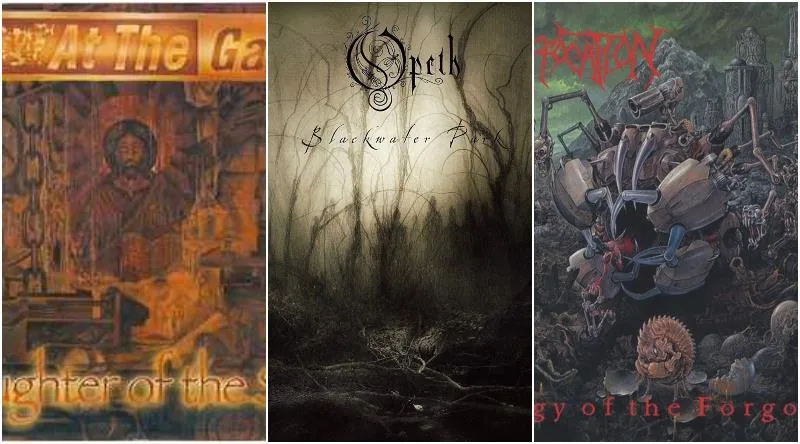
Across the Atlantic, New York's Suffocation took a different approach to technicality with their 1991 debut Effigy of the Forgotten, released on Roadrunner Records. The band struck a perfect balance between technical proficiency and sheer brutality, a combination that made them a crucial influence on both more technical and more brutal bands alike. The album's production, handled by Scott Burns, captured the raw, suffocating atmosphere perfectly, while Dan Seagrave's cover art remains one of the most mesmerizing images in death metal history. Suffocation's music was complex, yes, but it never lost its primal, gut-wrenching power, with soul-crushing vocals, sudden drum explosions, and ugly, dirty, intricate guitar riffs all fused together in a way that was far ahead of its time.
South Carolina's Nile took the genre in a completely different thematic direction with Amongst the Catacombs of Nephren-Ka, released in 1998 on Relapse Records. The band built their entire identity around Egyptian mythology, and this debut album saw them infusing their technical death metal with flutes, Middle Eastern instruments, and riffs that evoke harsh desert winds. The result was chaotic and uncompromising, a brutal technical death metal show with Egyptian spices sprinkled throughout. For newcomers, the album's unpredictable structures and sudden shifts can feel exhausting, but the song "Ramses Bringer of War" offers a perfect entry point. The track is built on Gustav Holst's immortal "Mars, the Bringer of War," taking the strongest elements of that classical masterpiece and merging them with Nile's technical approach. The result is epic, accessible, and a stunning introduction to the band's world of pharaohs and pyramids.
Finally, 1993 brought Dreams of the Carrion Kind from Disincarnate, a project led by guitarist James Murphy, whose resume already included stints in Cancer, Death, Obituary, and Testament. This album was pure old school death metal, with Murphy's high-quality, heavy, brutal riffs at the forefront and no experimental pretensions whatsoever. The album is a treasure trove for fans of the genre, featuring unused riffs from the songwriting sessions for Obituary's Cause of Death, which explains why listeners can feel echoes of both that album and Death's Spiritual Healing throughout. The biggest surprise comes on "Monarch of the Sleeping Marches," where Aaron Stainthorpe of My Dying Bride contributes guest vocals, though not his usual clean, melancholic style, instead delivering growls that fit perfectly with the album's aggressive tone. Dave McKean, known for his work on Neil Gaiman's Sandman comics, created the cover art, adding another layer of artistic credibility to this often-overlooked gem.
The European Extremes: Asphyx, Pestilence, Bolt Thrower, Demilich, and Obscenity
By the early 1990s, death metal had split into so many directions that a single scene could no longer contain it. The Netherlands, the United Kingdom, Finland, and Germany each contributed their own twisted branch to the tree, and five albums from those countries prove just how wide the genre's reach had become by the middle of the decade.
Dutch band Asphyx released The Rack in 1991 through Century Media, and it remains one of the most physically punishing records ever pressed. The group had no interest in flashy guitar work or technical showmanship. Instead, they built their sound on crushing, doom-influenced riffs that hit like a sledgehammer to the chest. Martin van Drunen's vocals deserve special attention here. His delivery is aggressive and pained, the sound of someone screaming from the bottom of a pit. The album shifts between chaotic bursts of speed and slower, oppressive passages that recall the weight of doom metal at its most suffocating. It is the kind of record that does not ask you to listen so much as it demands you brace yourself.
Van Drunen also fronted Pestilence, another Dutch outfit, and their 1989 album Consuming Impulse on Roadrunner shows a completely different side of his voice. Where Asphyx leaned into doom's crushing weight, Pestilence operated in the thrash-to-death crossover zone. The vocals here are even more aggressive, less anguished and more purely hostile. Van Drunen tears through the tracks with a ferocity that makes the album feel like a declaration of intent. Released in 1989, the record arrived at a moment when death metal was still defining itself, and Pestilence's blend of thrash energy and death metal brutality helped point the way forward. The songwriting stays grounded, never straying into technical excess, but the sheer force of the delivery makes it an essential piece of the genre's early history.
Crossing the North Sea, UK band Bolt Thrower took a fundamentally different approach with ...For Victory, released in 1994 on Earache. The band built their entire identity around war, and their music sounds exactly like what you would expect from a tank rolling across a battlefield. Simple, crushing, mid-tempo riffs drive every track, with no interest in speed for its own sake or technical flourishes. The power comes from the relentless forward motion, the way each riff locks into place and refuses to let go. One detail worth noting: bassist Jo Bench is widely recognized as the first female bassist in an extreme metal band, and she played on every Bolt Thrower album. Her presence in the lineup from the very beginning made the band a pioneer in more ways than one.
Then there is Demilich, a Finnish band that released exactly one full-length album and disappeared into legend. Nespithe came out in 1993 via Xtreem Music, and it remains one of the strangest records ever classified as death metal. The music is avant-garde technical death metal, all twisted rhythms and alien atmospheres that sound like they were beamed in from another dimension. The vocals are bizarre, guttural noises that barely resemble human singing. The song titles are famously long and nonsensical, with one track running to an entire sentence about a planet that absorbs flesh. The only single-word title on the album is "Erecshyrinol," which turns out to be an anagram for "No lyrics here." The vocalist is growling, but there are no actual words. It is a deliberately irritating move, the kind of inside joke that either endears you to the band or drives you away completely. For those who embrace the weirdness, Nespithe reveals itself as a genuine masterpiece of originality, a record that sounds like nothing else before or since.
Germany's Obscenity never achieved the fame of their peers, but their 1996 album 3rd Chapter on Conquest Music hides unexpected treasures. The album opens with a pointless ambient intro and a cover that offers no visual appeal, but the music itself is full of surprises. Just when a song settles into familiar brutal death metal territory, the band pivots into unexpectedly melodic and melancholic sections, sometimes backed by female vocals. These shifts keep the listener off balance in the best way. The lyrics also break from genre convention by engaging with social commentary rather than pure gore. The standout track "Disengaged" addresses heroin addiction directly, with lyrics that tell someone destroying their life to look in the mirror and see what they have become. It is a hidden gem in every sense, an album that rewards listeners willing to dig past its unassuming surface.
These five records, spread across four countries and nearly a decade of releases, demonstrate how death metal albums could sound radically different while still belonging to the same family. The crushing doom-inflected weight of Asphyx, the raw aggression of Pestilence, the martial simplicity of Bolt Thrower, the avant-garde strangeness of Demilich, and the melodic surprises of Obscenity all grew from the same root. Europe was not a single scene but a collection of scenes, each developing its own language while speaking the same tongue.
The Gothenburg Sound and Melodic Death Metal: At the Gates, In Flames, and Dark Tranquillity
In the mid-1990s, a small Swedish city became the epicenter of a metal revolution that would ripple across the globe for decades. Gothenburg, a port city on Sweden's west coast, gave birth to what we now call melodic death metal, and three bands stood at its heart: At the Gates, In Flames, and Dark Tranquillity. These groups took the raw aggression of death metal and wove in intricate guitar melodies, creating a sound that was both ferocious and beautiful.
The story of these three bands is one of tangled roots and cross-pollination. The vocalist swap between them tells you everything about how small and interconnected this scene was. Mikael Stanne, who would later front Dark Tranquillity for decades, actually sang on In Flames' debut album Lunar Strain. Meanwhile, Anders Fridén, who became In Flames' iconic frontman, had handled vocals on Dark Tranquillity's first record Skydancer. These two singers essentially traded places, and both bands ended up stronger for it.
At the Gates released Slaughter of the Soul in 1995 through Earache Records, and the album changed everything. Clocking in at just 34 minutes, it was lean, mean, and absolutely packed with iconic riffs. The band had stripped away the excess and focused on pure, aggressive, melodic intensity. That brevity became its superpower. Bands like Soilwork, Darkest Hour, The Black Dahlia Murder, Arch Enemy, and Killswitch Engage all point directly to this record as a formative influence. If you listen closely, you can hear its DNA in countless metalcore and melodeath records that followed.
In Flames delivered The Jester Race in 1996 via Wrong Again Records, and it stands as a cornerstone of the Gothenburg sound. The album has a unique atmosphere and character that sets it apart from everything else in their catalog. Each track carries its own personality, from tense, aggressive riffs to melancholic passages to almost playful, upbeat melodies that somehow all cohere into a perfect whole. The band would later drift through stylistic changes that left many longtime fans disappointed, but this record remains untouchable. It inspired countless groups and helped define what melodic death metal could be.
Dark Tranquillity took a bolder risk with Projector, released in 1999 through Century Media. The band had already established themselves as masters of the genre with their classic album The Gallery, but instead of repeating that formula, they pushed forward. Projector incorporated female vocals, keyboards, and clean vocal choruses, a significant departure from their earlier sound. For many listeners, including the author of the original account, it became the most-played Dark Tranquillity album of all time. It proved that melodic death metal could evolve without losing its soul, and it remains a perfect classic of the genre.
Supergroups and Modern Masters: Bloodbath, Gojira, Behemoth, Opeth, Hypocrisy, and Man Must Die
Bloodbath's Nightmares Made Flesh (2004, Century Media) brought together some of Sweden's most celebrated metal musicians for a love letter to old school death metal. The supergroup's lineup has been a point of confusion over the years, with various names floated depending on which era you're looking at. What's certain is that Mikael Åkerfeldt of Opeth handled vocals on the band's earlier recordings, while Nick Holmes of Paradise Lost took over the microphone for later albums.
The album itself walks a fascinating line, blending the raw spirit of classic death metal with a fresher, more modern sound. It's a tribute that doesn't sound like a museum piece, and that balance is exactly what makes it work. The project reportedly started as a casual idea over drinks, yet it grew into something far more significant, earning a reputation nearly as large as the members' main bands.
Around the same time, France's Gojira released From Mars to Sirius (2005, Listenable Records), an album that seemed to unite metal fans across every subgenre. Death metal heads, black metal devotees, thrash enthusiasts, and goth listeners all found common ground here. The music draws clear inspiration from Morbid Angel, but Gojira stripped away the malevolent darkness and rebuilt it with clean production and a surprisingly positive spirit. There's a spiritual quality to tracks like "Where Dragons Dwell" and "Global Warming" that lifts you off the ground, a sense of wonder rather than dread.
Poland's Behemoth delivered Demigod (2004, Regain Records), a blackened death metal wall of sound that lives up to its divine title. Karl Sanders of Nile contributes a guest guitar solo on the track "Xul," and the Egyptian influence is unmistakable throughout. The drumming never lets up, and Nergal's vocal performance channels pure fury. It's the kind of record that makes you clench your jaw, a crushing, majestic experience that hits like a physical force.
Opeth's Blackwater Park (2001, Music for Nations) isn't purely death metal, but its roots run deep in the genre. Mikael Åkerfeldt creates a one-man beauty and beast dynamic, switching between death growls and clean vocals with effortless precision. The album layers progressive metal, doom-laden riffs, and plenty of acoustic guitar into something that feels otherworldly. It's a record that invites you to drift away, eyes glazing over as the music unfolds.
Peter Tägtgren's Hypocrisy had been moving toward a more melodic approach, and Abducted (1996, Nuclear Blast) perfected that formula. The album balances mid-tempo, atmospheric tracks like "Roswell 47" with aggressive, fast-paced numbers like "Killing Art." The theme revolves around alien abduction and paranormal experiences, creating an atmosphere that feels like an episode of The X-Files. You can almost feel the fear of someone taken against their will, subjected to experiments in the cold emptiness of space.
The most subjective pick in this collection belongs to Scotland's Man Must Die. No Tolerance for Imperfection (2009, Relapse) is technical death metal that never forgets melody. Despite the aggressive name and cover art, the lyrics carry socially conscious messages. The title track criticizes media-driven perfectionism, while "Kill It, Skin It, Wear It" challenges fur wearers about the innocent creatures they sacrifice. It's fast, brutal, and surprisingly thoughtful, a hidden gem that deserved far more attention than it received.
What About the Bands Left Out?
No list of this kind can ever be complete, and this one makes no claim to be. Entombed, Malevolent Creation, Gorefest, Unleashed, Dying Fetus, Autopsy, and Dismember are just a handful of the essential names that didn't make the cut, and that's by design, not oversight.
The whole point of a curated selection like this is that it has to end somewhere. A list that tried to include every worthy death metal albums release would stretch into the hundreds, and even then, someone's favorite would still be missing. The finite nature of the list is what gives it shape and personality. It reflects one listener's journey through the genre, with all the subjective preferences and personal attachments that come with it. The bands left out aren't forgotten or dismissed, they're simply part of the vast landscape that no single list could ever fully map.
Frequently asked questions
What are the best death metal albums for beginners?
For newcomers, the most welcoming entry points include Death's Symbolic (1995) for progressive leanings, Carcass's Heartwork (1993) for melodic accessibility, and At the Gates' Slaughter of the Soul (1995) for pure melodic death metal. Each balances aggression with memorable songwriting, making them ideal first steps into the genre without sacrificing heaviness.
Why is Death's Symbolic considered a classic?
Symbolic , released in 1995, marks Death's full transformation into progressive death metal. Chuck Schuldiner, who died in 2001, shifted the band away from early gore themes toward philosophical lyrics about enlightenment and self-awareness. The album showcases his extraordinary guitar work and compositional maturity, cementing its status as a cornerstone of the genre.
How did Necrophagist influence technical death metal?
Muhammed Suiçmez's Onset of Putrefaction (1999) redefined technical death metal with its surgical precision and complexity. Suiçmez performed every part himself, handling vocals, guitars, bass, and programmed drums. The album set a new benchmark for instrumental virtuosity that countless bands have since tried to match.
What is the Gothenburg sound in melodic death metal?
The Gothenburg sound emerged from Gothenburg, Sweden, in the early 1990s. It blends death metal's aggression with melodic guitar riffs and harmonies, creating a distinctive style exemplified by At the Gates, In Flames, and Dark Tranquillity. This approach influenced generations of metalcore and melodic death metal bands worldwide.
Why is Cannibal Corpse so controversial yet popular?
Cannibal Corpse's Tomb of the Mutilated (1992) pushes boundaries with extreme lyrics and graphic artwork designed to shock. Yet the band achieved mainstream notoriety when their song "Hammer Smashed Face" appeared in the 1994 film Ace Ventura: Pet Detective starring Jim Carrey. Contrary to popular belief, their track "Stripped, Raped and Strangled" appeared in GTA IV, not "I Cum Blood."
How did Possessed's Seven Churches shape death metal?
Seven Churches (1985) is widely cited as the first death metal album. It bridged thrash and death metal with growled vocals, faster tempos, and darker riffs. The album influenced countless bands including Death, Morbid Angel, and Sepultura, making it a foundational document of the genre.
What are some underrated death metal albums?
Obscenity's 3rd Chapter (1996) and Man Must Die's No Tolerance for Imperfection (2009) deserve far more attention. The former blends brutal death metal with unexpected melodic passages and female vocals, while the latter delivers technical death metal with emotional depth and social commentary. Both remain hidden gems worth discovering.
Got a take on this? Add your voice to the conversation below →
No comments yet. Be the first.