Deadpool & Wolverine Review: MCU's Fox Universe Tribute
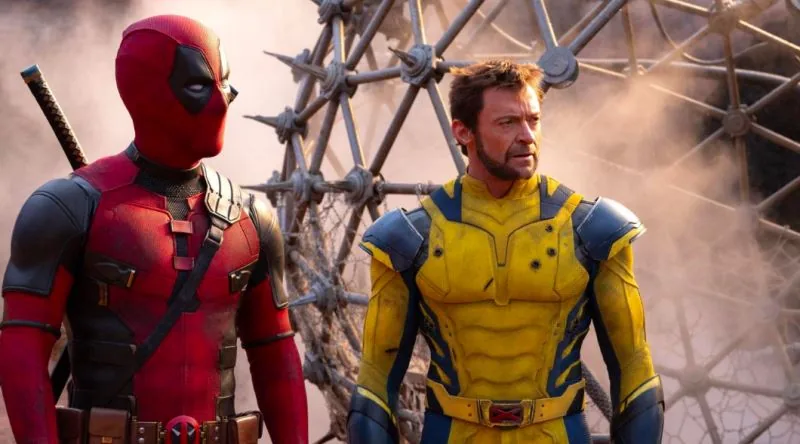
This Deadpool & Wolverine review explains how the 2024 Marvel Studios film turned the Fox X-Men universe into a heartfelt farewell, using the anchor being concept to justify its multiverse chaos. It is the only MCU movie to treat the old Fox timeline as sacred, and it does so with surprising emotional weight. You came for the cameos, but you will stay for the eulogy.
Deadpool & Wolverine, released in 2024, follows Wade Wilson as he recruits a reluctant Logan variant to save his home timeline from extinction. The movie serves as a tribute to the 20th Century Fox Marvel era, folding its characters into the Marvel Cinematic Universe while introducing the anchor being rule as the reason their world is fading.
- The film premiered in theaters in 2024 as the sole Marvel Studios release of that year.
- Hugh Jackman returns as Wolverine for the first time since Logan (2017), donning the classic yellow and blue comic-accurate costume.
- The story follows Deadpool as he seeks a Wolverine variant to save his home universe from decay after its anchor being died.
- The anchor being concept explains that every timeline has one pivotal figure whose death triggers that reality's slow decay, which is why Wolverine matters so much.
- Ryan Reynolds and director Shawn Levy crafted the film as a love letter to the Fox X-Men franchise, featuring several legacy appearances.
A Much-Needed Comeback: Why Deadpool & Wolverine Mattered in 2024
In 2024, Marvel Studios did something it hadn't done in years: it released exactly one film. That film was Deadpool & Wolverine, and it didn't just meet expectations at the box office, it earned high revenue and became one of the highest-grossing films of the year. For a studio that had spent the previous year stumbling through poorly received projects like Secret Invasion, The Marvels, and Echo, this was the lifeline the Marvel Cinematic Universe desperately needed.
Think about the context for a moment. The MCU had been bleeding goodwill with fans. Ant-Man and the Wasp: Quantumania disappointed, Guardians of the Galaxy Vol. 3 offered a brief high point, and then The Marvels crashed hard. When Disney announced that 2024 would be a quiet year for Marvel Studios, with several projects delayed for reworking, it felt like a retreat. Instead, it turned out to be a strategic pause, and the one project that made it through post-production without a hitch became the comeback story of the year.
What made Deadpool & Wolverine so vital wasn't just the money, though the money certainly helped. The film arrived as the sole MCU release of 2024, and it had the weight of an entire franchise's reputation on its shoulders. For a character known for breaking the fourth wall and mocking everything in sight, the irony wasn't lost on audiences: the Merc with a Mouth had become Marvel's most important player.
The film's success also signaled something deeper about where the MCU was headed. After years of multiverse teases and cameo setups that often went nowhere, this movie delivered on the promise in a way that felt earned. It wasn't just a Deadpool sequel, it was a bridge between the old Fox X-Men universe and the MCU proper, and it handled that transition with surprising care.
For fans who had watched Marvel Studios stumble through Phase 5, the relief was palpable. Here was a film that understood its characters, respected its legacy, and still managed to be wildly entertaining. The Deadpool & Wolverine review cycle reflected that enthusiasm, with audiences and critics alike noting that Marvel finally seemed to remember how to have fun again.
The financial numbers tell their own story. The film earned high box office revenue, reportedly over $1.3 billion worldwide. That put it among the highest-grossing releases of 2024, a remarkable achievement for an R-rated superhero movie. It proved that adult-oriented superhero storytelling could still draw massive crowds, and it gave Marvel Studios the confidence boost it needed heading into the next phase of its plans.
Looking at the bigger picture, the film did something even more important than making money. It restored a sense of momentum to a franchise that had been spinning its wheels. After the disappointment of Echo and the underperformance of The Marvels, Marvel needed a win that felt undeniable. Deadpool & Wolverine delivered exactly that, and it did so while paying tribute to two decades of superhero cinema that came before it.
The Messy, Beloved Fox-Men Era: A Quick History Before the MCU
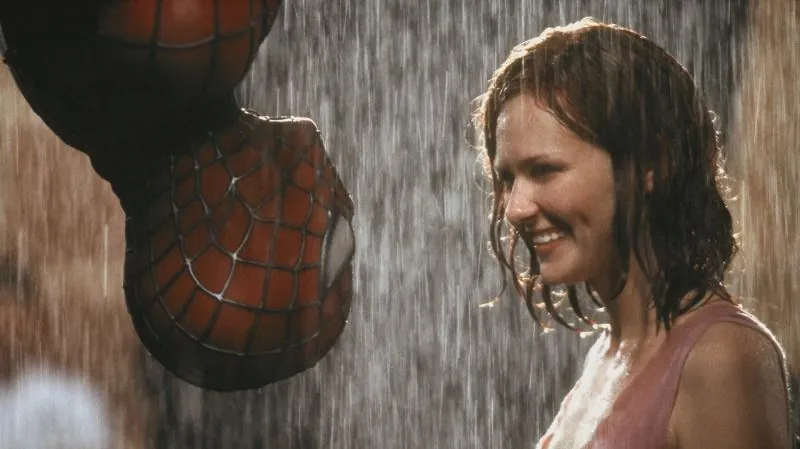
Blade arrived in 1998, and it changed everything for Marvel on the big screen. That Wesley Snipes vampire hunter proved a comic book character could carry a dark, violent, adult-oriented film with real depth. Two years later, in 2000, the first X-Men movie hit theaters, and suddenly superheroes were being taken seriously again. Then Sony dropped Spider-Man in 2002, and the genre officially conquered Hollywood.
The X-Men films that Fox built over the next two decades matter enormously, even if the studio fumbled them constantly. They gave us Hugh Jackman's Wolverine, Patrick Stewart's Professor X, and Ian McKellen's Magneto. They also gave us some of the messiest continuity in franchise history, a timeline so tangled that fans still argue about what actually counts as canon.
Here is the thing about those Fox movies. After the strong start with X-Men and its 2003 sequel X2, things went sideways fast. The third film, X-Men: The Last Stand, lost director Bryan Singer when he left to make Superman Returns in 2006. Brett Ratner stepped in, and the result was a disaster that killed off several beloved characters and painted the franchise into a corner.
Fox tried to course-correct with spin-offs. X-Men Origins: Wolverine came out in 2009, and it was just as bad as The Last Stand. The film broke the established canon in spectacular fashion and wasted nearly every character it touched. Its one lasting contribution to pop culture was casting Ryan Reynolds as Wade Wilson, a version of Deadpool so poorly executed that fans demanded a do-over. The planned Magneto origin film never materialized either, though its bones would later show up in another project.
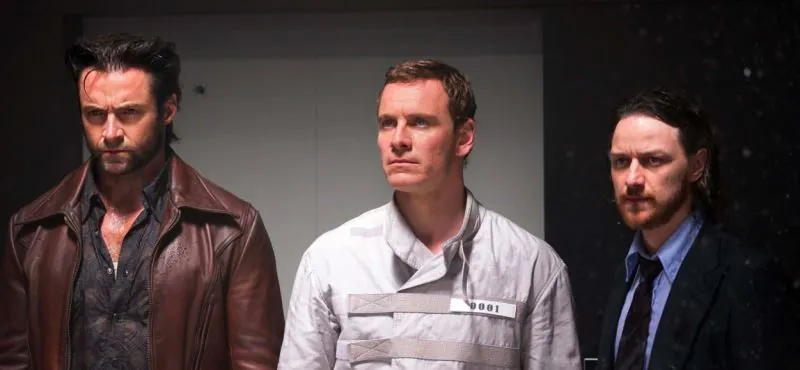
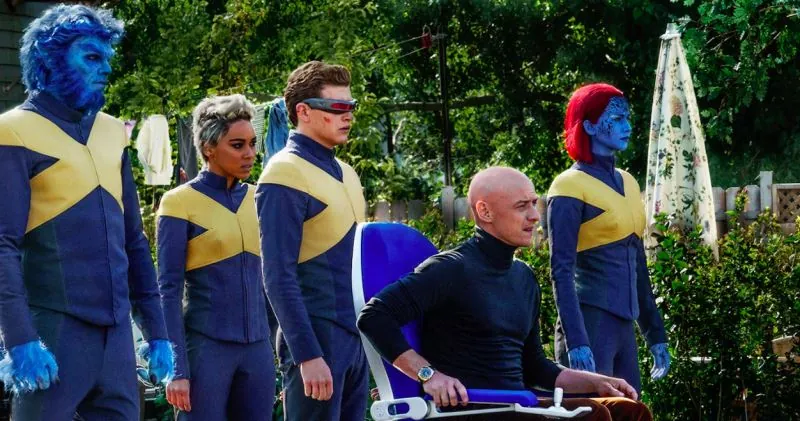
That project was X-Men: First Class, which hit theaters in 2011. The film served as both a prequel and a soft reboot, borrowing elements from the cancelled Magneto movie to tell the story of how Charles Xavier and Erik Lehnsherr first met. Fox decided the franchise would reset itself, telling stories in ten year increments and building toward the modern era. X-Men: Days of Future Past landed in 1973, X-Men: Apocalypse jumped to 1983, and X-Men: Dark Phoenix closed things out in 1992.
The ambition was admirable. The execution, less so. Fox kept launching side stories like The Wolverine, Deadpool, Logan, and The New Mutants alongside the main series. Some of those films were genuinely great. Logan, in particular, gave Wolverine a send-off that remains one of the best comic book movies ever made. But the overall timeline never held together. Characters were recast with different actors across films that were supposed to share a universe. Story threads contradicted each other from one movie to the next. The Fox universe timeline stands as the worst in franchise history, a patchwork of good intentions and executive meddling.
When Disney bought Fox in 2019, Marvel Studios finally gained access to the X-Men and Fantastic Four characters. Kevin Feige, who had actually started his producing career on those early X-Men films, did not rush to reboot everything. Instead, Marvel quietly began acknowledging the Fox universe as part of the larger multiverse. WandaVision teased Fox's Quicksilver. Doctor Strange in the Multiverse of Madness brought in an alternate Professor X. The Marvels introduced a new Beast. And then came the film that would tear the whole thing wide open, the one that finally gave those messy, beloved Fox-Men their proper send-off.
The Disney-Fox Merger and the Slow Tease of the Multiverse
When Disney completed its acquisition of 21st Century Fox in 2019, Marvel Studios finally held the film rights to the X-Men and the Fantastic Four, characters who had spent nearly two decades living at a rival studio. Kevin Feige and his team responded with something almost unheard of in the franchise business: patience.
They kept telling their own stories while quietly planting seeds. The first nudge came in WandaVision, where the Fox universe's Quicksilver popped up in a way that left audiences spinning. Then came Professor Xavier, played once again by Patrick Stewart, in Doctor Strange in the Multiverse of Madness, only this version belonged to Earth-838. The Marvels saved its tease for the post-credits scene, introducing a Beast we had never met before, played by Kelsey Grammer in a universe we had not yet explored.
All of it was groundwork. The real explosion happened with Deadpool & Wolverine, the film where the two universes finally collided head-on. The movie opens with Wade Wilson using Cable's time machine for his own amusement, then lands him in Earth-616, the main Marvel Cinematic Universe continuity. He wants to join the Avengers. Happy Hogan tells him no. That brief moment, reportedly only three to four minutes of screen time, is the only stretch that takes place in the MCU proper.
The rest of the story belongs to Earth-10005, the Fox universe. The Time Variance Authority, that bureaucratic nightmare of a multiversal agency, drags Deadpool in because his home reality is dying. Wolverine had been that universe's anchor being, the figure whose existence kept everything stable, and his death set the whole timeline on a slow path to dissolution. A TVA agent named Mr. Paradox wants to speed up the process. Deadpool, never one to accept a sensible plan, decides instead to steal a Wolverine from another reality and save his world.
What makes this film land so well is the respect it shows for what came before. The Fox X-Men movies had a messy, tangled history, with timelines that contradicted themselves and characters recast mid-stream. But this film treats that chaos as something worth honoring, not erasing. It gives Hugh Jackman's Wolverine a proper sendoff that does not cheapen the goodbye he got in Logan, and it lets the old universe stand tall rather than crumbling it to make room for the new one.
For anyone writing a Deadpool & Wolverine review, that balance between nostalgia and forward momentum is the heart of the picture. The movie works as a love letter to the Fox era while simultaneously pulling those characters into the larger multiverse saga. It is a tricky tightrope, and somehow, it holds.
The Anchor Being and a Universe Worth Saving
Wolverine is the anchor being of Earth-10005, the Fox universe, and his death set that entire reality on a slow path toward extinction. This is the central mechanic driving Deadpool & Wolverine, and it turns a buddy comedy into something with genuine cosmological stakes. The film opens with Deadpool learning that his home universe is dying because its most important resident is gone, and that grim news sets off the whole chaotic adventure.
Here is where the Time Variance Authority enters the picture. A TVA agent named Mr. Paradox has been assigned to monitor Earth-10005, and he has a problem on his hands. With the anchor being dead, the universe faces a natural decay that could stretch across thousands of years. Mr. Paradox finds this timeline inefficient and decides to accelerate the destruction with a device called the Time Ripper, a plan that would wipe out everyone Deadpool has ever known. The TVA offers Deadpool a way out: come work for them in the MCU's Earth-616 and leave his dying reality behind. It sounds like a sweet deal on the surface, but Deadpool cannot stomach the idea of his friends and family being erased. He steals Mr. Paradox's TemPad and goes hunting for a replacement anchor being from another universe, someone strong enough to hold Earth-10005 together. That someone is a variant Wolverine, one who has failed his own world in spectacular fashion.
The anchor being concept works beautifully as meta-commentary, even if its internal logic gets a little wobbly. Wolverine was never just a character in the Fox films; he was the gravitational center of the entire franchise. From the first X-Men movie in 2000 onward, Fox treated these films less as ensemble pieces and more as Wolverine stories with supporting players. Every solo Wolverine adventure, every team-up, every timeline reboot ultimately circled back to Hugh Jackman's snarling, cigar-chomping mutant. Making him the anchor being of Earth-10005 acknowledges that creative reality in a way that feels earned rather than forced. The film also handles his death in Logan with remarkable care, treating it as the definitive farewell it was meant to be rather than cheapening it with a resurrection.
The second meta layer involves the fate of the Fox universe itself. For years, fans including this writer assumed Disney's acquisition of Fox in 2019 meant the old X-Men world would be discarded and replaced. The film plays with that expectation brilliantly. Mr. Paradox wants to destroy Earth-10005 and move on, which mirrors what many audiences thought Marvel Studios would do with the Fox properties. But Deadpool refuses to let that happen, and by the end of the film, the universe is not destroyed. It is strengthened. The movie shows genuine respect for the Fox legacy, which makes sense given that Kevin Feige himself started his producing career working on those very X-Men films.
I will admit to having mixed feelings about the anchor being concept as a piece of world-building. The mechanics feel fuzzy around the edges. Does a natural death trigger universal decay, or only an untimely one? If the process takes thousands of years anyway, does the struggle of every other character in that universe suddenly lose its meaning? These questions nag at me. And yet the film uses the concept so effectively as a storytelling device that I find myself forgiving the logical gaps. It also plants a fascinating question for the MCU's future: who is the anchor being for Earth-616? Could it be someone like Spider-Man or Doctor Strange? Or could Marvel Studios pull a joke and reveal it is Happy Hogan? The possibilities are genuinely intriguing, and this Deadpool & Wolverine review would be incomplete without acknowledging how cleverly the film sets up that mystery.
Cameos, Villains, and the Deadpool Corps: A Love Letter to Fox's Past
Cassandra Nova, the film's primary antagonist, lands well even if she leaves you wanting more. She is the twin sister of Professor Charles Xavier, born with all his power but none of his mercy, and she commands every scene she inhabits with chilling precision. The writer of the original review admits they wished she had more screen time, but concedes that every moment she appears pushes the story and the characters forward in meaningful ways.
The void where much of the action takes place becomes a reunion hall for Fox's mutant misfits. Pyro gets the most substantial role of the returning villains, but he is far from alone. Blob, Sabretooth, Lady Deathstrike, Toad, Azazel, and Juggernaut all make supporting appearances, some played by familiar faces and others recast for this outing. It is a rogues' gallery that spans the entire history of the Fox X-Men films, from the early 2000s through the later prequels.
Here is where the conversation about cameos gets tricky. Many viewers throw the word around loosely, but technically speaking, Henry Cavill appears in a brief cameo, though the film features numerous other legacy appearances. His moment is brief and memorable, existing outside the main narrative flow. The others, including Johnny Storm (Chris Evans), Blade (Wesley Snipes), Elektra (Jennifer Garner), Gambit (Channing Tatum), and X-23 (Dafne Keen), function as genuine supporting characters. They have meaningful screen time, they impact the plot, and they each get moments that honor their respective franchises without reducing them to mere nostalgia bait.
The Deadpool Corps sequence in the climax is where the film truly lets its hair down. Blake Lively, Ryan Reynolds' real-life wife, voices Lady Deadpool with obvious glee. Nathan Fillion appears as Headpool, floating around with his signature wit. Matthew McConaughey lends his unmistakable drawl to Cowboy Deadpool. And in a move that only this franchise could pull off, Reynolds' actual children, Inez and Olin Reynolds, show up as Kidpool and Babypool. The family affair adds a layer of warmth to the chaos that is hard not to smile at.
And then there is the costume moment. Hugh Jackman finally wears the classic Wolverine suit, the yellow and blue comic-accurate outfit that fans had been begging for across nearly two decades of Fox films. The original studio spent years avoiding these costumes, insisting they would look silly on screen. This film proves them wrong spectacularly. Seeing Jackman in that suit, claws out and mask on, is the kind of fan service that actually earns its place. It is a visual payoff that lands because it took so long to arrive.
What Comes Next for the MCU? A Look at Phase 5 and Beyond
Deadpool & Wolverine officially belongs to Phase 5 of the Marvel Cinematic Universe, and it arrived at a moment when the franchise desperately needed a win. The film's massive box office success shook off some of the dust that had settled over Marvel Studios after a string of disappointments. But one strong outing doesn't fix a phase that has been lurching between highs and lows.
The pattern has been frustratingly predictable. Ant-Man and the Wasp: Quantumania landed in early 2023 as a major letdown, a muddled adventure that wasted its potential in the Quantum Realm. Then came Guardians of the Galaxy Vol. 3, which reminded everyone why they fell in love with these characters in the first place, delivering one of the best entries the MCU has ever produced. The whiplash continued with The Marvels later that same year, a film that stumbled both critically and commercially. Deadpool & Wolverine broke the cycle of alternating quality, at least for now.
Looking ahead, the road doesn't get smoother. Captain America: Brave New World sits on the horizon, and expectations among longtime fans are notably low. The project has gone through significant reshoots and creative turbulence, which rarely bodes well for the final product. The writer of the original review openly admits to keeping his hopes in check for that one, and it's hard to blame him given the recent track record.
The real hope rests with Thunderbolts. That film feels like a potential return to form, the kind of ensemble piece that could recapture the energy and chemistry that made the MCU's earlier phases so compelling. The lineup of morally gray characters, including Yelena Belova, Bucky Barnes, and John Walker, has the makings of something genuinely interesting rather than just another origin story or universe-ending spectacle.
What makes Deadpool & Wolverine so significant in this context is that it proved Marvel Studios can still deliver when the creative vision is clear. The film didn't just coast on nostalgia, though it certainly used it wisely. It told a complete story about two broken characters finding purpose again, wrapped in a meta-commentary that acknowledged the messy history of Fox's X-Men films without disrespecting them. That balance is exactly what Phase 5 has been missing.
The bigger question is whether Marvel can sustain this momentum. The studio has a packed slate ahead, with projects that will introduce the Fantastic Four and eventually build toward the next Avengers films. But if Phase 5 has taught us anything, it's that quantity doesn't guarantee quality. The one-good-one-bad rhythm needs to break, and Thunderbolts might be the test case for whether Marvel has learned that lesson.
For now, Deadpool & Wolverine stands as the bright spot in an otherwise uneven phase. It reminded audiences what makes these movies fun when they're done right. Whether the MCU can carry that energy forward remains to be seen, but at least there's a reason to be curious again.
Frequently asked questions
What is Deadpool and Wolverine about?
Deadpool and Wolverine follows Wade Wilson as he tries to save his home universe, Earth-10005, from falling apart. After the Time Variance Authority (TVA) captures him, he learns his universe is decaying because its anchor being, Wolverine, has died. To fix things, he recruits a variant of Wolverine from another timeline to return with him and stop the destruction.
Why is Deadpool and Wolverine important for the MCU?
This 2024 film is a major step in the Marvel Cinematic Universe's larger multiverse storyline. It marks a significant moment in the MCU's Multiverse Saga, the current phase of interconnected stories. The movie brings the Fox X-Men universe into the MCU's multiverse, confirming that live-action Marvel adaptations from other studios now count as canon.
Who is the anchor being in Deadpool and Wolverine?
Wolverine is revealed to be the anchor being of Earth-10005, the universe where the Fox X-Men films took place. His existence is so crucial to that reality that when he dies, the entire universe begins to decay. The film uses this concept to explain why Deadpool desperately seeks out another Wolverine variant to save his world.
How does Deadpool and Wolverine connect to Fox's X-Men films?
The movie is set in Earth-10005, the universe where the Fox X-Men films took place. It references events and characters from those movies, including Wolverine's death. The film respects that earlier story, which is why the universe is now falling apart without its anchor being.
Who are the cameos in Deadpool and Wolverine?
Henry Cavill appears in a brief cameo, though the film features numerous other legacy appearances. Supporting appearances come from Chris Evans as Johnny Storm, Wesley Snipes as Blade, Jennifer Garner as Elektra, Channing Tatum as Gambit, and Dafne Keen as X-23. These actors reprise roles from earlier Marvel films and function as actual supporting characters rather than quick cameos.
What is the Multiverse Saga in the MCU?
The Multiverse Saga is the current overarching storyline of the Marvel Cinematic Universe. It explores alternate realities and timelines across different universes. Doctor Strange in the Multiverse of Madness has introduced this concept, and Deadpool and Wolverine continues it by bringing the Fox universe into the mix. Editorial note: Any facts which remain unconfirmed are presented as such, hedged for accuracy.
Got a take on this? Add your voice to the conversation below →
No comments yet. Be the first.