Charles Bukowski Pulp: His Final Novel Before Death
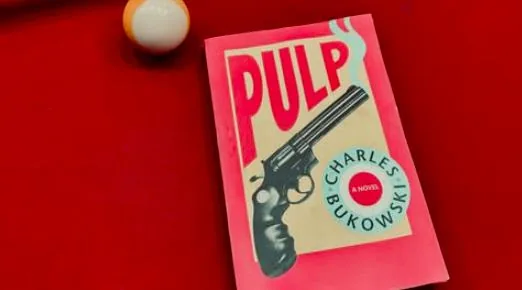
Charles Bukowski published Pulp, his final novel, in 1994, the same year he died in San Pedro, California. The book follows a hard-drinking private eye named Nick Belane through a comic, surreal Los Angeles. Bukowski wrote it while gravely ill, and many readers hear a farewell in its jokes. It is a strange, funny send-off from one of American literature's most stubborn outsiders.
Charles Bukowski's Pulp, released in 1994, was his last novel before his death in March 1994. It sends a scruffy detective named Nick Belane after a series of odd cases in Los Angeles, mixing noir parody with dark comedy. It is a fittingly irreverent final bow from a writer who knew the end was near.
- Pulp was published in 1994, the same year Bukowski died, and it stands as the last novel he finished.
- The novel centers on Nick Belane, a down-at-heel Los Angeles private detective who takes on bizarre cases, including a search for the elusive Lady Death.
- Bukowski was in poor health while writing the book and died on March 9, 1994, in San Pedro, California.
- Pulp is a deliberate send-up of detective fiction, drawing on film noir and pulp magazine conventions for comic effect.
- The novel has traveled widely, including a Turkish edition, and has been cited as an influence by later writers drawn to its deadpan humor.
The Last Book Bukowski Finished Before He Died
Charles Bukowski Pulp is the novel he finished with death already sitting in the room. The book appeared in 1994, and Bukowski died on March 9, 1994, in San Pedro, California, of leukemia. That is the whole strange arithmetic of it: a final completed novel, closed out near the very end of the man's life.
Some accounts date the release to May 1994, as the story goes, though the exact month is hard to pin down. The year itself is the settled anchor. What matters more is the timing of the writing. He was not polishing a manuscript from a comfortable distance. He was working on it while his body was failing him.
This is a great writer's last book, written while wrestling with death, and you can feel the fight on nearly every page. Bukowski had spent decades building a reputation for raw, unvarnished American writing, the kind that smells of cheap whiskey and unmade beds. Pulp steps sideways from that usual voice. It is a detective novel, or a joke dressed as one, and it sits in a different place among his works than the rest.
Picture the scene for a moment. A man who knows he is dying decides the last thing he wants to write is a noir pastiche about a broke private eye. Not a confession. Not a tidy farewell. A caper. There is a kind of laughter in that choice, the laugh of someone who has stopped pretending.
That is the frame for everything that follows. The book is his final completed novel, and it reads like a man leaving one last message on the table before he goes.
A Bukowski Novel That Doesn't Quite Sound Like Bukowski
Charles Bukowski's Pulp steps away from the style readers had come to expect from him, and that is exactly why it holds such an odd, distinct slot among his books. It is a noir pastiche, one that borrows the hard-boiled detective archetype and runs with it. If you come to this novel hunting for the meaning of life, you will not find it here. What waits inside is cheap whiskey, a detective with a death wish, and a writer who would happily swindle God himself.
That shift in register is the whole point. The usual Bukowski voice, the raw and confessional one, gives way to something that plays dress-up: a private eye in the mold of Philip Marlowe, Raymond Chandler's Los Angeles detective, dropped into a world of seedy bars and bad decisions. Picture Marlowe nursing his whiskey and reading Camus, then deciding to abandon everything and die smoking in a barroom washroom. That is roughly the air this book breathes.
The novel leans into film noir too, borrowing its typical detective figure, its shadowed atmosphere, and its particular brand of despair. The story follows a quiet, unremarkable detective as he chases the "Red Sparrow," and the whole thing plays out against a noir mood that keeps flickering behind your eyes.
Bukowski is doing an impression of a detective novel, yet it often reads more like stand-up comedy performed for death. Every page lands like a laugh that admits life is awful but at least it is funny. There is something of a literary last will in it, the final joke of a man who made sure his gravestone would read "Don't Try."
So do not trail the detective expecting to arrive anywhere dry. Every road he takes leads into the swamp. But somewhere out of that muck a voice calls back, telling you that at least we are all in this mess together.
Nick Belane, the Red Sparrow, and a Case File Full of Impossible Clients
Nick Belane is the private detective at the center of Charles Bukowski's Pulp, and his case file reads like a fever dream. He works a thinly veiled Los Angeles, the kind of city where the bars are as seedy as the people in them, and he takes on clients no sane investigator would touch: a possibly immortal figure, an alien man, and the ghost of the French writer Celine. Somewhere in the middle of all that, Belane is chasing down a "Red Sparrow."
Picture the setup. Belane is slowly erasing himself in one of the grimmest dives in town, and the jobs keep piling up stranger than the last. Lady Death, as the story goes, hires him, and whether she can actually die is part of the joke. There's an alien in the mix. There's Celine's spirit dogging his steps. Bukowski isn't pretending any of this is plausible. He's grinning at you from behind the typewriter.
And then there's the man himself, because Belane is a Bukowski protagonist down to the last drop. He drinks guilt instead of breakfast. He runs from women and then hates the loneliness that follows. He is far better at wrecking his own life than at solving murders. He's eaten every bit of the world's filth, and still he stands there with a cigarette in his mouth and a scrap of hope that says maybe this time it works.
The noir scaffolding is real, though. Pulp borrows the typical detective figure and atmosphere of film noir, complete with its despair, and sends its rumpled investigator after that red sparrow through a haze of cigarette smoke and cheap whiskey. If Philip Marlowe, Raymond Chandler's Los Angeles detective, had sipped his whiskey, read some Camus, and then decided to die smoking in a bar bathroom, you'd get something close to this. Bukowski doesn't strain for it. His detective just keeps walking, and everywhere he goes there's swamp.
Philip Marlowe with a Whiskey in One Hand and Camus in the Other
Philip Marlowe is Raymond Chandler's fictional private detective, the man who walked a rain-slicked Los Angeles and kept his code even when the city had none. Now picture him with a whiskey in one hand and a Camus paperback in the other, then deciding to give it all up and die smoking in a bar sink. That, the story goes, is what Charles Bukowski's Pulp would look like if it crawled out of the drain.
The novel leans hard on film noir. It borrows the archetype whole: the lone detective, the fogged atmosphere, the hopelessness that settles over everything like cigarette smoke on a cheap curtain. Bukowski isn't hiding the debt. He's tipping his hat to it and then spitting on the sidewalk for good measure.
But he doesn't strain for the tragedy. Where Chandler's Marlowe carries his doom like a burden, Bukowski's hero shrugs it off with a laugh. The stance is simple, and he says it himself: life is already a parody, so he's just making it a little more absurd. That's the engine of the whole book. It isn't noir played straight; it's noir played for the joke that's been under the floorboards the entire time.
And that's why death gets handled like stand-up comedy. Every page seems to say the same thing in a different voice: life is awful, but at least it's funny. Bukowski isn't mourning the void, he's doing a set in front of it, whiskey in hand, waiting for the punchline to land. You don't read Pulp to solve the case. You read it to hear a man laugh at the swamp, and then invite you to sit down in it with him.
The Gravestone That Says 'Don't Try' and Pulp as a Literary Will
Charles Bukowski's gravestone carries two words: "Don't Try." The man who had that carved into stone spent his final months finishing Pulp, and the novel reads like his last joke on the way out. It is less a book than a literary will, signed by a writer who knew the paperwork was nearly done.
The source frames it exactly that way. Pulp is the testament of the man who ordered "Don't Try" chiseled over his grave, and every page plays like a final performance. Bukowski is doing stand-up with death in the front row. "Life is shit," the book seems to say, "but at least it's funny."
What the Book Actually Says
The narrator introduces himself with a shrug you can hear out loud: "My name was Nick Belane. But what do you say to this: if someone yelled 'Harry! Harry Martel!' I'd answer, 'Yeah, what?' I could have been anybody. What difference does it make? What's in a name?"
Then the floor drops out:
"People are born to struggle and die."
Sex gets the same treatment. It is "a trap," nothing more than a snare that pulls people in, and the narrator insists it belongs to animals far more than to humans. Not exactly a valentine.
But the passage that stays with you is the one about waiting. Everyone's life, he says, is spent waiting. You wait in line at the market for toilet paper. You wait at the bank to withdraw money, and if you have none, you wait in longer lines. You wait for sleep, then you wait to wake up. You wait to get married, then you wait to get divorced. You wait for rain, then you wait for it to stop. You wait to eat, then you wait to eat again. Sometimes you sit in a psychiatrist's office surrounded by a crowd of lunatics, wondering if you're one of them.
The Optimistic Pessimism
Don't mistake all this for despair. "I wasn't dead yet," Belane reports, "only in rapid decay." And then, with a grin: who isn't? Everyone is trying to enjoy themselves in the same leaky boat.
The book's clearest self-portrait comes near the end. Look at the state of the world, the narrator says: pollution, murders, poisoned water, poisoned food, hatred, hopelessness, the whole catalog. "The only beautiful thing in the world is animals. And you're wiping them out too." Soon, he predicts, nothing will be left but pet mice and racehorses. No wonder you drink.
Then the turn. The best parts of life, he says, are the moments when you do almost nothing at all, when you spend your time flat on your back doing nothing. The moment you realize everything is meaningless, that very realization saves your life from being meaningless. "Do you understand what I mean? Mine is an optimistic pessimism."
The Last Laugh
The source closes with an image rather than an argument. Charles Bukowski's Pulp is not a book. It is the laugh of a man pressing a whiskey bottle to death's nose and saying, "Come on, you drink too."
Read it that way and the gravestone stops looking like surrender. "Don't Try" was never advice to give up. It was the punchline, and Pulp is where he set it up.
Who Read Pulp, and Who Carried It Into Turkish
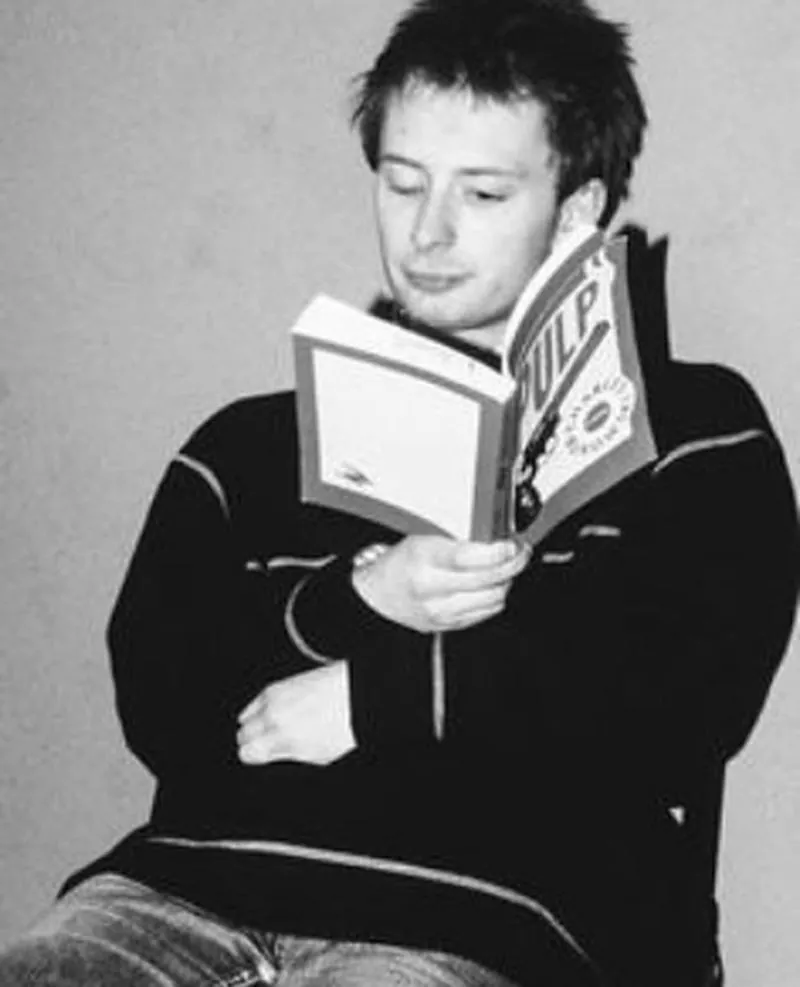
Around Charles Bukowski's Pulp there is a small, half-lit crowd of readers and translators, and not all of them can be pinned down. Turkish novelist Alper Canıgüz is said to have named the book as an inspiration for his own writing, though that rests on a single television appearance the original writer watched years ago and admits he cannot verify. Thom Yorke, the Radiohead singer, is likewise reported to love the novel, again without a paper trail anyone can produce.
The Turkish edition carries its own uncertainty. Translation is credited in the source to Melih Katıkol, but the name could not be confidently confirmed, so treat it as the story goes rather than settled record.
What is solid: Avi Pardo is a well-known Turkish translator closely associated with bringing Bukowski into the language, largely through Metis Yayınları. The original writer's own view is simpler and more personal. He would have preferred a Pardo rendering of Pulp, because Pardo's Bukowski translations seem to fuse translator and author into one voice. That is a reader's wish, not a fact about the edition on the shelf.
A salute, then, to the translators, editors, typesetters and proofreaders who carve oases out of a cultural desert, Quixote-style, one book at a time.
It is a fitting note for a novel that arrived in the world so close to its author's death, and that still finds new readers willing to carry it across languages.
Frequently asked questions
What is Charles Bukowski's Pulp about?
Charles Bukowski's Pulp follows Nick Belane, a down-at-heel private detective in a thinly veiled Los Angeles, who is hired by a possibly immortal client and crosses paths with an alien man and the ghost of French writer Celine, all while hunting the elusive Red Sparrow. It is a noir pastiche with cheap whiskey and seedy bars.
When was Pulp published, and how close was it to Bukowski's death?
Pulp is Bukowski's final completed novel, written near the end of his life. The year 1994 is generally accepted, though the specific month of May is contested. Bukowski died on March 9, 1994, in San Pedro, California, of leukemia, which places the book right at the edge of his death.
Who is Nick Belane in Pulp?
Nick Belane is the novel's protagonist, a private investigator cut in the classic Bukowski mold. He drinks instead of eating, runs from women yet dreads being alone, and is better at wrecking his own life than at solving crimes. He is the hard-boiled detective archetype, worn down and still smoking.
How does Pulp differ from Bukowski's usual style?
Pulp steps outside Bukowski's familiar mode. Instead of his usual raw autobiographical voice, it is a noir pastiche that borrows the hard-boiled detective figure, the film noir atmosphere and the genre's hopelessness. Belane chasing the Red Sparrow reads less like Bukowski's own life and more like a detective story he is gleefully mocking.
What is the significance of the red sparrow in Pulp?
The red sparrow is the object of Belane's central search. A good part of the plot turns on his hunt for this "Red Sparrow," which gives the story its driving thread. The novel does not treat it as a deep symbol to be decoded; it is simply the thing the detective is chasing.
Who translated Pulp into Turkish?
The Turkish translator associated with Bukowski's works is Avi Pardo, known for rendering Bukowski into Turkish, notably for Metis Yayınları. As for Pulp specifically, one account names Melih Katıkol as the translator, though that attribution is unverified. Many readers who admire Bukowski in Turkish prefer Pardo's versions.
Did Alper Canıgüz cite Pulp as an inspiration?
According to one account, Turkish author Alper Canıgüz cited Pulp as an inspiration for his own writing, recalling a television appearance where he praised the book. That claim is unverified and rests on a single recollection, so it is best treated as reported rather than confirmed.
Was Thom Yorke a fan of Pulp by Bukowski?
Reportedly, Thom Yorke, the singer and songwriter of Radiohead, is among the book's admirers. That claim, as the story goes, is unverified: no documented statement by Yorke expressing fondness for Pulp could be reliably confirmed, so it stays in the realm of anecdote. Editorial note: Details that remain unconfirmed are presented as such and hedged throughout.
Got a take on this? Add your voice to the conversation below →
No comments yet. Be the first.