Asteroid City Review: Why Wes Anderson's Latest Disappoints
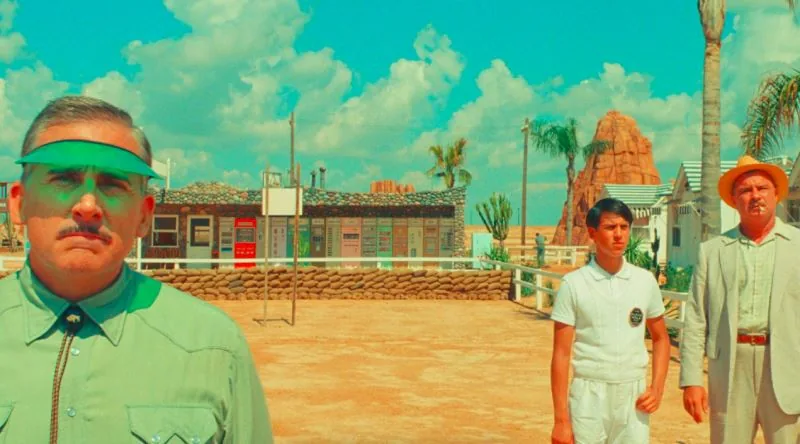
Asteroid City, Wes Anderson's 2023 set-in-1955 sci-fi comedy-drama, is a visually stunning but emotionally hollow experience that marks a clear disappointment in the director's filmography. The story, which follows a grieving father (Jason Schwartzman) and his prodigy son at a Junior Stargazer convention, gets lost in its own intricate framing devices, leaving its audience admiring the craftsmanship while feeling strangely disconnected from the characters' grief. While the pastel deserts and retro-futuristic props are pure eye candy, the Asteroid City review disappointment stems from a script that prioritizes cleverness over genuine human connection, a trend that has become increasingly frustrating for longtime fans of the auteur.
Wes Anderson's Asteroid City, released in 2023, tells the story of a widowed father and his son at a desert stargazer convention. The film is visually spectacular but suffers from a disjointed narrative and emotionally distant characters. It is a disappointing entry in Anderson's career, prioritizing style and meta-commentary over the heartfelt character depth of his earlier work.
- The film is set in 1955 in the fictional desert town of Asteroid City, where a Junior Stargazer convention is disrupted by an alien encounter.
- Jason Schwartzman stars as Augie Steenbeck, a war photographer grieving the recent death of his wife while trying to connect with his gifted son.
- The narrative is framed as a television broadcast about a play, creating a story-within-a-story structure that often distracts from the main plot's emotional core.
- The ensemble cast, including Scarlett Johansson, Tom Hanks, and Bryan Cranston, delivers the director's signature rapid-fire dialogue with precision but rarely gets the chance to breathe.
- The film's reception has been notably divided, with many critics and audiences highlighting a lack of narrative cohesion compared to Anderson's earlier classics.
Wes Anderson's New Direction: A Visual Feast That Leaves Characters Behind
If you've been tracking Wes Anderson's filmography, you've likely sensed something shifting since The French Dispatch (2021). The Asteroid City review disappointment many viewers felt in 2023 wasn't random, it was the culmination of a two-film slide toward spectacle over soul. Anderson, the American director known for his symmetrical frames and pastel palettes, has quietly traded emotional excavation for visual fireworks.
Compare that to where he started. Bottle Rocket (1996), Rushmore (1998), and especially The Royal Tenenbaums (2001) reportedly carried audiences through genuine emotional valleys and peaks. Those films, according to many critics, earned their quirk by grounding it in recognizable human ache. Then came The Grand Budapest Hotel (2014) and The Darjeeling Limited (2007), which many consider his comedic high-water marks, though the latter leans more melancholic than purely funny.
Here's the odd part: Anderson has now made two films in this new mode, yet audiences barely register the change. The symmetrical framing and colorful imagery remain so familiar that they mask the transformation. But peek at the characters, and you'll notice something missing. There's no inner life to excavate, no psychological depth to sit with. The visual language stays constant while the human center quietly evaporates.
In Asteroid City, that trade-off becomes impossible to ignore. The film follows Augie and his son Woodrow as they grieve the mother's death, but their loss stays frustratingly surface-level. Yes, the pain is visible, you can see it in Anderson's carefully composed shots, but the director seems far more interested in the framing of Augie standing in a cabin window than in what's actually churning inside him. The grief is acknowledged, then set aside for the next gorgeous tableau.
What saves the film from feeling entirely hollow? Those three young daughters, who reportedly steal every scene they're in. Anderson has always understood that children in his films behave more maturely and sensibly than the adults around them, and here that pattern holds. The girls' natural sweetness carries genuine comedic weight without any forced jokes, their simple presence proving more charming than any set piece.
Asteroid City: The Sum of Anderson's New, Distant Approach
Asteroid City, Wes Anderson's 2023 sci-fi dramedy set in a fictional 1950s desert town, wraps his signature visual style around a story of grief that stays frustratingly at arm's length. The film, which premiered at Cannes in May 2023 before its US theatrical release on 16 June 2023, is a colorful puzzle box where the pain is visible but never truly felt.
Visually, this is Anderson at his most toy-like and fairy-tale-esque. The mise-en-scène repeats with almost obsessive symmetry, every frame a meticulously composed diorama of pastel motels and retro rockets. Yet for all that visual richness, the characters offer almost no clues about their inner worlds. The humor that once defined his voice has been dialed down from a proper measure to trace amounts, leaving a film that looks like vintage Anderson but moves with a cooler, more detached pulse.
What saves the film from feeling hollow are the three young girls, Augie's daughters, who are incredibly sweet. Anderson extracts the maximum effect from them with seemingly no effort at all. In his films, children generally behave more maturely and sensibly than adults, and here that pattern holds beautifully. Their unique innocence is carried to the screen without extra staging or forced jokes, their natural presence alone providing the warmth the adults cannot.
The central thread follows Augie, a war photographer, and his son Woodrow, both grieving the mother and wife they lost. The pain is there, visible in the frame, but Anderson presents it through stylized scenes rather than deep psychological interiority. Consider the moment Augie stands at the cabin window: Anderson seems more interested in the framing of that shot than in what is happening inside the man. The grief becomes a compositional element rather than an emotional experience, a choice that defines this new phase of the director's work.
Why Change Isn't Necessarily Bad for Anderson's Cinema
The shift in Wes Anderson's filmmaking is a preference, not a decline, and it deserves to be understood on its own terms. Change is inevitable for both cinema and humans, two mechanisms that organically feed each other, and Anderson's evolution reflects that natural process. The director who once took audiences through emotional depths with films like Rushmore and Bottle Rocket has clearly moved toward something else, and that's not inherently a loss.
Anderson now seems more interested in visuals, art design, decor, and colors than in psychological excavation. Since The French Dispatch, his films have been visually satisfying but reportedly haven't allowed characters to deepen the way they once did. Critics have noted this shift toward stylized storytelling with less interiority, though it's hardly a universal judgment. What's striking is that his camera work hasn't changed at all. He still carries entire films with just two movements, trucking and pan shots, and it works magnificently.
In Asteroid City, the grief of Augie and his son Woodrow is present, visible, but never explored internally. The loss of the mother and wife sits there on screen, acknowledged through stylized scenes rather than psychological depth. Anderson frames Augie at the cabin window with care, yet seems uninterested in what's happening inside his mind. That's a deliberate choice, and it's worth respecting even if it frustrates.
There's a personal confession buried in this appreciation. Watching an Anderson film, around the forty-fifth minute, a warm awareness settles in: nothing bad will truly happen to these characters. They'll bicker sweetly, get a little sad, some things will remain puzzling, but the ending won't darken the heart. That certainty is a gift in a world already full of pain and drama. Whatever direction Anderson's cinema evolves toward, his films will keep being watched with genuine interest. The author of this reflection signs off as "mikua," and that loyalty speaks to something real about why Anderson's work endures.
Got a take on this? Add your voice to the conversation below →
No comments yet. Be the first.