Agatha Christie Disappearance: The 1926 Mystery
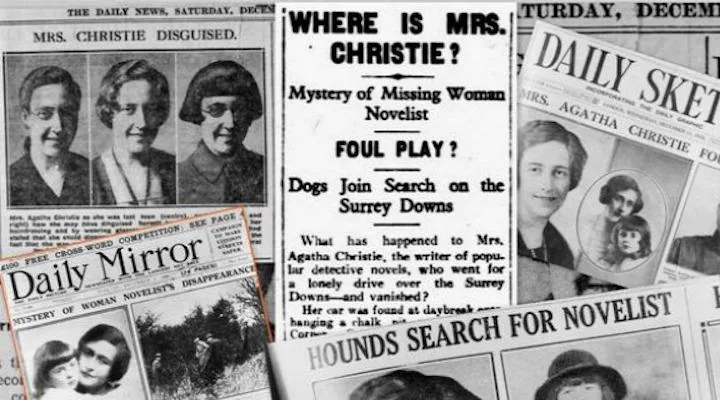
In December 1926, the Agatha Christie disappearance became one of the most sensational mysteries of the era, as the world’s most famous crime novelist vanished for 11 days before being found safe at a hotel in Harrogate, England. The baffling case gripped the public, sparked a nationwide manhunt, and left a trail of questions that still fascinate readers today. It is a story of personal turmoil, media frenzy, and a silence that the author carried to her grave.
On the evening of December 3, 1926, Agatha Christie drove away from her home in Berkshire, England, and disappeared. Her abandoned car was found at Newlands Corner the next morning. After an 11-day search, she was located safe at the Swan Hydro Hotel in Harrogate, where she had checked in under a different name.
- Agatha Christie vanished from her home in Sunningdale, Berkshire, on the evening of December 3, 1926.
- Her Morris Cowley car was discovered abandoned at Newlands Corner, near Guildford, on the morning of December 4, 1926.
- A massive manhunt involving police and volunteers took place across the English countryside for 11 days.
- Christie was found safe on December 14, 1926, at the Swan Hydro Hotel in Harrogate, Yorkshire, where she had registered under the name of Teresa Neele.
- She never publicly explained the reasons for her disappearance, leaving the event an enduring literary mystery.
The Night Agatha Christie Vanished
On Friday, December 3, 1926, at approximately 9:30 p.m., Agatha Christie left her home in Sunningdale, Berkshire, and drove into the night. She had just kissed her seven-year-old daughter, Rosalind, goodnight. The woman who would later be celebrated as the Queen of Crime climbed into her Morris Cowley and disappeared, setting off one of the largest manhunts in British history.
The evening had started like any other. Christie, already a famous novelist by 1926, had spent the day at her country home with her family. The house sat quietly in the Berkshire countryside, the kind of comfortable, unremarkable setting you might find in one of her own mysteries. But the ordinary night took an extraordinary turn when she got behind the wheel of her car.
She didn't pack a suitcase. She didn't leave a note. She simply drove away from the life she knew, and for the next ten days, no one had any idea where she had gone.
The news spread quickly. By the time morning broke on December 4, her abandoned Morris Cowley was discovered at Newlands Corner near Guildford, perched on a steep slope as if it had been left in a hurry. The car was there, but Christie was nowhere to be found. There were no signs of an accident, no blood, no struggle, nothing to explain what had happened to her.
What followed was a search effort that captured the attention of the entire country. Hundreds of police officers and civilian volunteers combed the countryside. The Home Secretary, William Joynson-Hicks, pressed the police to move faster. Even the era's most celebrated mystery writers got involved: Sir Arthur Conan Doyle, the creator of Sherlock Holmes, and Dorothy L. Sayers, known for her Lord Peter Wimsey series, both joined the search, hoping their expertise might crack the case. The story even made the front page of The New York Times as the world watched and wondered.
As the days stretched on with no sign of her, speculation ran wild. Some journalists suggested she had drowned herself deliberately. Others whispered that the whole thing was a publicity stunt designed to promote her latest book. A few hinted at something far darker. But the truth, when it finally emerged, would be stranger than any of their theories.
The Manhunt That Gripped a Nation
When Agatha Christie vanished on December 3, 1926, Britain launched one of the largest manhunts in its history, a search so vast it made the front page of The New York Times and drew in everyone from the Home Secretary to the creator of Sherlock Holmes. By the time her Morris Cowley was found abandoned at Newlands Corner near Guildford on the morning of December 4, the machinery of a national investigation was already turning.
Hundreds of police officers and civilian volunteers fanned out across the Berkshire and Surrey countryside, with some contemporary reports mentioning a thousand or more officers assigned to the case. The exact figure varies depending on the account, but the scale was unmistakable. Aircraft joined the hunt for the first time ever in a British manhunt, buzzing over fields and woodland as ground teams combed every ditch and hedgerow. The pressure came from the very top: Home Secretary William Joynson-Hicks, the government minister responsible for policing, publicly urged the force to make faster progress.
Then the literary world stepped in. Sir Arthur Conan Doyle, the creator of Sherlock Holmes, and Dorothy L. Sayers, the author of the Lord Peter Wimsey detective series, both joined the search. The hope was that their expertise in plotting criminal mysteries might crack a real one, though neither would crack this case before the police did.
As the days stretched on with no sign of the missing novelist, speculation ran wild. Some journalists dared to claim she had deliberately drowned herself. Others whispered that the whole affair was a publicity stunt cooked up to promote her latest book. The theories grew darker as the second week began and the story circled the globe, landing on the front page of The New York Times and turning the Agatha Christie disappearance into international news.
The Car at Newlands Corner and a Wave of Speculation
On the morning of December 4, 1926, police found Agatha Christie's Morris Cowley abandoned on a steep slope at Newlands Corner, near Guildford. The car sat there with no trace of the famous author, and no evidence pointed to an accident. The vehicle was simply empty, its owner vanished into the cold English countryside.
Days passed with no sign of Christie, and the silence only fed the rumors. Some journalists dared to suggest the crime novelist had deliberately drowned herself in one of the nearby ponds. Others whispered that the whole affair was a publicity stunt cooked up to promote her latest book, a clever trick to grab headlines. And a darker undercurrent of fear ran through the speculation, with some observers worried that something far worse had befallen the thirty-six-year-old writer.
The search itself had become a national obsession. Hundreds of civilians joined the hunt alongside police officers, and the Home Secretary, William Joynson-Hicks, publicly pressed the police to move faster. Two of Britain's most celebrated mystery writers, Sir Arthur Conan Doyle and Dorothy L. Sayers, were drawn into the investigation, with hopes that their expert minds might crack the case. Even aircraft joined the search for the first time, scouring the Surrey countryside from above.
As the second week of the manhunt unfolded, the story went global. The Agatha Christie disappearance landed on the front page of The New York Times, captivating readers across the Atlantic just as much as it gripped the British public. Every theory grew louder with each passing day, but the truth would not surface until December 14, when Christie was finally found safe at a hotel in Harrogate, eleven days after she had driven away from her Berkshire home.
Found in Harrogate: The Banjo Player and the Silence
After eleven days of frantic searching, Agatha Christie was found safe and well on December 14, 1926, at the Swan Hydropathic Hotel in Harrogate, a spa town in North Yorkshire. The mystery of the Agatha Christie disappearance had finally reached its end. She had simply checked into the hotel as a guest, blending in with the other visitors taking the waters.
The official conclusion pieced together a strange journey. Investigators determined that after leaving her Berkshire home on the night of December 3, she had driven to London, crashed her car, and then taken a train north to Harrogate. How she traveled from the wrecked vehicle to the railway station, and why she chose that particular spa town, remained unexplained. As the story goes, a hotel banjo player recognized her and alerted the police, though no reliable record confirms this colorful detail. The more mundane truth is that her identity was eventually established, and the worldwide hunt came to a quiet close.
What followed was perhaps the most puzzling part of all. Agatha Christie never spoke about those eleven missing days, not to her family, not to the press, not in her autobiography. Between December 3 and 14, 1926, there is a silence she carried for the rest of her life. That refusal to explain fueled decades of speculation about what really happened, turning a personal crisis into one of the great unsolved literary mysteries. The world would never learn the full truth from her own lips, and the gaps in the story remain open to this day.
Frequently asked questions
What happened to Agatha Christie in 1926?
Agatha Christie vanished from her Berkshire home on December 3, 1926, and was discovered alive at a hotel in Harrogate on December 14, 1926. The celebrated crime novelist, then 36 years old, drove away around 9:30 p.m. after kissing her sleeping seven-year-old daughter Rosalind goodnight, sparking one of Britain's largest manhunts.
Why did Agatha Christie disappear for 11 days?
She never explained. The author remained silent about the entire episode for the rest of her life, leaving room for endless speculation. Theories ranged from genuine memory loss to a calculated publicity stunt for her latest book, though none were ever confirmed by Christie herself.
Where was Agatha Christie found after her disappearance?
She was found at the Swan Hydropathic Hotel in Harrogate, a spa town in Yorkshire, on December 14, 1926. She had checked in under a different name and appeared calm and healthy. The hotel, now known as the Old Swan Hotel, still stands today.
Who helped search for Agatha Christie when she vanished?
Police forces across southern England joined the hunt, with contemporary reports mentioning hundreds of officers and civilian volunteers. Two of Britain's most famous mystery writers also lent their expertise: Arthur Conan Doyle, creator of Sherlock Holmes, and Dorothy L. Sayers, author of the Lord Peter Wimsey series. Their involvement reflected the nation's fascination with the case.
How did Agatha Christie's car get found at Newlands Corner?
Her Morris Cowley was discovered abandoned on a steep slope at Newlands Corner near Guildford on the morning of December 4, 1926. The car showed no signs of an accident, and there was no trace of Christie anywhere nearby. The discovery deepened the mystery rather than solving it.
Did Agatha Christie ever explain her disappearance?
No, she never spoke about the eleven days. Even in her autobiography, she left that period blank. The silence itself became part of the legend, fueling decades of theories about what really happened between December 3 and December 14, 1926.
Was Agatha Christie's disappearance a publicity stunt?
That was one theory floated by newspapers at the time, suggesting she engineered the disappearance to promote her newest novel. But it was never confirmed, and Christie herself never addressed it. The stunt theory remains just one of several unproven explanations for her vanishing.
How did the police eventually locate Agatha Christie?
According to the original account, she was recognized by a hotel banjo player who alerted the authorities, though this detail is not verified in reliable sources. What is certain is that she was found safe at the Swan Hydropathic Hotel on December 14, 1926, eleven days after she disappeared. The story made the front page of The New York Times during the second week of the search, capturing worldwide attention.
Got a take on this? Add your voice to the conversation below →
No comments yet. Be the first.