Why the Titanic Sank: Six Fatal Compartments
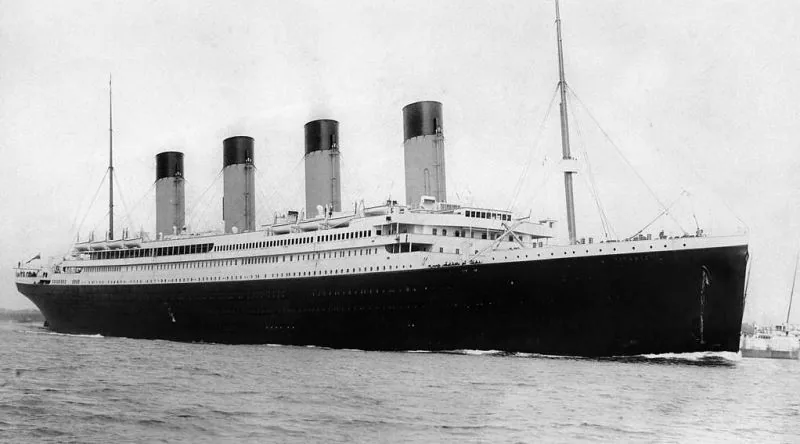
The Titanic sank in the North Atlantic on April 15, 1912, after an iceberg opened six watertight compartments to the sea, one more than the ship's design could survive. For over a century, people have blamed binoculars, brittle steel, and a reckless captain. The truth is quieter and more haunting: the ship was built to stay afloat with four compartments flooded, and the iceberg gave it six.
The Titanic struck an iceberg late on April 14, 1912, and sank early the next morning. The collision breached six watertight compartments, exceeding the four-compartment safety margin her designers had planned for. Roughly 1,500 people died.
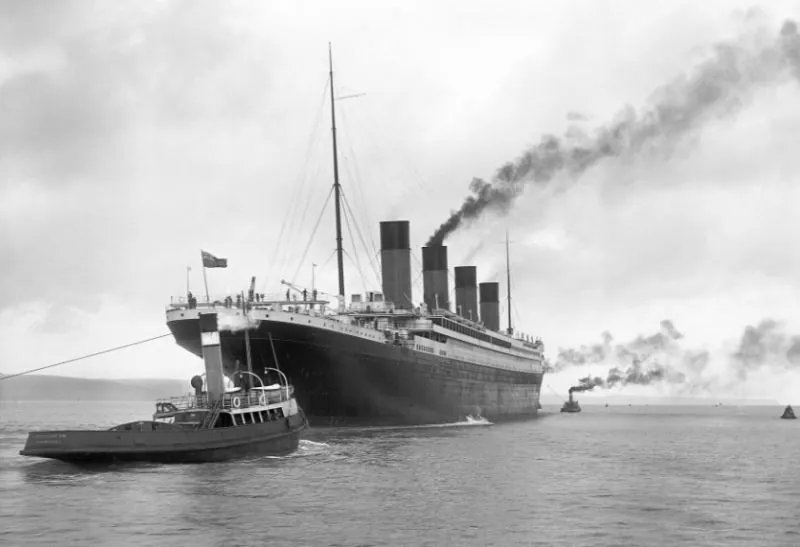
- The Titanic departed Southampton on April 10, 1912, and struck an iceberg in the North Atlantic at about 11:40 p.m. on April 14.
- The iceberg breached six forward watertight compartments, while the ship was designed to stay afloat with only four flooded.
- The ship sank at roughly 2:20 a.m. on April 15, 1912, less than three hours after the collision.
- Around 1,500 of the roughly 2,200 people aboard died, largely because there were not enough lifeboats for everyone.
- The British inquiry of 1912 concluded the ship sank because of the damage from the collision, not from any single flaw in construction or navigation.
Why the Titanic Sank: The Real Story Behind the Myths
On the night of April 14, 1912, the RMS Titanic was four days into her maiden voyage when a lookout in the crow's nest spotted a dark mass ahead. Within seconds the ship's hull was opened along six of her forward compartments, and by the early hours of April 15 the largest vessel afloat had slipped beneath the North Atlantic. More than a century later, the question of why the Titanic sank still gets answered with the wrong reasons: missing binoculars, brittle steel, a reckless captain racing for a record. None of those explanations holds up.
The real answer is narrower and stranger. The Titanic was a well-built ship for her era. Her Olympic-class design included sixteen watertight compartments separated by automatic doors, a system that could have kept her afloat in a wide range of collision scenarios. What killed her was not a flaw in the concept but a breach that exceeded the safety margin the design assumed. Six compartments flooded. The ship was engineered to survive four.
That single number, six instead of four, is the spine of the whole story. Everything else, the ice warnings that never reached the bridge, the engines thrown into reverse, the lifeboats that left half empty, flows from that arithmetic. The rivets, the binoculars, the wireless operators, all of it has been examined, argued over, and in most cases misunderstood.
This is the account that walks through each popular theory and shows what actually holds. By the end, the sinking of the Titanic stops looking like a freak accident caused by one missing pair of binoculars and starts looking like a chain of design limits, human decisions, and split-second timing that closed every escape route one by one.
The Binoculars Myth: What the Lookouts Could and Couldn't See
The missing binoculars aboard RMS Titanic are real and well documented. They were also not why the ship sank. When the British and American inquiries wrapped up in 1912, they pointed to a tangle of causes, and an empty binocular locker was never among the leading ones.
So where did this story get its grip? Partly from the drama of it. Two lookouts, Frederick Fleet and Reginald Lee, stood in the crow's nest on the night of April 14, 1912, staring into a darkness that gave them almost nothing to work with. There had been a pair of binoculars aboard, locked away, and the key was not with them.
Here is the part that gets oversimplified. The popular version says lookouts on ocean liners of that era simply did not use binoculars on night watches, that naked-eye observation was the practice. That claim is reported as too absolute. Naked-eye scanning was standard practice for night watches on many liners of the era, but the blanket assertion that no lookout ever used binoculars after dark is too absolute.
What actually stole the iceberg from them was the night itself. Weather conditions blurred the horizon line until sea and sky ran together with no seam to read. The iceberg did not announce itself as a white shape. It drifted as a black mass, merging into the dark water around it. Binoculars would have handed the lookouts a narrow, shaky tunnel of vision, and in that particular darkness, that may have been worse than nothing.
Treat the binocular shortage as a genuine gap in the ship's equipment, and a secondary one. It did not put the ice in the water. It did not push Titanic to 22 knots. It did not erase the warnings that never made it to the bridge with the urgency they deserved. The inquiries looked at all of it, and the loss of the ship came down to a collision of circumstances rather than one missing piece of glass.
Steel, Rivets, and the Myth of Bad Materials
Here is the version of why the Titanic sank that gets passed around most often: the steel was cheap, the rivets were junk, and the ship was doomed before it ever left Belfast. That story is tidy, satisfying, and mostly wrong.
Start with the rivets, because this is where the myth digs in deepest. The claim that Titanic's materials were directly responsible for the sinking is an oversimplification. Titanic's materials were broadly typical for the era, but the claim oversimplifies ongoing debates about rivet quality and steel brittleness, and not every liner used identical techniques. The giant wrought-iron rivets have drawn real scrutiny: research suggests they may have been weaker than ideal and prone to corrosion, and that they could have been a disadvantage during impact. But that finding is contested, and it does not prove much on its own. Those same rivets kept being used after Titanic, and they did not turn every collision into a catastrophe.
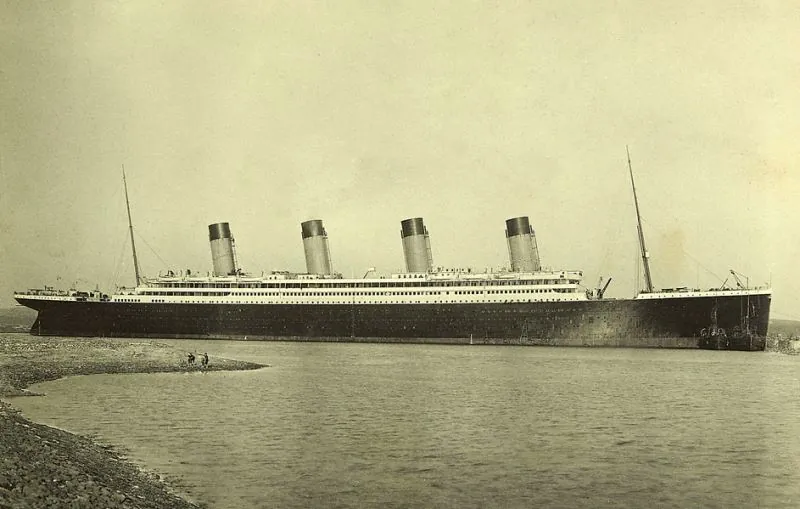
Then there is the argument that falls apart fastest. You will hear that Titanic's sister ships, Olympic and Britannic, were built with the same materials and techniques and survived several collisions, so the materials cannot have been the problem. That claim is false. Olympic survived several collisions, but Britannic sank in 1916 after striking a mine, so the idea that both sister ships survived several collisions simply does not hold. Britannic struck a naval mine laid by the German submarine U-73 in the Aegean Sea on November 21, 1916, and went down. Olympic is the one with the long, charmed career. She was finally withdrawn from service in 1935 and scrapped.
And the ship did break apart. Contrary to the popular version, the 1997 film did not invent that detail. Only a minority of witness accounts at the time said the ship split, which is why the idea stayed disputed for decades. Robert Ballard's 1985 discovery of the wreck settled it: Titanic broke in two.
Six Compartments: How the Titanic Exceeded Its Safety Margin
The Olympic-class ships were genuinely well built for their era. The British Wreck Commissioner's Inquiry of 1912 concluded that the watertight compartments and automatic doors aboard RMS Titanic were designed to keep her afloat in a wide range of scenarios. What actually doomed the ship was simpler and harsher: the damage exceeded the safety margin the design assumed. Six compartments opened to the sea, one more than the ship could survive.
After the disaster, her sister ships got the upgrades Titanic never had. Watertight bulkheads were extended up to B deck and fully capped, and a protective inner skin known as a double hull was fitted in some areas. Why weren't those features there from the start? Historians point to the speed race between ocean liner companies, the enormous space steam engines consumed amidships, and the fact that earlier collisions had been bow-first, so the safety features were designed around that kind of impact rather than a long side gash. These are plausible contributing factors often cited by historians, but the record supports them only as partial explanations.
The arithmetic of the flooding is brutal. As the story goes, if the iceberg had cut Titanic in five places instead of six and water had flooded only the first four compartments, the ship might not have sunk at all, or might have stayed afloat five to seven hours, long enough for Carpathia to reach her. That is a hypothetical counterfactual, and the specific figures are speculative rather than firmly established. Estimates of pump capacity and water ingress also vary widely in the technical literature. The commonly repeated figures, about two tons per minute pumped against seven to ten tons per minute entering through six cuts, are plausible but not reliably verifiable. It is documented that the crew had not conducted a full lifeboat drill. The specific claim that setting up pump hoses reduced speed and efficiency is less clearly established, and post-disaster safety improvements focused heavily on lifeboats, bulkheads, and watertight integrity rather than on pump distances and locations.
One persistent myth deserves burying. Nothing was stripped from the ship so first-class passengers could lounge in greater comfort. The only safety compromise made for the rich was the number of lifeboats, and even then Titanic carried 20 lifeboats, more than British regulations of 1912 required. Until half an hour before she went under, almost no one truly believed the ship would sink, and many passengers refused to board the boats at all. Many passengers were reluctant to board lifeboats early on, but the specific reference to a lifeboat accident a year or two earlier as a motivating memory is not a widely established explanation.
The Marconi Operators: Heroes, Not Villains
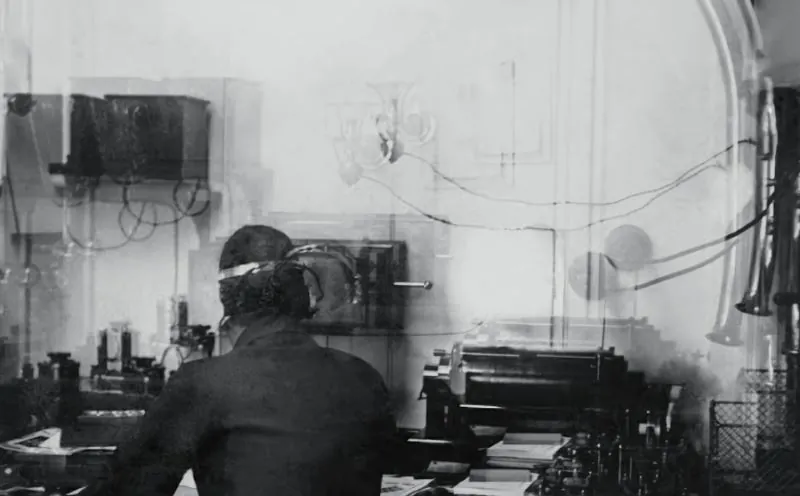
Jack Phillips and Harold Bride, Titanic's two Marconi wireless operators, have been remembered for more than a century as rude and arrogant, the men who supposedly brushed off an iceberg warning from the SS Californian with a curt "shut up, I'm busy." The truth about why the Titanic sank, though, is far more complicated than that popular image allows.
Marconi operators did use informal and sometimes blunt language, and phrases like "shut up, I'm busy" and "go to hell" were ordinary working jargon rather than evidence of a bad attitude. These men were the tech obsessives of their era, and they had built their own shorthand the same way any tight-knit group develops its own language. The claim that recent research specifically shows this is not verifiable with confidence, but it reframes the operators as professionals doing a demanding job rather than villains.
The more heroic version of their story, though, does not hold up cleanly either. There are accounts of Titanic's operators maintaining wireless equipment, and their distress calls were crucial to the rescue. The specific claim of an overnight repair, done contrary to the rules, that enabled 700 rescues is not well established.
Where the record is clear is on the warnings themselves. British and U.S. inquiries in 1912 found that ice warnings were not effectively communicated to the bridge. Icebergs were already known to be in the area, the route had been adjusted slightly south before departure, and there was broad confidence in the ship and its lookouts. That confidence, documented in the inquiries, helps explain why warnings did not get the priority they deserved.
One more thread worth pulling: the 1912 coal miners' strikes delayed the maiden voyage from March to April. The 1912 coal strike did affect Titanic's departure and coal supply, but the causal link to specifically dangerous iceberg conditions from the Labrador Current and tides is speculative, so treat it as a plausible contributing factor rather than a proven cause.
Murdoch's Maneuvers: The 37 Seconds That Sealed the Titanic's Fate
First Officer William Murdoch saw the iceberg, and in the seconds that followed he did what every trained sailor of his era would have done: he tried to steer around it. The British Wreck Commissioner's Inquiry in 1912 did not blame him for that choice. Historians still argue about it, because a head-on collision might have left the ship afloat, yet no officer on any bridge would deliberately ram an iceberg at 22 knots.
The maneuvers themselves are where the record gets slippery. The commonly accepted account is that Murdoch ordered hard-a-starboard and then full astern on the engines. The claim that he later said he turned hard-a-port to protect the stern from damage, with no witness to confirm it, is not clearly supported, so it stays in the realm of an unverified account rather than a documented fact.
What the engineers and hydrodynamic analysts point to is the consequence of reversing the engines. Once the propellers turned backward, the rudder lost its bite. Cavitation, the flow of water around the hull, and the sheer momentum of a 46,000-ton ship made the rudder's position almost irrelevant. It is true that reversing engines reduces rudder effectiveness, but the specific 37-second figure often cited to argue the ship was already beyond steering, and the claim that rudder position became entirely irrelevant, are not firmly established.
The iceberg was sighted too late, the ship was too large, and she was moving at roughly 22 knots. No clever maneuver could have saved her. Titanic was going to either strike head-on or take side damage, and the side damage is what she took.
That is the hard truth of the night of April 14, 1912. It was not a failure of seamanship in the ordinary sense. It was a failure of margin, and Murdoch was simply the man standing on the bridge when the margin ran out.
Frequently asked questions
Why did the Titanic sink on its maiden voyage?
The RMS Titanic struck an iceberg on the night of April 14, 1912, and sank in the early hours of April 15 during her maiden voyage. The iceberg breached six of her watertight compartments, one more than the design's safety margin allowed. At roughly 22 knots, the iceberg was sighted too late for a safe turn.
Was the lack of binoculars really a cause of the Titanic disaster?
The binocular shortage aboard Titanic is well documented, but the British and U.S. inquiries of 1912 concluded it was not the primary cause. Naked-eye observation was standard for night watches on many liners of the era, and weather conditions that blurred the horizon, plus the iceberg's dark mass against a dark sea, were more decisive factors.
Did poor-quality steel or rivets cause the Titanic to sink?
This is widely reported as an oversimplification. Titanic's materials were broadly typical for ocean liners of her era, and the inquiries did not identify construction quality as the direct cause. Debate continues over whether some wrought-iron rivets were weaker than ideal, but this remains an open question rather than a settled explanation.
How did the Marconi wireless operators affect the Titanic rescue?
Their distress calls were crucial to the rescue effort, and Carpathia reached the scene because of them. Claims that an overnight repair of a broken Marconi device, done contrary to the rules, directly enabled 700 rescues are not well established. The operators' conduct and the equipment's condition are documented, but that specific causal story remains unverified.
What did First Officer Murdoch do when he saw the iceberg?
William Murdoch ordered hard-a-starboard and then full astern. Some analyses suggest a head-on collision might have been survivable, but no sailor would intentionally strike an iceberg, and his attempt to avoid it was judged the correct response. The British Wreck Commissioner's Inquiry did not blame him.
How many compartments did the iceberg breach on the Titanic?
Six compartments were breached, which exceeded the ship's designed safety margin. Olympic-class vessels carried watertight compartments and automatic doors that would have kept Titanic afloat in many scenarios. The sinking resulted from damage that surpassed what the subdivision was built to absorb, not from a single design flaw.
What safety changes were made to Olympic and Britannic after the Titanic sank?
Following the disaster, watertight bulkheads on Olympic were extended up to B deck and fully capped, and double hulls were added in some areas. Britannic was built with these lessons incorporated from the start. Britannic later struck a mine laid by the German submarine U-73 in the Aegean Sea on November 21, 1916, and sank. Olympic served a long career, was withdrawn from service in 1935, and was subsequently scrapped.
Why did the SS Californian not help the Titanic?
Ice warnings were not effectively communicated to Titanic's bridge, partly because icebergs were already known to be in the area and the route had been adjusted slightly south before departure. Confidence in the ship and her lookouts ran high. The source material does not fully explain Californian's inaction that night. Editorial note: Details that remain unconfirmed, including the exact sequence of events in the final minutes, are presented as such.
Got a take on this? Add your voice to the conversation below →
No comments yet. Be the first.