Roosevelt and Atatürk: Letters Behind a 1937 Film
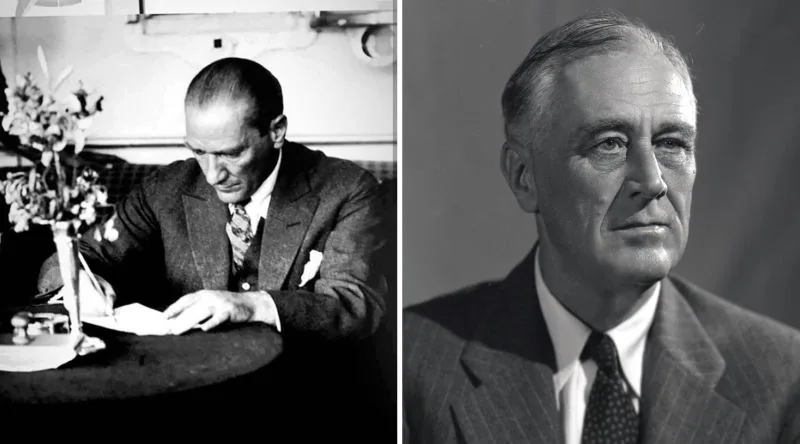
In 1937, a documentary about Turkey's modernization reportedly sparked a warm and revealing correspondence between President Franklin D. Roosevelt and Mustafa Kemal Atatürk. According to the account, Roosevelt wrote directly to the founder of the Turkish Republic to express his admiration after watching the film at the White House. The exchange captured a moment of genuine mutual respect, yet the two leaders never managed to meet in person, a missed opportunity that both men acknowledged with regret.
In 1937, President Franklin D. Roosevelt reportedly watched a documentary about Turkey's reforms and wrote a personal letter to Mustafa Kemal Atatürk expressing his deep admiration. Atatürk replied with warmth and gratitude. The correspondence revealed a shared vision of modernization, though the two leaders never met face to face.
- According to the account, American filmmaker Julien Bryan produced a documentary of roughly 90 minutes that captured Atatürk's sweeping modernization reforms.
- President Roosevelt reportedly screened the film at the White House and was so impressed that he sent a personal letter to Atatürk praising his leadership.
- Atatürk responded with an equally warm letter, expressing his own respect for the American president and his hope for stronger ties between the two nations.
- Atatürk sent Roosevelt a collection of Turkish postage stamps, which Roosevelt said he enjoyed viewing during his rare moments of rest.
- Despite the mutual admiration expressed in their letters, the two presidents never arranged a meeting, a fact Roosevelt reportedly noted with disappointment.
The Letter That Almost Wasn't Written
Franklin D. Roosevelt, who served as President of the United States from 1933 to 1945, reportedly exchanged letters with Mustafa Kemal Atatürk in 1937. The two men never met face to face, yet a documentary film about modern Turkey allegedly sparked a warm correspondence between them. What makes this story remarkable is how a reel of footage became the bridge between two leaders on opposite sides of the Atlantic. The tale begins with an American journalist named Julien Bryan, a documentary filmmaker who was reportedly invited to Turkey in September 1936 to capture the country's rapid transformation. According to the account, Bryan filmed extensively across Istanbul, Ankara, Izmir, Eskisehir, and Kayseri with state support. Atatürk, who was known to keep his distance from reporters, reportedly allowed Bryan to film him at Florya beach, including scenes with his adoptive daughter Ülkü Adatepe. The footage supposedly grew into a documentary of roughly 90 minutes showing Atatürk working at Çankaya Palace and chairing cabinet meetings. The story goes that Bryan had connections in American political circles, including with Roosevelt himself. As the narrative unfolds, this film about modern Turkey was screened at the White House on March 27, 1937, at a private event attended by the President. The screening, along with Bryan's commentary, reportedly lasted about two and a half hours. About ten days later, Roosevelt allegedly wrote to Atatürk expressing his admiration and his hope that the two men would one day meet. The letter, as the story goes, also mentioned a collection of Turkish postage stamps Atatürk had sent, which Roosevelt said he enjoyed viewing during his rare moments of rest.The Man Behind the Camera: Julien Bryan's Mission
In September 1936, an American journalist named Julien Bryan reportedly arrived in Turkey with a singular mission: to capture a rapidly modernizing nation on film. According to the account, he came at the state's invitation, though the specifics of that invitation remain unverified. What is clear is that Bryan, a documentary filmmaker with connections in Washington, was about to get access that few outsiders ever achieved.
With government support backing his project, Bryan traveled through Istanbul, Ankara, Izmir, Eskişehir, and Kayseri, cities that were themselves characters in the story of Turkey's transformation. The resulting footage, as the story goes, ran to roughly 90 minutes. But the real prize was something else entirely.
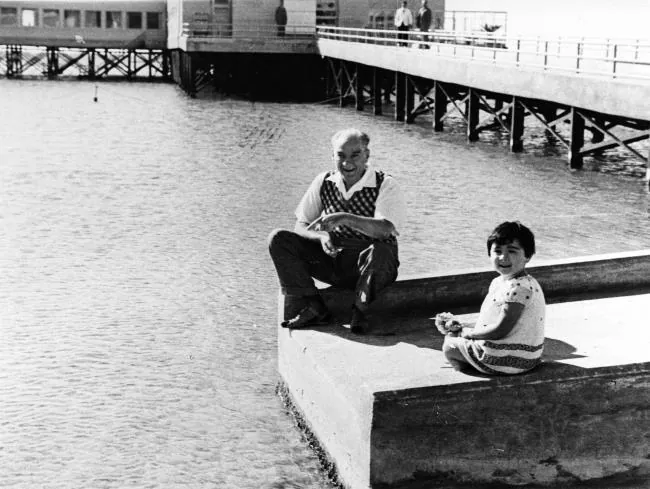
Mustafa Kemal Atatürk, the founder of the modern Turkish Republic, was famously wary of journalists. He kept his distance from the press. Yet Bryan managed to film him in moments that felt almost private: on the beach at Florya, walking along the sand, even in the water. The most famous frames, according to the account, show Atatürk playing with his adoptive daughter Ülkü Adatepe on that same shoreline. There is a softness in those images, a man who could chair a cabinet meeting with iron discipline one hour and laugh with a child the next.
Bryan also captured Atatürk at work inside Çankaya Mansion in Ankara, the presidential residence, and presiding over cabinet meetings. These were not staged propaganda shots. They were intimate glimpses of a leader in his element, and they would soon travel far beyond Turkey's borders.
Bryan was no stranger to political power. He counted influential friends in American circles, including President Franklin D. Roosevelt, who held office from 1933 to 1945. That connection would prove decisive. The film Bryan assembled, a portrait of a nation remaking itself, was headed for the most famous address in the United States.
A Private Screening at the White House
According to the account, on the evening of March 27, 1937, a reel of film flickered to life inside the White House before an audience of one very important man: Franklin D. Roosevelt, who had been President of the United States since 1933. The documentary, a portrait of modern Turkey assembled by the American journalist and filmmaker Julien Bryan, played for two and a half hours including Bryan's running commentary. Whether Roosevelt personally sat through the entire private screening is a detail that no reliable record confirms, but the story insists he was there, watching closely.
Bryan moved easily in American political circles, counting the President himself among his acquaintances. That connection mattered. The Turkish government had reportedly invited him to the country in September 1936 to capture a nation in furious transformation, and he had returned with footage shot across Istanbul, Ankara, Izmir, Eskisehir and Kayseri. Now that material was reaching the highest office in the land. According to the account, the screening was arranged as a private event with the President in attendance, and Bryan's narration stretched the presentation to roughly 150 minutes. No official White House log from that date survives to verify the gathering, so the details rest on the retelling rather than the archive.
What the film showed mattered as much as who watched it. Bryan had managed to record Atatürk in rare unguarded moments, including scenes of the leader playing with his adoptive daughter Ülkü on the sands of Florya beach. Those images, reportedly, left a vivid impression on Roosevelt. The screening planted a seed that would grow into the correspondence between the two leaders, a thread of diplomatic warmth that began with a letter written about ten days after that evening in the White House.
Roosevelt's Letter and Atatürk's Reply
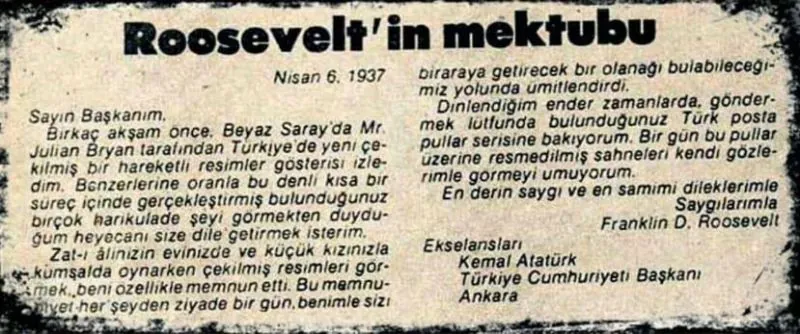
The Roosevelt Atatürk correspondence of 1937 remains one of those tantalizing "what if" moments in diplomatic history. According to the account, roughly ten days after that private White House screening, Franklin D. Roosevelt, who served as President of the United States from 1933 to 1945, put pen to paper and wrote to Mustafa Kemal Atatürk, the founder of modern Turkey. The story of these letters, which reportedly appeared in newspapers at the time, reveals two world leaders who genuinely wanted to meet, and never got the chance.
Roosevelt's letter, as the story goes, opened with his reaction to the film. He described watching it at the White House a few evenings earlier and feeling a surge of excitement at seeing the remarkable progress Turkey had made in such a short time. What seems to have touched him most, though, were the images of Atatürk at home and on the beach playing with his little girl. That personal glimpse, Roosevelt reportedly wrote, strengthened his hope that the two men would one day find the opportunity to meet face to face.
The American president also mentioned something rather tender. Atatürk had sent him a collection of Turkish postage stamps, and Roosevelt confessed that he spent his rare moments of leisure looking at them. He said he hoped to one day see the landscapes depicted on those stamps with his own eyes.
Atatürk's reply, reportedly dated April 5, 1937, matched that warmth. He expressed genuine joy at receiving the letter and gratitude for Roosevelt's kind words about modern Turkey's progress. But he also made a point to voice his own admiration for the United States. Both nations, he wrote, pursued the same ideal of general peace and human happiness. He closed with something close to longing: he awaited impatiently the day he could greet Roosevelt's "lovely and powerful personality" in Turkey.
Now, a word of caution. These letters are reported in the traditional account, and the full extent of the correspondence has not been independently confirmed. No reliable primary records exist to verify the exact dates or even the complete contents of what was exchanged. The story has been passed down, quoted in newspapers and history books, but scholars have not been able to pin down the originals. What we can say with confidence is that Roosevelt was president during this period, and that the idea of these two leaders exchanging warm words is consistent with what we know of both men's public positions in 1937.
The regret, however, is real. According to the account, after Atatürk's death in 1938, Roosevelt reportedly said: "My sorrow is that my intense desire to meet this man can no longer be realized." Whether those exact words were spoken is not confirmed, but the sentiment rings true. Two men who clearly respected each other across the Atlantic, who exchanged stamps and compliments and hopes for a meeting, never got to shake hands. The meeting they both wrote about with such anticipation simply never happened.
The Aftermath: A Missed Meeting and Lasting Legacy
The White House screening was never meant to be a one-time event. Julien Bryan, the American journalist who had captured Atatürk on film, reportedly carried his work across the United States, presenting it in lectures under the title "Turkey Reborn" like a cultural ambassador. According to the account, he kept showing the footage in various cities, spreading the image of a rapidly modernizing nation to American audiences.
But the most poignant moment came later, after Atatürk's death in 1938. Roosevelt reportedly expressed his regret in words that have echoed through the years: "My sorrow is that my intense desire to meet this man can no longer be realized." The quote is widely attributed to the president, though its authenticity cannot be confirmed from primary sources. What is certain is that the two leaders never did meet face to face, despite the warmth of their exchange.
As for the stamps Atatürk sent, their fate speaks to the formalities of presidential protocol. Gifts to US presidents are officially logged and become government property, meaning presidents cannot keep them privately. The Turkish stamps are likely sitting in the White House archive, catalogued and preserved, a quiet reminder of the correspondence that promised so much more. The what-if of their meeting remains one of history's gentle tragedies, a connection forged in letters and film but never completed in person.
Frequently asked questions
What prompted Roosevelt to write to Atatürk in 1937?
Franklin D. Roosevelt, who served as U.S. President from 1933 to 1945, was reportedly moved by a documentary about modern Turkey that was screened at the White House. The film, shot by American journalist Julien Bryan, showed the sweeping reforms transforming the young republic. Roosevelt was so impressed by what he saw that he felt compelled to reach out to Mustafa Kemal Atatürk directly.
Who was Julien Bryan and how did he film Atatürk?
Julien Bryan was an American journalist and filmmaker who was reportedly invited to Turkey in September 1936 to document the rapidly developing nation. According to the account, he captured Atatürk at Florya beach, including scenes with his adoptive daughter Ülkü Adatepe, as well as footage of the leader working at Çankaya mansion and chairing cabinet meetings. The story says these sessions produced a documentary of roughly 90 minutes.
What did Roosevelt say in his letter to Atatürk?
Roosevelt praised Atatürk's remarkable achievements in a relatively short time and expressed particular joy at seeing images of the Turkish leader at home and playing with his daughter on the beach. He mentioned enjoying the collection of Turkish postage stamps Atatürk had sent him, and he voiced a strengthened hope that the two men would one day meet face to face.
How did Atatürk respond to Roosevelt's letter?
Atatürk replied warmly, thanking the American president and expressing his own sincere desire to meet. He noted that both nations shared the same ideal of peace and human happiness. The Turkish leader said he looked forward to the day he could greet Roosevelt in Turkey, closing with genuine respect and good wishes for the American people.
Why did Roosevelt regret not meeting Atatürk?
After Atatürk's death in 1938, Roosevelt reportedly lamented that his intense desire to meet this man could no longer be realized. The quote attributed to him expresses deep sorrow that the meeting he had hoped for would never happen. While the exact wording cannot be confirmed from primary sources, the sentiment reflects the genuine connection established through their exchange.
What happened to the Turkish stamps Atatürk sent to Roosevelt?
Gifts sent to U.S. presidents are officially logged as government property rather than personal possessions. This means the stamps Atatürk sent to Roosevelt would have been recorded and retained by the government. According to the account, they are likely held somewhere in the White House archive, though their specific location has not been verified. Editorial note: Any facts which remain unconfirmed are presented as such (hedged).
Got a take on this? Add your voice to the conversation below →
No comments yet. Be the first.