Prostitution in Ottoman Istanbul: A 16th-Century History
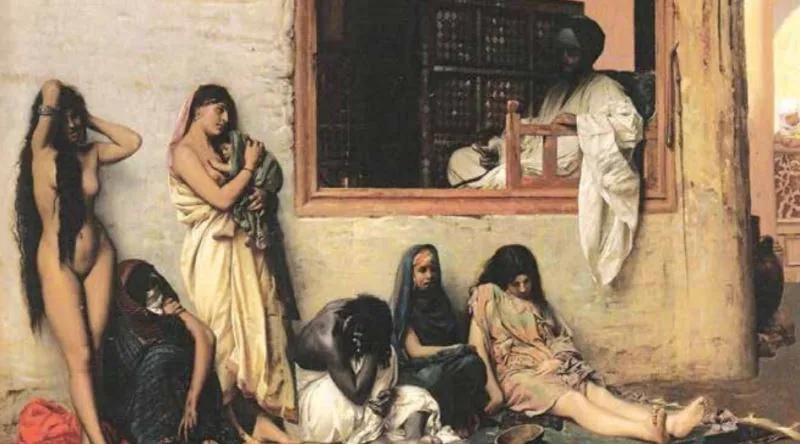
Prostitution in Ottoman Istanbul was a persistent, complex reality that stretched from the 16th-century slave trade to the regulated brothels of the 19th century and the crisis-driven streets of World War I, shaping the city's social fabric across four centuries. This is a story of poverty, power, and survival, where the lives of enslaved women, desperate widows, and marginalized men converged in the shadows of the imperial capital, revealing a side of Ottoman society rarely discussed in polite company.
Prostitution in Ottoman Istanbul existed continuously from the 16th century onward, initially tied to the slave trade and later evolving into regulated brothel districts. By the 19th century, the state attempted medical oversight, while wartime poverty in the early 20th century drove more women into the trade. The practice persisted despite periodic crackdowns and moral condemnation.
- In the 16th century, prostitution in Ottoman Istanbul was closely linked to the slave trade, with enslaved women often forced into sexual labor in the city's taverns and bathhouses.
- The Galata district, across the Golden Horn from the old city, became a well-known center for brothels and illicit entertainment during the Ottoman era.
- Sultan Selim III, ruling from 1789 to 1807, is often associated with a crackdown on prostitution, though historical evidence does not confirm he was uniquely zealous compared to other sultans.
- In 1879, the Ottoman state introduced formal regulations for the control of venereal disease, requiring medical inspections of sex workers in Istanbul.
- During World War I, economic hardship and the displacement of women drove a visible increase in prostitution in Istanbul, prompting new official responses.
The 16th Century: When Slave Markets Fed the Brothels
In the 1500s, prostitution in Ottoman Istanbul was inseparable from the slave trade, with women displayed and sold in the city's slave markets before being purchased by merchants or brokers who pushed them into sex work. The Janissaries, the empire's elite infantry corps, stood out as some of the most devoted customers of this shadowy economy.
The trade clustered in specific corners of the city: bekar odaları, the cramped bachelor rooms where single men lodged; meyhanes, the taverns that hummed with wine and whispers; and the genelevs, the brothels themselves. These were the spaces where the city's illicit pleasures played out, often within earshot of the pious institutions that defined Ottoman public life.
The 16th-century writer Latifi captured the scene with a sharp pen in his work Evsaf-ı İstanbul, a portrait of the city's districts. He singled out Galata, the Genoese-founded quarter across the Golden Horn, describing it as unrivaled in both wine and prostitution. His warning was blunt: a healthy Muslim man who walked into Galata would come out devastated, his virtue shattered by what he found there.
The Ottoman government's stance on this illegal sector was remarkably hands-off. As long as prostitution stayed out of public view and no special complaint arose, the authorities generally let it be. That tolerance had its limits, though. Certain sultans did push back, and some accounts suggest Selim III, who reigned from 1789 to 1807, took a particularly hard line against the trade. Yet despite any efforts, the sector never disappeared; it simply adapted and endured.
A Traveler's Exaggerated Count and a Sultan's Failed Crackdown
By the 1600s, foreign visitors were already trying to put a number on Istanbul's sex trade, and the Scottish traveler William Lithgow came back with a whopper: roughly 4,000 brothels operating in the city, serving both Muslim and Christian clientele. That figure is almost certainly inflated and widely disputed by historians. Even so, it points to a sector that was impossible to miss, woven into the daily life of a bustling imperial capital.
The Ottoman government's default stance toward prostitution in Ottoman Istanbul was a policy of willful blindness: stay out of it unless the activity became a public scandal or some special circumstance forced their hand. That hands-off approach had its exceptions, though. Some accounts single out Sultan Selim III, who ruled from 1789 to 1807, as a monarch who battled the trade fiercely, but historical records do not confirm that he was uniquely zealous compared to other sultans. What is certain is that no crackdown, however vigorous, ever came close to wiping the sector out. The brothels, the taverns, and the back-alley transactions simply adapted and endured, shifting shape with each new wave of enforcement.
1879: The State's First Attempt to Regulate What It Couldn't Ban
By the 19th century, the Ottoman Empire was bleeding strength, and its economy was spiraling toward collapse. As the empire weakened, prostitution in Ottoman Istanbul didn't just persist; it exploded, spreading through neighborhoods with an urgency that frightened even the most seasoned officials. The clearest sign of this surge wasn't a census or a police report. It was the sudden appearance of hospitals built specifically to treat venereal diseases, institutions the city had never needed before.
The breaking point came in 1879, when the Ottoman government issued the Emraz-ı Zühreviye Nizamnamesi, the Venereal Diseases Regulation. The goal was modest: bring brothels under some kind of control and stop contagious diseases from ravaging the population. State-appointed inspectors were now authorized to walk through brothel doors on a regular schedule, checking conditions and demanding compliance. Women working in these establishments were required to submit to routine medical examinations at the Nisa Hospital, a women's venereal hospital that had opened in Beyoğlu, the district where the trade thrived most openly.
It was a landmark moment, the first time the state stopped pretending the trade didn't exist and instead tried to manage its damage. The regulation didn't ban prostitution in Ottoman Istanbul; it legitimized a system of oversight, acknowledging that the city's authorities could no longer look away. Inspections, mandatory checkups, designated hospitals. These were the tools of a government that had given up on eradication and settled for containment.
World War I and the Collapse of a Society
By the early 20th century, the empire's final decades, prostitution in Ottoman Istanbul had spiraled completely out of control. Escalating social and economic crises, endless wars, and the constant conscription of men into the army weakened family ties, pushing poverty-stricken Ottoman women openly onto the streets.
Ahmet Rasim, a prominent writer and observer of the era, captured this devastation in his work Fuhş-i Atik, serialized in 1922. He lamented the moral decay, the spread of prostitution, and the proliferation of disease, attributing it all to the destruction caused by World War I. Rasim, who witnessed the collapse firsthand, also offered a striking metaphor: he compared prostitution to a lock and alcohol to the key that opens it. His words painted a picture of a society unraveling at its seams, where hunger and desperation had become the currency of survival.
Refik Halid Karay, another writer of the period known for exploring moral decay in his works, wrote in his novel Sonuncu Kadeh a haunting observation. He described how, during World War I, prostitution driven by hunger began to take children from Muslim homes for the first time. As he wrote, girls filled the secret market, and brokers proudly presented them, their names now known and their innocence traded openly. This specific claim, however, cannot be independently verified without the full text of the novel, so it remains part of the period's literary testimony rather than confirmed historical record.
What is certain is that the Ottoman government, despite prostitution being illegal, never managed to suppress the trade. The state's approach had long been one of non-interference unless the activity became public or there was a special reason to act. In the empire's weakened final years, prostitution became a mirror of social and economic crisis, a grim reflection of a society struggling to hold itself together.
Got a take on this? Add your voice to the conversation below →
No comments yet. Be the first.