Medieval Japan Daily Life: Harsh Realities of Samurai Era
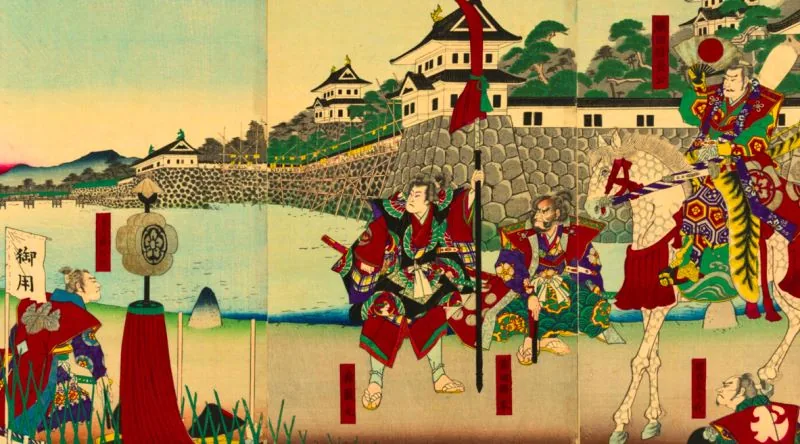
Medieval Japan daily life (1185-1606) was a relentless struggle defined by rigid social ranks, chronic warfare, and scarce resources. For the vast majority of commoners, survival meant backbreaking labor, meager diets, and little personal freedom, while a tiny samurai elite wielded absolute power over life and death. This was a world where a peasant's worth was measured in rice, a woman's voice was barely heard, and famine could erase entire villages in a single season.
From the Kamakura period through the end of the Sengoku era, medieval Japan daily life was shaped by a strict warrior-led hierarchy. Commoners farmed and paid heavy taxes, samurai enforced order through force, and women held limited legal rights. Hunger, disease, and violence were constant companions for most people.
- The Kamakura period (1185-1333) established the samurai class as the ruling elite of medieval Japan.
- Commoners in medieval Japan daily life worked as farmers, artisans, and merchants under strict feudal obligations to local warlords.
- Women in medieval Japan could inherit property in early periods, but their legal status eroded significantly by the 16th century.
- Medieval Japanese food centered on rice, millet, vegetables, and fish, with meat rarely consumed due to Buddhist prohibitions.
- Frequent famines and epidemics, such as the great famines of the 13th and 15th centuries, repeatedly devastated the population.
Medieval Japan Daily Life: A World of Contrasts
Picture a Japan split cleanly down the middle. On one side, silk robes in brilliant colors, imported porcelain on the table, and evenings at the theater. On the other, rough cotton clothing, meals of plain rice and fish, and the constant grind of famine, disease, and civil war. That was the reality of medieval Japan daily life during the era roughly spanning 1185 to 1603, and the gap between the haves and have-nots was staggering.
Historians generally mark the medieval period as ending in 1573 or 1603, when the country began consolidating under unified rule. The wealthy elite of this time wore layered silk garments that shimmered with embroidered flowers, birds, and landscapes. They ate from porcelain sets that had traveled across the sea from China, sipped green tea from lacquered cups, and could afford to travel freely across the archipelago. Commoners, by contrast, dressed in simple hemp or, after the late 14th century, cotton, and counted themselves lucky to have rice and fish on the table at all. Their lives were punctuated by crop failures, outbreaks of smallpox and leprosy, and the ever-present threat of violence from local warlords.
What might surprise you is how much of that medieval world still lingers today. The green tea drunk after meals in the 13th century remains a daily ritual across Japan. The board game go, played with black and white stones on a wooden grid, still has millions of devotees worldwide. Fine chopsticks, crafted from lacquered wood or ivory, are still treasured possessions in many homes. And every July or August, families gather for the Obon festival to honor their ancestors, a tradition that has survived more than seven centuries, keeping the medieval connection to the spirit world alive.
The Rigid Class System of Medieval Japan
Medieval Japan's social ladder looked very different from what most people imagine, and the picture painted by the source material is a fascinating one. According to the account, at the very top stood the samurai and bushi, the warrior class, followed by land-owning aristocrats, then priests, farmers and peasants, with artisans and merchants at the bottom. Interestingly, merchants were actually ranked below peasants in this reported hierarchy, a detail that seems backwards to modern eyes.
This particular ordering, as the story goes, leaves out some important figures. The emperor and the court nobles, who technically sat above everyone else in the real social structure, don't appear in this version of the pyramid. Priests, too, were actually outside the secular class system entirely, though the source places them within it. Below even the merchants existed an outcaste class, people who handled the work nobody else would touch: butchering animals, working leather, preparing funerals, and performing as actors. These were the invisible hands of medieval Japanese society, essential yet completely shunned.
The system wasn't completely locked, though. During periods of intense civil war, peasants could sometimes rise into the warrior class, earning their place through skill and bravery on the battlefield. To keep this from happening too often, marriage laws were used as a barrier, restricting people to marrying only within their own class. It was a clever, if harsh, way to keep the social order intact, ensuring that the medieval Japan daily life experience of a farmer stayed firmly separated from that of a samurai.
Marriage, Women, and the Samurai Wife
Marriage in medieval Japan split sharply along class lines, and the differences tell you everything about who held power. Among the upper classes, a wedding was a formal, carefully arranged affair. Out in the countryside, though, the rules loosened considerably, and young couples in rural areas could take part in something called yohai, the "night visit," which allowed premarital sexual relations between partners who were courting.
That rural flexibility stood in stark contrast to the rigid expectations placed on women in warrior households. In ancient Japan, a newly married man typically moved in with his wife's family. By the medieval period, that custom had reversed, and a wife was expected to relocate to her husband's home. Once there, her duties went far beyond cooking and cleaning. When a samurai was away, his wife was expected to defend the household in his absence. To drive the point home, brides married into samurai families received a symbolic knife, a kaiken, at the wedding ceremony as a reminder of that duty. Many samurai wives went further and trained in martial arts themselves, preparing for the day they might need to protect their home with more than just a ceremonial blade.
The source material claims that divorce in this era was always initiated by the husband, who only needed to write a letter to end the marriage. Historical records, however, show that women could also initiate divorce during the medieval period, so the reality was more complex. What is certain is that the stakes were brutally high for wives. Under samurai law, adultery by a woman could lead to her execution, and the threat was no idle one.
The 'Ie': Family, Inheritance, and Loyalty
In medieval Japan daily life revolved around a single structure: the ie, a corporate household that functioned as one economic and social unit. This was never just a nuclear family. The ie included parents, children, grandparents and elders, blood relatives beyond the immediate circle, household servants, and even the servants' own children, all living and working under one roof.
The ie was not owned by any single person. It belonged to the family line itself, stretching backward and forward through generations, and the people inside it were bound by three principles that governed every decision and duty: obligation, obedience, and loyalty. These three values dictated who ate first, who worked which fields, and who had the final say in a dispute.
Inheritance typically passed to the eldest male child, but the system had a flexible edge. If a household had no male heir, an outsider male could reportedly be brought in as head of the household, acting as its manager and master. According to the original account, this practice varied across regions and periods, and the specific term for such a man is not firmly confirmed in all records. The adopted son's wife would take her place as the senior woman of the house, and his job was to run the estate's affairs as if he had been born to it. Adoption of boys for this purpose was also practiced, making the ie a remarkably adaptable structure when the family line faced extinction.
Education: For the Few, Not the Many
In medieval Japan, formal schooling was a rare privilege, reserved mostly for aristocrats, Buddhist temple students, and the rising samurai class, while farmers' and merchants' children learned their trades at home from their families. If you were born into a farming or merchant household, your classroom was the field or the shop floor, where you picked up the practical skills you would use for the rest of your life. Formal education, with its books and calligraphy brushes, simply was not part of that world.
For those who did pursue learning, the path often began with a private tutor or in classes held at Buddhist temples. In 1439, a samurai named Uesugi Norizane revived the Ashikaga school, which went on to train about 3,000 students in the 16th century. The curriculum focused on two subjects considered essential for a warrior: military strategy and Confucian philosophy. Students who excelled also helped build a library of classical Chinese and Japanese literature, which served priests and scholars before becoming a center of learning during the Edo period.
One such library, the Kanazawa library, was founded in 1275 by Hojo Sanetoki. Educated priests often found themselves handling paperwork far removed from religious duties, serving as the literate backbone of medieval administration. Another source of learning appeared in the 16th century, when Christian missionaries established their own schools, adding yet another thread to the fabric of medieval Japan daily life.
Markets, Shopping, and Imported Goods
By the 14th century, marketplaces were springing up across Japan, and many towns began holding them weekly or three times a month. Before this shift, getting your hands on food meant dealing directly with farmers or traveling merchants, but the arrival of regular markets changed the rhythm of medieval Japan daily life in a fundamental way. The timing was no accident, either. Just before markets took hold, better farming tools had made harvests more reliable, which meant there was finally enough surplus to make regular trading worthwhile.
Barter was still the everyday way of doing business, with goods swapped directly for other goods. But coins were creeping into circulation more and more, and local rulers actively encouraged the trend. They backed the markets because standardization served their own interests: with a fixed place for trade, they could enforce consistent weights and measures, and more importantly, they could tax what was sold. Beyond food, the stalls offered pottery, tools, cooking equipment, and household furnishings. In the capital and other large cities, the selection went far beyond local wares. There you could find Chinese silk, Korean cotton, Ming porcelain, and spices shipped in from Thailand and Indonesia, luxuries that would have been unthinkable for a rural villager to encounter.
Food and Diet: What Medieval Japanese Actually Ate
Contrary to what some accounts claim, medieval Japan's upper classes and priests did not eat just twice a day while commoners ate four times. In reality, the wealthy ate more frequently, while those lower on the social ladder made do with fewer meals throughout the day.
Meals were strictly segregated by gender. Men typically did not sit down to eat with women, and the serving order followed a rigid household hierarchy. A wife served her husband his meal, while the eldest daughter-in-law was responsible for serving the eldest woman of the house. Food arrived on a tray placed before the person eating, and meals were consumed with chopsticks made of lacquered wood, precious metal, or even ivory.
Buddhist influence ran deep among the aristocratic class, making meat consumption socially inappropriate for many of them. Samurai and commoners faced no such restriction and ate meat whenever they could get their hands on it. The idea that three servings of rice per person per day was ordinary does not hold up, though. Rice was a luxury item. Commoners relied on other grains, and a daily ration of three rice servings would have been far beyond what most people could afford.
What most people actually ate were vegetables, sea vegetables, seafood, and fruit. Soy sauce, wasabi, sansho (a spice made from the seeds of the Japanese prickly ash tree), and ginger added flavor to these everyday dishes. After meals, people drank green tea brewed from hard leaves, a distinctly different drink from the powdered tea used in formal tea ceremonies. Sake, the rice wine, was enjoyed by everyone but typically saved for special occasions rather than consumed daily.
Clothing and Appearance: Status on Display
In medieval Japan daily life, the kimono was the great equalizer in shape but a brutal divider in fabric. Upper-class women wrapped themselves in silk kimonos cinched at the waist with an obi belt, while farmers and laborers made do with plain linen versions in muted colors until the late 14th century, when cotton finally became accessible to everyone.
The layers told a story of rank before a single word was spoken. Women wore long uchiki robes during formal training, while men favored short haori jackets or the longer uchikake. By the late medieval period, samurai adopted the kamishimo, a matched set of sleeveless jackets and trousers that practically shouted their warrior status. Better garments carried embroidery of flowers, birds, and landscapes; the cheaper ones stayed bare.
Footwear followed the same logic. Almost everyone slipped into zori sandals, which could be carved from wood, stitched from leather, or twisted from rope depending on what you could afford. Country folk facing harsh winters pulled on zunbe, boots woven from straw. Above it all sat the kasa, a straw hat that came in many shapes, some of which quietly announced the wearer's standing to anyone who knew how to read it.
Beauty rituals were just as coded. Both men and women prized a pale complexion and dusted their faces with oshiroi, a white powder. Women painted their lips in a small dot using beni, a red flower paste, and shaved their natural eyebrows only to draw fresh ones higher up the forehead. Married women and samurai darkened their teeth in a practice called ohaguro, a mark of maturity and status that struck outsiders as startling but signaled respectability at home.
One detail from the original account deserves a correction. The claim that medieval criminals had their offenses tattooed across their faces is a later Edo-period practice, not something from the medieval centuries. Tattoos as punishment belong to the 17th century and beyond, so if you picture a medieval Japanese street, you would not have seen branded faces advertising crimes.
Entertainment and Leisure: From Sumo to Noh
When the workday ended in medieval Japan, the fun began. Shinto shrines hosted sumo wrestling matches, where powerful men clashed in sacred grounds, though the sport would only reach wider audiences in later centuries. Hawking with trained birds, fishing in quiet rivers, and even cockfighting filled afternoons with competitive spirit.
The Japanese knew how to play with balls long before modern sports arrived. Kemari, a kicking game played by aristocrats in flowing robes, tested footwork and grace, while temari involved tossing a hand-stitched ball with precision. Children and adults alike enjoyed hanetsuki, a badminton-like game played with wooden paddles and a feathered shuttlecock, especially during New Year celebrations. Martial arts practice doubled as both discipline and entertainment, sharpening skills that might one day save a life on the battlefield.
Inside the home, two board games dominated the scene. Go challenged two players to place black and white stones across a grid, each trying to control more territory than the other. Shogi, a cousin of chess, brought its own strategic depth with pieces that could be dropped back into play after capture. These games tested the mind the way sword fighting tested the body.
Card games carried their own special appeal, though they looked nothing like Western decks. Karuta featured poetry written across its cards, turning literature into a competitive memory game. Hanafuda displayed flowers and animals instead of numbers, with beautiful illustrations that made each hand feel like holding a piece of art. Gambling often accompanied these card games, adding a risky edge to an evening of play.
Theater lovers found their escape in Noh, which rose to popularity after the 14th century. Masked actors moved slowly across the stage, their deliberate gestures accompanied by music, praising the gods and telling stories of folk heroes. The masks themselves were works of art, carved to show everything from joy to rage with a subtle tilt of the head.
Children had their own world of play. Tops spun across packed dirt floors, dolls were dressed and cared for, and kites danced in the wind above villages and castles alike. These simple toys brought joy to medieval Japan daily life, connecting generations through play that needed nothing more than string, wood, and imagination.
Travel and Transportation: Dangerous Journeys
Getting anywhere in medieval Japan meant confronting mountains first. The country's rugged, steep terrain made roads scarce and journeys slow, so people planned their travel around the landscape itself. For most of the medieval period, which roughly spanned the late 1100s through the early 1600s, walking was the only realistic option for the vast majority of the population.
If you needed to reach a distant village or city, you typically waited by the roadside for a passing group of travelers, then paid a hefty fee to join them. These convoys offered safety in numbers, but the cost could be steep. Merchants and farmers with goods relied on horse-drawn carts to move their wares, while urgent messages were carried by messengers who pushed their horses to a fast gallop.
Water routes carried both people and cargo, and the wealthy could avoid the dust and strain of the road entirely by riding in a kago, a palanquin carried on the shoulders of bearers. For those with ambitions beyond the islands, overseas journeys led to Korea and China, where traders exchanged goods and priests visited monasteries, returning with new knowledge to share back home.
Every journey carried real risk. Bandits lurked along mountain passes and forest roads, ready to strip travelers of their belongings. At sea, the Wako pirates prowled the waters, raiding ships and coastal settlements alike. In medieval Japan daily life, a simple trip could quickly turn into a fight for survival, and most people thought twice before leaving home.
Death, Burial, and the Obon Festival
Life in medieval Japan daily life came with a hard stop, and the way people faced that ending reveals a lot about how they lived. The medieval period in Japan, spanning roughly from 1185 to 1606, was no picnic, and the constant threats of famine, war, and disease kept mortality rates high. While some accounts suggest that average life expectancy in Japan reached 50 years compared to 40 in Western Europe, those numbers remain speculative and hard to verify for such a turbulent era.
People battled relentless famines, struggled to get enough vitamins from a rice-heavy diet, endured near-constant warfare, and faced devastating illnesses like smallpox and leprosy. When death finally came, contrary to what some popular accounts claim, cremation was not the most common method for the general population. Burial was actually the standard practice for most people, with cremation reserved largely for the elite and Buddhist monks.
As for what happened to the soul afterward, beliefs varied. According to the original account, some believed the deceased traveled to a place called "shigo no sekai," or dark lands, though this specific term isn't confirmed in historical records. What we know for certain is that Buddhist teachings offered multiple possibilities: the soul might reach a pure land, face hellish punishment, or return through reincarnation. These beliefs shaped how families honored their dead, and nowhere was that more visible than during the Obon festival.
Every July or August, families across Japan still gather to honor their ancestors during Obon, a tradition that stretches back to these medieval roots. The belief held that ancestral spirits would return to visit their living families for three days, a time filled with offerings, lanterns, and quiet remembrance. It was a moment when the boundary between the living and the dead felt thin, and families made sure their ancestors felt welcome in the homes they once inhabited.
Frequently asked questions
What was daily life like for commoners?
For most people in medieval Japan daily life meant a constant struggle for survival against famine, disease, and civil war. Commoners wore cotton clothing, ate rice and fish, and worked from dawn to dusk, while upper classes enjoyed colorful silk garments, imported porcelain, and theater performances that commoners could only dream of attending.
How did the class system work?
Medieval Japanese society was rigidly stratified, with the emperor and court nobles at the very top, followed by land-owning aristocrats, then farmers, artisans, and merchants at the bottom. Priests stood outside this secular hierarchy, while an outcaste class handled tasks like butchering and leatherworking that others refused. During civil wars, some peasants could rise to warrior status, though marriage laws restricted movement between classes.
What rights did women have?
Contrary to the popular version that medieval Japanese women were completely powerless, they actually held significant rights to inherit property, own land, and even initiate divorce. A samurai wife was expected to defend the home in her husband's absence and received a symbolic knife at her wedding as a reminder of this duty, and many samurai women trained in martial arts.
What did people eat?
Rice was a staple food in medieval Japan, though commoners did not eat three servings of it daily as some accounts suggest. The typical diet included vegetables, sea foods, and fruit, with meat eaten by samurai and commoners when available. Aristocrats avoided meat due to Buddhist influence, and men typically ate separately from women, with wives serving their husbands during meals.
How was education structured?
Formal education in medieval Japan was reserved for aristocrats, temple students, and the rising samurai class, while farmers and merchants trained their children at home for the work they would do for life. The Ashikaga school, founded in 1439 by samurai Uesugi Norizane, trained about 3,000 students in the 16th century in military strategy and Confucian philosophy. The Kanazawa library, established in 1275 by Hojo Sanetoki, preserved classical Chinese and Japanese literature.
How did people travel?
Most travel in medieval Japan was done on foot, which made journeys extremely dangerous due to bandits on land and Wako pirates at sea. The wealthy rode in kago palanquins carried by bearers, while water routes carried both people and goods. Those who could afford it waited for traveling groups to pass through their region and paid high fees to join them for safety.
What were death and burial customs?
According to the original account, cremation was the most common burial method in medieval Japan, though records suggest this practice was actually more typical for the elite than for the general population. Many believed the deceased's soul traveled to dark lands and could visit the living at intervals, while Buddhists envisioned pure lands, hellish realms, or reincarnation. The Obon festival, held annually in July or August, honors deceased ancestors, with spirits believed to visit their families for three days.
Got a take on this? Add your voice to the conversation below →
No comments yet. Be the first.