Phantom Time Hypothesis: The 297 Missing Years
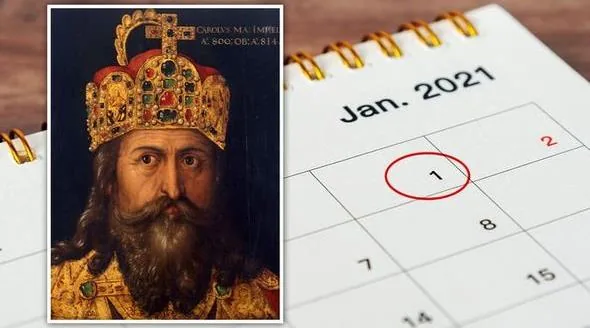
The Phantom Time Hypothesis is a claim by German journalist and author Heribert Illig, put forward in 1991, that roughly 297 years of the early Middle Ages never actually happened. In his telling, the years 614 to 911 were fabricated, and rulers like Charlemagne and Otto III were invented or backdated to serve a political agenda. It sounds like a thriller: a medieval emperor and a pope quietly rewriting the calendar. Most historians treat it as fiction, and the reasons why are just as interesting as the theory itself.
The Phantom Time Hypothesis is Heribert Illig's 1991 claim that about 297 years of the Middle Ages, roughly 614 to 911, were invented. Illig argued that Emperor Otto III and Pope Sylvester II manipulated the calendar and historical records. Historians overwhelmingly reject the idea, pointing to independent records from many cultures that fill those centuries.
- Heribert Illig, a German journalist and author, first published the Phantom Time Hypothesis in 1991.
- The theory holds that the years 614 to 911 were fabricated, a span of about 297 years.
- Illig claimed that Emperor Otto III and Pope Sylvester II were central to the supposed deception.
- The theory tries to explain the Gregorian calendar's 10-day correction, which historians attribute to accumulated calendar drift.
- Mainstream historians reject the hypothesis, citing Chinese, Islamic, and Byzantine records that document the same period.
The 297 Years That Never Happened
In 1991, a German journalist and author named Heribert Illig put forward a claim wild enough to make you stop mid-sip: that roughly 297 years of the early Middle Ages, spanning AD 614 to 911, simply never took place. Not lost. Not poorly recorded. Fabricated, wholesale, and slipped into the record.
Read that again and let it land. Nearly three centuries of European history, the stretch most of us picture when we hear "the Middle Ages," quietly erased from the timeline. Illig was not a medievalist. He was a writer and editor, a man with a taste for revising accepted dates, and that is exactly what makes the proposal so strange to sit with.
His version of events goes something like this. Illig claims that Holy Roman Emperor Otto III, Pope Sylvester II and possibly Byzantine Emperor Constantine VII conspired to redesign the Anno Domini dating system after the fact, placing themselves near the symbolic year AD 1000 to legitimize Otto's claim to imperial power. In his account, they pulled it off by changing documents, misrepresenting evidence and outright forging records. In this telling, the entire Carolingian Empire, Charlemagne included, would be a fabrication, and the phantom years were grafted onto the early Middle Ages to fill the gap.
Illig had been circling big chronological questions for years. Before he ever turned to the medieval period, he published proposals in Germany calling for a revision of prehistoric and ancient Egyptian chronologies, often alongside other independent researchers. The Phantom Time Hypothesis was the boldest stop on that road.
His ideas found real space in the German media through the 1990s. Then came the book: Das erfundene Mittelalter, "The Invented Middle Ages," published in 1996. Historians did not nibble at the edges of it. They rejected it as fundamentally flawed, and the rejection was close to universal. Even the encyclopedic summary of the hypothesis notes plainly that the evidence contradicts it and that it never earned historians' support.
And yet the question nags. How does a claim this large get built in the first place? What evidence does someone gather to argue that centuries of kings, wars and cathedrals are a collective illusion? That is where the case gets interesting, and where it starts to come apart.
The Conspiracy: Otto III, Sylvester II, and the Year 1000
Here the Phantom Time Hypothesis stops being a story about lost centuries and turns into a story about a plot. Illig's claim is that Holy Roman Emperor Otto III, Pope Sylvester II, and possibly Byzantine Emperor Constantine VII worked together to redesign the Anno Domini dating system after the fact. Their reported aim was to plant their own era squarely in the special year AD 1000 and to legitimize Otto's claim over the Holy Roman Empire by rewriting history itself.
Illig says this was pulled off by altering, misrepresenting, and forging documentary and physical evidence. Under this scenario, the entire Carolingian Empire, Charlemagne included, would be a fabrication. That is the turn: not a few missing pages, but a deliberate imperial forgery with a motive you can name.
Worth keeping straight, though: the popular version of this idea is looser than the record supports. Framing the plot as a wholesale fabrication of the Anno Domini system is a loose characterization, and the conspiracy framing is contested. The engine of the theory is the 297 phantom years, roughly AD 614 to 911, inserted into the early Middle Ages. The year 1000, in this telling, was never a real milestone. It was a stage set.
Illig's Evidence: Sparse Digs, Shaky Dating, and the Calendar Gap
Strip away the conspiracy and what's left is a short list of complaints, and one piece of arithmetic that has a strange way of sticking in your head. Heribert Illig's case rests on five planks, and the calendar plank is the one he polishes hardest.
Start with the ground itself. Illig points out how little archaeological material can be reliably pinned to the years AD 614 to 911, the stretch he calls phantom time. Fewer pots, fewer coins, fewer foundations than the length of the era would lead you to expect. Then he goes after the tools that fill the gaps. Radiometry and dendrochronology, the tree-ring dating method, he dismisses as unreliable across such a recent window. And he accuses medieval historians of leaning on written sources the way a tired man leans on a railing, trusting parchment over soil.
His architectural argument is the one that sounds almost reasonable over coffee. Romanesque churches rising across tenth-century Western Europe suggest to him that Rome's world was not so far back in the past as everyone assumes. Same stone, same arches, less distance than the textbooks claim.
Then comes the calendar, and this is where the Phantom Time Hypothesis sounds briefly plausible. The Gregorian calendar took effect in 1582. Under the older Julian system, the date drifts against the real seasons by about one day every 128 years. Run that math forward from the Julian calendar's establishment in 45 BC and you would expect roughly a 13-day gap by the late sixteenth century. But the astronomers and mathematicians working for Pope Gregory XIII found that only 10 days needed to be dropped. Three days short. Illig reads that missing trio as a fingerprint, roughly three centuries of counted years that never actually happened.
Here is the catch, and it is a big one. The Gregorian reform of 1582 was never trying to realign the calendar with 45 BC. It was aiming at AD 325, the year the Council of Nicaea fixed the spring equinox at March 21 as the anchor for dating Easter. By 1582 the astronomical equinox had slid to March 10 on the Julian reckoning, while Easter was still being computed from the nominal March 21. The reform pulled the calendar back to Nicaea, not to Julius Caesar, and that target sits 369 years after the Julian reform. Illig's lost three centuries map neatly onto that gap, which is exactly the problem: the arithmetic he treats as a smoking gun is what the correction was designed to produce.
Historians did not take long to say so. Illig's 1996 book Das erfundene Mittelalter ("The Invented Middle Ages") was reviewed and rejected across the field as fundamentally flawed, and the hypothesis never gained scholarly support. It did get a hearing in the German press during the 1990s, which is more than most rejected chronologies manage. Before he ever turned to the early Middle Ages, Illig had already published proposals in Germany for revising prehistoric and ancient Egyptian chronologies, so the phantom years were not a one-off detour.
What makes the calendar argument so seductive is that it borrows the authority of real astronomy. The drift is real. The 10-day correction is real. The only thing missing is the reason the correction was measured the way it was.
Why Historians Say the Phantom Time Hypothesis Falls Apart
The Phantom Time Hypothesis falls apart fastest on the calendar argument, because its central math rests on a misreading of what the Gregorian reform was actually trying to do. Pope Gregory XIII's astronomers were not trying to snap the calendar back to the Julian calendar as it stood in 45 BC. They were trying to restore the spring equinox to March 21, the date the Council of Nicaea fixed in AD 325 as the anchor for computing Easter.
That distinction matters. By 1582 the astronomical equinox had drifted to March 10 on the Julian calendar, while Easter was still being calculated from the nominal March 21 equinox. So the reform corrected the gap between Nicaea and 1582, not between Julius Caesar and 1582. Illig's version of the story leans on a roughly 128-year-per-day drift rate and asks why only 10 days were dropped instead of 13. The equinox around the Julian reform in 45 BC is often placed near March 23, though the precise date is not confidently confirmed. Either way, the reform's target was Nicaea, and the arithmetic behind the supposed missing centuries dissolves.
The astronomical record closes the door from another direction. Ancient eclipse observations transmitted in European sources before AD 600 line up with ordinary chronology, not with a phantom gap. One report is attributed to Pliny the Elder for AD 59, though a specific verified eclipse at that date could not be confidently confirmed. Far stronger is the Chinese material: Tang dynasty observations and records of Halley's Comet are consistent with conventional astronomy without any phantom time inserted.
| Evidence line | What it shows |
|---|---|
| Chinese Tang observations and Halley's Comet records | Continuous, consistent with conventional chronology |
| Archaeological remains and dendrochronology | Refute rather than support the hypothesis |
| Global written records (Africa, Asia, Australasia, the Americas) | A 300-year gap would have to appear everywhere |
Then there is the geographic problem, and it is fatal. The theory is extremely Eurocentric. If 297 fabricated years had really been slipped into the early Middle Ages, the gap would have to show up in African, Asian, Australasian and American records too. It does not. Tree-ring dating and excavated remains point the same way, contradicting the missing centuries instead of confirming them.
The Verdict: A Fascinating Story, Not a Real One
Here is the plain answer: the Phantom Time Hypothesis is a great story and a bad theory. Wikipedia's entry on the idea says the evidence contradicts it and that it never won historians' support. Professional medievalists reject it wholesale, and they did not need long to decide. Heribert Illig's proposals, though, did land with a thud of attention in the German media through the 1990s, which is how a fringe chronology became a household argument.
His 1996 book, Das erfundene Mittelalter ("The Invented Middle Ages"), was published after scientific review and then met the same wall: historians called it fundamentally flawed and dismissed it across the board. That reaction is easy to predict. Anyone peddling a claim this wild will get brushed off by the guild. So the fairer test is not the verdict but the reasoning, and the reasoning is where the story starts to buckle.
Take the calendar. Illig's cleverest card is the gap between the Julian and tropical years, about one day of drift every 128 years. By his arithmetic, the Gregorian reform of 1582 should have required a 13-day correction. Pope Gregory XIII's astronomers and mathematicians found they needed only 10. From that shortfall, Illig leaps to roughly three centuries of time that never happened.
But the reform was never meant to realign the calendar with 45 BC, when the Julian calendar was introduced. It aimed to restore the spring equinox to where it sat at the Council of Nicaea in AD 325, the meeting that fixed the method for dating Easter and set the nominal equinox on March 21. By 1582 the real equinox had slid to March 10 on the Julian reckoning while Easter was still computed from that nominal March 21. The math fits ordinary chronology without a single ghost year.
The sky makes the same point. Tang dynasty observers in China logged astronomical events, Halley's Comet among them, and their records run continuously and cleanly against conventional astronomy, with no phantom gap spliced in. Radiocarbon dating and dendrochronology, the tree-ring method, point the same way. And the whole scheme is relentlessly Eurocentric: if it were true, Africa, Asia, Australasia and the Americas would each need their own matching hole in the record, and none exists.
So the Phantom Time Hypothesis survives as exactly what it is, a thrilling piece of historical fiction with a real calendar puzzle at its heart. The puzzle is genuine. The 297 missing years are not.
Frequently asked questions
What is the Phantom Time Hypothesis and who proposed it?
The Phantom Time Hypothesis is the claim that roughly 297 years of early medieval history, spanning about AD 614 to 911, were invented and inserted into the timeline. It was proposed in 1991 by Heribert Illig, a German journalist and author who had earlier published revisionist proposals on prehistoric and ancient Egyptian chronologies. Illig laid out the full argument in his 1996 book Das erfundene Mittelalter ("The Invented Middle Ages"), which historians rejected as fundamentally flawed.
Did the years 614 to 911 really never happen?
No. Illig claims those 297 years were fabricated, but professional historians and medievalists universally reject the idea. Archaeological remains, tree-ring dating, and written records from outside Europe all testify to continuous habitation and record-keeping across that span. The hypothesis remains a fringe curiosity with no scholarly support.
How do historians refute the Phantom Time Hypothesis?
They point to ancient astronomical observations, especially solar eclipses recorded in Europe before AD 600, which fit the conventional chronology rather than Illig's compressed one. Chinese Tang dynasty records, including sightings of Halley's Comet, form an unbroken astronomical sequence. Archaeology and dendrochronology (tree-ring dating) confirm the standard timeline, and historians note the hypothesis is heavily Eurocentric: if it were true, Africa, Asia, Australasia and the Americas would all show a 300-year gap in their records, and they do not.
Why does the Gregorian calendar have only a 10-day correction?
Because the 1582 Gregorian reform never aimed to realign the calendar with the Julian calendar's state in 45 BC, when Julius Caesar introduced it. It aimed to restore the calendar to its position at the Council of Nicaea in AD 325, which fixed the spring equinox on March 21 as the basis for dating Easter. By 1582 the astronomical equinox fell on March 10 in the Julian calendar while Easter was still computed from the nominal March 21, so Pope Gregory XIII's astronomers dropped 10 days to return to the Nicene alignment, not to 45 BC.
Was Charlemagne a real historical figure or a hoax?
Charlemagne was real. Illig claims the entire Carolingian Empire, Charlemagne included, was fabricated as part of the phantom-time scheme, but mainstream historians roundly reject this. The documentary, archaeological and architectural record of the period is far too rich and cross-referenced to be a forgery, and no serious medievalist treats the Carolingian era as invented.
How do Chinese Tang dynasty records disprove phantom time?
Tang dynasty astronomers in China kept continuous records of the sky, including apparitions of Halley's Comet, and these observations are consistent with conventional astronomy without any inserted "ghost time." Because the Chinese record is independent of European chronicles, it cannot have been altered to fit Illig's scenario. The unbroken sequence of dated observations leaves no room for 297 fabricated years.
What role did Otto III and Pope Sylvester II supposedly play?
According to Illig's account, Holy Roman Emperor Otto III, Pope Sylvester II and possibly Byzantine Emperor Constantine VII conspired to redesign the Anno Domini dating system retroactively. Their alleged motive was to place the era at the special year AD 1000 and legitimize Otto's claim to the Holy Roman Empire. Illig says the plot was carried out by altering, misrepresenting and forging documentary and physical evidence. Historians treat this conspiracy framing as unsupported.
Is there any archaeological evidence for the hypothesis?
No. Illig argued that archaeological remains reliably datable to AD 614-911 are scarce and that radiometric and dendrochronological dating methods are unreliable, but the evidence runs the other way. Archaeology and dendrochronology actively refute the phantom-time idea rather than support it, and the Wikipedia article on the hypothesis notes that the evidence contradicts it and that it has not gained historians' support. Editorial note: Details that remain unconfirmed or contested are presented here as such, and the theory described is not accepted by mainstream historians.
Got a take on this? Add your voice to the conversation below →
No comments yet. Be the first.