Neural Implant Memory: A Mouse Brain and the Ship of Theseus
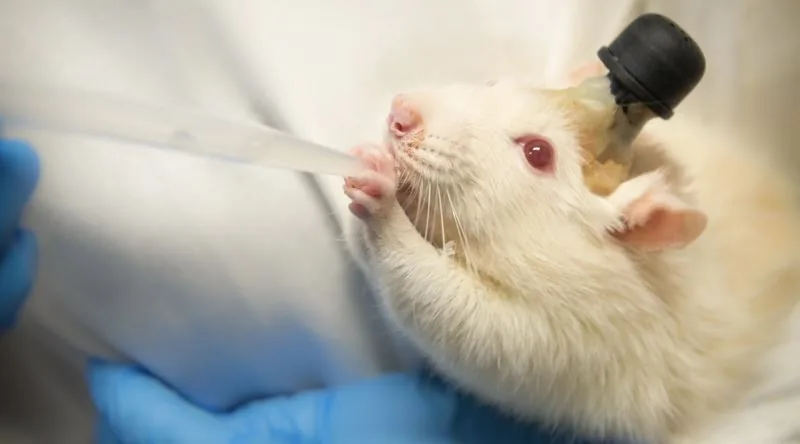
A neural implant memory experiment showed that a prosthesis wired between two regions of a mouse hippocampus could help the animal retrieve a learned response. The work sat at the crossroads of neuroscience and engineering. What made it more than a lab curiosity was the question it nudged into the open. If a device can stand in for part of the machinery of remembering, how much of you lives in that machinery?
Researchers reported that a neural prosthesis bridging CA3 and CA1 in the mouse hippocampus improved the animals' performance on a memory task. The finding raised a thought experiment: if artificial parts can substitute for neurons, what happens to personal identity?
- The study focused on the CA3 to CA1 pathway in the mouse hippocampus.
- The implant was designed to mimic the signal transformation that normally passes between those two hippocampal regions.
- Animals with the prosthesis performed better on a learned memory task than animals without it, according to the reported results.
- The experiment involved animals, so its implications for human cognition remain a matter of open scientific and philosophical debate.
- The work became a touchstone for the Ship of Theseus thought experiment about whether gradual replacement of neurons changes who we are.
A One-Way Bridge Between Two Rooms of the Brain
Picture a sliver of electronics that listens to one neighborhood of the hippocampus and speaks to another. That is the core idea behind a neural implant built to boost memory: electrodes pick up the chatter of neurons in a region called CA3, a microprocessor learns the pattern, and the same signal gets played into CA1, the region those neurons would normally talk to.
The clever part is the learning. The microprocessor was designed to tell two different firing patterns in CA3 apart, then work out how each one gets projected downstream into CA1. Once it has that mapping, it can stand in for the wiring itself. When researchers blocked the normal neural connection between the two regions, the prosthesis kept the conversation going, restoring function that had been cut off.
Here is where the story gets a little slippery, so treat it as reported rather than settled. The account says the implant drew its data from about two dozen electrodes in CA3, and that it could push memory-task performance beyond what the animal could manage on its own. The CA3-to-CA1 design is solid, but those specific details, the exact electrode count and the "better than normal" framing, are harder to pin down than the headlines suggest.
In essence, the neural implant works as a one-way bridge between CA3 and CA1. Signals flow across, but nothing flows back. A future version, the thinking goes, could add a neural feedback loop so the bridge runs in both directions.
That single-direction limitation matters. A real hippocampal circuit is a conversation, not a broadcast. Still, the experiment showed something striking: a device that can learn a memory signature and re-inject it where the brain's own connections have failed. The account treats it as an early but promising step, one that raises an obvious next question about what happens when you point this kind of tool at a healthy brain.
Can a Neural Implant Boost Memory in a Healthy Brain?
Whether a neural implant memory boost could work in a healthy brain comes down to one thing: how that brain reacts to and adapts to the artificial prosthesis. The short answer is that it plausibly could. The reasoning rests on evidence that existing brain-computer interface models built for disabled individuals show adaptation can be successful, and on the brain's native flexibility.
Think about how a newborn's brain comes into the world with no idea what a photon is, no concept of a sound wave. Then, over months, it learns to read the data streaming in from the eyes and other sense organs, and out of that raw feed it builds cognitive ability. If a young brain can learn to make sense of an organ it was never wired for in advance, why couldn't it learn to integrate a permanently implanted device that connects the brain to an external or internal source?
That is the heart of the argument. With time, the brain could form or learn an effective "mapping" between its own internal cognitive states and the inputs and outputs coming from the device. The brain, in other words, would adapt to the interface rather than the interface having to perfectly mirror the brain from day one.
None of this is trivial. Real technological and neural complexities remain, and neural feedback loops in particular are a knot that has to be untangled. As the story goes, the near-term use is modest: brain regions that cannot perform their work, where the device learns the task and takes over. The long-term extension is far more speculative, a leap openly framed as a thought experiment. If you can keep scaling the implant until it replaces the brain's existing neurons, the question goes, why not eventually transfer the brain to a cloud through those same implants?
That cloud idea is where the argument stops being neuroscience and starts being philosophy. It sets up the thought experiment that follows, and it is worth keeping the two registers separate. The infant-learning analogy is the serious case. The cloud is where the imagination runs wild.
The Nanorobot Thought Experiment: Replacing Neurons One at a Time
Picture a swarm of microscopic nanorobots, each one small enough to slip between living cells but clever enough to do everything a neuron does. In this thought experiment they also work as neural implant memory hardware, and like glia cells they physically reshape themselves as they learn. The plan is simple on paper: seed a few of them into a guinea pig's brain, let them learn, then keep adding more until they take over.
Start small. Drop a modest number of these robots into a handful of spots in the animal's brain. While it is awake and consciously recalling something, or holding a mental state, the little machines fire right alongside the relevant neurons. That is how they develop and learn, by doing the work in real time rather than reading it off a chart.
Then scale up. Add more of them and station them in each specialized region, the hippocampus included, so they pick up something in the memory region too. Here the account pauses for a correction that matters. Memory is not a place where things get recorded. Many regions activate together in the conscious moment and learn from it. When something similar happens again, a neural pattern close to the old one emerges and the relevant cells re-create it. They do not fetch it from a shelf.
Those re-creations run on the millisecond scale, and they feel like "recalled past" even though they are a "re-created present." It explains something you have probably noticed: the same memory comes back a little different every year. The brain stays continuously plastic, so the similar patterns drift each time while still landing close enough to count as the same thing. As the account frames it, there is no central memory vault like a computer's, and therefore no memory capacity limit. The hippocampus is simply active when that kind of pattern matching happens.
Plant a few of the tiny robots in the thalamus and the brainstem as well. The thalamus genuinely does flip markedly between active and inactive across wakefulness, sleep, and anesthesia, so it is a natural outpost for a device meant to ride along with consciousness itself. The brainstem is where the claim gets shaky. Contrary to the line that it is the sole cause of brain death, medical consensus defines brain death as the irreversible loss of all brainstem and cerebral function, so treat that as the author's assertion, not established fact.
When the Last Neuron Is Gone, Who Is the Guinea Pig?
Keep adding the nanorobots until there are no original neurons left. One day the old cells fall silent and stop doing any work at all, but the tiny machines simply take over their jobs. The subject still wakes up as the same self, still daydreams private things, still gets lost in a train of thought.
Then comes the next step: wire the nanorobots into a network so they all run at once, in parallel. According to the account, they could then virtually recreate the same phenomenal world we live in now, because our brain already builds a phenomenal world virtually, inside itself. Every conscious state, on this view, is a pattern stitched from a different combination of neurons or glia regions, a kind of living network. The claim is that there is a technical limit on those patterns, but a very high one, reportedly 10^12 or more. Each combination forms, vanishes and re-forms, moment after moment.
The speculative machinery runs underneath all this. As the account frames it, information reaching the thalamus that never passes through the cortex can reportedly travel unconsciously to motor regions and muscles; only what reaches the cerebral cortex makes you "aware" of what is to be done. Mental arithmetic or spoken language, it goes, must pass through the prefrontal cortex, and conscious information surfaces in roughly 400 ms. Treat those as reported claims, not settled science.
Here is the snag. The nanorobots are still bolted to the brain and dependent on the body, and they may still need input from the sense organs. The answer here points to dreams. In a dream we reuse old acquired experience and feel a pinprick or pain with zero input from outside. Failing that, you could load sound or image data straight into the network as external input. The easiest route is to borrow a flavor from old experience and serve it again.
Motor output works the other way. For muscle and movement, you disconnect from the network for a moment, reconnect to the body, and fire the muscles, say, to walk to the kitchen. Then comes the question of whether any of this is even necessary. We never wanted to leave the body anyway. In dreams we fly and escape and feel it as our only reality. Maybe it is already like that now, and the only problem is the stubborn laws of physics.
Which leaves the question almost forgotten along the way. Which one is the guinea-pig brain? The newly created network, or the old one, the pattern? It is the Ship of Theseus all over again. A thought experiment that opened with neurobiology closes on a philosophical problem, and nobody in the story can say for certain where the guinea pig went.
Frequently asked questions
What is a neural implant and how does it enhance memory?
A neural implant is a brain-computer interface built to support memory function. In the hippocampal prosthesis, electrodes record activity from the CA3 region and a microprocessor stimulates the CA1 region, so the device works as a one-way bridge between the two. The goal is not to store memories but to help the brain re-create the patterns behind them.
How did the mouse hippocampus experiment with CA3 and CA1 work?
Electrodes sat in CA3 while a microprocessor learned how that region's firing patterns map onto CA1. The chip could tell two firing patterns apart and then stimulate CA1 to reproduce the matching output. According to the account, the prosthesis restored function when the normal connection between the regions was blocked. The exact electrode count and the "better than normal" framing remain contested.
Can neural implants be used to boost cognitive ability in healthy people?
The answer here is that it depends on how well the brain adapts to the hardware. Existing brain-computer interfaces built for disabled individuals already show that adaptation can succeed, and the analogy is infancy: a baby learns to read data from the eyes and other senses and builds cognitive skill from it. Real complexities remain, but nothing rules it out.
What does the Ship of Theseus have to do with brain implants?
Imagine nanorobots gradually replacing neurons until none of the originals remain. The question becomes which one is really the guinea pig's brain: the newly assembled network, or the old pattern it preserves. That is the same identity puzzle as the Ship of Theseus, where every plank is swapped and the question of sameness stays open.
Why does the brain not store memories like a computer?
The argument is that memory is not a place where things get recorded. Many regions activate together, learn, and later re-create a similar pattern at millisecond scale, which is why the same memory feels different each year as the brain keeps changing. This framing is the author's own view and oversimplifies how memory is actually distributed and stored.
What role do the thalamus and brainstem play in consciousness?
The thalamus shifts markedly between active and inactive states across wakefulness, consciousness, sleep, and anesthesia, which ties it closely to the level of awareness. The brainstem matters too, but it is not the sole cause of brain death. Brain death is the irreversible loss of all brainstem and cerebral functions, not the failure of one structure alone.
How could nanorobots gradually replace neurons in the brain?
Seed a small number of them first and let them fire alongside the real neurons while the brain is awake and thinking, so they learn and change structurally like glia cells. Then raise their count and spread them into specialized regions, including the hippocampus, thalamus, and brainstem, until they take over the work of the neurons they replace.
What happens to personal identity if neurons are replaced by nanorobots?
The answer is meant to be reassuring: the subject keeps the same selfhood, can still imagine personal things, and can still be absorbed in thought. The unresolved question is which network counts as the guinea-pig brain once the swap is complete, the new one or the old pattern. Editorial note: Details that remain unconfirmed or contested in the scientific literature are presented here as such, and the philosophical scenarios discussed are hypothetical rather than established fact.
Got a take on this? Add your voice to the conversation below →
No comments yet. Be the first.