John Rawls Theory of Justice: Veil of Ignorance Explained
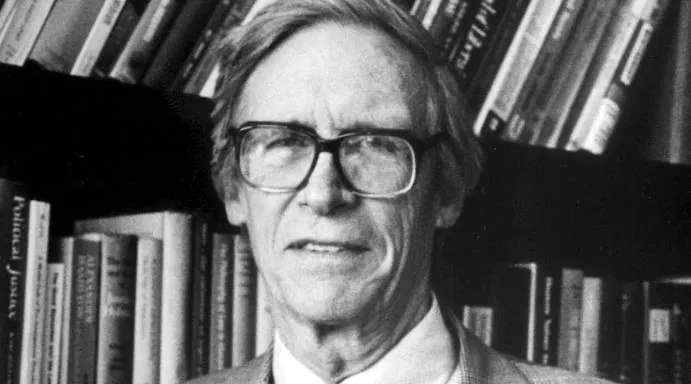
John Rawls' theory of justice, unveiled in his 1971 book "A Theory of Justice," reshaped political philosophy by arguing that fair principles emerge when we design society from behind a veil of ignorance. The Harvard philosopher asked us to imagine choosing rules without knowing our own status, forcing genuine impartiality. It is a thought experiment that still challenges how we think about fairness, inequality, and the social contract.
John Rawls, a philosopher at Harvard University, published "A Theory of Justice" in 1971. He proposed that fair social rules come from an original position where people hide their personal traits behind a veil of ignorance. This leads to two principles: equal basic liberties and arrangements that benefit the least advantaged. His work remains central to modern political philosophy.
- John Rawls published "A Theory of Justice" in 1971 while teaching at Harvard University.
- The veil of ignorance is a hypothetical condition where decision-makers do not know their own social status, talents, or personal traits.
- Rawls argued that rational people in this original position would choose two principles of justice.
- The first principle guarantees equal basic liberties for all citizens.
- The second principle, known as the difference principle, permits inequality only when it benefits the least advantaged members of society.
The Harvard Philosopher Who Tried to Solve Inequality
John Rawls, born in Baltimore, Maryland in 1921, spent nearly three decades as a professor at Harvard University, from 1962 until his retirement in 1991. His life's work, John Rawls' theory of justice, stands as one of the most discussed and applied theories of justice in contemporary philosophy. It offers a democratic-liberal answer to a question that has vexed thinkers for centuries: how can we justify inequality while still valuing freedom?
The question itself feels almost personal. Liberals want people to be free, to govern their own lives, to pursue their own desires. They want equal liberty. But inequality keeps creeping in from somewhere, and that creates an uncomfortable tension. Rawls stepped into that tension with a bold proposal. He argued that inequality is only just when it works to the benefit of the least advantaged members of society. That single idea, published in his landmark 1971 book A Theory of Justice, would go on to shape political philosophy for decades.
What makes Rawls' approach so distinctive is where he drew his authority from. He did not ground his theory in religion, nor in vague appeals to human nature. Instead, he invited every person to perform a thought exercise. Under the right conditions, he claimed, any rational person would arrive at the same principles of justice. The theory's power doesn't come from divine command or biological destiny; it comes from pure reasoning. That is a deeply democratic move, one that puts the philosopher and the ordinary citizen on equal footing.
Rawls built his framework by drawing on the social contract tradition of Locke, Rousseau, Hobbes, and Kant. But he also armed himself with game theory and rational choice theory to defend against critics who found those old contracts too abstract. He attacked utilitarianism, yet borrowed from John Stuart Mill even as he criticized him. The result was a dense, layered argument that filled 600 pages and spawned an equally substantial follow-up, Political Liberalism, published in 1993. The sheer intellectual range of the work, with its careful footnotes and engagements with thinkers like Amartya Sen and John Harsanyi, helped make Rawls the most cited social justice theorist of the twentieth century.
The theory itself, despite its complexity, can be stated simply. Two principles govern a just society. The first guarantees equal basic liberties for everyone, defined in the broadest possible terms. The second addresses social and economic inequalities, and it splits into two parts. Part 2a holds that inequalities must benefit everyone, while part 2b insists that positions and offices must be open to all. These principles are meant to be read in a specific order, with the first taking priority over the second. Within the second principle, the difference principle (2a) comes before fair equality of opportunity (2b), a point that sometimes gets muddled in popular summaries.
Rawls' genius, or perhaps his audacity, was in claiming that these principles are not arbitrary. He believed that anyone placed in what he called the original position, behind a veil of ignorance where they know nothing of their own social status, gender, wealth, or talents, would choose exactly these principles. Faced with the possibility of ending up at the bottom of society, rational people would adopt a maximin strategy, maximizing the minimum outcome rather than gambling for the best possible result. It is a compelling argument, one that has kept philosophers arguing for half a century.
The Two Principles That Shook Political Philosophy
John Rawls published A Theory of Justice in 1971, and inside that dense, 600-page volume sat two principles that would rewire how the Western world argued about fairness. The first principle is simple on its face: every person holds an equal right to the most extensive basic liberties. The second principle gets trickier, because it splits into two parts, and it is where Rawls does his most interesting work.
Here is how the second principle works. Social and economic inequalities are just only if they satisfy two conditions. Condition 2a says those inequalities must benefit everyone. Condition 2b says the positions and offices that create inequality must be open to all. You can already feel the tension. How do you make sure the wealthy getting wealthier helps the poor? How do you keep the doors to power genuinely wide open rather than just theoretically unlocked?
Rawls insisted these principles be read in a strict order, what he called lexicographical priority. Think of a dictionary: you look at the first letter before the second, and the second before the third. In the same way, the first principle outranks the second, so basic liberties can never be traded away for economic gain. Within the second principle, the order matters just as much. The difference principle (2a) comes before fair equality of opportunity (2b), meaning you first ensure inequalities benefit everyone, then you make sure positions are open to all. That ordering is easy to miss, but it is the spine of the whole system.
Rawls did not stop at A Theory of Justice. In 1993 he published Political Liberalism, a follow-up that showed how these principles could hold up in a society where citizens disagree about everything from religion to the meaning of the good life. The book was nearly as hefty as the first, and together they made Rawls the most cited social justice theorist of the twentieth century. Not bad for a man who boiled his entire philosophy down to two principles that fit on a napkin.
The Original Position and the Veil of Ignorance
Rawls needed a way to prove his two principles of justice weren't just his personal opinions. So in his 1971 book A Theory of Justice, he built a thought experiment called the "original position," where you design society without knowing anything about yourself. It's the intellectual engine behind the entire John Rawls' theory of justice.
Here's the setup. Imagine you're asked to write the rules for a brand new society, but there's a catch. A "veil of ignorance" hides everything about you. You don't know your gender, your wealth, your social status, your talents, or even your age. You know other people exist, but you can't form coalitions or make backroom deals with them. You're completely alone with your reasoning.
Why force such strange conditions? Because Rawls knew something about human nature. If you know you're wealthy, you'll design a tax system that favors the rich. If you know you're talented, you'll want a society that rewards natural ability. The veil strips away all that self-interest. You can't rig the game because you don't know which player you'll be.
Rawls argued that rational people in this position would adopt what he called the "maximin" strategy. The term comes from game theory: maximize the minimum outcome. In plain words, you protect the worst-case scenario. Since you might end up as the poorest, least advantaged person in society, you'd want to make sure that worst position is as good as possible. You'd avoid risky arrangements that could leave you destitute. According to Rawls, everyone reasoning from behind the veil would arrive at the same two principles of justice.
This move was clever for another reason. Earlier social contract thinkers like Thomas Hobbes, John Locke, Jean-Jacques Rousseau, and Immanuel Kant had proposed hypothetical agreements, but critics found their reasoning analytically weak. Rawls armed himself with game theory and rational choice theory as shields. He wasn't just asserting fairness; he was claiming mathematical rigor. And in the years after publication, economists like Amartya Sen and John Harsanyi took up the challenge, showing that the same assumptions could lead to different conclusions when you applied rational choice methods differently.
The thought experiment remains the most vivid image in political philosophy. You don't need a PhD to picture it. You just need to imagine not knowing who you are, then deciding what fairness means.
Why Rawls Might Be Wrong: Three Serious Flaws
John Rawls built his entire John Rawls' theory of justice on a beautiful thought experiment, but critics have poked three very real holes in it. The first problem is that the choices Rawls assumes people make behind the veil of ignorance are not universal at all, but deeply shaped by a particular bourgeois, capitalist worldview. He never actually proved that everyone would reach the same conclusion, and that is an empirical question he left unanswered.
The second flaw cuts even deeper into the logic. Rawls used game theory and rational choice methods to show why people would pick his two principles, but the whole reasoning is circular. The conclusions are already baked into the assumptions he makes about the people in the original position: that they are non-selfish, that they do not know their own social standing, that they cannot form coalitions or cooperate with each other. Change any one of those starting points and the whole edifice wobbles. Amartya Sen and John Harsanyi, both heavyweight thinkers in their own right, demonstrated using the very same rational choice toolkit that entirely different conclusions can be drawn from Rawls' own premises. So the argument does not have the airtight quality Rawls claimed for it.
The third critique is perhaps the most human one. Even if we grant Rawls everything, even if every single person behind the veil would agree on the same principles of justice, that says nothing about whether real people will actually live by those principles once the veil lifts. Rawls wanted so badly to be objective that he set aside the subjective experiences of injustice that ordinary people carry with them every day. A person who has been treated unfairly at work, who has watched a landlord evict a neighbor, who has felt the sting of being passed over for a promotion, does not consult a theory before deciding what feels just or unjust. Rawls left those daily, lived experiences out of his system entirely, and critics argue that is a fatal omission for any theory that claims to be about real justice.
These are serious objections, and they are worth sitting with. The fact that Rawls' framework has survived this kind of scrutiny for decades, with scholars like Sen and Harsanyi engaging so seriously with his work, says something about its power. But the critiques also remind us that no theory of justice, however elegant, can fully capture the messy, subjective, contradictory ways human beings actually experience fairness and unfairness in their own lives.
Why Rawls Still Matters Today
The enduring popularity of John Rawls' theory of justice says less about the philosophy itself and more about how academia works. Rawls, who lived from 1921 to 2002, built a reputation that has outlasted nearly every other political thinker of the twentieth century, and the reasons behind that staying power are worth examining closely.
Here is the uncomfortable truth that many scholars would rather not confront: Rawls did not actually say anything particularly new. What he did do was dress up familiar ideas in the language of game theory and rational choice, wrapping old liberal commitments in complex mathematical-sounding frameworks. That combination proved irresistible to academics who, like the rest of us, tend to respect what they do not fully understand. The sheer density of his work, the thick footnotes, the intricate arguments against utilitarians like John Stuart Mill, all of it created an aura of profundity that critics found hard to puncture.
The theory itself, rooted in Kantian logic, defends the core values of Anglo-Saxon liberalism: individual freedom, equal basic rights, and a cautious acceptance of economic inequality only when it benefits the least advantaged. Some commentators have tried to paint Rawls as a radical, even an egalitarian socialist, but both Rawls and actual socialists reject that label outright. The mischaracterization is more about marketing than about the content of his ideas.
Yet dismissing Rawls entirely would be a mistake. His work inspired Jürgen Habermas to write extensively on justice, sparking one of the most fruitful philosophical exchanges of the late twentieth century. He is also the reason many leftists hold at least a grudging respect for Harvard University, the institution where he taught from 1962 until his retirement in 1991. That is no small feat for a philosopher born in Baltimore, Maryland.
The critiques of his system are serious. Amartya Sen and John Harsanyi both demonstrated, using the same rational choice methods Rawls employed, that different conclusions could be drawn from his assumptions. The original position and the veil of ignorance, his most famous thought experiments, rest on premises about human risk aversion that are not empirically established. But the fact that his work generates such vigorous debate, decades after its publication, is itself a sign of its significance.
Rawls' books deserve to be read, and his analysis deserves to be criticized. That is the mark of a thinker who matters, even when, or perhaps especially when, his conclusions are wrong.
## Frequently Asked Questions About Rawls' Theory of Justice ### What is John Rawls' theory of justice? John Rawls' theory of justice is a framework built on two core principles: everyone gets equal basic liberties, and inequalities are acceptable only when they benefit the least advantaged while keeping positions open to everyone. Rawls, who lived from 1921 to 2002, published this influential framework in *A Theory of Justice* in 1971. It stands as one of the most discussed political philosophy works of the twentieth century. ### What is the veil of ignorance in Rawls' philosophy? The veil of ignorance is a hypothetical condition where people choose principles of justice without knowing their own social status, gender, wealth, or any personal characteristics. Rawls designed this thought experiment to guarantee impartiality. Since nobody knows where they'll end up in society, they can't rig the rules to favor themselves. This forces genuinely fair choices. ### What are Rawls' two principles of justice? The first principle grants everyone equal rights to the most extensive basic liberties. The second principle addresses social and economic inequalities, splitting into two parts: 2a says inequalities must benefit everyone, and 2b requires that positions creating inequality remain open to all. Rawls specified that the first principle takes priority over the second, and within the second principle, the difference principle (2a) comes before fair equality of opportunity (2b). ### How does Rawls use the original position? The original position is Rawls' thought experiment where rational people, standing behind a veil of ignorance, choose principles of justice. They know others exist but can't form coalitions or know their own place in society. Rawls argues these conditions push everyone toward the maximin strategy: avoiding risk by maximizing the minimum outcome. This means protecting the worst-off members of society. ### Why did Rawls criticize utilitarianism? Rawls attacked utilitarianism while still borrowing some essentials that even John Stuart Mill accepted. His core objection centered on individual rights versus aggregate utility. Utilitarians might sacrifice one person's rights for the greater good, but Rawls insisted basic liberties can't be traded away for overall happiness. His framework prioritizes the individual over the collective calculation. ### What are the main criticisms of Rawls' theory? Critics point to several weaknesses. Some argue Rawls' assumptions reflect bourgeois values rather than universal truths. Others say he failed to prove everyone would reach the same conclusions from the original position. Amartya Sen and John Harsanyi both demonstrated, using rational choice methods, that different conclusions could emerge from the same starting assumptions. Rawls also neglected subjective experiences by focusing purely on objective principles. ### How does Rawls differ from Hobbes and Locke? Unlike Hobbes and Locke, who grounded their social contracts in historical events or natural law, Rawls built his contract on a purely hypothetical original position with a veil of ignorance. He defended his principles using game theory and rational choice theory rather than appeals to nature or history. This made his framework analytically rigorous while sidestepping questions about whether any actual contract ever happened. ### What is the maximin rule in Rawls' theory? The maximin rule means choosing the principle that maximizes the minimum outcome. In practical terms, Rawls believed people behind the veil of ignorance would want to improve conditions for the least advantaged members of society. Since you might end up being that person, you'd design rules that make their situation as good as possible. This risk-averse approach drives his entire theory of justice.Editorial note: This piece presents the core elements of Rawls' theory as they are widely documented, and any interpretive or contested details are framed as such rather than stated as settled fact.
Got a take on this? Add your voice to the conversation below →
No comments yet. Be the first.