Immurement: The Medieval Sacrifice Walled Up Alive
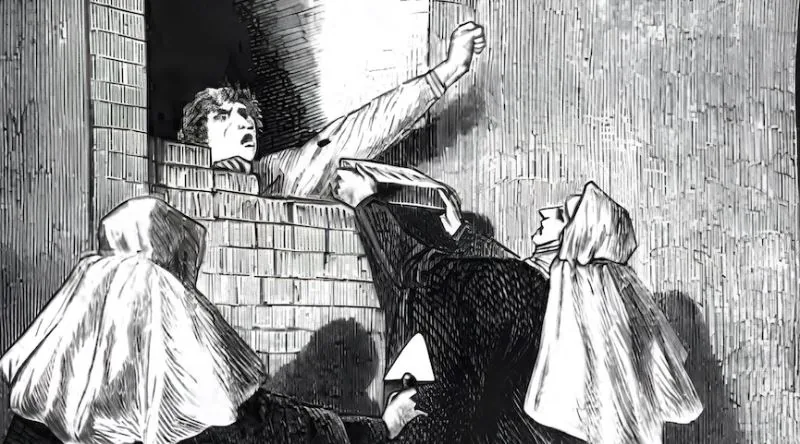
Immurement is the practice of sealing a living person inside a wall, and across medieval Europe it was performed as a foundation sacrifice to appease God and protect a new castle, church, or bridge from collapse. The victims were sometimes prisoners, sometimes strangers, and in the most chilling accounts, sometimes children. Builders believed a structure needed a guardian spirit, and a human soul trapped in stone was thought to provide exactly that. The practice left its mark on folklore, on legend, and occasionally on the archaeological record itself.
Immurement was the act of walling a living person into a structure, most often as a foundation sacrifice meant to keep the building standing. Medieval accounts describe prisoners, strangers, and children sealed inside castle, church, and bridge walls. Firm archaeological proof is rare, and many stories survive only as legend, so historians treat most claims with caution.
- Immurement involved sealing a person inside a wall, sometimes as punishment and sometimes as a ritual offering to protect a new building.
- Foundation sacrifice was the belief that a structure needed a human soul, or guardian, buried within it to keep it from collapsing.
- The legend of Rozafa Castle in Albania tells of a woman walled into the foundation so the fortress would hold.
- Folklore from Bremen, Germany, describes a child sealed into a bridge to strengthen it, though the story is not firmly verified.
- Human remains have occasionally been found inside old walls, but historians rarely confirm them as deliberate immurement.
When the Walls Wouldn't Stay Up
Immurement is the practice of sealing a living person inside a wall, and in medieval Europe it was understood as both a punishment and a method of execution. The same act, though, could be dressed up as something holier: a sacrifice meant to keep a building standing. When a castle or church refused to rise, the people of the Middle Ages rarely blamed the masons.
Picture a half-built fortress where the stonework keeps giving way. In the medieval mind, the cause was never bad mortar or a badly chosen site. It was the devil at work, or God handing down a punishment for a faithless community. Once you accept that framing, the fix stops looking like engineering and starts looking like ritual.
Clerics and builders, the shrewd religious men and contractors of their day, landed on a solution that still turns the stomach. Offer a human life to the structure itself. Wall someone up alive between the stones, and the walls will hold, the devil will be kept at bay, and God will be calmed. That is immurement in its sacrificial form, and the medieval imagination treated it as a genuine cure for collapsing masonry.
The logic stretched to water as much as stone. Build beside a violent, surging spring and the floods keep coming? Give the building a victim, and the waters settle. The practice also carried a colder, official face. Immurement served as a punishment and even an execution, a sentence carried out with brick and mortar rather than a blade.
A wall that will not stay up is not the builder's fault. It is the devil's, or God's, and only a life sealed inside the stone can settle the debt.
That belief did not stay confined to fortresses and churches. Across Europe, different peoples offered sacrifices for ordinary buildings too. In Romania, a new house might be given a life so that the spirit of the place would be satisfied and would not claim one of the people who actually lived there. The fear was always the same: a structure with a hungry spirit, and a family that would pay for it if no one else did.
What makes immurement so hard to shake is how seriously the medieval world took it. It was not a whisper told to frighten children. It was a remedy that clerics endorsed and builders acted on, a bargain struck between frightened people and the walls rising around them.
Children, Coins and a Stool Between Two Walls
Here is where the story turns ugly. As the old accounts tell it, the people chosen for immurement were usually children, and the families who handed them over were poor. Reportedly, they were paid for the loss, a transaction that turns grief into a line item. Treat this as legend and local tradition rather than verified record, because the paper trail simply is not there.
Picture the scene at a castle or church site. The masons have laid course upon course, and somewhere in that rising skin of stone a living child is left behind, sealed as the walls climb. According to the original account, the practice was not always a quick death. In some places a stool was set between two walls so the victim could sit, upright and aware, until the end came. That detail is the kind of thing folklore loves to preserve, and it is exactly the kind of thing historians cannot confirm.
The reasoning behind it was brutally simple, at least to the minds of the period. Burying an innocent life inside the structure would calm God and drive the devil away. If a building would not stand or would not finish, the fault was never the workmanship. It was the devil, or it was divine punishment. A sacrifice was the fix.
The flood version is the one that sticks. Suppose you want to build over a raging water source. Give the waters a sacrifice, the logic went, and they will not rise again. The river stays in its bed, the foundation holds, and nobody has to ask what was buried in the footing.
An innocent life in the wall to calm God and keep the devil out. A stool so the child could sit until death.
Notice how the belief works. It is not engineering, it is bargaining. And like most bargains made in the dark, it leaves no receipt.
The Bones in the Walls: What Was Reportedly Found
Here is where the story gets slippery. Accounts passed around about immurement point to human remains turning up inside walls or down in the foundations of old castles across Europe. Germany, Czechia, Albania, Greece, Romania, Serbia: the list of countries is long. The trouble is that most of these finds are reported, not confirmed, and archaeology has a way of staying quiet when the paperwork is thin.
Start with Germany. The story names two castles, Wesenberg and Putbus, and says bones were found tucked between the walls or buried in the footings. That claim is unconfirmed, with no excavation record behind it, so treat it the way you would treat any tale told twice before it reaches you.
Czechia has its own entry. Pecka Castle is said to hold the same grim discovery, human remains sealed into the masonry. Again, the claim floats without a confirmed source underneath it.
Albania is the most interesting case, because Rozafa Castle comes with a legend attached. The name itself is bound to a walling-in story, the kind where a woman is entombed so the fortress will stand. That is exactly why the castle gets mentioned. But no human remains there have been confirmed, and a legend is not the same thing as a skeleton in a wall.
The geography widens from there. Similar finds are reportedly tied to Greece, Romania and Serbia, though no specific remains in these three countries have been confirmed. Building sacrifices are ethnographically attested across the region, which is the part worth keeping. The specific bones are the part worth doubting.
The pattern is clear: a vivid story, a named castle, and a missing excavation report. That gap is the real story here.
What survives the scrutiny is not the skeletons. It is the belief that a structure could be made to hold by giving it a life, and that belief shows up in the folklore of the region long after any wall has crumbled.
Beyond Castles: The Bremen Bridge and the Romanian House
Castles and churches get the attention, but the practice of immurement may have traveled much further than their stone walls. If the grim logic held, then any structure that refused to stand, or any water that refused to stay put, could call for the same offering. The story of a bridge in Bremen is the strangest case of all.
According to the original account, workers demolishing a bridge in Bremen in the 1800s found a child's skeleton resting in the foundation. That claim is unverified, and it reads a lot like the old folkloric motif of the bridge that will not hold until a life is given to it. Still, it points at something the account insists on: the ritual was not reserved for grand religious buildings. It could be applied to many kinds of structures, wherever a project kept failing.
Then there is Romania, and here the motive shifts in a way that is genuinely telling. In Romanian belief, when a new house was built, the sacrifice was made so the spirit of the place would be satisfied and would not take the life of someone living there. Notice the difference. This is not about calming a god or driving off a devil. It is a bargain with the ground itself, a way of paying the site so it leaves the household alone.
That variation is the real point. Different European peoples gave building sacrifices for different reasons, and the account is careful to say so. One community feared a vengeful deity, another feared a restless spirit of the land, and a third simply wanted a bridge to stay up. The same terrible act, dressed in a dozen different beliefs, spread across the continent and outlived the castles that supposedly started it.
Frequently asked questions
Were children really walled up alive?
The original account says the victims were usually children, and that poor families were reportedly chosen and paid for the loss. Treat that transactional detail with care. The stool set between two walls so a victim could sit until death is a vivid image that belongs to legend and folklore more than to any confirmed record, so it is best read as part of the tale, not a documented procedure.
What is the legend of Rozafa Castle?
Rozafa Castle in Albania is one of the sites where human remains were reportedly found between walls or in the foundations. The legend attached to the castle is well known, but no physical remains there have been confirmed, so the find stays in the realm of report rather than verified fact.
Which countries have archaeologists reportedly found human remains inside old walls?
According to the original account, remains turned up in walls or foundations at castles in Wesenberg and Putbus in Germany, at Pecka Castle in Czechia, and at Rozafa in Albania, with similar finds reported in Greece, Romania and Serbia. None of these specific finds has been independently confirmed, so they are presented here as reported rather than established.
Was a child's skeleton really found in a demolished bridge in Bremen?
The account says a child's skeleton was found in the foundation of a bridge torn down in Bremen in the 1800s. That detail could not be verified, and it closely echoes the old folkloric motif of a bridge that will not stand until a life is buried beneath it, which is reason enough to hold it loosely.
Why did Romanian builders sacrifice a person when building a new house?
In Romania, the belief held that a sacrifice at the start of a new house would satisfy the spirit of the place, so that spirit would not claim the life of someone who lived there. This is documented as a belief, most famously in the Manole legend, rather than as a proven practice, but the reasoning behind it is clear: the ground demanded a life, and the builders chose to give it one before it took its own. Editorial note: Details that remain unconfirmed by firm historical or archaeological evidence are presented here as legend or tradition rather than established fact.
Got a take on this? Add your voice to the conversation below →
No comments yet. Be the first.