1522 Rat Trial: How Rats Won in Court
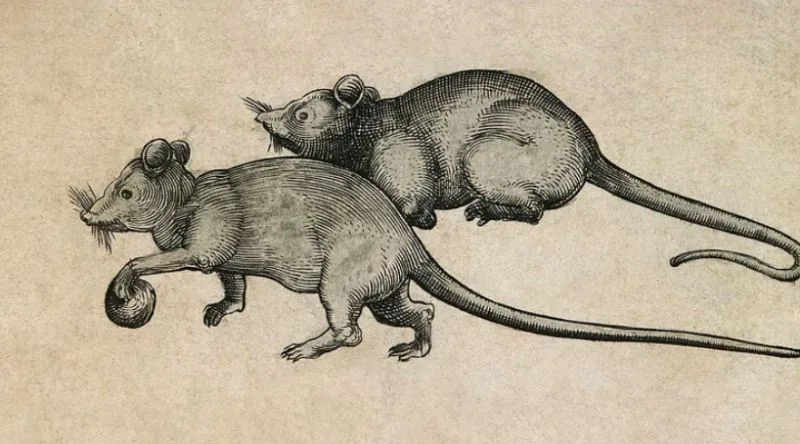
According to the traditional account, a rat trial in Autun, France, is said to have taken place around 1522, when a colony of rats was formally summoned to court for eating and destroying barley crops. What makes the case famous is not the crime but the defense: a brilliant young lawyer named Barthélemy de Chasseneuz argued the rats' case so skillfully that the proceedings collapsed without a single rodent ever appearing. It sounds like a fable, yet it played out in a real courtroom, in a world where animals could be charged, summoned, and even excommunicated. The story has survived for five centuries because it captures something oddly human: our habit of taking the law very seriously, even when the defendants have tails.
Around 1522, the residents of Autun, France, are said to have brought a formal case against local rats accused of eating their barley. Lawyer Barthélemy de Chasseneuz defended the animals, arguing procedural points such as the summons not reaching every rat. The case is often described as ending without a conviction, and no rat was ever punished.
- The case is traditionally dated to 1522 in Autun, a town in the Burgundy region of France.
- Local residents accused the rats of damaging and eating their barley crops.
- Barthélemy de Chasseneuz, a trained jurist, acted as counsel for the rats.
- His defense leaned on procedural arguments, including that not all the accused rats had been properly summoned.
- The case ended without the rats appearing or being convicted, and it became one of the best known animal trials in history.
When Animals Went to Court
Picture a courtroom where the defendant has four legs and a tail. It happened more often than you would guess. Across centuries of European legal history, animals were formally charged, tried and punished like people: an elephant hauled before a judge and then executed, a pig prosecuted and put to death, a rooster condemned and killed. That last one is worth pausing on. The rooster's crime was laying an egg, a feat that got it tied to witchcraft and sent to the gallows.
Then there is the case that broke the pattern. Sometime around 1522, in the French town of Autun, a pack of rats stood accused of eating and destroying the barley crop. As the story goes, the exact date and details drift from one account to the next. But the trial itself has a hero, and his name is real: Barthélemy de Chasseneuz, the lawyer appointed to defend the rats.
Chasseneuz did not phone it in. According to the traditional account, he is said to have objected that the prosecution had accused "some rats" without ever specifying which ones, and the judge reluctantly pushed the hearing back. The prosecution is said to have redrawn the indictment to cover every rat in Autun. At a later hearing, the lawyer is said to have argued his clients were too widely scattered to make the trip, and the case was postponed again. When the rats still failed to show, he is said to have requested safe passage for them, citing dangers from spiteful peasants and bloodthirsty cats.
By then the patience of both the judge and the opposing side was worn thin. The court could not even fix a date for a fourth hearing, and so, as the story goes, it ruled. The rats won.
One correction before we go further. The story is usually credited to E. P. Evans's 1906 book, and that book is titled The Criminal Prosecution and Capital Punishment of Animals, not "Death Punishment" as it is sometimes cited. The modern retelling that brought the 1522 rat trial back into circulation appeared on Ekşi Şeyler on 29 September 2023, written under the handle "patrick hockstetter."
We ate the barley because we needed to eat, like any living thing. The real issue is why the humans left the grain out and assumed we would ignore it.
That imagined defense is the heart of the appeal. The rats never uttered a word, yet they emerged victorious.
The Crime: Eating the Barley
Picture a French town called Autun, and a field of barley that somebody has been helping themselves to. The year, as the story is usually told, is 1522. The accused? Rats. Not one rat caught red-handed in a sack, but the town's rodent population at large, charged with chewing through the barley crop and wrecking the harvest. The date and the finer details shift a little from one account to the next, so treat the exact framing as the traditional version rather than a court transcript. What holds steady is the shape of it: a prosecutor building a formal case against a rodent "gang," and a real courtroom preparing to hear it.
And here is where the tale stops being a joke and starts being strange. Someone had to defend them. In this corner of sixteenth-century France, the machinery of justice was so literal that a lawyer was actually assigned to the rats' side. His name was Barthélemy de Chasseneuz, a jurist remembered in E. P. Evans's 1906 study of animal prosecutions as the man who took the rats' case.
So you have a prosecutor with a grievance about ruined grain, a defendant that cannot speak, cannot sign its name, and has no intention of showing up, and a defense attorney who apparently intended to argue the thing properly. The stage is set. The barley is gone. The rats are nowhere to be found. And a courtroom in Autun is about to discover just how hard it is to put a field full of rodents on trial.
The Lawyer's Three Delays
Barthélemy de Chasseneuz did not defend the rats of Autun by denying they ate the barley. He defended them by making the court chase its own tail, one hearing at a time. Across three separate appearances, the counsel appointed to speak for the accused turned procedure itself into a shield, and the 1522 rat trial became a slow-motion lesson in how paperwork can outlast outrage.
The first hearing set the pattern. As the story goes, Chasseneuz rose and objected that the prosecution had named only "some rats" without identifying which ones. A charge that vague, he argued, could not be answered, because no defendant could know whether the summons was meant for him. The judge, reportedly less than eager to press on, postponed the case, and the prosecution is said to have gone back to revise the indictment so that it named every rat in Autun. The net had been widened, and the rats still had not been caught in it.
At the second hearing, the accused again failed to appear, and the lawyer had an answer ready. According to the traditional account, he explained that his clients were scattered too widely across the countryside to gather in one courtroom on a single day. Distance, not defiance, kept the benches empty. Another postponement followed, and the case drifted further into the calendar.
By the third hearing, the courtroom had a rhythm of its own: the prosecution read its case, the bench waited, and the defendants simply were not there. This time Chasseneuz pressed the point that gives the story its teeth. In the traditional telling, he is said to have asked the court to guarantee his clients safe passage to trial, citing dangers along the way from "spiteful peasants and bloodthirsty cats." A rat crossing open ground to answer a summons, he implied, was a rat taking its life in its paws.
That argument pushed the patience of both the judge and the opposing side to the edge. What had begun as a dispute over ruined barley now looked like a case that could not be brought to order at all. As the story goes, the court could not even fix a fourth hearing date, and the matter is said to have resolved in the rats' favor. Whether the verdict was ever formally written down is another question the record leaves open, but the ending has traveled: the defendants won without a single one of them setting foot in the room.
The Verdict: Rats Win
By the end of the 1522 rat trial in Autun, the courtroom had run out of patience and out of calendar. The rats had never once shown up. According to the traditional account, the court could not settle on a date for a fourth hearing, and so the case is said to have closed in the rodents' favor, though the ending is often described as much as a procedural collapse as a true acquittal.
Picture the scene. The judge has now heard the same defense three times. A safe-conduct pass for vermin. A demand that the court guarantee his clients a clear path past the cats and the pitchforks. The prosecution is seething. The clerk is running low on parchment. And somewhere in the walls of Autun, the accused are going about their lives, completely untroubled by the machinery of French justice grinding to a halt over them.
That is the strange, almost comic payoff of the whole affair. The rats did not win because anyone proved their innocence. They won because the court that summoned them could not actually bring them in, guarantee their safety, or agree on how to move forward. The defendant's seat remained empty, and that emptiness won the case.
The original account even imagines what the rats might have said if they had bothered to speak. Their defense, as it is framed, goes something like this: we ate the barley because we needed to eat, the same as any living creature. The real question is why the humans left the grain out and expected us to ignore it. You claimed the land, yet you grew nothing for us to eat. It is a defense that lands with a certain uncomfortable logic, and it is hard to imagine a jury that would have turned it down.
You claimed the land, yet you grew nothing for us to eat.
So the rats of Autun came away with the win. They never testified, never posted bail, never hired anyone. Their lawyer, Barthélemy de Chasseneuz, did the talking, and the record suggests he did it well enough to stall the entire proceeding into oblivion. The case is remembered less for its legal reasoning than for the sheer absurdity of a courtroom solemnly debating the travel plans of rodents.
What the 1522 Rat Trial Really Shows
Start with the paper trail, because it matters. The account of the 1522 rat trial traces back to E. P. Evans's 1906 book, and its real title is The Criminal Prosecution and Capital Punishment of Animals. A popular retelling calls it "Death Punishment," which is simply wrong. One word, but it tells you how stories drift as they get passed along.
Now the part that survives scrutiny. A lawyer was indeed appointed to defend the rats, and that lawyer is remembered as Barthélemy de Chasseneuz, a name worth holding onto. He did not argue that rats are innocent of eating barley. He argued procedure. And procedure, handled by someone who knows it cold, can win a case all by itself.
That is the quiet lesson of the 1522 rat trial. The defense never needed its clients to appear. Each objection bought time, and each delay made the prosecution's position a little more ridiculous. As the story goes, the rats were never specified clearly enough, then they were too scattered to summon, then they needed a guarantee of safe passage past spiteful peasants and bloodthirsty cats. Whether every one of those hearings unfolded exactly that way is hard to pin down, and the records are thin. But the shape of the thing holds: a skilled advocate turning the machinery of the court against the people who set it running.
It is a rare example of animals winning a legal case brought against them. The accused never showed up, never said a word, and still came away with the win.
And the ending was not a dramatic acquittal. The court is said to have been unable to set a fourth hearing date, and the case fell apart in the rats' favor. No verdict on the barley. No punishment. Just a docket that ran out of road.
Which leaves the question the story keeps teasing. If the rats had actually turned up, would it have mattered? The favorite imagined defense has a certain blunt logic to it: we ate the barley because we needed to eat, and no one questioned why the harvest was left out where we could get to it. That speech belongs to legend, not to any court record. Still, it captures why this case lingers. A courtroom built to condemn a pack of rodents ended up demonstrating, in slow motion, that the law is a set of moves, and the person who knows the moves best usually wins.
Frequently asked questions
What was the 1522 rat trial in Autun, France?
According to the traditional account, the 1522 rat trial was a legal case in Autun, France, in which rats stood accused of eating and destroying barley crops. The story is widely reported in secondary sources, though the precise date and details vary from one retelling to the next and cannot be fully confirmed.
Who was Barthélemy de Chasseneuz and what was his role?
Barthélemy de Chasseneuz was the jurist appointed to defend the rats of Autun. In the standard accounts, counsel was formally assigned to the rodent defendants, and Chasseneuz is the lawyer traditionally associated with that defense. His name survives as the legal mind at the center of the case.
Why were the rats put on trial?
As the story goes, the rats of Autun were accused of eating and destroying the town's barley crops. The prosecution built its case around that damage, treating the rodents as defendants answerable for the ruined harvest. The charge was destruction of crops, not any harm to people.
How did the rats win without appearing?
According to the original account, their lawyer won on procedure rather than evidence. Hedged retellings describe a series of delays, and the case is said to have ended when the court could not set a fourth hearing date and ruled for the rats. They never appeared in court.
Did animals really have lawyers in medieval times?
Yes. In some animal trials, counsel was appointed to represent the animals, and the Autun rat case is the clearest example. E. P. Evans, in his 1906 book The Criminal Prosecution and Capital Punishment of Animals , describes exactly this practice: a lawyer assigned to defend the accused rats.
Was it a real historical event?
The case is widely reported in secondary sources, but its details are contested. The standard account comes from E. P. Evans's 1906 book, The Criminal Prosecution and Capital Punishment of Animals , and later retellings repeat and embellish it. Treat the broad outline as traditional history, not a fully documented court record.
What legal arguments did Chasseneuz use?
As the story goes, he argued that the indictment was too vague, naming only "some rats" without specifying which ones. He reportedly added that his clients were too widely dispersed to appear and that they needed safe passage against spiteful peasants and bloodthirsty cats. These procedural objections, not a defense of the barley, carried the day. Editorial note: Details of the 1522 proceedings survive mainly through later legal commentary, so any points that remain unconfirmed are presented here as hedged rather than settled fact.
Got a take on this? Add your voice to the conversation below →
No comments yet. Be the first.