AI Cheating in Education: Einstein Would Never Use It
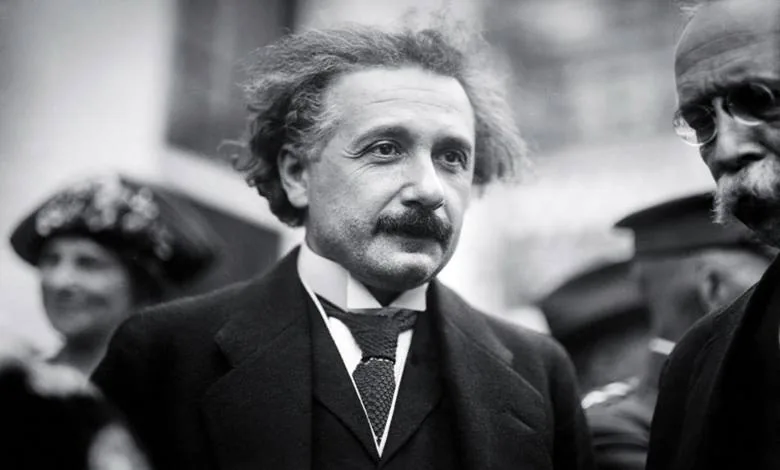
AI cheating in education has reached a tipping point, with a Brown University class seeing exam averages soar to 96 percent after students used artificial intelligence, a stark contrast to the critical thinking Albert Einstein championed at ETH Zurich in the 1890s. The story of how students weaponized AI for an economics course while Einstein famously relied on his own imagination reveals a troubling divide in modern learning. It is a tale that pits the allure of effortless grades against the messy, essential work of building a mind.
A Brown University economics class saw test scores climb to an average of 96 percent after students used artificial intelligence to complete take-home exams, prompting the professor to redesign the course. The incident highlights how AI cheating in education is reshaping academic integrity, and it stands in direct opposition to the values of deep thinking and effort that Albert Einstein practiced and preached throughout his life.
- At Brown University, an economics professor discovered that students in his class were using AI to write take-home exam answers, driving the class average to 96 percent.
- The professor, Roberto Serrano, changed the course format to an in-person, proctored final after the AI-assisted cheating was uncovered in 2012.
- Albert Einstein attended the Swiss Federal Polytechnic School, now ETH Zurich, in the 1890s, where he valued independent study and imagination over rote memorization.
- The myth that Einstein was a poor student is false; he performed adequately and graduated, though he did skip classes and showed little interest in mathematics according to one professor.
- Einstein famously said that imagination is more important than knowledge, a principle that directly challenges the convenience of AI replacing mental effort in education.
The Class That Averaged 96%: A Red Flag in the Age of AI
In 2012, a Brown University economics professor named Roberto Serrano walked into his intermediate microeconomics course and saw something that made his stomach drop. His 86 students had just submitted a take-home midterm, and the class average sat at an astonishing 96%. Only 5 students scored below 90%, and in all his years teaching this course, the historical average had never crept past 80%. Something was deeply, unmistakably wrong.
Serrano didn't confront anyone or accuse anyone directly. Instead, he made a simple announcement: the final exam would be held in person, proctored, with no take-home option. The response was immediate and telling. Eighteen students dropped the course entirely, and 9 more simply didn't show up on exam day. Of the original 86, only 59 students actually sat for the final. Their average score? 48.6%. Just one student managed to score 90% or above.
For Serrano, the gap between those two numbers wasn't just a statistical curiosity. It was a window into a troubling shift in student behavior around AI cheating education. "We cannot allow a society where a significant portion of our brightest young people think cheating is acceptable," he said. "Such an understanding sets society back, even drives it to failure. We cannot choose to become stupid."
The Brown incident is a stark illustration of what makes AI tools so dangerous in education. It's not that they can write essays or solve equations, though they certainly can. The real threat is more insidious: AI erodes our own skills, particularly the critical thinking and mental effort we develop by struggling through difficult problems. When students outsource their thinking to a machine, they don't just cheat on a test. They cheat themselves out of the intellectual growth that comes from wrestling with hard questions.
This isn't a brand-new problem. But large language models have made it far more visible and far more severe. The temptation to let an AI handle the hard parts of learning has never been stronger, and the Brown University case shows just how quickly that temptation can reshape an entire classroom.
The Einstein Myth: He Wasn't a Bad Student, He Was a Reluctant One
Albert Einstein was never a dropout or a failing student, and the story that he somehow taught himself physics in isolation is one of science's most persistent fairy tales. He was admitted to the Zurich Polytechnic Institute, now known as ETH Zurich, in 1896 at just 17 years old, and he graduated in 1900. The record is clear: he ranked fourth in a graduating class of five, which is a far cry from flunking out.
The myth usually goes something like this: a young Einstein, bored and rebellious, couldn't handle formal academics, so he ended up punching a clock at the Swiss Patent Office. The reality is less dramatic but far more interesting. He took the patent job because he couldn't land a university assistantship, not because he lacked credentials. His 1905 "miracle year" papers, the ones that rewrote physics, weren't flashes of isolated genius. They were the product of years of formal education, heavy reading, and real collaboration with colleagues and mentors.
There is a kernel of truth buried in the legend, though. Hermann Minkowski, the famous mathematician who taught at ETH during Einstein's time, later recalled his student as someone who skipped classes regularly and showed little interest in mathematics. That sounds damning until you remember the context. Einstein started university at 17, found some lectures pointless, and followed his own curiosity instead of the syllabus. That isn't failure. It's a teenager with an unusual amount of confidence in his own intellectual instincts, even if his professor couldn't see where those instincts would lead. Performance in a classroom and raw potential are not the same thing, and Minkowski, for all his brilliance, simply couldn't predict what his distracted student would become.
Why Einstein Would Never Outsource His Thinking to AI
Albert Einstein's 1921 words on education cut straight to the heart of today's AI dilemma: "The value of a university education lies not in learning facts but in training the mind to think about things not learnable from textbooks." For Einstein, education was never about collecting information, it was about building the mental machinery to wrestle with questions no textbook could answer. That distinction matters more now than ever, because handing our thinking over to an AI tool is the ultimate form of AI cheating education, a way of skipping the very struggle that builds a mind.
Einstein would not have been an AI skeptic in the way you might imagine. He would likely have used such tools the way he used libraries and colleagues: to search for information, to test his ideas against existing knowledge, to find new angles on stubborn problems. What he would never have done, though, is let a machine do his critical thinking for him. He would have checked the information it gave him, questioned its assumptions, and pushed through to his own conclusions using his own reasoning. The searching and testing were just tools; the thinking was the point.
That insistence on doing his own mental work is what separated Einstein from the crowd. His professors at the Zurich Polytechnic Institute, now known as ETH Zurich, where he was admitted in 1896, saw a student who skipped lectures and seemed indifferent to mathematics. Hermann Minkowski, the mathematician who taught him, later recalled Einstein as someone who rarely attended class and showed little interest in the subject. Yet this was the same man who, after graduating in 1900 ranked fourth in a class of five, would go on to rewrite physics. What transformed the disengaged student into a revolutionary thinker was not raw genius alone, but years of deliberate, difficult mental effort that no shortcut could have replaced.
When you outsource that effort to an AI, you are not just getting help with homework. You are choosing to let a machine erode the very capabilities that make education meaningful. The Brown University economics professor Roberto Serrano, who caught his students cheating in 2012, put it bluntly: a society that accepts cheating among its brightest young people is a society choosing to fail. Einstein would have agreed, because he understood that the struggle with hard problems is where real thinking happens, and that struggle cannot be delegated.
What Einstein Really Meant by 'Imagination Is More Important Than Knowledge'
Einstein's most quoted line about imagination versus knowledge is real, but it is also the most misunderstood sentence he ever spoke. The full meaning only makes sense when you hear the story behind it, which involves a 1929 interview, a solar eclipse, and a physicist who trusted his gut before any experiment proved him right.
The quote reportedly emerged during a conversation Einstein had with writer George Sylvester Viereck in 1929. According to the original account, the two were discussing the 1919 solar eclipse observations that had confirmed general relativity, though the exact context of that eclipse discussion is not clearly established in the interview itself. What the record does show is that Einstein was explaining how he had felt his theory was correct long before the evidence arrived. "I believe in intuition and inspiration," he said. "Sometimes I feel I am right, but I do not know that I am." When the Royal Academy sent two expeditions to test his theory, he admitted he believed the results would match his predictions. "When the eclipse of 29 May 1919 confirmed my intuitions, I was not surprised. I would have been surprised had I been wrong."
Viereck then asked whether Einstein trusted his imagination more than his knowledge. The physicist answered with the line that would follow him forever: "I am enough of an artist to draw freely upon my imagination. Imagination is more important than knowledge. Knowledge is limited. Imagination encircles the world."
Read those words in context and a different picture emerges. Einstein was not dismissing knowledge or telling students to skip their textbooks. He was describing how new ideas work: every thinker who pushes boundaries must believe they can see past what is currently known. That leap of faith requires imagination. But imagination alone never built a theory.
The 1919 solar eclipse observations did confirm general relativity, and that confirmation only mattered because Einstein had spent years building a deep mathematical and theoretical foundation. Without that foundation, his imaginative leaps would have stayed as idle daydreams. The striking thing about his statement was not that he believed he was right. It was that his deep theoretical understanding meant a wrong result would genuinely have surprised him.
So the famous quote is not a license to skip the hard work of learning. It is a reminder that knowledge gives imagination something to work with. Einstein's imagination produced testable theories precisely because it was built on years of rigorous study, patient calculation, and the kind of mental effort that no shortcut can replace. That is the lesson that matters for anyone tempted to let an AI tool do the thinking for them.
The Real Cost of Letting AI Think for Us
The most valuable thing you own is your own mind, and the moment you hand its heavy lifting to a machine, you start losing it. No language model, no matter how fluent its answers sound, can replace the messy, slow work of running an experiment, collecting real data, and wrestling with what it actually means. When a model tells you what an unperformed experiment would find, that is a guess built from old information, not a result, and treating it as fact is how critical thinking quietly dies.
Science has never been a solo sport, and pretending otherwise does nobody any favors. Einstein did not emerge from a vacuum with relativity fully formed. He trained at the Swiss Federal Polytechnic School, now known as ETH Zurich, entering in 1896 and graduating in 1900, fourth in a class of five. His success grew out of years of education, dense reading, and constant conversation with friends, colleagues, and professors. A 1903 photograph shows him alongside Conrad Habicht and Maurice Solovine, two members of that circle, proof that his breakthroughs were collaborative products, not solitary flashes.
Even his own professor, the mathematician Hermann Minkowski, remembered the young Einstein as someone who skipped classes and showed little interest in mathematics. That assessment did not stop Einstein from becoming one of history's greatest physicists. What changed him was not a shortcut but the opposite: he refused to dodge the mental struggle. He worked at the Swiss Patent Office not because he abandoned physics, but because no university assistantship materialized after graduation, and he kept thinking anyway.
This is exactly why AI cheating education is such a dangerous trade. When you let a model answer your homework, write your essay, or predict your lab results, you are not saving time. You are spending the one resource you can never get back: the chance to build your own reasoning. The Brown University economics course taught by Roberto Serrano showed what happens when that trade becomes routine. A take-home midterm with 86 students averaged 96 percent, with only five students scoring below 90, numbers that had never appeared in that class before. When Serrano announced an in-person final, 18 students dropped the course and 9 simply did not show up. The 59 who took it averaged 48.6 percent, and exactly one student scored 90 or above.
Einstein understood this dynamic long before anyone heard of artificial intelligence. In a 1921 text, he wrote that the value of university education lies not in collecting facts, which you can get from books, but in training the mind to think about things that cannot be learned from textbooks. He would reportedly have used modern tools for searching and testing ideas, but he would never have handed over the thinking itself. He trusted his imagination, as he told George Sylvester Viereck in a 1929 interview, but that imagination rested on a solid foundation of knowledge and years of hard mental work.
Do not give that away. The next time you feel tempted to let a model think for you, remember that every skipped struggle is a muscle you never build. Avoiding AI cheating education is not about following rules. It is about keeping the only mind you will ever have, and refusing to let it atrophy while a machine does your growing for you.
Frequently asked questions
What happened at Brown University with AI cheating?
In 2012, a Brown University economics class taught by Professor Roberto Serrano caught widespread cheating when a take-home midterm averaged 96%, a score never seen before in that course. After Serrano announced a proctored final, 18 students dropped the class and 9 skipped the exam. The 59 students who showed up averaged just 48.6%.
Why did Einstein not fail school?
Albert Einstein was admitted to the Zurich Polytechnic in 1896 and graduated in 1900, ranking fourth in a class of five. He did skip classes and annoyed professors like mathematician Hermann Minkowski, who remembered him as a student who rarely attended lectures. But skipping classes is not the same as failing. He completed his degree and continued his scientific work.
How did Einstein view imagination versus knowledge?
Einstein said imagination is more important than knowledge, but he never meant imagination could replace a solid knowledge base. In a 1929 interview with George Sylvester Viereck, he explained that knowledge is limited while imagination encircles the world. He was describing how new ideas emerge, not dismissing the value of what you already know.
Why would Einstein not use AI?
Einstein valued independent critical thinking and mental effort over ready-made answers. In a 1921 text, he wrote that the value of university education lies in training the mind to think about things not learnable from textbooks. He would not delegate his reasoning to a tool, because the struggle with hard problems is what builds the mind.
What is the danger of AI in education?
The main danger is that it erodes our own skills. When we outsource learning and critical thinking to a tool, we lose the mental effort that builds understanding. The Brown University case shows what happens when answers come too easily: students who scored 96% on a take-home exam dropped to 48.6% when they had to think for themselves.
Got a take on this? Add your voice to the conversation below →
No comments yet. Be the first.