Adolf Hitler's Childhood: The Making of a Dictator
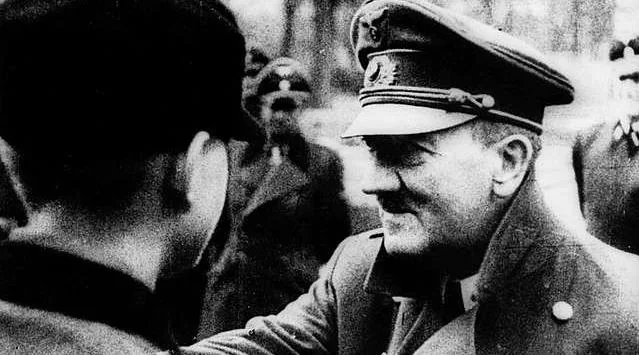
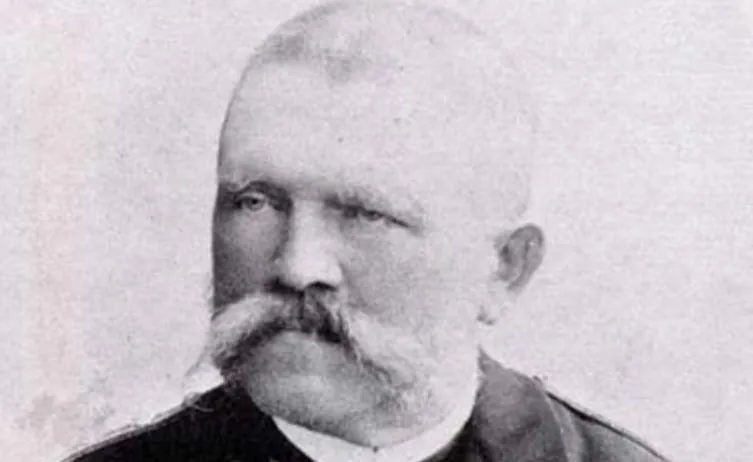
Adolf Hitler's childhood unfolded in Austria, where he was born in 1889 and raised in a household dominated by a stern, aging customs official. His father, Alois Hitler, ruled the family with an iron hand, and the young boy absorbed a worldview that mixed resentment, ambition, and a hunger for greatness. The art school rejection that followed would later become the stuff of legend, but the foundations of the dictator were laid much earlier, in the quiet towns and tense family rooms of his youth.
Adolf Hitler was born in 1889 in Austria and grew up under a domineering father, Alois, who worked as a customs official. After his father's death, Hitler pursued art in Vienna but was rejected by the Academy of Fine Arts. His early years, marked by family tension and personal failure, are often cited as formative influences on his later ideology.
- Adolf Hitler was born on April 20, 1889, in Austria, to Alois Hitler and Klara.
- His father, Alois, was a strict and authoritarian customs official who reportedly clashed frequently with his son over the boy's desire to become an artist.
- After his father's death, Hitler moved to Vienna, where he applied to the Academy of Fine Arts and was rejected for lack of talent.
- During his youth in Linz and Vienna, Hitler was exposed to German nationalist ideas and the antisemitic atmosphere of the time.
- Hitler later wrote about his childhood in Mein Kampf, presenting his early life as a struggle against his father's expectations and a formative period for his worldview.
The Question That Won't Let Go: How Did a Boy Become a Monster?
How does a child born in a small Austrian town in 1889 grow into the man who would order the murder of millions? That question sits at the center of everything that follows, and it refuses to sit still. The aim here is not to excuse Adolf Hitler, not for a single sentence. It is to walk slowly through the turning points of his childhood and youth, the bricks laid one on top of another, and to ask which of them actually mattered.
The material comes from a piece published on the Ekşi Şeyler culture channel on 7 February 2025 and written by a contributor using the handle relativity90. That writer blended his own commentary with a book he credits as Hitler, the Man Behind the Monster, attributed to Michael Kerrigan, translated by Barbaros Uzunköprü and issued by Kronik Kitap. A note on that bibliography: Kerrigan has indeed written about Hitler, but this exact title, translator and edition cannot be confirmed, so treat the citation as the author's stated source rather than a verified one.
What makes the question so stubborn is that the ordinary facts of the childhood are not, by themselves, extraordinary. A boy in Linz. A strict father. A mother he adored. Thousands of boys had that. Something in the combination, or in how the boy metabolized it, tipped. The sections ahead follow the trail from the family house to the streets of Vienna, and they do it without ever letting the monster off the hook.
Alois Hitler: An Illegitimate Child, a Violent Father
Adolf Hitler's father entered the world with a question mark hanging over his name. Alois Hitler was baptized as an illegitimate child, and for years he carried his mother's surname, Schicklgruber, before he became "Hitler." The man who gave him that name was Johann Georg Hiedler, whom Alois's mother had married years after her son was born. Whether Hiedler was actually Alois's biological father has never been settled. Historians have chased the question for generations, and the identity of Adolf Hitler's paternal grandfather remains genuinely unknown.
That mystery sat at the root of the household. Whatever psychological weight it carried, the man Alois grew into was authoritarian and harsh, a father whose word was law and whose hand was quick. Domestic violence runs through this story like a dark thread. Alois beat his wife Klara and he beat his son. The popular version of Alois as a depressive is not well supported by the evidence, but his severity is not in dispute.
He was also, contrary to the version that circulates in some retellings, a man who climbed. Alois worked in the customs service, and he did not stay at the bottom of it. He rose to the rank of senior customs inspector, Zolloberamtsoffizial, before he retired. So the picture of a frustrated low-level clerk who never advanced does not hold up.
What he wanted for his son was a civil service career, a safe desk, a pension. Young Adolf wanted none of it. He wanted to paint. In Mein Kampf, Hitler sketched a schematic portrait of working-class life, a cramped basement household of seven people where children watched their father drink and strike their mother. The details are unconfirmed, and Alois was no factory worker, but the emotional core of the passage is hard to dismiss. As the story goes, no house, however large, could have given Klara and her children enough room to escape Alois's patriarchal tyranny.
One correction belongs here. It is sometimes said that Adolf tormented his younger sister Paula. The accounts we have point the other way, toward a distant but non-abusive relationship between the two.
This is the ground floor of Adolf Hitler's childhood, and it is bleak enough on its own: an illegitimate father, a household ruled by fear, a boy who learned early that will and force were the same thing.
What Hitler Wrote in Mein Kampf, and What He Left Out
Open Mein Kampf and you find a basement. Hitler asks his reader to picture a working-class family of seven crammed into two narrow rooms below ground, five children among them, one boy of about three. That specific image, a seven-member family in a basement, is the part historians treat with caution. What is not in doubt is that Hitler did sketch working-class life into the book. The question is how much of the sketch was memory and how much was stagecraft.
Because the real household did not look like that. Alois Hitler was not a laborer. The family home was not a basement, and the family was not seven people. Hitler's passage was schematic, partly fictionalized, which makes the emotional charge underneath it stranger, not weaker.
Read the language he chose. He wrote of "indecency leaving no taste in the mouth." He wrote that understanding this environment is "hard for people who don't know" it. And then the line that stops you: that a child in such a house would come to believe "nothing but fear drives even an adult." Those are not the words of a man describing poverty. They are the words of a man describing something he saw.
Some readers find hints of child abuse in that paragraph. Even setting that reading aside, the father's "savage" attacks on the mother are right there on the page, written by the son.
From there the story reaches forward. Lebensraum, the doctrine that Germany needed more "living space" and should expand eastward into Slavic regions, is a matter of historical record. Whether it grew out of a small boy's dread for his mother is speculation, and worth naming as speculation. But it is a question the passage invites.
Nietzsche, Heidegger, and the Doctrine of Will
Friedrich Nietzsche lived from 1844 to 1900, and Martin Heidegger lived from 1889 to 1976. Two German philosophers, born forty-five years apart, whose names would later be pulled into the orbit of one of history's darkest figures. The story goes that Adolf Hitler read both of them and built a doctrine around the supremacy of will. That claim deserves scrutiny.
According to the original account, Hitler absorbed Nietzsche and Heidegger and fashioned a philosophy of raw willpower from their work. But historians have long debated how much of Nietzsche Hitler actually read. And there is no solid evidence that Hitler read Heidegger at all. The connection exists more in retrospective analysis than in documented fact. J. P. Stern reportedly argued that Hitler constructed a crude reality from metaphorical interpretations of these philosophers. Stern did write critically about Hitler's vulgarization of philosophy, though the exact wording of that assessment cannot be confirmed.
What is documented is Hitler's stubbornness. He wanted to become a painter, and he resisted his father's insistence that he pursue a civil service career. Alois Hitler wanted his son in the customs office, following a path of bureaucratic respectability. Young Adolf refused. That refusal, that insistence on his own artistic ambition against paternal pressure, would later be read as an early expression of the very will he supposedly found in Nietzsche's pages.
Then came the rejections. Hitler applied to the Vienna Academy of Fine Arts and was turned down. He tried again. Rejected a second time. The institution that could have launched him as a landscape painter instead closed its doors. Twice.
The author's conclusion is blunt: a failed landscape painter who became the world's greatest despot is not surprising, given the domestic violence and disappointment that shaped him. The boy who watched his father's brutality, who lost his mother, who was told he was not good enough for art school, became the man who demanded the world bend to his will. The doctrine of will, whatever its philosophical sources, had its roots in something far more personal. A childhood of friction and rejection, transformed into a lifetime of rage.
The Wittgenstein Connection: Schoolmate, Not Nemesis
Ludwig Wittgenstein was born on 26 April 1889, six days after Adolf Hitler entered the world on 20 April 1889. That near-simultaneous arrival has tempted storytellers for decades, and it leads straight to the Linz Realschule, the secondary school where both boys sat as pupils around 1903 and 1904. Whether they ever exchanged a word there is simply unproven, and that gap is exactly where the legend grows.
The story, as it gets told, insists the two were separated by a full two years of schooling. According to that version, the intellectually precocious Wittgenstein skipped ahead a year while Hitler was held back, widening a gap between them. The records do not support it. They were in the same class at the Linz Realschule, so no two-year educational divide existed. What remains genuinely striking is the social distance: Hitler, a struggling student from a modest background, and Wittgenstein, the son of one of the wealthiest and most cultured families in Vienna, sharing the same room and almost certainly not the same world.
Then comes the darker claim. Some accounts argue that a clash with Wittgenstein became a turning point in Hitler's life, the spark that set him on the road to becoming an anti-Semite. Treat this with real caution. It is a speculative thesis that most mainstream historians reject, and it rests on no solid evidence. What is documented is that Wittgenstein's grandparents were Jewish on both sides of his family. The popular version of the story often goes further and calls his parents Catholic, but that is only half right: his mother was Catholic and Ludwig himself was raised in that faith, while his father had been raised Jewish. The tidy picture of a Catholic boy tormented by a Jewish classmate does not survive contact with the facts.
So the Linz connection stays what it most likely always was: two future giants of the twentieth century, born six days apart, breathing the same classroom air, and probably never knowing it mattered.
The Meldemannstrasse Footnote: Hitler and the Jewish Philanthropists
In his lean Vienna years, before the war and long before the chancellery, the young Adolf Hitler lived in a lodging on Meldemannstrasse called the Haus. Here is the fact that stops people cold: it was funded by Jewish philanthropists. The future author of the Holocaust owed his bed, his meals, and his roof to the very people he would later try to erase from Europe.
That is documented. What is far shakier is the softer claim that he got along well with the Jewish men who shared that lodging. The story goes that the down-and-out Hitler was friendly with his Jewish neighbors, that they lent him money, that they argued about art and politics over the communal tables. It is a tempting detail, and it is repeated often, but it is not reliably documented. Treat it as a story the source passes along, not a settled record.
The housing itself is a different matter. The Meldemannstrasse lodging was philanthropically funded, and Jewish benefactors were associated with exactly this kind of charitable housing for the poor. So the irony holds even without the friendly-neighbor anecdote. In the hardest stretch of his life, when he had no family money, no academy place, and no prospects, Adolf Hitler was kept warm by Jewish charity. He would spend the rest of his career repaying that debt with gas chambers.
There is a quieter thread running under all of this. Later, at the height of his power and during the most critical crises of his leadership, there is abundant evidence that Hitler's attention span narrowed and that he refused advice or constructive criticism even when he needed it most. Historians read that rigidity as a reflection of the domestic tension he grew up inside, the despotism of his father Alois imprinted on the way he handled anyone who dared to correct him.
So the Meldemannstrasse footnote closes the circle. The boy who was beaten into silence became the man who could not be told anything, and the young vagrant who took Jewish charity became the dictator who tried to annihilate the people who gave it.
Frequently asked questions
What was Adolf Hitler's childhood like?
Adolf Hitler's childhood, born April 20, 1889, in Austria, was shaped by domestic violence, an authoritarian father, and a bitter clash over his career. His father, Alois Hitler, a customs officer, beat his wife and son. Young Adolf wanted to be a painter, not a civil servant, and that resistance defined his youth.
How did Alois Hitler treat his family?
Alois Hitler ruled his household with an iron hand, and beatings of both his wife and his son Adolf were part of daily life. He worked as a customs officer and retired as a senior customs inspector. The claim that he was clinically "depressive" is not well established.
Why was Hitler rejected from the Vienna Academy of Fine Arts?
Hitler applied to the Academy of Fine Arts Vienna and was rejected, then rejected again. The school judged his portfolio lacking in talent. That double refusal, layered on top of the violence at home, closed off the one future he actually wanted.
Did Hitler and Ludwig Wittgenstein attend the same school?
Both attended the Realschule in Linz around 1903 to 1904. Ludwig Wittgenstein was born April 26, 1889, six days after Hitler. Whether the two ever spoke or interacted is unproven. Contrary to a popular version, they sat in the same class, so no two-year educational gap existed.
How did Nietzsche's philosophy influence Hitler?
Hitler's engagement with Friedrich Nietzsche (1844 to 1900) is debated, and there is no solid evidence he read Martin Heidegger (1889 to 1976) at all. The idea that he built a doctrine of the supremacy of will from their work is speculative, and the claim that he absorbed them directly remains unproven.
What did Hitler write about his childhood in Mein Kampf?
In Mein Kampf, Hitler sketched a working-class family of seven crowded into a basement, with parents brawling and a small boy learning fear. The specific seven-member basement household is unconfirmed, since Alois was no factory worker and the family did not live in a basement.
Was Hitler's father abusive?
Yes. Alois Hitler is described as authoritarian and harsh, and he beat both his wife and his son Adolf. The additional characterization of him as "depressive" is not well established. What is documented is the pattern of domestic violence that ran through the household.
Did Hitler have a normal relationship with his siblings?
Contrary to a claim that he abused his sister Paula, no reliable evidence supports that. Accounts suggest a distant but non-abusive relationship between them. What we can say is that the siblings were not close, and the household tension shaped them all. Editorial note: Some details about Hitler's childhood, particularly the nature of his relationship with his father and the influence of his early years on his later actions, remain debated among historians and are presented here as interpretations rather than settled facts.
Got a take on this? Add your voice to the conversation below →
No comments yet. Be the first.