Gerbert of Aurillac: The Pope Who Brought Math to Europe
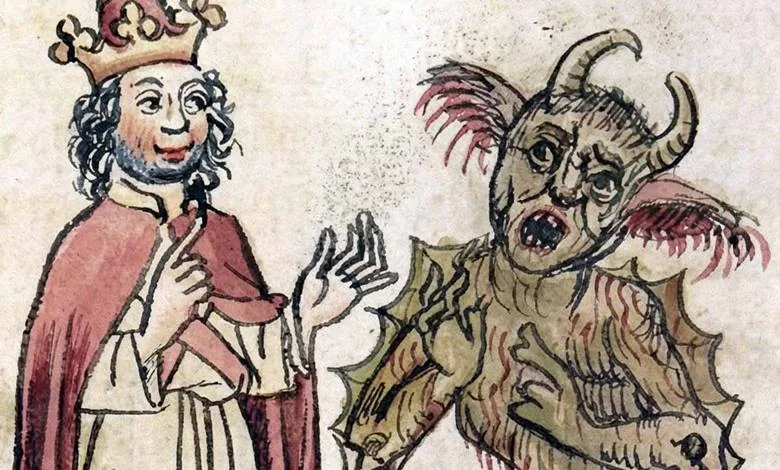
Gerbert of Aurillac became Pope Sylvester II in 999, and he spent his life pulling medieval Europe toward the mathematics of the Islamic world. He learned the abacus and the astrolabe from scholars in Spain, then taught them to a continent that counted on its fingers. His reward was a legend that he had sold his soul to a demon. Few scholars in the Middle Ages knew more, and few were more feared for it.
Gerbert of Aurillac was a tenth-century French scholar who studied in Catalonia, taught the quadrivium, and became Pope Sylvester II in 999. He worked with the abacus and the astrolabe and is linked to the early spread of Arabic numerals in Christian Europe. Later legend claimed he learned magic in Spain and made a pact with the devil.
- Gerbert of Aurillac was born around 945 in the Auvergne region of France and entered a monastery school as a boy.
- He studied mathematics and astronomy in Catalonia, where he encountered Islamic learning that was unavailable elsewhere in Christian Europe.
- He worked with the abacus and the astrolabe and is associated with the early transmission of Arabic numerals, though the extent of his personal role is debated.
- He was elected pope in 999 and took the name Sylvester II.
- After his death in 1003, a legend grew that he had a pact with the devil, sealed by a talking bronze head.
The Bones That Whisper in the Lateran
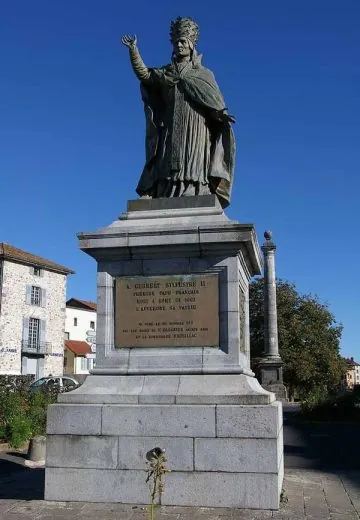
Walk into the Basilica of Saint John Lateran in Rome and look at the tombs lining the nave. According to an old tradition, if you hear a faint rattle of bones from one of them, a pope will soon die. The bones are said to belong to Gerbert of Aurillac, who reigned as Pope Sylvester II from 999 to 1003. Treat this as legend, not settled fact, but it is the doorway into one of the strangest stories of the medieval Church.
What makes Gerbert worth your time is not the ghost story. It is the mind behind it. Born around 945 in the Auvergne region of southern France, he came from a modest family and entered a monastery school as a boy. There he absorbed the trivium of grammar, logic and rhetoric, then the quadrivium of mathematics, geometry, music and astronomy. His teachers recognized something rare in him and let him keep studying instead of settling for a quiet clerical life.
Around 967, a Spanish nobleman visited the monastery at Aurillac and spotted the young monk's talent. He persuaded the abbot to let Gerbert come with him to Barcelona. That journey changed everything. Al-Andalus, the Muslim-ruled south of the Iberian Peninsula, was then one of the most advanced centers of mathematics, astronomy and philosophy in Europe, and its scholars had preserved and enriched the works of ancient Greece. Gerbert stepped into a scientific world his Latin contemporaries had mostly forgotten.
From Spain he went to Rome, where he met Pope John XIII and Holy Roman Emperor Otto I. The emperor prized men trained in mathematics, and Gerbert quickly earned his trust. He became tutor to the emperor's son, with support to keep learning and researching. In 998 he was made Archbishop of Ravenna, and in 999 he was elected pope, taking the name Sylvester II. His papacy lasted only about four years, swallowed up by political struggles that overshadowed the science he loved.
And then, centuries of rumor got to work on him. In the Middle Ages, knowledge that ordinary people could not explain often looked like magic. Mathematics, astronomy, mechanical devices, ideas arriving from distant lands: all of it carried a whiff of the forbidden. So a second Gerbert was born in the popular imagination, a sorcerer who had learned secret sciences in Spain, seized a book of spells, and struck a bargain with the devil himself.
As the story goes, Gerbert owned a mysterious head made of bronze or some other metal, and it answered questions with only yes or no. He read his future in those replies. The head told him he would not die before celebrating Mass in Jerusalem, so he kept well away from the Holy Land. Then one Sunday he celebrated Mass at Santa Croce in Gerusalemme in Rome. Saint Helena, mother of Emperor Constantine, was traditionally credited with bringing relics and soil from Jerusalem to that church, which is how it got its name. According to the legend, Gerbert realized the prophecy had caught him, and that Mass was his last.
He died on 12 May 1003 and was buried in the Lateran Basilica. A tradition holds that his tomb carried a Latin inscription referring to the resurrection of the body on Judgment Day, and that some readers later twisted the wording to mean the place itself would make sounds. The exact wording and how it changed over time cannot be reliably confirmed. From that tradition, reportedly, came the whisper of rattling bones and the claim that the noise was the devil applauding.
The most famous version of the devil-pact legend comes from the English monk William of Malmesbury, writing more than a century after Sylvester's death in De Rebus Gestis Regum Anglorum. William names no firm source for it, and he even notes that some readers might take the whole thing as fiction. Accusing a pope of sorcery was not unusual in the Middle Ages, yet this particular legend outlived most of the others. Distrust of science, and of knowledge drawn from non-Christian sources, kept it alive.
If you ever find yourself in Rome, you can go looking for his tomb in the Lateran. Keep your ears open while you are there. A quiet tapping from the bones, and the news may soon be carrying a papal election.
From a Monastery in the Auvergne to Barcelona
Gerbert of Aurillac was born around 945 in the Auvergne, the rugged highland country of southern France, near the town of Aurillac. His family was modest, not noble, and that detail matters. In a world where birth usually decided a career, his mind was the only inheritance that counted.
His parents sent him into a monastery school while he was still a child. The first rung was the trivium: grammar, logic and rhetoric. Only after that came the quadrivium, the fourfold course of mathematics, geometry, music and astronomy. This was the whole map of medieval learning, and Gerbert walked it in order, from words to numbers to the sky.
His superiors noticed quickly that they were not dealing with an ordinary recruit. Rather than let him settle into the quiet life of a country cleric, they kept him in study. Around 967, that decision paid off in an unexpected way. A Spanish nobleman visiting the monastery at Aurillac recognized the young monk's gift, persuaded the abbot to release him, and carried him south to Barcelona.
Catalonia in those years sat on the edge of a different world. In Al-Andalus, Islamic scholars had preserved and enriched the Ancient Greek works on mathematics, astronomy and philosophy, and had added centuries of their own research on top. For a monk raised on Latin textbooks, this was not a small adjustment. It was a second education.
Around 970 Gerbert traveled to Rome, where he met Pope John XIII and the Holy Roman Emperor Otto I. The emperor had a taste for men trained in mathematics, and Gerbert fit the bill. He became tutor to the emperor's son, a role that would shape the later years of his life.
The Abacus, the Astrolabe, and the Numbers That Changed Everything
Ask most people what Gerbert of Aurillac did for a living and they will say pope. Fair enough. Ask what he did with his hands, and the answer gets stranger and far more interesting: he pushed little counters around a board, carved spheres of the night sky, and taught students how to build instruments that measured the heavens.
Start with the board. The abacus Gerbert worked with was not the beaded frame you picture from a child's classroom. It was a flat surface, and in the older Latin tradition each counter on it stood for exactly one unit, which meant long, grinding columns of tokens for even modest sums. Gerbert is associated with refining the device by using counters marked with numerals, so that a single token could stand for a larger value and calculation moved faster. The extent of his personal role in that refinement is debated among historians, so treat the claim as a strong tradition rather than a settled fact.
The second claim is bigger and hazier still. Gerbert is associated with the earliest transmission of Hindu-Arabic numerals into Western Europe, and the extent of his personal role is argued over to this day. What is not in doubt is the world he was working in. Latin Europe ran on Roman numerals. The concept of zero had not taken hold, the decimal system was not in wide use, and a merchant or a monk trying to divide a large number faced a genuine ordeal. His work was one early step in a transformation that would take later centuries to complete.
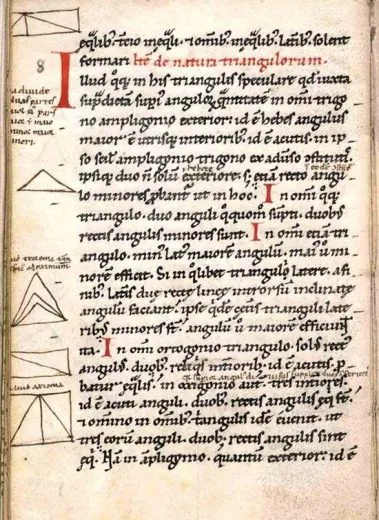
For Gerbert, arithmetic never stood alone. He treated arithmetic, geometry, music and astronomy as a single body of knowledge, the four-part course the ancient world called the quadrivium, and he set about reviving it. Numbers, in his teaching, were not just for tallying grain. They were the key to reading the universe.
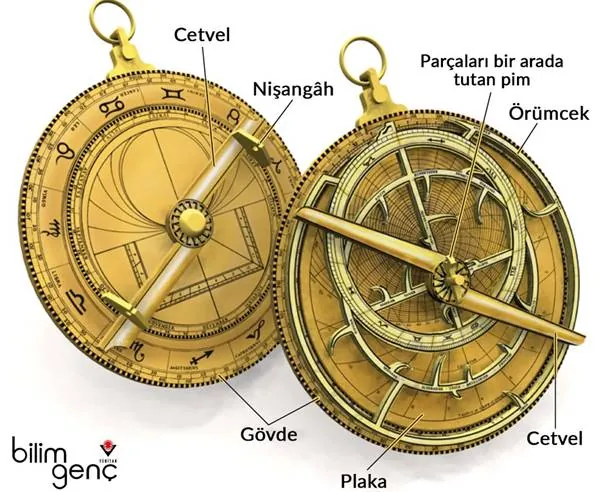
His student Richer of Reims left us a rare close-up. Richer wrote that Gerbert built spherical models representing the sky, devices that showed where the stars sat and how the celestial bodies moved. He also taught his pupils how to make astronomical instruments themselves, and he played an important role in making the astrolabe known in Western Europe. He most likely encountered that instrument in Al-Andalus, the Muslim-ruled Iberia where mathematics, astronomy and philosophy were far ahead of the rest of the continent, and he carried the knowledge north in his teaching.
Picture the scene for a moment. A classroom in late tenth-century Europe, no printed diagrams, no cheap paper. A teacher holds up a sphere marked with stars and tells his students that the sky can be modeled, that its motion can be captured in a small object you build with your own hands. That is the Gerbert who matters, more than the pope, more than the legend.
Ravenna, the Throne of Peter, and Four Short Years
In 998, the scholar from Aurillac was made Archbishop of Ravenna, and a year later, in 999, he was elected pope, taking the name Sylvester II. Those two facts sit among the most solidly documented in his entire life. What the records do not show is a man who wanted the job for its own sake. Gerbert of Aurillac had spent decades chasing manuscripts, instruments and arguments. Now he was being handed the most politically exposed seat in Latin Europe.
His fame had done this to him. Every court in Christendom knew the name of the teacher who could explain arithmetic, astronomy and music as one connected body of knowledge. That reputation made him useful to emperors and kings, and usefulness, in the tenth century, was the surest road to high office. Ravenna came first, a wealthy archbishopric on the Adriatic. The papacy came next, and it came fast.
The reign itself was brutally short. Sylvester II sat on the throne of Peter for roughly four years, from 999 until his death on 12 May 1003. Almost none of that time was quiet. Rival Roman factions, imperial politics and the endless business of governing the Church consumed his days. The scientific work that had made him famous slowed to almost nothing.
Think about what that means. The man who had built spherical models of the heavens, who had taught students how to construct and use the astrolabe, who had pushed at the edges of how numbers could be written and calculated, spent his final years tangled in disputes that had nothing to do with any of it. The papacy did not crown his scholarship. It interrupted it.
He died in 1003, and the legend that would eventually swallow his real story had not yet been born.
The Scholar Who Became a Sorcerer
In the Middle Ages, knowledge did not always inspire trust. Often it did the opposite. People readily linked knowledge they could not explain to magic, especially mathematics, astronomy, mechanical devices, and knowledge arriving from distant lands.
That suspicion settled on Gerbert of Aurillac. Over time a second Gerbert emerged in the popular imagination. This Gerbert was no longer just a scholar. Legend turned him into a sorcerer who consorted with dark powers, summoned the devil, and obtained knowledge by forbidden means.
According to the legend, he learned secret sciences in Spain, seized a book of magic, and made a direct pact with the devil. The story also says he owned a mysterious bronze or metal head that answered questions only with yes or no. He was said to read the future from those answers and make decisions accordingly.
The head told him he would not die before celebrating Mass in Jerusalem. He interpreted this as the real Jerusalem and avoided the Holy Land. Then, on a Sunday, he celebrated Mass at Santa Croce in Gerusalemme in Rome. The church was named for the Holy Cross in Jerusalem because Helena, mother of Emperor Constantine, had brought relics and soil from Jerusalem there. Thus he unknowingly "celebrated Mass in Jerusalem." The prophecy was fulfilled, and this was his last Mass.
It is worth remembering that the speaking head, the devil pact, and the prophecy belong to legend and reported tradition, not to fact.
The Tomb, the Rattle, and the Monk Who Told the Tale
When Sylvester II died in 1003, Gerbert of Aurillac, the pope who had reigned from 999 to 1003, was laid to rest in the Basilica of Saint John Lateran in Rome, and the haste of that interment became part of the story almost immediately. A tradition holds that his tomb carried a Latin inscription speaking of the resurrection of the body on Judgment Day, a standard Christian formula for a grave.
Then the words began to slip. As the story goes, some later readers took the inscription to mean that the place itself would make sounds, and from that reading a rumor grew legs. The exact wording and how it changed over time cannot be reliably confirmed. The tomb rattled, people said. The bones moved inside it. And the noise, according to the legend, was not a holy sign at all but the devil's mocking applause.
Where did the devil-pact version come from? The most famous source is the English monk William of Malmesbury, writing more than a century after Sylvester's death in De Rebus Gestis Regum Anglorum. William gives no definitive source for the tale, and he even admits that some readers might consider the whole thing fiction. That is the honest core of the legend: a monk, a hundred years late, hedging his own story.
Accusing popes of sorcery was not unusual in the Middle Ages. What set Sylvester apart was staying power. The legend outlived the others, fed by distrust of the sciences and of knowledge arriving from non-Christian sources. The rattling bones deepened the mystery around him, and the mystery kept the story alive long after the man himself was gone.
If you find yourself in Rome, you can look for his tomb in the Lateran Basilica. And keep your ears open. If you hear bones rattling, you may want to check the news.
Frequently asked questions
Who was Gerbert of Aurillac and why is he important?
Gerbert of Aurillac was born around 945 in the Auvergne region of France and reigned as Pope Sylvester II from 999 until 1003. He is remembered as a pioneering figure in mathematics, astronomy and education in medieval Europe, a scholar whose curiosity set him apart from nearly every other churchman of his age.
How did Gerbert of Aurillac become Pope Sylvester II?
Gerbert studied in Catalonia, then met Pope John XIII and Emperor Otto I in Rome around 970. He tutored the emperor's son, was made Archbishop of Ravenna in 998, and was elected pope in 999, taking the name Sylvester II. His papacy lasted only four years, ending with his death in 1003.
Did Pope Sylvester II really make a pact with the devil?
No. The devil pact is legend, not history. Its most famous telling comes from the English monk William of Malmesbury, writing more than a century after Sylvester's death in De Rebus Gestis Regum Anglorum . William cites no definitive source and even notes that some readers might consider the whole story fiction.
What was the legend of Pope Sylvester II's speaking bronze head?
According to the legend, Gerbert owned a mysterious bronze or metal head that answered questions only with yes or no. It reportedly told him he would not die before celebrating Mass in Jerusalem. He avoided the Holy Land, but on a Sunday he celebrated Mass at Santa Croce in Gerusalemme in Rome, a church named for Jerusalem, and died soon after.
How did Gerbert of Aurillac help bring Arabic numerals to Europe?
Gerbert is associated with the early transmission of Hindu-Arabic numerals to the Latin West, and with refining the abacus by using counters marked with numerals to speed up calculation. The exact extent of his role in both is debated by historians, so the credit is real but partly uncertain.
Why do rattling bones in his Lateran tomb supposedly foretell a pope's death?
Gerbert was buried in the Basilica of Saint John Lateran. A tradition holds that the Latin inscription on his tomb referred to the resurrection of the body on Judgment Day, but the wording was later reinterpreted to mean the place itself would make sounds. From that grew the rumor that rattling bones in the tomb signal a pope's approaching death.
What did Gerbert of Aurillac study in Catalonia and Al-Andalus?
He studied mathematics, astronomy and philosophy in a region where Islamic scholars had preserved and enriched the works of Ancient Greek thinkers. That environment, far more advanced than most of Latin Europe, gave Gerbert a different way of understanding the sciences, and he carried that knowledge north with him. Editorial note: Details that remain unconfirmed, particularly the magical legends attached to Gerbert's later reputation, are presented here as legend rather than established fact.
Got a take on this? Add your voice to the conversation below →
No comments yet. Be the first.