Teşkilat-ı Mahsusa: Ottoman Spy Agency That Never Existed
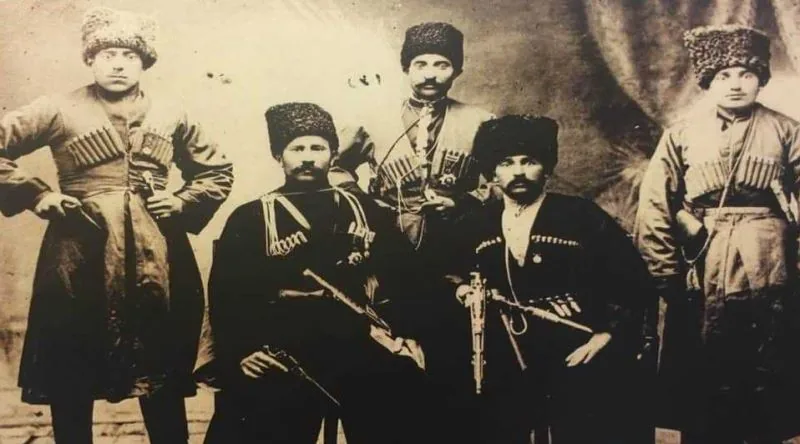
Teşkilat-ı Mahsusa, the Ottoman Empire's shadowy intelligence unit tied to Enver Pasha and the Committee of Union and Progress, is a historical puzzle whose very existence historians still debate today. The story of this clandestine organization, active during the turbulent years before and during World War I, pulls you into a world of secret agents, guerrilla warfare, and the desperate final decades of a collapsing empire. It is a tale where the lines between official policy, revolutionary zeal, and personal ambition blur into a fascinating, and often tragic, historical fog.
Teşkilat-ı Mahsusa, or the Special Organization, was an Ottoman intelligence and irregular warfare unit associated with Enver Pasha around World War I. Its existence, structure, and operations are disputed, with some historians viewing it as a formal agency and others as a loose collection of covert efforts. Its legacy remains a subject of intense scholarly debate.
- Teşkilat-ı Mahsusa was closely linked to Enver Pasha and the Committee of Union and Progress leadership during the early 20th century.
- The organization's activities were concentrated in the years leading up to and during World War I, roughly between 1913 and 1918.
- Its operations were primarily focused on the Ottoman Empire's border regions and territories in the Caucasus, the Balkans, and the Arab provinces.
- The unit engaged in intelligence gathering, sabotage, and irregular warfare, often working with local tribal and guerrilla forces.
- The exact administrative structure and official status of Teşkilat-ı Mahsusa remain unclear, with historical records being fragmentary and often contradictory.
A Secret Organization Born from the Committee of Union and Progress
Teşkilat-ı Mahsusa was a clandestine unit created inside the Committee of Union and Progress, the revolutionary political movement that shook the Ottoman Empire in the early 1900s, operating under the direct authority of Enver Pasha, the empire's influential Minister of War. Its stated mission ran deep: escape the stranglehold of imperial European powers, protect Turkish rights against minority encroachments, drag the state into modernization, and finally break the repressive grip of Sultan Abdul Hamid II. The organization reportedly began its shadowy work as early as 1911, though the formal name only came later, and on 5 August 1914 it was officially converted into a department attached to the Ministry of War. When the Committee of Union and Progress government fell from power on 8 October 1918, Teşkilat-ı Mahsusa was formally dissolved alongside it.
The spark that lit this particular fuse came from Macedonia. As European powers and local nationalist movements pushed to tear the province away from Ottoman control, the empire's leaders realized they needed a different kind of weapon, one that could fight without uniforms, without borders, without official acknowledgment. The organization's operatives would eventually range from the Caucasus to the Middle East, from the Balkans to Central Asia, carrying out counter-intelligence, propaganda, and covert organizing. Some historians insist the whole thing was a fantasy, a story that grew in the telling; the archives were never recovered, and it is widely believed that Committee leaders destroyed the documents before fleeing the country in 1918. The historian İlber Ortaylı, however, takes a different view, arguing that even without official paperwork, the evidence from memoirs and indirect records shows Teşkilat-ı Mahsusa operated de facto, a real presence that simply left no paper trail behind.
From the Balkans to the Suez: What the Teşkilat-ı Mahsusa Actually Did
The Teşkilat-ı Mahsusa's fingerprints are all over some of the Ottoman Empire's most desperate gambles, from the deserts of North Africa to the banks of the Suez Canal. But separating what this shadowy organization truly accomplished from what legend credits it with takes some careful untangling. Let's walk through the operations that historians can document, and flag the ones that remain murky.
The story starts in Tripolitania, in what is now Libya, during the Italo-Turkish War of 1911-1912. When Italy invaded, Ottoman officers and volunteers organized a fierce local resistance movement that tied down the Italian army far longer than anyone in Rome expected. The resistance itself is well documented; however, the claim that Italy was so frustrated it attacked other Ottoman territories to force a withdrawal is reported but never confirmed in the records.
A far more concrete achievement came in 1913, after the Balkan Wars had stripped the empire of its European provinces. Using irregular warfare tactics, operatives linked to the organization helped establish the Provisional Government of Western Thrace. It was a bold experiment in keeping a piece of lost territory under Ottoman influence through local resistance rather than conventional military force.
In the Balkans proper, the guerrilla campaign against Greek and Serbian forces is documented in military histories of the period. The same cannot be said with equal confidence for activities in Afghanistan and Pakistan. According to the original account, agents conducted instigative operations against British interests there, but calling it large-scale guerrilla warfare overstates what the evidence supports.
Then came the grandest scheme of all. In 1915, the Ottoman Fourth Army, with support from the Teşkilat-ı Mahsusa, planned and launched the First Suez Canal Offensive. The goal was straightforward: block the canal, choke off British supply lines to India and the Far East, and perhaps spark an uprising among Egypt's Muslim population. The offensive ultimately failed, but the planning itself reveals how far the organization's reach extended.
What makes all of this so difficult to verify is the paper trail, or rather, the lack of one. The Teşkilat-ı Mahsusa archives were never recovered. It is widely believed that Committee of Union and Progress leaders destroyed the documents before fleeing the country in 1918, when the organization was formally dissolved on October 8 of that year. Historian İlber Ortaylı has argued that the organization operated de facto even without official records, its activities known through memoirs and indirect sources.
The Great Disappearing Act: Why Historians Can't Agree If It Ever Existed
The Teşkilat-ı Mahsusa archives have never been found, and that single missing piece of evidence fuels one of the most stubborn debates in Ottoman history. In 1918, as the Committee of Union and Progress government collapsed, its leaders reportedly destroyed the documents before fleeing the country. No paper trail survived. No official record remained. Just a void where proof should have been.
That void has proven remarkably fertile ground for disagreement. Some historians look at the absence of documentation and conclude the whole thing was a myth, a story retroactively assembled from rumor and patriotic imagination. Others point to the sheer volume of memoirs, military dispatches, and diplomatic cables that reference the organization's activities and argue the opposite: that it operated so effectively precisely because it left so little behind.
Historian İlber Ortaylı has weighed in on the controversy with a characteristically pragmatic take. According to Ortaylı, the organization operated de facto even though official documents are unavailable. In other words, the lack of paperwork does not mean the work never happened. He argues that the Teşkilat-ı Mahsusa functioned in practice, its existence confirmed through the recollections of those who served in it and the indirect records of the operations themselves.
The debate gets stranger when you consider what the organization reportedly accomplished. According to the original account, it organized resistance in Tripolitania so effectively that Italy attacked other Ottoman territories to force a withdrawal. It established the Provisional Government of Western Thrace in 1913 using irregular warfare tactics. It planned operations to block the Suez Canal. These are not the achievements of a phantom. Yet without a central archive, every claim remains open to challenge.
What makes this particularly frustrating for researchers is the timing. The Teşkilat-ı Mahsusa was formally transformed into an official organization under the Ministry of War on 5 August 1914, meaning it existed as a recognized state body for over four years. It was officially dissolved on 8 October 1918, when the Committee of Union and Progress government left power. Four years of official existence, and still the records vanished.
The disappearance itself has become part of the story. As the story goes, the CUP leaders knew they were leaving and made sure the evidence left with them, or perhaps before them. Whether they burned the documents, buried them, or carried them into exile remains unknown. What is known is that no one has ever recovered them, and until someone does, the Teşkilat-ı Mahsusa will remain what it has always been: a shadow organization whose very existence is a matter of faith.
The Men Behind the Shadows: Notable Members and the Yıldız Confusion
The roster of Teşkilat-ı Mahsusa reads like a who's who of Ottoman military and intellectual life, and knowing these names helps ground the organization in real people rather than legend. Among the most celebrated was Halil Kut, the commander who forced a British army to surrender at the Siege of Kut in 1916, a rare and humiliating defeat for the Empire's enemies in Mesopotamia. He was a man of the battlefield, but the organization also drew intellectuals and agitators into its orbit.
Yusuf Akçura, a prominent Tatar intellectual and advocate of Turkish nationalism, reportedly organized conferences across various European countries during World War I to champion the rights of Tatars killed in Central Asia. The details of these activities are not well-documented, so much of what we know remains fragmentary. Other figures included Yakup Cemil, Ömer Naci, Bahaeddin Şakir, and Kuşcubaşı Eşref, each bringing their own skills to the clandestine work. Then there was Fuat Balkan, who in 1903 had co-founded Beşiktaş Jimnastik Kulübü, the Istanbul sports club that would grow into one of Turkey's most beloved football institutions. That a football club founder and a secret agent could be the same person says a great deal about how deeply the organization's members were woven into the fabric of Ottoman society.
One persistent source of confusion deserves clearing up. Teşkilat-ı Mahsusa is frequently mixed up with the Yıldız Intelligence Organization, but they were fundamentally different units serving different masters. The Yıldız organization was tied to the palace of Sultan Abdülhamid II, while Teşkilat-ı Mahsusa emerged from the Committee of Union and Progress under Enver Pasha's direction. They were, as the saying goes, as different as night and day.
Another common misconception concerns the organization's origins. Contrary to the popular version, the claim that it was originally called the Umur-ı Şarkiye Department and was equivalent to today's Chief of General Staff is incorrect. That was a separate entity entirely, and the equivalence to the modern Turkish General Staff is anachronistic. The confusion likely arises because both were connected to the Ministry of War, but they were distinct bodies with different functions. Teşkilat-ı Mahsusa was its own thing, a special organization in the truest sense of the phrase.
Frequently asked questions
What was Teşkilat-ı Mahsusa?
Teşkilat-ı Mahsusa was a secret organization established within the Committee of Union and Progress under the direction of Enver Pasha. It handled intelligence, propaganda, and irregular warfare operations both inside and outside the Ottoman Empire. The organization operated in the years leading up to and during World War I, with its formal structure tied to the Ottoman Ministry of War.
Who founded Teşkilat-ı Mahsusa?
Enver Pasha, the Ottoman Minister of War, founded Teşkilat-ı Mahsusa within the Committee of Union and Progress. The organization was created as a special unit closely tied to the CUP's political goals. On 5 August 1914, it was transformed into an official organization under the Ministry of War, giving it a formal military structure.
Why is its existence controversial?
The archives of Teşkilat-ı Mahsusa have never been found. According to the original account, CUP leaders reportedly destroyed the documents before leaving the country in 1918. Because no official records survive, historians disagree sharply. Some argue the organization existed as a formal body, while others claim it was little more than a myth or an informal label for various operations.
What activities did it carry out?
Teşkilat-ı Mahsusa organized guerrilla warfare against Greek and Serb forces in the Balkans, and helped establish the Provisional Government of Western Thrace in 1913 using irregular warfare tactics. It also organized resistance in Tripolitania and made plans to block the Suez Canal. The Ottoman Fourth Army, with Teşkilat-ı Mahsusa support, planned the First Suez Canal Offensive in 1915.
Who were notable members?
Halil Kut, the victorious commander of the Siege of Kut in 1916, was a prominent member. Yusuf Akçura, a well-known intellectual, reportedly organized conferences in various European countries during World War I to advocate for Tatars killed in Central Asia. Fuat Balkan, one of the founding members of Beşiktaş Jimnastik Kulübü in 1903, also belonged to the organization.
How is it different from the Yıldız Intelligence Organization?
Teşkilat-ı Mahsusa and the Yıldız Intelligence Organization were completely separate units with different purposes. The Yıldız organization operated under Sultan Abdülhamid II's palace structure, while Teşkilat-ı Mahsusa belonged to the Committee of Union and Progress under Enver Pasha. They were taban tabana zıt, or diametrically opposed, in their loyalties and functions. The two are sometimes confused today, but they served different masters and different political visions.
Got a take on this? Add your voice to the conversation below →
No comments yet. Be the first.