Battle of Nineveh: The Pyrrhic Victory of 627
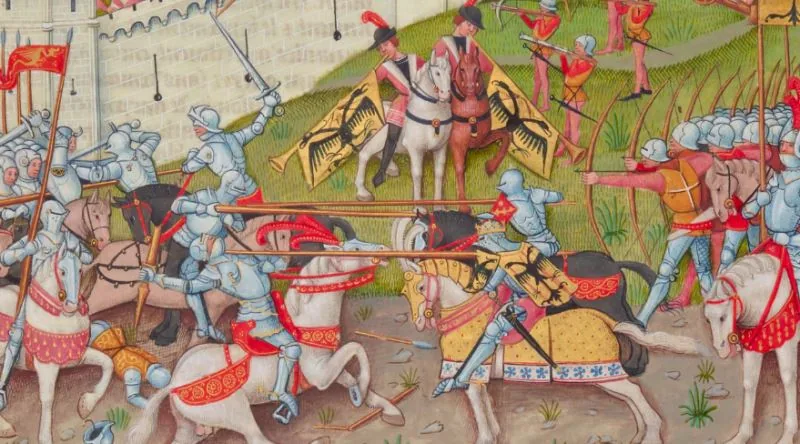
The Battle of Nineveh in 627 AD was the climactic Byzantine victory that broke the back of the Sasanian Empire, yet it left both superpowers so bloodied that a third force, the rising Islamic caliphate, swept in within a decade. For Emperor Heraclius, it was a desperate gambit after years of crushing defeat, a campaign that would crown him a savior but ultimately seal the doom of the ancient world order he fought to preserve.
In December 627 AD, Byzantine Emperor Heraclius defeated the Sasanian army under General Rhahzadh near the ruins of Nineveh in modern-day Iraq. The victory ended Khosrow II's occupation of Byzantine lands, but the two empires' mutual exhaustion left a power vacuum that the Islamic conquests would soon fill.
- The battle took place in December 627 AD near the ancient city of Nineveh, on the eastern bank of the Tigris River in what is now Iraq.
- Emperor Heraclius personally led the Byzantine army, marking one of the few times a Byzantine emperor commanded troops in the field during this war.
- The Sasanian general Rhahzadh was killed during the fighting, and his army was routed after a daylong engagement.
- The victory allowed Heraclius to march unopposed toward the Sasanian capital of Ctesiphon, forcing Khosrow II to flee and eventually be overthrown by his own nobles in February 628.
- Both empires emerged so weakened from the decades-long conflict that they could not resist the Arab Muslim armies that began their conquests in the 630s.
The Battle That Ended an Age
On December 12, 627, two exhausted superpowers collided near the ruins of Nineveh, and the world tilted on its axis. The Byzantine Empire and the Sasanian Empire had spent decades bleeding each other dry, and this single battle near the ancient Assyrian city would decide which of them limped into the future. But here is the uncomfortable truth that history books often gloss over: the Battle of Nineveh had a winner, yet it produced no true victor.
By the time the fighting started, both empires were shadows of what they had once been. The Byzantines, also known as the Eastern Roman Empire, had watched their territories slip away for years. The Sasanians, the last great Persian dynasty, had pushed deep into Byzantine lands, taking Syria, Palestine, and eventually Egypt. Yet their victories came at a terrible cost, one that would become painfully clear on that December day.
Emperor Heraclius, who had taken the throne in 610 with military backing from Carthage, led his forces personally into the fray. Sources from the period consistently describe him fighting alongside his men, a decision that boosted morale even as it risked everything on a single life. His generals maneuvered with skill, and the Sasanian command suffered heavy losses. By the end of the day, the field belonged to the Byzantines.
But winning the field and winning the war proved to be two very different things. The Sasanian Empire collapsed into internal chaos shortly after the defeat, with Khosrow II deposed and a rapid succession of rulers tearing the dynasty apart. The Byzantines, for their part, had spent so much blood and treasure that they could not capitalize on their tactical triumph. Both empires had reached their structural limits, and neither could sustain the fight much longer.
That exhaustion opened a door that would change everything. Within a few short years, the Islamic conquests swept through the region with startling speed, rolling over territories that had been contested for generations. The Battle of Nineveh did not simply end a war; it ended an age. Late Antiquity's final century had been defined by the long rivalry between East Rome and the Sasanian Empire, and on that December day, that rivalry reached its breaking point.
The battle itself was not a grand clash of fresh armies eager for glory. It was a desperate gamble by two states running on fumes, a final throw of the dice that left both empires gasping for air. Heraclius had staked everything on this confrontation, knowing that a defensive posture would only delay the inevitable collapse. He chose to strike deep into enemy territory, braving winter conditions to force the Sasanians into a decisive engagement.
It worked, tactically speaking. But the strategic picture told a different story. The Byzantine army that marched away from Nineveh was not the instrument of a resurgent empire. It was a battered force that had used up its last reserves. The treasury was empty, the provinces were devastated, and the administrative machinery that held the empire together was barely functioning.
The Sasanians fared even worse. Their defeat at Nineveh did not merely cost them a battle; it unraveled the fragile political consensus that held their empire together. Aristocratic factions that had been simmering with resentment during Khosrow II's long and costly wars now saw their chance. The dynasty tore itself apart from within, and within a few years, the Sasanian Empire had effectively ceased to exist as a major power.
What makes the Battle of Nineveh so significant is not the tactical brilliance on display, though there was some of that. It is the way this single engagement exposed the fragility of both imperial systems. Two great powers had spent a generation destroying each other's capacity to rule, and when the dust settled, neither had the strength to fill the vacuum they had created. That vacuum did not remain empty for long.
602, 610: When Byzantium Lost Its Legitimacy
Emperor Maurice was killed in 602, and that single murder unraveled the entire Byzantine state. A military revolt swept him from power and took his life, leaving the empire without the one ruler who had kept the army disciplined, the treasury balanced, and the provinces connected to Constantinople. What followed was not just a change of leadership, but the collapse of the very idea that the emperor ruled by right. The man who stepped into that void was Phocas, a centurion who had led the rebellion. His reign, which lasted from 602 to 610, became a slow bleed of arbitrary executions, court purges, and administrative chaos. Officials who served under Maurice were killed or driven out. Provincial governors lost touch with the capital. The army's loyalty shifted from the state to whoever paid best. Every execution made the next one easier, and soon the empire was being held together by fear rather than law. That internal rot gave the Sasanian Empire, Byzantium's great eastern rival, exactly the opening it needed. King Khosrow II had a personal score to settle. Years earlier, Maurice had helped him regain his own throne, and the two rulers had maintained a fragile peace. When Maurice was murdered, Khosrow declared it an unforgivable crime. He wrapped his invasion in the language of vengeance, calling his campaigns a righteous punishment for the death of a legitimate emperor. The Sasanian aristocracy and army rallied behind that cause, and Byzantine territory became the target. Between 603 and 610, Sasanian forces pushed deep into Anatolia, carving through provinces that had been secure for generations. The Byzantine army did not simply lose battles; it failed to mount coherent resistance at all. Commanders operated without coordination, supply lines fell apart, and local officials often had to choose between negotiating with the enemy or being abandoned by their own government. The empire was not being defeated so much as it was coming apart from the inside. Here is where the popular version of the story tends to go too far. Many accounts claim that Syria, Palestine, and Egypt all fell before 610. That is not accurate. Egypt did not come under Sasanian control until 619, nearly a decade later. Syria and Palestine did suffer raids and pressure during this period, but the full conquest of those provinces came after Phocas was already gone. What the empire faced by 610 was not total military defeat, but political paralysis so complete that defeat seemed inevitable. By the time Heraclius reached Constantinople in 610, backed by a military elite from Carthage, he inherited a state that was barely functioning. The treasury was nearly empty. The provinces were fragmented. The army had lost its command structure. And yet, the empire had not actually fallen. It was still standing, hollowed out but intact, waiting for someone willing to take the risk of fighting back.The Paper Tiger: Inside the Sasanian Empire's Hidden Weakness
By the early seventh century, the Sasanian Empire looked like the Near East's strongest power, and for good reason. Under King Khosrow II, Persian armies had swept through Syria, Palestine, and Egypt, slicing through Byzantium's economic lifelines like a hot knife through butter. Egypt fell in 619, a staggering blow that cut off the grain supply that fed Constantinople. On paper, the Sasanians were unstoppable.
But paper tigers tear easily. The empire's dazzling string of victories concealed a rotting foundation that would give way at the worst possible moment.
The prolonged campaigns that brought such glory came at a brutal cost. Every mile of conquered territory demanded soldiers, supplies, and silver, and the Sasanian treasury felt the strain. Tax collectors squeezed rural villages harder and harder, and resentment simmered across the Persian countryside. Peasants who had once supported the war effort began to see it as an endless drain on their livelihoods.
Meanwhile, a different kind of rot crept into the corridors of power. The Sasanian monarchy had always depended on the great aristocratic families to keep the realm together, but Khosrow II's endless wars upset that delicate balance. The nobility grew restless as the central authority demanded more money and more men for distant campaigns that seemed to benefit only the king himself. Military commanders, far from the capital at Ctesiphon, began acting like independent warlords rather than loyal servants of the crown.
This was the empire's fatal flaw. Its strength rested on temporary military superiority, not institutional stability. The Sasanian state had no deep reserves of loyalty to draw upon, no flexible administrative system that could absorb shocks. It was a war machine built for conquest, not for endurance.
So when Heraclius launched his desperate counteroffensive in the 620s, the Persian giant was already cracking from within. The Battle of Nineveh on December 12, 627, would simply deliver the final blow to a structure that had been crumbling for years. The victories that preceded it had been bought with borrowed strength, and the bill was coming due.
Heraclius's Last Gamble: From Carthage to Constantinople
When Heraclius sailed from Carthage to Constantinople in 610, he wasn't arriving as a triumphant liberator. He was stepping into a wreck. The young emperor, backed by a military elite from the North African province, found an empire that had been bleeding out for eight years straight. The treasury sat empty. Anatolia lay defenseless, its cities exposed after years of Sasanian raids. Syria and Egypt, the wealthiest provinces in the entire empire, were on the verge of slipping away entirely. Any rational ruler would have looked at this situation and started planning a long, careful recovery. Heraclius did the opposite. He understood something crucial: there was no time for rebuilding. No time for institutional reform, no time to slowly rebuild the army's numbers, no time to restore the old administrative machinery. The empire needed movement, not patience. So Heraclius made a series of desperate, calculated choices. He slashed court expenses to the bone, trimming the lavish spending that had characterized the imperial household. He reached into the church treasury, borrowing its wealth with a promise of repayment that must have felt hollow even as he made it. And he reorganized the army around a radical principle: mobility over mass. Smaller, faster, more lethal forces that could strike deep into enemy territory rather than hunkering down behind walls. This wasn't a strategy born of confidence. It was a gamble born of necessity. Heraclius bet everything on offensive action because defense had already failed. The old ways of fighting, the static frontier defenses and siege-bound campaigns, had crumbled against the Sasanian war machine. Something new was required, even if it meant risking everything on a single throw of the dice. What makes Heraclius one of the most unusual rulers of his era is how completely he fused his personal fate with the empire's survival. He didn't direct his armies from the safety of Constantinople, issuing orders from a gilded palace. He rode with them. He marched through hostile territory, slept in the field, and put his own body on the line in ways that emperors had largely stopped doing centuries earlier. The line between the man and the state blurred until they became nearly indistinguishable. By the time he finally turned east toward the heart of Sasanian territory, Heraclius had staked everything on his own ability to outthink and outfight the enemy. The empire's remaining resources, its last reserves of manpower and gold, were riding with him. There would be no second chance if this failed.The Battle of Nineveh: Winning the Field, Losing the War
When the two armies finally met near the ruins of Nineveh in December 627, neither side looked like the superpower it had been just a generation earlier. The Byzantine army was bone-tired from years of desperate campaigning, while the Sasanian forces had fractured into semi-independent commands under ambitious generals who answered to no one fully. This was not a clash of two healthy empires at their peak. It was more like two exhausted boxers throwing everything they had left into one final swing.
Heraclius made a choice that still puzzles military historians. Instead of hunkering down behind walls and waiting out the Persian advance, the emperor marched his army deep into enemy territory during winter. The decision forced the battle on Sasanian home ground, where the defenders could not simply retreat and regroup. It was a gamble that carried enormous risk, but Heraclius understood something crucial: his empire could not survive another year of defensive warfare. The only way forward was through.
The emperor himself fought in the thick of the action at Nineveh. Contemporary sources describe him leading from the front, armor on, sword in hand, personally engaging in the combat. For a ruler who had watched his empire lose Syria, Palestine, and Egypt to the Persians, this was more than bravery. It was a statement that the emperor would share the fate of his soldiers, win or lose.
On the field itself, Heraclius's capable subordinates executed the battle plan with precision. They outmaneuvered the Sasanian command, which suffered heavy losses as its leadership structure collapsed under the pressure. The tactical superiority of the Byzantine forces showed in every phase of the fighting. By the end of the day, the Persians had been driven from the field, and Heraclius had secured what looked like a decisive victory.
But here is the uncomfortable truth that the celebrations obscured: the victory bought time, not strength. The Byzantine Empire had won a battle, yet it had not restored its capacity to project power, rebuild its economy, or replenish its depleted manpower. The state's long-term resilience was gone, spent in the very campaign that produced this triumph.
What was won at Nineveh was time. What was lost was the ability to use that time effectively. Heraclius returned to Constantinople as a conqueror, but the empire he ruled was a shell of its former self, hollowed out by decades of war and unable to recover its old dominance. The victory at Nineveh would go down in history as a great military achievement. It just would not be enough to save the world that had produced it.
Double Collapse: Sasanian Disintegration and Byzantium's Quiet Retreat
The Battle of Nineveh on December 12, 627, did not merely end a war. It triggered two very different fates: the Sasanian Empire unraveled completely within a few years, while Byzantium survived but shrank into a defensive shadow of its former self. One empire vanished from history. The other quietly surrendered its place at the center of the Mediterranean world.
In the weeks after Nineveh, the Sasanian state began to come apart at the seams. Khosrow II, the king who had launched the war against Byzantium on the pretext of avenging Emperor Maurice's murder in 602, was deposed by his own nobles. What followed was a dizzying succession of rulers, each lasting only months before being overthrown or executed. The dynastic chaos gutted the empire's ability to govern, and within a few years the Sasanian state had effectively disappeared from the historical stage. The Chronicle of Seert describes this period as one of near-total collapse, with provincial governors acting as independent warlords and the central treasury empty.
Byzantium's fate was quieter but no less profound. Heraclius had won his gamble at Nineveh, but the victory had consumed the empire's last reserves of men and money. The tax system still functioned, yet it no longer produced the revenues needed for major campaigns. Border armies existed on paper, but they lacked the reserves to sustain prolonged resistance against any determined enemy. The empire kept its core territories, its capital at Constantinople, and its institutional skeleton. What it lost was its dominant position in the Mediterranean, a position it would never fully reclaim.
This simultaneous exhaustion created the vacuum that the Islamic conquests would fill in the decades after 627. The new armies sweeping out of Arabia encountered border defenses that had been bled dry by twenty-five years of Romano-Persian warfare, provincial populations weary of occupation and counter-occupation, and central governments too depleted to mount effective responses. The conquests were not simply a product of religious fervor or military brilliance. They were made possible by the fact that both great powers of late antiquity had spent their strength destroying each other.
Byzantium's retreat was not a dramatic collapse. The empire did not fall, did not fragment, did not vanish. It contracted, hardened, and adapted. Heraclius's successors would rule a smaller, poorer, more militarized state, one focused on survival rather than expansion. The Sasanian Empire had no such capacity for adaptation. Its aristocratic factions tore it apart from within, and no successor state emerged to carry its legacy forward. By the time the Arab armies reached the Iranian plateau, there was no Sasanian state left to resist them in any organized fashion.
This is the deeper meaning of Nineveh. It was a battle that produced a victor but no winning empire. The Sasanians shattered, the Byzantines shrank, and between those two outcomes, the old world order gave way to something new. The Battle of Nineveh closed one era and opened another, not because of what was won on the field, but because of what both sides lost in the process of fighting there.
A Pyrrhic Victory: What Nineveh Really Meant
The Battle of Nineveh on December 12, 627, is often remembered as a glorious Byzantine comeback, but that framing misses something essential. This was not a revival. It was a postponement, a brilliant gamble that bought Emperor Heraclius a few years of breathing room while quietly draining the empire of everything it needed to survive what came next.
Heraclius won the field that day. He led his army in person, deep in enemy territory, and shattered the Sasanian forces that had spent nearly two decades carving up the Roman East. But look closer at what victory actually delivered. The Sasanian Empire collapsed into dynastic chaos within months, true. Yet Byzantium did not step into that vacuum as a restored power. It limped forward, hollowed out, its treasury spent, its provinces ruined, its frontier armies exhausted beyond recovery.
The real story of Nineveh is not about who won. It is about what both sides lost in the getting there. For twenty-five years, the two great empires of late antiquity had been tearing each other apart. The Sasanians had taken Syria, Palestine, and Egypt, cutting off the richest provinces of the Roman world. Heraclius had answered with a desperate counterstroke, marching his army through the mountains in winter to strike at the Persian heartland. Every step of that campaign burned resources neither empire could spare.
When the dust settled, neither state could do the one thing an empire must do: project power across a vast geography. The Sasanian realm dissolved into civil war, with a rapid succession of rulers unable to hold the center. Byzantium kept its core, but its Mediterranean dominance was gone. The historian Walter Kaegi has argued that this mutual exhaustion is precisely what paved the way for the Islamic conquests, and the evidence supports him. The armies that swept out of Arabia in the 630s met not two mighty empires but two hollow shells, each too spent to mount a coherent defense.
Heraclius himself deserves a more honest assessment than the hero worship he usually receives. He was not a savior. He was an actor working within impossible constraints, a man who understood that passive defense would mean certain death and chose instead to stake everything on offense. It worked, in the narrow sense that the empire survived his reign. But the cost was structural. The administrative machinery that had once collected taxes, maintained roads, and fielded professional armies was gone. What remained was a state running on momentum, not capacity.
So Nineveh closes an era rather than opening one. It was a battle with a winner, yes, but no victor. The last great act of both empires, fought between two powers that had spent their strength proving they could no longer afford to fight each other. The new age that followed belonged to forces neither side had fully reckoned with, and the ground they left behind was fertile precisely because it had been so thoroughly exhausted.
Frequently asked questions
What was the Battle of Nineveh?
The Battle of Nineveh was a military engagement on December 12, 627, between the Byzantine Empire and the Sasanian Empire near the ancient city of Nineveh. The Byzantines secured a tactical victory, but the battle was less a triumphant rout and more a mutual exhaustion of two empires already drained by decades of war.
Why did the Battle of Nineveh weaken both empires?
By the time the two armies met at Nineveh in December 627, both the Byzantine and Sasanian Empires had been fighting each other for over two decades. The prolonged conflict had consumed their financial reserves, manpower, and military resources. The battle itself spent the last of their strength, leaving neither side capable of maintaining long-term strategic dominance.
How did Emperor Heraclius win the Battle of Nineveh?
Emperor Heraclius personally led the Byzantine forces at Nineveh, taking the initiative by attacking in winter conditions. He forced battle on Sasanian home territory, where his capable subordinates achieved tactical superiority over the Persian army. Heraclius's bold decision to fight rather than retreat proved decisive on the battlefield.
Who was Khosrow II and what was his role?
Khosrow II was the Sasanian ruler who used Emperor Maurice's murder in 602 as a pretext to invade Byzantine territories. His forces captured Syria and Palestine, and later Egypt in 619, before he was deposed following the defeat at Nineveh in 627.
What happened after the Battle of Nineveh?
The Sasanian Empire collapsed into dynastic chaos within a few years after Nineveh. Khosrow II was deposed, and a rapid succession of rulers followed. The Byzantine Empire survived but lost its dominant position in the Mediterranean, becoming a more defensive and regional power.
Did the Battle of Nineveh lead to the Islamic conquests?
Yes, the exhaustion of both empires at Nineveh is widely regarded as enabling rapid Arab expansion. The battle left the Byzantine and Sasanian Empires so weakened that their border defenses and provincial administrations could not resist the Islamic forces that emerged in the 630s.
Why is the Battle of Nineveh considered a pyrrhic victory?
Heraclius won the field at Nineveh but consumed the empire's last energy in doing so. The victory bought Byzantium time but not strength. When the Islamic conquests began shortly after, the Byzantine Empire lacked the reserves to mount an effective, sustained defense.
What was the Byzantine crisis in 602?
In 602, Emperor Maurice was killed in a military revolt, and a centurion named Phocas seized power. The empire's legitimacy and military discipline collapsed under Phocas's rule, which was marked by arbitrary executions and administrative chaos, opening the door for the Sasanian invasion.
Got a take on this? Add your voice to the conversation below →
No comments yet. Be the first.