Orphan Train: America's 1854 Child Relocation Program
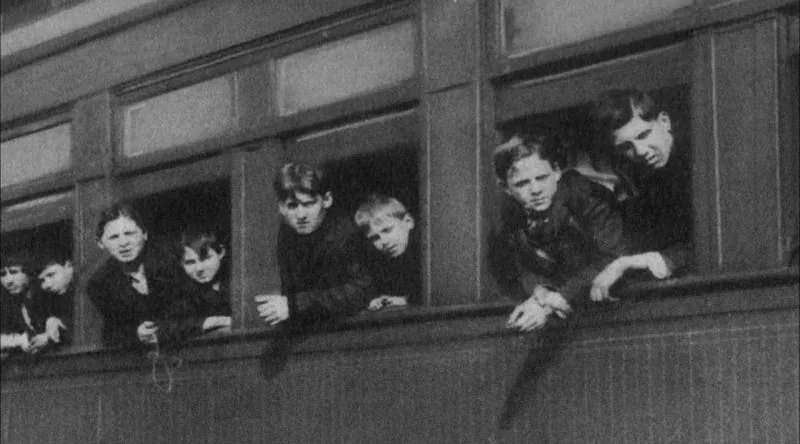
The Orphan Train movement, a massive child relocation program that ran from 1854 to 1929, shipped over 200,000 abandoned and orphaned children from East Coast cities to rural Midwest towns, where many found work rather than the loving homes they were promised. These children, some of them Irish Catholic immigrants from New York's crowded streets, were packed onto trains and sent west to unknown fates, their stories a poignant mix of hope, exploitation, and resilience that still echoes in American history.
From 1854 to 1929, the Orphan Train program moved over 200,000 children from East Coast cities to Midwest farms and towns. Children were placed with families who often treated them as laborers rather than adopted sons and daughters, with mixed outcomes ranging from genuine care to harsh exploitation.
- The Orphan Train program ran from 1854 through 1929, moving orphaned and abandoned children from East Coast cities to rural areas in the Midwest.
- An estimated 200,000 or more children were relocated during the program's operation.
- Many children were placed with families who sought free farm labor or inexpensive childcare rather than genuine adoption.
- Children who were not selected at one station were put back on the train and taken to the next stop.
- The program ended in 1929 after years of disappointing results for many of the children it was meant to help.
The Orphan Train: A 75-Year Experiment in Relocating America's Homeless Children
In 1854, the United States launched a social experiment that would touch the lives of more than 200,000 children over the next 75 years. The Orphan Train program gathered orphaned, abandoned, and homeless kids from crowded East Coast cities and shipped them by rail to the Midwest, where families were supposed to welcome them with open arms. It sounded like a noble solution on paper. The reality, as thousands of children would discover, was far crueler.
The program ran from 1854 until 1929, a stretch of three quarters of a century. Children were collected from coastal urban centers like New York City, where poverty and disease had left countless youngsters without parents or guardians. Volunteers loaded them onto trains and sent them west, stopping at small towns along the way where local residents would gather to inspect the arrivals. The children stood on makeshift platforms, often in their best clothes, hoping someone would choose them.
But the selection process rarely resembled the heartwarming adoption scenes organizers had imagined. Many of the people who came to these stops were reportedly not looking to expand their families out of love. According to the original account, many were seeking free farm labor or inexpensive childcare, though historical records show a mix of motivations. A farmer might pick a sturdy boy to work his fields. A new mother might take a girl to help with household chores. Genuine adoption, the kind that provided a real home and emotional security, was not the common outcome.
Children who were not selected faced an especially bleak fate. They were simply put back on the train and carried to the next station, where the process repeated itself. Imagine the crushing weight of being passed over again and again, watching strangers size you up and shake their heads. For many, the journey became a loop of disappointment that stretched across state lines.
Contrary to the popular version of the story, the children were not mostly Irish Catholic immigrants. While many did come from Irish and other Catholic immigrant families, they were not the majority overall. The trains carried a mix of backgrounds, all united by the same misfortune of being alone in a harsh world.
By 1929, the program had run its course and was officially ended. The experiment, which had promised happy endings, largely delivered heartbreak instead. The children who rode those trains often found that life in the Midwest was not the fresh start they had been promised. Some were treated kindly. Many were not. The scars of those journeys stayed with survivors for the rest of their lives.
The story of this painful chapter lives on in popular culture. Author Christina Baker Kline wrote a novel titled Orphan Train that was inspired by the true events of the movement. The book weaves together past and present to illuminate what those children endured, introducing a new generation to this overlooked piece of American history.
The Orphan Train remains a sobering reminder that good intentions do not always produce good outcomes. What began as a charitable effort to rescue homeless children from the streets of Eastern cities turned into a 75-year ordeal that left thousands feeling unwanted, overworked, and forgotten.
Who Were the Children on the Orphan Train?
They were the invisible ones of America's booming cities, the children who had no one left to turn to. Between 1854 and 1929, an estimated 200,000 orphaned, abandoned, and homeless children were loaded onto trains in East Coast cities like New York and sent west, into the unknown, in what became known as the Orphan Train movement.
Many of these kids came from Irish Catholic immigrant families, though they were not the majority. Their parents had often died in epidemics, factory accidents, or the brutal poverty of tenement life. Some children were true orphans. Others had been abandoned on doorsteps or simply left to fend for themselves when a mother or father could no longer feed them. The streets of New York were full of these kids, sleeping in alleys, begging for bread, running in packs to stay warm.
The solution, as conceived by the reformers of the day, was to sweep them up and ship them out. The children were gathered from the crowded coastal cities and put on trains heading for rural towns in the Midwest, the West, and the South. For kids who had never left their own block, the journey was dizzying. The landscape changed from brick and smoke to endless fields. The train clattered on for days, and at each stop, the children were led onto the platform like merchandise at a market.
Local families came to look them over. According to the original accounts, many of these families were reportedly not looking for a child to love. They wanted free labor for their farms or cheap help for a new mother. Only a small number genuinely came to adopt. Children who were not chosen were simply put back on the train and taken to the next station, where the whole ordeal began again. You can imagine the dread of that moment, watching the train pull away with you still on it, wondering if any town would ever take you in.
The Heartbreak at Every Station: Selection and Rejection
Every train stop turned into a small, quiet tragedy. When the Orphan Train pulled into a rural station, the children were led off and lined up like merchandise at a market. Local families walked slowly among them, looking them over, asking them to turn around, checking their hands and their teeth. The children who were not chosen were simply put back on the train and carried to the next station, where the whole painful ritual began again.
According to the original accounts, many of the townspeople who came to these selections were reportedly not looking for a child to love. As the story goes, they wanted free farm labor or cheap childcare, someone to work the fields without wages or to watch the baby without a salary. Only a small handful of families arrived with the genuine intention of adopting a child and giving it a real home. The rest came shopping for muscle and obedience.
The children learned quickly what was happening. They watched the faces of the adults who inspected them, trying to guess which ones might be kind. They saw other kids get picked and disappear into wagons, and they saw kids get passed over and led back toward the train cars. That return trip, the walk back onto the train after being rejected in front of everyone, was its own kind of wound. The practice of sending unselected children onward to the next station is well-documented, and it repeated itself again and again from 1854 until the program finally ended in 1929.
Why Did the Orphan Train Program End?
The Orphan Train program shut down in 1929, and it ended because for countless children, life did not get better. It often got dramatically worse. What began in 1854 as a grand experiment in finding homes for abandoned kids collapsed under the weight of its own failures and the heartbreak it produced.
The final decades of the program were marked by growing awareness of just how badly things had gone wrong. Children who rode those trains westward were supposed to find loving families, warm beds, and a fresh start. Instead, too many found themselves treated as free labor, worked from dawn to dusk on farms, or handed endless chores with no affection and no future. The gap between the program's promise and its reality became impossible to ignore.
By the 1920s, child welfare practices had started to change across the United States. The old model, with its chaotic station stops and public selection rituals, looked increasingly cruel and outdated. The program had promised these kids a family, but for many it delivered uncertainty and rejection instead of the loving homes they had been led to expect.
The disappointment was not just institutional. It was deeply personal. Children who were not chosen at one station were simply put back on the train and carried to the next town, where the process repeated itself. Imagine standing on a platform, watching strangers size you up, and being passed over again and again. That experience left scars that no amount of eventual placement could heal. The program had promised these kids a family, but it delivered uncertainty, rejection, and, in far too many cases, outright exploitation.
When the program came to an end in 1929, it marked the conclusion of a 75-year chapter in American history. More than 200,000 children had been transported from East Coast cities to the Midwest and beyond. The outcome was clear: it had failed in its stated goal of finding loving homes for many of the children it moved.
Writer Christina Baker Kline captured that lingering pain in her novel "Orphan Train," which was inspired by the real events of the movement. The book shows how the echoes of that failed program continued to shape lives for generations.
The Orphan Train in Popular Culture: Christina Baker Kline's Novel
Author Christina Baker Kline wrote a novel simply titled Orphan Train, and it did something remarkable: it pulled a forgotten piece of American history back into the spotlight. The book, inspired by the real Orphan Train movement that ran from 1854 to 1929, introduced many readers to the children who rode those rails westward. Kline's novel weaves together two storylines, one following a modern-day teenager and the other tracing the life of a young girl placed on an Orphan Train in the 1920s.
What makes the novel land with such force is how honestly it portrays the children's inner lives. Kline researched the era deeply, drawing on firsthand accounts and archival records to capture the texture of those journeys. The book shows the children's hopes as they stepped onto the platform at each stop, their fears as strangers inspected them, and their disappointments when they were passed over. The novel refuses to soften the edges of what these children endured.
The book's success sparked renewed interest in the historical Orphan Train program. Readers who had never heard of the 200,000-plus children sent from East Coast cities to the Midwest suddenly wanted to know more. Kline's novel gave a face to a statistic, transforming abstract history into the story of one girl's struggle for belonging. In doing so, it ensured that the voices of those children would finally be heard by a new generation.
Frequently asked questions
What was the Orphan Train program?
The Orphan Train was a 19th-century American initiative that moved orphaned and abandoned children from crowded East Coast cities to rural areas in the Midwest, West, and South for adoption. Operating from 1854 to 1929, the program transported more than 200,000 children by rail in hopes of finding them new homes.
Who were the children on the Orphan Train?
The children were orphaned, abandoned, or homeless youngsters gathered from places like New York City and other East Coast urban centers. While many came from Irish Catholic immigrant families, contrary to popular belief they were not the majority. The group included children from many different backgrounds and circumstances.
Why did the Orphan Train program fail?
The program largely disappointed because many families who came to select children were reportedly seeking free farm labor or cheap childcare rather than genuine adoption. As the story goes, only a small portion of families truly wanted to adopt. Many children ended up in conditions worse than what they had left behind.
When did the Orphan Train program end?
The program ended in 1929 after 75 years of operation. The conclusion marked the end of a movement that had touched the lives of hundreds of thousands of vulnerable children across America.
Did the Orphan Train inspire any books?
Yes, Christina Baker Kline wrote a novel titled "Orphan Train" that was inspired by true events. The book sheds light on the drama of that era, capturing the hopes, fears, and disappointments of children who were shuttled from place to place searching for belonging.
Where did the Orphan Train take children?
Children were taken from East Coast cities to rural areas in the Midwest, West, and South. At each station stop, townspeople would gather to inspect and select children, while those not chosen were put back on the train and carried to the next stop to try again. Editorial note: Any facts which remain unconfirmed are presented as such, hedged to reflect the uncertainty inherent in historical records from this era.
Got a take on this? Add your voice to the conversation below →
No comments yet. Be the first.