Medieval Book Protection: Chains, Chests, and Curses

Medieval book protection relied on a practical arsenal of chains, locked chests, and written curses to safeguard irreplaceable manuscripts. These measures were born from a simple reality: books were so valuable that losing one to a thief or careless borrower shaped centuries of library design. From chaining volumes to reading desks to hiding them inside heavy oak chests, every method aimed to keep knowledge exactly where it belonged.
Medieval libraries protected books by chaining them to reading desks, storing them in locked chests, and adding handwritten curses that threatened divine punishment for thieves. This system was common across Europe, with the Gorton chest as a surviving example of a locked book box that reportedly chained books on the inside.
- Chaining books to shelves was the most effective way to keep them safe in the Middle Ages, with surviving volumes still showing the marks left by iron chains.
- The Gorton chest, a 17th-century piece at Chetham's Library, was reportedly made to hold 68 volumes purchased in 1658 under Humphrey Chetham's will.
- Medieval book curses, often written on the final page, threatened excommunication, damnation, or physical affliction for anyone who stole or damaged the volume.
- Books were so valuable that medieval readers developed surprisingly creative strategies, including heavy locked chests that were too cumbersome to steal.
- Book curses appeared across cultures, including an Arabic example from Jerusalem's Syriac community that called down God's wrath on thieves.
Why Medieval Books Needed Protection
In the Middle Ages, a single book was worth a small fortune, making theft a constant and serious problem for libraries, churches, and private collectors alike. With such enormous value attached to these handwritten treasures, medieval readers developed surprisingly creative strategies to keep their collections safe. This article explores the three main methods they relied on: chains, chests, and curses.
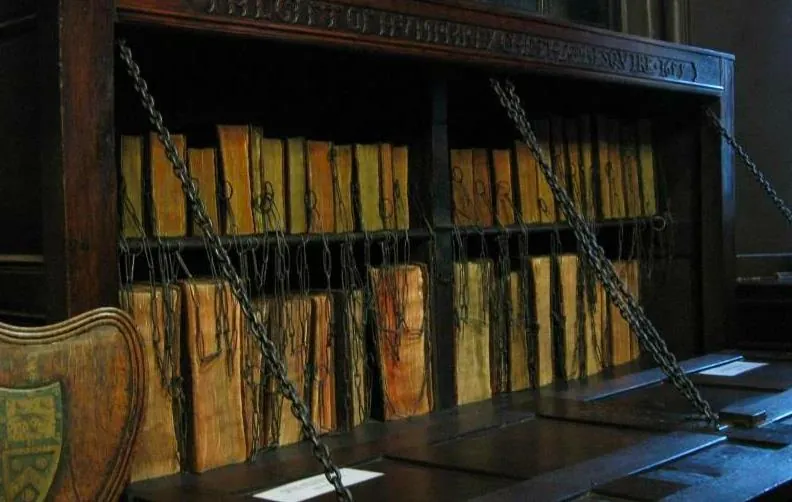
Picture walking into a medieval library and seeing books literally bolted to their shelves. That was the first line of defense, and it worked remarkably well. The chains weren't meant to keep readers away; they were meant to keep thieves from walking out with a fortune. Today, you can still spot the evidence on surviving volumes, whether from the actual iron links or the telltale marks they left pressed into the wooden covers. It's not so different from how modern electronics stores tether display phones to their counters, just with a lot more rust and medieval craftsmanship.
The second approach was the book chest, a heavy wooden box secured with one or more locks, often too massive for anyone to simply carry off. At Merton College library in Oxford, a 14th-century chest still survives as a perfect example of this strategy. Think of it as the medieval equivalent of a bank vault, built not for convenience but for pure, stubborn security.
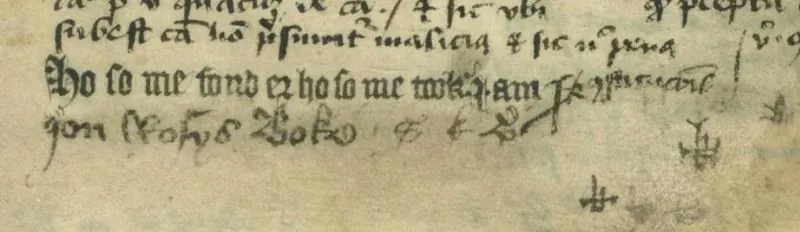
Then came the strangest protection of all: the curse. Medieval scribes would write warnings directly into their books, promising divine punishment for anyone who dared steal them. Some of these curses were genuinely terrifying, threatening eternal damnation unless the thief returned the volume or paid penance. Book curses even appeared in Arabic traditions, including one from Jerusalem's Syriac community that called down God's wrath on anyone who removed the manuscript from its rightful place. Bishop Leofric, who donated manuscripts to Exeter Cathedral in the second half of the 11th century, included an Anglo-Saxon curse in one of his gifts, suggesting that recipients needed extra encouragement to treat books with proper care. The English note "ho so me fond er ho so me took i am jon fosys boke" translates simply enough: whoever finds or takes this book, it belongs to John Foss.
Chaining Books to Shelves
If you have ever wondered why some old libraries look like they are holding their books hostage, the answer is simple: chaining books to shelves was the most effective way to keep them safe in the Middle Ages. A book was worth a small fortune back then, so librarians did whatever they could to make sure nobody walked off with one.
Walk into any medieval library today and you can still spot the evidence. Many old books carry telltale marks on their wooden covers, scars left behind by the iron chains that once anchored them in place. Those chains were not decorative. They were the medieval equivalent of the security cords you see holding display phones and tablets down at a modern electronics store. The comparison is almost too perfect. A shopper can pick up a phone, test it, and put it back, but they cannot walk out the door with it. A medieval reader could open a chained book, read it at the lectern, and close it again, but the book was never leaving that room.
Chained libraries were once common across Europe, and a handful still survive today. Visitors to these places often describe the same strange feeling: rows of books standing behind their chains, waiting patiently, still tethered to the very shelves that protected them centuries ago. The chains tell you something important about how knowledge was accessed in the Middle Ages. You did not borrow a book and take it home. You came to the book, sat down, and read it where it lived. The chain was not just a lock. It was a statement about how precious these objects really were.
Locked Chests: The Medieval Safe
Chaining books to shelves worked well, but it wasn't the only trick medieval librarians had up their sleeves. Some of the most valuable collections were locked away inside heavy wooden chests, the medieval equivalent of a bank vault. These chests were built to be too heavy to move easily, and they came fitted with one or more locks to keep curious hands away from the pages inside.
Today, you can still see a surviving example at Merton College in Oxford, where a 14th-century chest remains on display. It's a sturdy, no-nonsense box that makes it easy to imagine how a librarian in the 1300s would have carefully placed each manuscript inside, turned the key, and felt that small comfort of knowing the books would stay put until morning.
Chetham's Library in Manchester offers a more unusual twist on this idea. The library holds what's known as the "Gorton chest," a 17th-century piece that reportedly chained books on the inside rather than just locking them away. According to the account, the chest was made to hold 68 volumes purchased in 1658 under the terms of Humphrey Chetham's will, and those books supposedly made up the entire church library at Gorton. Whether the chest really held every book the church owned is hard to verify, but the image of a locked box with chained books inside paints a vivid picture of just how far people would go to protect their collections.
Most book chests didn't bother with chains, though. The simple math was this: if a chest is too heavy to lift, it's too heavy to steal. Add a solid lock on top, and you've got a secure storage system that works like a modern safe. A thief would need time, tools, and a lot of nerve to break in, which made these chests a practical choice for libraries that couldn't afford to lose a single volume.
For anyone researching medieval book protection, these chests show a clever blend of brute force and careful design. They weren't just storage boxes; they were security systems built from oak and iron, and they did their job well enough that examples like the one at Merton College have survived centuries to tell the tale.
Book Curses: The Ultimate Deterrent
If chaining a book to a shelf felt too mechanical, and locking it in a chest felt too heavy, medieval scribes had one more trick up their sleeves: they wrote curses directly into the pages. It was a third, far more unusual method of medieval book protection, and it relied entirely on fear of the afterlife rather than physical restraint.
According to the original account, a book belonging to St. Caecilia Church carried a chilling warning. Anyone who stole the volume or removed it from the church would be cursed forever, unless they returned it or performed penance. Another curse reportedly went further, promising that a thief would be accused by a holy martyr before Jesus Christ on Judgment Day. Whether these exact words survive in any archive is unconfirmed, but they capture the spirit of the era perfectly.
Book curses were not limited to Latin Christendom. In Jerusalem, the Syriac community wrote a similar warning in Arabic: whoever stole the book or took it from its place of donation would be cursed from God's mouth, and God would be angry with them. The tradition clearly crossed languages and cultures.
Bishop Leofric, who donated a manuscript to Exeter Cathedral in the second half of the 11th century, included an Anglo-Saxon curse in the volume. The gift came with a condition: treat this book with extra care, or face the consequences. Around the same period, a contested story places a man named Humphrey as abbot of Rochester Abbey in Kent. The account suggests that Humphrey copied books for the community, adding a curse alongside a note reading "in memory of precentor Humphrey."
Some inscriptions took a gentler approach. An English note reads: "ho so me fond er ho so me took i am // jon fosys boke," meaning whoever finds me or takes me, I am John Foss's book. The message is plain and direct. Yet the account adds a suspicious detail: the name was written over an erasure, with a previous owner's name scraped away. As the story goes, this suggests John Foss himself may have been the thief who stole the book and claimed it as his own.
Did Book Curses Actually Work?
Book curses raise a wonderfully awkward question: did anyone actually believe these threats would stop a determined thief? The honest answer is that we cannot know for sure, but the notes themselves reveal a charming optimism. The people who wrote them genuinely seemed to think a gentle reminder scrawled in the margins would be enough to make a would-be thief think twice.
Think about the logic for a moment. You have a book so valuable that it gets chained to a shelf or locked inside a heavy chest. Then, when those physical barriers fail, you turn to words. Some curses were elaborate, calling down eternal damnation. Others were simpler, just asking the finder to return the book to its rightful owner. One English note reads, "ho so me fond er ho so me took i am jon fosys boke," which translates to "whoever found me or took me, I am John Foss's book."
That particular inscription tells a darker story. The name was written over an erasure, a spot where a previous owner's name had been scratched out. According to the original account, this suggests John Foss may have been a thief himself, claiming a book that was never his to begin with. If that is true, then the curse on the book did not work. The book was still stolen, still claimed, and still passed along.
So why bother writing curses at all? Maybe because the alternative was doing nothing. Chains could be broken and chests could be pried open, but a curse traveled with the book wherever it went. It was a last line of defense, a way of saying that even if you take this book, you will never truly own it. The writer of the note believed in the power of that reminder, even if the evidence suggests otherwise.

Frequently asked questions
What methods were used to protect books in medieval times?
Medieval librarians relied on three main strategies to keep their collections safe: chaining books directly to shelves, locking them inside heavy chests, and writing curses inside the pages. Each approach targeted a different weakness. Chains stopped casual theft, chests made removal physically difficult, and curses appealed to the thief's fear of divine punishment. Together these methods formed a surprisingly effective security system for an age when a single book could cost as much as a small house.
Why were medieval books chained to shelves?
Books were chained to shelves to prevent theft while still allowing people to read them. The chain was long enough to let a reader pull the book to a nearby desk, but short enough to stop anyone from carrying it out of the library. Think of how modern electronics stores tether display phones to their tables. The same logic applied in medieval libraries, where losing even one volume meant losing a fortune.
What is a book curse and how did it deter thieves?
A book curse was a written threat of divine punishment inscribed inside a manuscript, warning that anyone who stole or damaged the book would face eternal consequences. One curse from St. Caecilia Church reportedly declared that whoever took the book would be damned forever unless they returned it or paid penance. Another warned that a holy martyr would accuse the thief before Jesus Christ on Judgment Day. These curses treated book theft as a sin, not just a crime.
How did medieval book chests prevent theft?
Book chests were heavy wooden boxes fitted with one or more locks, designed to be too cumbersome to carry away. The weight alone made them impractical to steal, while the locks protected the contents from anyone who managed to open the lid. A locked chest functioned like a modern safe. The 14th-century chest at Merton College library in Oxford survives as a fine example of this approach, showing how seriously institutions took the security of their collections.
What is the Gorton chest at Chetham's Library?
According to the original account, Chetham's Library in Manchester holds a 17th-century chest called the Gorton chest, reportedly built to hold 68 volumes purchased in 1658 under Humphrey Chetham's will. The story goes that these books formed the entire church library. The chest chained books inside, combining the security of a lock with the restraint of a chain. However, the specific details of this chest cannot be independently confirmed.
Did medieval book curses actually work?
Book curses likely did not always work, despite their fearsome language. The case of John Foss suggests that some readers simply ignored them. An English inscription in one manuscript reads "ho so me fond er ho so me took i am jon fosys boke," meaning whoever finds me or takes me, I am John Foss's book. The note was written over an erasure of a previous owner's name, reportedly suggesting Foss may have acquired the book dishonestly. Curses could not stop everyone.
Where can I see chained libraries today?
A small number of chained libraries still survive across Europe. These rare institutions preserve the original chains, rods, and wooden shelves that once secured medieval collections. Visitors can see the marks left by chains on old book covers and the iron fittings still attached to historic furniture. The practice faded as printing made books cheaper and more plentiful, but these surviving libraries offer a glimpse into a world where reading was a privilege worth protecting.
How did Bishop Leofric's gift include a curse?
Bishop Leofric donated a manuscript to Exeter Cathedral in the second half of the 11th century, and that manuscript carried an Anglo-Saxon curse. The curse warned against removing the book from the cathedral, adding a spiritual penalty to the gift. This combination of donation and curse appears frequently in medieval records. It suggests that even generous benefactors worried about how their gifts would be treated, and they used every tool available to ensure their books stayed where they belonged. Editorial note: Any facts which remain unconfirmed are presented as such, hedged where the historical record is incomplete.
Got a take on this? Add your voice to the conversation below →
No comments yet. Be the first.