Kubilay Incident: Atatürk's Fury and the 'Cursed City'
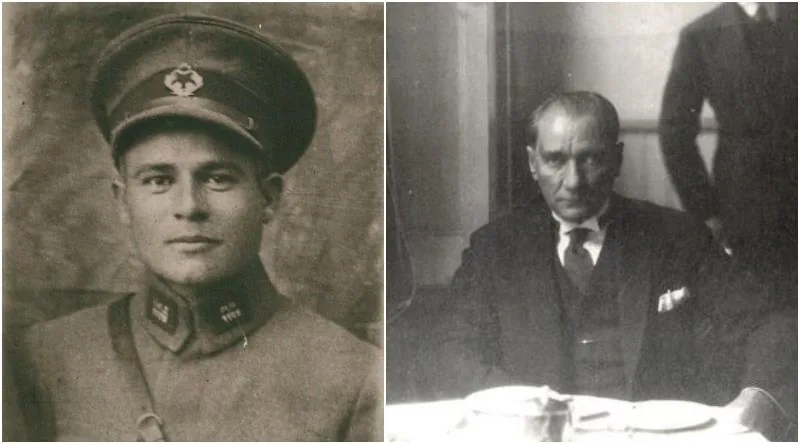
The Kubilay Incident of 1930 saw an anti-republican mob murder a young reserve officer in Menemen, Turkey, prompting Mustafa Kemal Atatürk's furious response. According to one memoir, he even proposed declaring the town a "cursed city." The brutal killing of Mustafa Fehmi Kubilay, a teacher and officer, shook the young Turkish Republic to its core. The event remains one of the most emotionally charged moments in modern Turkish history, a story of idealism meeting violent reaction.
On December 23, 1930, a mob inspired by religious reactionaries killed Reserve Officer Kubilay in Menemen, Izmir Province. Atatürk reacted with fury, ordering swift military justice. According to one memoir, he proposed renaming the town "Cursed City." The incident effectively ended Turkey's immediate multi-party experiment and led to a wave of executions.
- The Kubilay Incident occurred on December 23, 1930, in the town of Menemen, near Izmir.
- A mob led by a Dervish named Mehmet killed Reserve Officer Mustafa Fehmi Kubilay in the town square.
- According to Kazım Özalp's memoir, Atatürk proposed declaring Menemen a "cursed city" (ville maudite) as a mark of national disgrace.
- The government responded with a harsh military tribunal that sentenced multiple perpetrators to death for their roles in the uprising.
- The incident effectively ended the immediate multi-party experiment, though Atatürk continued to voice support for democracy in principle.
A Young Officer, a Town Square, and a Republic Under Siege
On 23 December 1930, in the small Aegean town of Menemen, Turkey, a reserve officer named Mustafa Fehmi Kubilay was killed in the town square by a group of anti-republican rebels. The event, now known as the Kubilay Incident or the Menemen Incident, struck at the very heart of the young Turkish Republic. It happened while Mustafa Kemal Atatürk was still alive, just seven years after the republic had been proclaimed, and it sent a shockwave through the nation's capital.
Menemen was not a place where anyone expected trouble. It was a quiet farming town near the city of İzmir, known for its fertile plains and its famous woven fabrics. But on that December morning, a small band of men led by a local figure named Derviş Mehmet gathered in the central square, calling for the restoration of the caliphate and the sharia law that Atatürk's reforms had abolished. They carried a green flag and shouted slogans against the republic. When Kubilay, who was serving as a reserve officer in the local garrison, came forward to confront them, he was overwhelmed and killed.
The news reached Ankara like a physical blow. According to the account of Kazım Özalp, who was serving as the Speaker of the Grand National Assembly at the time, Atatürk was furious in a way that those around him had rarely witnessed. Özalp later recalled in his memoir Atatürk'ten Anılar that the president was summoned to the presidential residence, where he found Atatürk pacing, his face pale with anger. The prime minister, İsmet İnönü, and the Minister of National Defense, Zekai Apaydın, were also called in. Atatürk reportedly said that the murder of an army officer in a government square, in the name of religion, was an act of treason against the republic itself, and he demanded swift and severe punishment.
What happened next has been the subject of much discussion. According to Özalp's memoir, Atatürk used a French term, ville maudite, meaning "cursed city," and suggested that Menemen deserved to be declared one. This idea, however, is not supported by any other credible historical source, and it appears only in Özalp's account. What is certain is that Derviş Mehmet and his associates were captured, tried by a military court known as a divan-ı harp, and executed. The incident left a lasting mark on Atatürk, who reportedly never spoke of it without emotion. Some have claimed that he abandoned multi-party politics altogether after 1930, but that is an oversimplification. He did not launch another party, yet he continued to express support for democratic ideals in the years that followed.
Atatürk's Fury: A Memoir of a 'Cursed City'
The rawest account of Atatürk's reaction to the Kubilay Incident comes from Kazım Özalp Pasha, a general who served as one of his closest associates. In his memoir "Atatürk'ten Anılar," Özalp describes being summoned to the presidential residence in Ankara the moment the news broke on 23 December 1930. He writes that the report hit the capital like a bomb, and that Atatürk was angrier, sadder, and more agitated than anyone had ever seen him.
According to Özalp's account, Atatürk paced the room as Prime Minister İsmet Pasha, Defense Minister Zekai Bey (Apaydın), and Army Inspector Fahrettin Pasha (Altay) all arrived. The president's fury poured out in a torrent of words. How could reactionaries, he demanded, slaughter an army officer in the government square in the name of religion? Where were these traitors during the Greek occupation? He insisted the punishment must fall not just on the killers but on all of Menemen, since thousands of residents had stood by without intervening.
Here the memoir takes its most dramatic turn. Atatürk reportedly declared that the town of Menemen deserved to be declared a "ville maudite," a cursed city. The French custom, as Özalp explains it, meant dispersing the entire population to other towns across the country, burning the emptied city to the ground, and erecting a large black stone column in the government square as a warning to future generations.
Now, a word of caution about that famous quote. The "ville maudite" remark appears solely in Özalp's memoir, and no credible historical source confirms Atatürk ever used that phrase. The publication details of the memoir itself, including the claimed 1992 Türkiye İş Bankası edition and page numbers 47-48, cannot be independently verified. Treat it as a reported anecdote from a close confidant, not as established history.
What the memoir does record next is telling. Özalp suggested waiting a day or two for detailed reports before acting, hoping to let the atmosphere cool. Atatürk never mentioned "ville maudite" again. Derviş Mehmet and his accomplices were captured, tried before a military court (divan-ı harp), and executed. Özalp adds that Atatürk never forgot the incident and never again attempted a multi-party experiment, though that last claim overstates things: he continued voicing support for multi-party democracy even if he launched no new party after 1930.
The Aftermath: Trials, Executions, and the End of an Experiment
The justice that followed the Kubilay Incident was swift and absolute, but the political consequences would echo far beyond the courtroom. Derviş Mehmet and his associates were captured, tried by a military court known as the divan-ı harp, and executed, closing the chapter on the perpetrators who had killed the young reserve officer in Menemen on 23 December 1930.
Kazım Özalp, a senior military commander and close associate of Atatürk, later recorded his memories of those tense days in his memoir. According to Özalp's account, when news of the killing reached Ankara, it landed like a bomb. Atatürk summoned him to the presidential residence immediately, visibly furious and deeply shaken. The atmosphere was electric with anger as the top leadership gathered: Prime Minister İsmet Paşa, Defense Minister Zekai Apaydın, and Army Inspector Fahrettin Altay all rushed to the scene.
In that heated moment, Özalp claims Atatürk was so enraged that he floated the idea of declaring Menemen a "ville maudite," a cursed city whose entire population would be expelled and whose buildings would be burned as a permanent warning. The French term reportedly crossed his lips in his fury. Özalp, hoping to cool the temperature, suggested they wait a few days for detailed reports before acting on such a drastic measure.
Here the memoir takes an interesting turn. According to Özalp, Atatürk never mentioned the "ville maudite" idea again. The moment of rage passed, and the legal process took its course. But Özalp also makes a broader claim: that Atatürk "never attempted multi-party politics again" after this episode.
That last assertion needs some context. While it's true that Atatürk did not launch another opposition party after 1930, the statement is too absolute. He continued to voice support for the multi-party idea in principle, even as circumstances kept the single-party system in place. The Kubilay Incident certainly cooled any immediate enthusiasm for political experimentation, but the complete abandonment of the concept, as Özalp frames it, doesn't quite match the fuller record.
What is undeniable is that this event marked a genuine turning point. The immediate experiment with a loyal opposition, which had been testing the waters of Turkish democracy, effectively came to an end. The shock of a military officer being killed in broad daylight by reactionary forces, with townspeople reportedly cheering rather than intervening, had a chilling effect on political reform. No new opposition party would emerge until after Atatürk's death.
Frequently asked questions
What was the Kubilay Incident?
The Kubilay Incident was a violent anti-republican uprising that took place in Menemen, a town in western Turkey, on 23 December 1930. A group of reactionary rebels killed a young reserve officer named Mustafa Fehmi Kubilay in the town square. The event shook the young Turkish Republic and prompted a harsh government response.
Who was Mustafa Fehmi Kubilay?
Mustafa Fehmi Kubilay was a reserve officer (asteğmen) serving as a teacher in Menemen. On 23 December 1930, he confronted a group of rebels who had gathered in the town square waving a green flag and demanding the restoration of Sharia law. He was killed on the spot.
How did Atatürk react to the Kubilay Incident?
When news of the Kubilay Incident reached Ankara, Mustafa Kemal Atatürk was reportedly furious and deeply shaken. According to the memoir of Kazım Özalp, who was summoned to the presidential residence, Atatürk called for immediate action against the rebels and the town of Menemen itself. He ordered swift legal proceedings, and the perpetrators were quickly captured, tried by a military court (divan-ı harp), and executed.
What did Atatürk mean by 'ville maudite'?
The phrase "ville maudite" is French for "cursed city." According to Kazım Özalp's memoir, Atatürk reportedly proposed declaring Menemen a cursed city, which in the historical French practice would mean evacuating all residents, burning the town to the ground, and erecting a black stone column as a warning. However, no credible historical source outside that single memoir supports this claim, and Atatürk never mentioned it again.
What happened to the perpetrators of the Kubilay Incident?
Derviş Mehmet, the man who led the rebels and killed Kubilay, was captured along with his associates. They were tried by a military court and executed. Contrary to what some have claimed, Atatürk did not abandon the idea of multi-party politics entirely after this event, though he did not launch another opposition party during his lifetime. Editorial note: Some details of the event, including the exact wording of Atatürk's proposal and specific casualty figures, remain unconfirmed and are presented as such in the account above.
Got a take on this? Add your voice to the conversation below →
No comments yet. Be the first.