Imported Kings of Greece: Bavarians to Glücksburgs
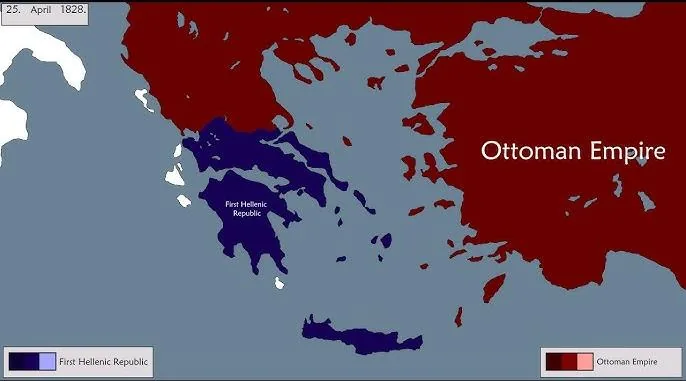
Greece imported its kings from Bavaria and Denmark because no native royal dynasty survived Ottoman rule, a saga that ran from 1832 to 1973 and involved Otto of Bavaria and the Danish-born House of Glücksburg. These imported kings of Greece shaped a nation that never fully accepted them, leading to assassinations, exiles, and a final referendum that ended the monarchy for good. It is a story of foreign princes trying to rule a fiercely independent people, and the strange, often tragic results when they tried.
Greece, after winning independence from the Ottomans, had no royal family of its own, so the great powers selected a Bavarian prince, Otto, as king in 1832. He was deposed in 1862, and the Greeks then invited a Danish prince, George I, to rule. His dynasty, the House of Glücksburg, lasted until the monarchy was abolished in 1973.
- Otto of Bavaria became the first king of modern Greece in 1832, chosen by Britain, France, and Russia.
- Otto was forced to leave Greece in 1862 after years of unpopular rule and a revolt.
- George I, a Danish prince, was elected king of Greece in 1863 and ruled for nearly 50 years.
- George I was assassinated in 1913 in Thessaloniki, just after Greece's territorial gains in the Balkan Wars.
- The Greek monarchy was abolished by the military junta in 1973 and confirmed by a free referendum in 1974, with the last king, Constantine II, going into exile.
Why Did Greece Have to Import Its Kings?
Greece imported its kings because, after the Greek War of Independence, which began in 1821, led to the formal recognition of Greece as an independent kingdom in 1832, the new country had absolutely no one at home qualified to wear the crown. Nearly four centuries of Ottoman rule had wiped out any native aristocracy or royal bloodline, leaving a power vacuum that only outsiders could fill. The solution came from Britain, France, and Russia, who simply picked a foreign prince for the job.
The struggle for Greek independence had begun in 1821, an uprising that drew in everyone from wealthy landowners to mountain bandits. But while these fighters could win battles, they could not agree on much else. Between 1823 and 1825, the revolutionaries tore each other apart in an internal civil war, splitting along regional and personal loyalties before the Ottomans were even fully pushed out.
When the Third National Assembly gathered in Troezen in 1827, they tried a different approach. Rather than crowning a king, they elected Ioannis Kapodistrias, a seasoned diplomat who had served as foreign minister for Russia's Tsar Alexander I, as the head of Greece. Kapodistrias was a capable administrator, but his reforms and authoritarian style made enemies quickly. In 1831, he was assassinated in Nafplion by the Mavromichalis brothers, a family he had clashed with over local power.
With their chosen leader dead, the Greeks found themselves back at square one. There was simply no royal house to step forward. The Byzantine Empire had fallen in 1453, and the centuries of Ottoman rule that followed never allowed a Greek feudal aristocracy to take root. What passed for local elites were the kocabaşıs, wealthy landowners appointed by Ottoman authorities to govern villages and regions. Some of these men fought for Greek independence, while others stayed loyal to the Ottomans. Neither group could claim the throne without reigniting the very civil war that had nearly destroyed the revolution.
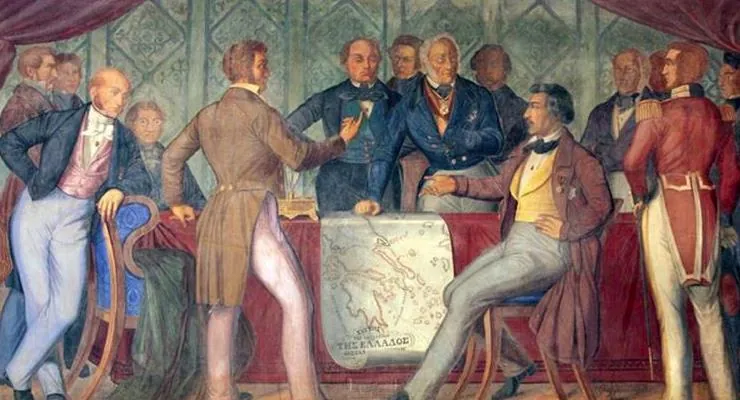
So the Great Powers stepped in. Britain, France, and Russia had already decided Greece's fate in London, and they were not about to let the Greeks choose their own monarch. The throne needed someone neutral, someone acceptable to all European courts, someone who would not upset the delicate balance of power on the continent. The Greeks themselves were not consulted.
The first offer went to Prince Leopold of Saxe-Coburg and Gotha, a young nobleman with no connection to Greece whatsoever. He turned the job down, and for good reason. Roughly five months later, Leopold became the first King of Belgium instead.
That rejection led the Great Powers back to the drawing board, and in 1832 they settled on Prince Otto of Bavaria. The second son of Bavaria's King Ludwig I was just 17 years old. He did not speak a single word of Greek. He had never set foot in the country he was about to rule. None of that mattered to the diplomats in London, who also mapped out the line of succession, decreeing that Otto's heirs, or his younger brothers if he had no children, would inherit the Greek crown.
It was a strange arrangement, and the Greeks knew it. Their new king was a teenager from a German court, imposed on them by foreign powers who had fought for their independence but now treated their sovereignty as a bargaining chip. The story of Greece's imported kings had begun, and it would not end well for anyone involved.
King Otto of Greece: The Teenage Bavarian Who Never Learned Greek
Before a single Greek ever sat on the modern Greek throne, the crown went to a 17-year-old Bavarian prince who could not speak a word of the language. Otto of Bavaria was offered the Greek throne in 1832 by Britain, France, and Russia, and he accepted, becoming King Otto of Greece at an age when most teenagers were still finishing their schooling. He arrived in his new kingdom as a complete cultural outsider, and he would spend three decades trying, and ultimately failing, to win over the people he was sent to rule.
The story of how Greece ended up importing its kings begins with a problem that had no easy solution. When the Greek War of Independence, which started in 1821, finally led to the recognition of Greece as an independent kingdom in 1832, there was simply no native royal family to put on the throne. The centuries of Ottoman rule had prevented the kind of landed aristocracy that produced royal dynasties elsewhere in Europe. The Greek notables who did hold power, known as kocabaşis, were local strongmen and landowners, not the stuff of which monarchies are made.
The Great Powers, meaning Britain, France, and Russia, decided they would solve this problem themselves. In 1830, they met in London and essentially appointed themselves the kingmakers for this new nation, without consulting the Greeks about who should rule them. Their first choice was Prince Leopold of Saxe-Coburg and Gotha, a well-connected German prince who seemed like a safe pair of hands. Leopold considered the offer, but he turned it down. As it happened, he had his eye on a different crown entirely, and within months he became the first King of Belgium in 1831.
So the search continued, and in 1832 the three powers reconvened in London. This time they settled on Prince Otto of Bavaria, the second son of King Ludwig I. Otto was just 17 years old, he spoke no Greek whatsoever, and he had never set foot in the country he was about to rule. None of that seemed to matter to the diplomats who made the decision. They also mapped out the line of succession, decreeing that if Otto had no children, the throne would pass to his younger brothers.
The Greeks had actually tried to govern themselves before the powers stepped in. In 1827, the Third National Assembly met at Troezen and elected Ioannis Kapodistrias, a distinguished diplomat who had served in the Russian court, as the head of the new Greek state. Kapodistrias was a capable administrator, but his authoritarian style made enemies, and in 1831 he was assassinated in Nafplion by the Mavromichalis brothers. With his death, the window for native Greek leadership closed for good, and the path was clear for the imported kings of Greece to take over.
Young Otto arrived in Greece with Bavarian troops in tow, a visible reminder that he was a foreign imposition. He brought his own courtiers, his own advisors, and his own ideas about how a kingdom should be run, none of which had much to do with the realities of his new home. The Greeks never really accepted him as one of their own, and the resentment simmered for years.
By 1843, the discontent had reached a breaking point. The Bavarian soldiers who had been propping up Otto's rule were withdrawn from the country, and almost immediately a popular uprising began. The 3 September 1843 Revolution led Otto to accept a new constitution, a humiliating concession for a king who had expected to rule as an absolute monarch. But even this was not enough to save him.
The troubles kept mounting. Greece's involvement in the Crimean War proved disastrous and deeply unpopular. Then came an assassination attempt on Otto's wife, Queen Amalia, who was born a princess of Oldenburg. The royal couple was increasingly isolated, and in 1862 a coup finally removed Otto from the throne he had never truly occupied. The king and queen fled aboard a British warship, leaving Greece the same way they had arrived, as foreigners passing through.
Otto spent his remaining years in exile in Bavaria, reportedly wandering his palace in the ceremonial dress of the Evzones, the Greek elite soldiers whose uniform he had come to love. He died on 26 July 1867 in Bamberg, Bavaria, at the age of 52. According to witnesses, his last words were in English: "Greece, my Greece, my beloved Greece." A man who never learned to speak the language of his subjects died calling out for them in a third tongue.
His successor would fare better, but that is another chapter in the long, strange saga of the imported kings of Greece.
The Glücksburg Lottery: How a Danish Prince Became King George I of Greece
The Greek National Assembly took a remarkable gamble in 1863 when it elected Prince William of Schleswig-Holstein-Sonderburg-Glücksburg as King George I of Greece. He was just 17 years old, spoke not a single word of Greek, and had never set foot in the country he was about to rule. Yet this Danish teenager would go on to embrace his adopted homeland so completely that he became known as the father of the nation, founded a dynasty that lasted over a century, and helped bring the Olympic Games back to life.
When the young prince sailed into Athens in 1863, he arrived as a Catholic ruler for an Orthodox nation, an outsider in every sense. His accession speech, delivered in a language he was still learning, carried a surprisingly modern message for a teenager: "In these modern times, princes should strive to be superior to those around them in intelligence, knowledge, and goodness." He reportedly told the crowd, "My power lies in the love of my people," words that sounded like royal flattery but turned out to be a genuine promise.
George threw himself into Greek life with uncommon dedication. He learned the language quickly, mastered wrestling and running, sports that Greeks had considered national pursuits since antiquity. Unlike his predecessor Otto, who remained perpetually foreign in Greek eyes, George seemed to understand that ruling Greece meant becoming Greek. He supported constitutional monarchy at a time when many European royals resisted any limits on their power.
His most lasting achievement came through sports. George actively supported the revival of the Olympic Games and officially opened the 1896 Summer Olympics in Athens, the first modern Games held since antiquity. The event showcased his adopted country to the world and cemented his reputation. His efforts earned him the affectionate title "father of the nation," and he would go on to reign for nearly five decades, an extraordinary tenure for any monarch, let alone an imported one.
The Glücksburg family connections proved remarkably useful for Greece's international standing. George's brother Frederick became King of Denmark. His sister Alexandra married the Prince of Wales, the future King Edward VII of Britain. Another sister, Dagmar, became Empress Marie of Russia as the wife of Tsar Alexander III. Through these marriages, the family earned the nickname "the in-laws of Europe," and Greece suddenly had royal relatives in every major European court.
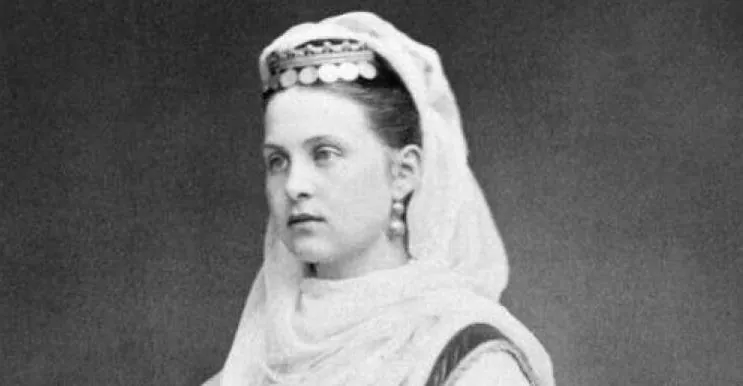
During a visit to his sister Empress Marie in St. Petersburg, George met Grand Duchess Olga Constantinova of Russia. Their marriage brought George a partner who would become beloved by Greeks as "the queen of the poor" for her charitable work. Olga adapted to her new country quickly, often appearing in traditional Greek dress, and her popularity strengthened her husband's position immensely.
George's long reign was not without conflict. Throughout his rule, Greece remained locked in struggle with the Ottoman Empire over Crete, a dispute that simmered for years without resolution. The king navigated these challenges while maintaining his commitment to constitutional governance, a balancing act that won him respect even from political opponents.
In March 1913, shortly after celebrating his golden jubilee, George made plans to step down and hand the throne to his eldest son. During a visit to Thessaloniki, a socialist named Alexandros Schinas shot him through the heart. The king who had arrived as a foreign teenager speaking no Greek died as a beloved national figure, his assassin's bullet ending a reign that had transformed both the man and his adopted country.
Constantine I and the Monkey Bite That Changed History
Constantine I, born on 2 August 1868, was the first Greek king born on Greek soil, and his very name carried the weight of an empire's ghost. He was named after Constantine XI Palaiologos, the last Byzantine emperor who died defending Constantinople in 1453, and the name was chosen by the Greek people themselves during the celebrations of his birth. For a nation still finding its footing, this boy represented something no imported ruler ever could: a king who was truly, undeniably Greek.
But being Greek on the inside did not spare Constantine from the brutal realities of Greek politics. At just 29 years old, he commanded the Thessaly army in the disastrous 1897 Greco-Turkish War, a conflict that ended in humiliation for Greece and dealt a serious blow to the monarchy's popularity. The defeat sparked calls for military reform, and by August 1909, the Goudi coup forced Constantine and his brothers out of their armed forces positions. The man who would later redeem himself as a military hero first had to be reinstated by Prime Minister Eleftherios Venizelos, who argued that all Greeks should be proud to have their sons serve in the army, kings included.
That reinstatement proved fateful. When the First Balkan War erupted, Constantine led Greek forces to victory, capturing Thessaloniki and washing away the stain of 1897. His popularity soared, and he was promoted to marshal, becoming the king who doubled Greek territory. When his father, King George I, was assassinated in Thessaloniki in March 1913 by Alexandros Schinas, Constantine ascended to the throne at the peak of his glory.
The glory did not last. As World War I thundered across Europe, Constantine's refusal to commit Greece to the Allied cause clashed violently with Venizelos's pro-Allied vision. Their disagreement split the nation in two, a rupture known as the National Schism. In 1917, Constantine was forced to abdicate and leave Greece, handing the crown to his second son, Alexander, while never formally renouncing his rights to the throne.
And here is where the story takes its strangest turn, one that Winston Churchill himself would later memorialize. King Alexander, the young man placed on the throne as a wartime compromise, was walking through the royal estate's vineyards in 1920 when a pet Barbary macaque, reportedly belonging to a servant, bit him. The wound seemed minor at first, but within days infection set in. Alexander lingered for 23 days, slipping into delirium before dying on 25 October 1920. Churchill later wrote that saying a quarter of a million people died from the bite of a single monkey might not be an exaggeration, a dark reference to the catastrophe that followed.
The monkey bite set off a chain reaction that reshaped the Eastern Mediterranean. With Alexander gone, a December 1920 plebiscite overwhelmingly recalled Constantine from exile. He returned to the throne and resumed the anti-Turkish policies that Venizelos had pursued, policies that ended in the Greek army's devastating defeat in August 1922 and the Asia Minor Catastrophe, the forced exchange of populations that uprooted hundreds of thousands of Greeks from Anatolia. Constantine was deposed again shortly after, and he spent his final four months in exile in Italy. He died of heart failure on 11 January 1923 in Palermo, Sicily, a king whose legacy was forever tangled with the bizarre death of his own son.
The saga of the imported kings of Greece reaches its strangest moment in this chapter, where a single animal bite undid the work of generals and diplomats alike. Constantine's personal story, from Greek-born prince to twice-deposed monarch, mirrors the instability that plagued the Glücksburg dynasty from its very first days on Greek soil.
George II, the Metaxas Dictatorship, and a King Who Died on April Fool's Day
George II had one of the strangest careers of any European monarch. He was kicked off the throne in 1924 when Greece became a republic, and the state confiscated everything he owned. Then, in 1935, a plebiscite reported that 98 percent of Greeks wanted their king back, so he returned to a country that had voted to erase him just over a decade earlier. The restoration came through General Georgios Kondylis, who ended the republic and called for a vote on the monarchy's future. George II landed back on Greek soil on 25 November 1935, and within days he appointed Kondylis as interim prime minister. Elections followed, producing a dead heat between royalists and the communists who naturally opposed the crown. That political paralysis opened a door that would define the king's legacy. When both Kondylis and Prime Minister Konstantinos Demertzis died in quick succession, Lieutenant General Ioannis Metaxas stepped in with a frightening justification: the country was about to fall to the communists. Parliament was suspended, and Metaxas began ruling by decree. George II supported what became known as the 4th of August Regime in 1936. Metaxas suspended the constitution, banned political parties, arrested opponents, and imposed heavy censorship. For the first years, the king and the general essentially ran Greece together as co-presidents of a fascist state. It was an arrangement that sat uneasily with the democratic traditions Greeks had fought for since 1821. Then came October 1940, when Mussolini's Italy invaded from Albania. The Greeks stunned everyone with their defense, launching a counter-offensive that pushed deep into Albanian territory. Greek forces captured the southern half of Albania, which was under Italian control at the time. For a few months, it looked like the dictatorship might actually deliver something lasting. The triumph did not last. Metaxas died in January 1941, and by April the Germans had invaded Greece. George II fled with his government, first to Crete, then to Egypt, and finally to Britain. He spent the rest of the war as a king in exile while his country suffered occupation, famine, and the beginnings of a civil war. When the war ended, the Allies supervised a referendum in 1946, and the result brought George II home again. The country he returned to was broken. Greece did score one territorial gain on 10 February 1947, when the Paris Peace Treaties formally ceded the Dodecanese islands from Italy. But the political instability only worsened, and the Greek Civil War was intensifying in the north. Through all that chaos, the king kept working in his office at the new royal palace in Athens. On 1 April 1947, he was found dead there. When the news went out, Greeks assumed it was an April Fool's joke. It was not. George II was dead at the age of 56. His brother Paul took the throne the same day, inheriting a country at war with itself. The man who had once helped suspend Greece's democracy was gone, and the imported kings of Greece would never again hold the kind of power George II had shared with Metaxas.The Last Kings: Paul I and Constantine II, From Junta to Republic
Paul I took the throne in 1947, inheriting a country shattered by occupation and civil war, and he would spend the next seventeen years trying to hold it together before dying on 6 March 1964 at age 62. His son Constantine II, just 24 years old, became king on that same March day in 1964, stepping into a role that would last barely three years before everything collapsed around him. The story of these final monarchs is really the story of how the imported kings of Greece met their end, caught between a brutal military dictatorship and a people who had stopped believing in them.
Paul's reign began on 1 April 1947, the very day his brother George II was found dead in his office at the royal palace in Athens. The news was announced on April Fool's Day, and many Greeks initially assumed it was a joke. It was not. Paul, the third son of Constantine I, took over a nation still bleeding from the German occupation and sliding into the Greek Civil War, a conflict between the government and communist forces that would rage until 1949. He worked to heal those wounds, even making efforts to improve relations with Turkey after nearly four centuries of tension, but the emerging Cyprus dispute would sour things again. His final decade was marked by failing health, and when he died in 1964, he left his young son a throne that was already wobbling.
Constantine II inherited more than a crown on 6 March 1964. He inherited a country where political instability was becoming the norm, where the old certainties of the postwar era were dissolving. At first, Greeks saw the young king as a fresh start, someone who might steer them toward calmer waters. Instead, the waters only grew rougher. By 21 April 1967, a group of right-wing military officers led by Georgios Papadopoulos had seized control of the state in a lightning coup, and the colonels' junta was born.
That morning, Greeks woke to a nightmare. Tanks rumbled through the streets of Athens, sporadic rifle fire punctuated the dawn, and military marches blared from every radio. Then came the announcement: the armed forces had taken over the country. The junta claimed Greece was in danger of falling to communists, a pretext that justified sweeping arrests. Politicians, composers, artists, and ordinary left-leaning citizens were systematically rounded up. The composer Mikis Theodorakis was among those detained, and some 10,000 people on the regime's blacklist were sent to prisons or to concentration camps like the island of Yaros. The constitution was suspended, free speech vanished, and strict censorship was imposed on radio, newspapers, and eventually television.
For a time, the junta kept Constantine II in place as a symbolic head of state, a fig leaf of legitimacy. But the arrangement could not hold. On 13 December 1967, the young king made his move, calling on the army and the people to support a counter-coup against the colonels. The response was tepid at best. The coup failed, and Constantine fled to Rome with his family, beginning an exile that would last decades. The junta first appointed a regent and claimed the king could return freely whenever he wished, but that was hollow talk. On 1 June 1973, the regime formally abolished the monarchy and declared a republic, a decision ratified by a controlled referendum on 29 July 1973. Constantine refused to recognize the result, but his protests meant little while the colonels held power.
The junta's grip finally broke after the Turkish military intervention in Cyprus in 1974, and in the chaos that followed, Greeks were given a genuine choice. On 8 December 1974, a free referendum confirmed the abolition of the monarchy by a decisive margin. The imported kings of Greece were done. Constantine, now a man without a country in any practical sense, spent years shuttling between London and other European capitals, nursing the hope of return.
The legal battles dragged on for decades. In 1994, under the government of Andreas Papandreou, a law stripped the former royal family of their Greek citizenship and property. The same law required Constantine to adopt a surname before he could receive a Greek passport, a demand he resisted with characteristic stubbornness. In a July 1995 interview with Vanity Fair, he protested that his family had no name to adopt. "We are as Greek as every Greek," he insisted, adding that his family was of Danish origin and that even the Danish royal family had no surname. Glücksburg, he pointed out, was merely the name of a town.
In 2000, Constantine took his case to the European Court of Human Rights, seeking 500 million euros in compensation for property confiscated after his deposition. The court ruled in his favor in 2002 but awarded him only 12 million euros, a fraction of what he had demanded. It was a symbolic victory at best, a reminder that the monarchy he represented was gone for good. Constantine II died on 10 January 2023 at the age of 82, the last king of the Hellenes, the final chapter in a saga that began when the Great Powers first decided that Greece needed an imported monarch. The Glücksburg dynasty, a branch of the Danish royal family that had ruled Greece from 1863 to 1973, was finally extinguished on Greek soil.
Frequently asked questions
Why did Greece import foreign kings after independence?
Greece imported foreign kings because there was no native royal family to take the throne. When Greece won its independence from the Ottoman Empire in 1832, centuries of Ottoman rule had prevented a Greek aristocratic class from developing, leaving no homegrown dynasty available to rule.
Who was the first king of modern Greece?
The first king of modern Greece was Prince Otto of Bavaria, a 17-year-old German prince who spoke no Greek when he took the throne in 1832. He was chosen by Britain, France, and Russia in the London Protocol, without consulting the Greek people, and reigned until he was deposed in 1862.
How did the Glücksburg dynasty come to rule Greece?
The Glücksburg dynasty came to rule Greece in 1863, when the Greek National Assembly elected Prince William of Denmark as King George I. After Otto was deposed, the Greeks chose this Danish prince, who was only 17 at the time and also spoke no Greek, but he would go on to reign for nearly fifty years.
When was the Greek monarchy abolished?
The Greek monarchy was abolished in two stages. The military junta first abolished it on June 1, 1973, confirming the decision with a controlled referendum on July 29, 1973. After the junta fell, a second referendum on December 8, 1974, held under civilian rule, confirmed the abolition and established the republic.
Who was the last king of Greece?
The last king of Greece was Constantine II, who took the throne on March 6, 1964, at age 24. He fled the country after a failed counter-coup against the military junta on December 13, 1967, and lived in exile until his death on January 10, 2023, at age 82.
How did a monkey bite lead to the Asia Minor Catastrophe?
King Alexander of Greece died in 1920 after being bitten by a Barbary macaque, which led to sepsis. His death triggered a political crisis: Constantine I returned from exile, resumed the war against Turkey, and the campaign ended in the Asia Minor Catastrophe of 1922. Winston Churchill later wrote that a quarter of a million people died as a result of that monkey bite. Editorial note: Any facts which remain unconfirmed are presented as such, hedged where necessary to reflect ongoing historical debate.
Got a take on this? Add your voice to the conversation below →
No comments yet. Be the first.