Gregor Baci: Survived a Lance Through His Skull
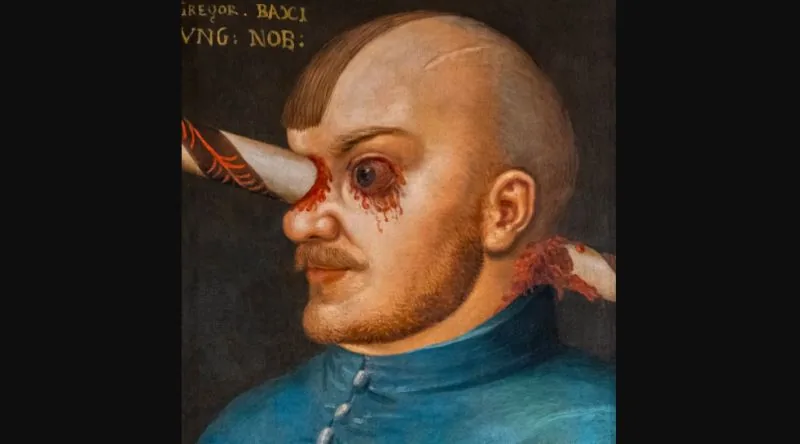
In 16th-century Hungary, a nobleman named Gregor Baci survived a full year with a lance piercing his skull, a wound so severe it remains a landmark in medical history. His story, captured in a haunting Renaissance portrait, is a testament to human endurance and the brutal reality of medieval warfare. The Gregor Baci lance injury is not just a gruesome footnote; it is a window into a life hanging by a thread, where every breath for 365 days was a victory against impossible odds.
Around 1526, Hungarian nobleman Gregor Baci was impaled through the skull by a lance. The weapon entered through his eye and exited the back of his head. Against all odds, he lived for a full year with the lance still embedded before his eventual death, leaving behind a portrait that documents his extraordinary survival.
- The incident occurred in Hungary during the early 16th century, possibly during a tournament or battle, though the exact circumstances remain uncertain.
- The lance entered Baci's skull through his eye and exited through the back of his head.
- Despite the severity of the wound, Baci lived for approximately one year afterward.
- A portrait, believed painted by an anonymous German or Austrian artist of the Danube School, depicts Baci with the lance still protruding from his head.
- The painting, dated 1526, serves as a unique and chilling record of Renaissance-era survival.
A Wound That Should Have Killed Him
In 1526, a portrait was painted of a Hungarian nobleman named Gregor Baci with a wooden lance still jutting through his skull, the shaft entering through his eye and exiting the back of his head. The inscription on that painting tells a story that sounds impossible: Baci survived this injury for an entire year before death finally caught up with him.
Picture the scene in early 16th-century Hungary. The early 1500s were brutal years, torn between the Ottoman-Hungarian wars and the pageantry of knightly tournaments. Baci's identity shifts depending on who tells the story. Some sources describe him as a noble soldier, others as a tournament knight. What happened to him is not confirmed, but the portrait itself is real, dated 1526 and attributed to an anonymous German or Austrian painter of the Danube School.
The lance went through his eye, punched through the bone of his skull, and came out the back of his head. A wound like that should have ended him on the spot. No antibiotics existed. No modern surgery. No painkillers. Yet the record shows he kept breathing.
What followed was a grim year. The protruding portion of the lance was cut away, but the rest stayed lodged in his head, the wound wrapped and left to heal as best it could. Some accounts claim he could still speak and manage small daily tasks during that time, though that detail feels like a stretch. More likely, he spent those months wrestling with pain and the constant threat of infection.
How Gregor Baci finally died remains unknown, though infection or complications from the wound almost certainly did him in. But before the end, he sat for a portrait, lance still in place, and that image survived the centuries as one of the most astonishing medical oddities of the Renaissance.
A Year of Living with a Lance in His Head
Gregor Baci, a Hungarian nobleman living in the early 1500s, survived for roughly one full year after a lance pierced through his eye and skull. The weapon entered through his eye, tore through his cranium, and emerged from the back of his head. Instead of killing him on the spot, it began the most grueling year of his life.
There was no modern medicine in 16th-century Hungary. No antibiotics, no surgical suites, no painkillers. The men who tended to Baci did what they could: they cut off the exposed portion of the lance, leaving the rest embedded deep in his skull, wrapped the wound, and sent him off to recover. The remaining wood stayed lodged in his head for the next twelve months.
What followed was likely a slow, brutal struggle against infection and agony. Every movement of his neck, every change in weather, every heartbeat sent pain through a wound that never closed properly. The human body can survive extraordinary trauma, but it rarely does so quietly. Baci's year was probably filled with fever, suppuration, and the constant threat of sepsis.
Some accounts claim he could still talk and manage limited daily tasks during this period. Those reports are unverified, and frankly, they strain belief. A man walking around with a broken lance in his head, chatting and going about his routine? It sounds more like legend than medicine. What seems certain is that he endured, day after day, in a world that had no way to truly help him.
His death remains a mystery, though infection or complications from the wound most likely finished what the lance started. Before he died, he sat for a portrait painted by an anonymous German or Austrian artist of the Danube School around 1526. That painting, showing the lance still jutting from his head, is the reason the Gregor Baci lance injury is remembered at all. A man who should have died in an instant instead lived a full year with wood in his head, and someone thought to capture that impossible sight on canvas.
The Portrait That Made Him Immortal
Around 1526, an anonymous German or Austrian painter of the Danube School picked up a brush and created an image that would outlive centuries of medical progress. The portrait shows Gregor Baci with a wooden lance shaft entering his eye and exiting the back of his skull. It remains one of the most startling medical documents ever painted.
The artist never signed his name. We only know he belonged to the Danube School, a loose circle of painters working in the region along the river in the early 1500s. Whoever he was, he chose not to flinch. The canvas shows the full horror with clinical clarity: the lance pierces the eye socket, tunnels through the head, and emerges at the rear. There is no blood, no drama. Just a man sitting for his portrait with a spear through his head.
That choice made the painting invaluable. For historians, it turned a wild story into something you could point at and say, this really happened. The inscription on the canvas dates it to 1526 and identifies the subject as a Hungarian nobleman. Without this single artwork, Baci's survival might have faded into rumor, the kind of tale you hear at a tavern and forget by morning.
The painter captured something else too. Baci's expression is calm, almost matter-of-fact, as if sitting for a portrait with a lance in his skull was just another day. The shaft has been trimmed short, cut down after the initial injury, leaving a stub that juts from his face like an impossible beard. His eyes are open. He is very much alive.
For anyone who doubts the story, the portrait is the smoking gun. It is the piece of evidence that separates Gregor Baci from legend. The lance injury, the survival, the year of living with wood embedded in his head, all of it is right there on canvas, painted by a stranger who saw this man and decided his face deserved to be remembered.
How Did Gregor Baci Die?
No one knows exactly what finally killed Gregor Baci. The most likely answer, according to medical reasoning and the original account, is that the wound itself did him in, probably through a severe infection or complications that set in during the year he spent carrying that lance in his skull.
Think about what his body was going through. In the 1520s, there were no antibiotics, no modern surgery, nothing to fight the inevitable bacteria that would have flooded the open wound where the lance entered through his eye and exited through the back of his skull. The fact that he survived at all, let alone for a full year, defies what we understand about trauma medicine. Some versions of the story claim he could still talk and manage small daily tasks during those months, though that detail feels like it stretches credibility. What seems far more plausible is that he spent much of that year battling pain and infection with no real relief available to him.
The timeline matters here. The portrait that survives of him, painted by an anonymous German or Austrian artist of the Danube School and dated to 1526, shows the lance still embedded in his head. That painting is the clearest evidence we have that he lived roughly a year after the initial injury. The inscription on it identifies him as a Hungarian nobleman, though whether he was a soldier or a tournament knight remains unclear from the record. What the painting cannot tell us is how his final days unfolded, whether he declined gradually or died suddenly when his body finally gave out. The silence of the historical record on that point is frustrating, but it also makes the image of him, calm and composed with a wooden shaft piercing his skull, all the more haunting.
Frequently asked questions
Who was Gregor Baci?
Gregor Baci was a 16th-century Hungarian nobleman, likely a soldier or tournament knight, who became famous for surviving a horrific lance injury. Living in Hungary during the 1500s, his exact role remains uncertain, but historical records confirm he was a man of noble standing who endured one of the most astonishing survival stories of his era.
How did Gregor Baci survive a lance through his head?
The lance entered through his eye, pierced his skull, and emerged from the back of his head. The protruding portion was cut off, the wound was dressed, and remarkably, he lived for about a year afterward. This survival occurred without modern antibiotics, surgery, or painkillers, making his endurance nearly miraculous by any standard.
How long did Gregor Baci live after his injury?
Gregor Baci survived for approximately one year after the lance pierced his skull. During that time, he reportedly endured severe pain and likely battled infection, as medical care in the 1500s offered little beyond basic wound dressing. His year-long survival remains a testament to human resilience, even as complications probably led to his eventual death.
Who painted the portrait of Gregor Baci?
An anonymous German or Austrian painter from the Danube School created the famous portrait of Gregor Baci around 1526. This artwork captures the nobleman with the lance still embedded in his head, serving as a haunting visual record of his survival. The painting survives today as one of history's most striking medical curiosities.
Got a take on this? Add your voice to the conversation below →
No comments yet. Be the first.