French Revolution: The 1789 Uprising That Changed Europe
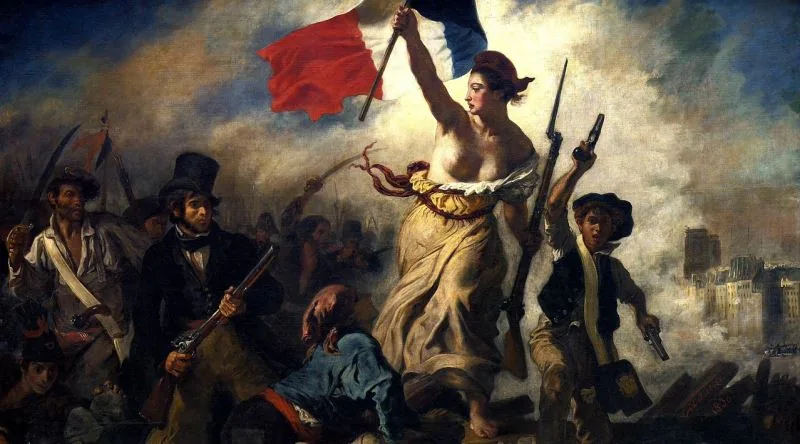
The French Revolution of 1789 dismantled the Bourbon monarchy, stormed the Bastille, and unleashed a decade of upheaval that permanently reshaped Europe's political landscape. It began in Paris as a fiscal crisis spiraled into a popular uprising, and its echoes of liberty, equality, and fraternity still resonate in every modern democracy. You can almost feel the heat of that July day, the crack of musket fire, and the raw hope of a crowd that decided the old order had to fall.
The French Revolution began in 1789 when economic collapse and social inequality drove the people of Paris and the Third Estate to challenge King Louis XVI's absolute rule. They stormed the Bastille on July 14, issued the Declaration of the Rights of Man, and set off a chain of events that ended the monarchy, radicalized into the Reign of Terror, and ultimately paved the way for Napoleon's rise.
- The Estates-General convened at Versailles in May 1789, marking the first such meeting since 1614, and quickly deadlocked over voting procedures.
- The Third Estate declared itself the National Assembly on June 17, 1789, in the Tennis Court Oath, vowing not to disband until a constitution was written.
- The Bastille was stormed on July 14, 1789, in Paris, a symbolic and practical blow against royal authority that became the revolution's enduring emblem.
- The Declaration of the Rights of Man and of the Citizen was adopted in August 1789, asserting universal rights and sovereignty of the nation.
- King Louis XVI was executed by guillotine on January 21, 1793, in Paris, after being convicted of conspiracy against the state.
The Revolution That Was 500 Years in the Making
The French Revolution was not a sudden explosion. Historians broadly agree that its structural causes developed over centuries, with some describing it as the product and synthesis of at least 500 years of economic and social change, a slow burn that finally caught fire in 1789. When it did, it didn't just change France. It reshaped how the entire world thinks about politics.
Consider the revolutions that came before it. The English Revolution of the 1600s, for all its drama, was ultimately a "soft" transition. Power shifted, but the fundamental structures of society remained largely intact. The American Revolution, meanwhile, was primarily a war of independence. The colonists wanted to throw off British rule, but they weren't fundamentally reordering their own society's internal hierarchies in the same way.
The French Revolution was different. Here, newly formed social classes organized with remarkable clarity and forcibly overthrew a monarchical power. This wasn't a dynastic squabble or a colonial rebellion. It was a wholesale reimagining of who gets to rule and on what basis. The people of Paris didn't just want a change of leadership; they wanted a new world.
This is why the historian Eric Hobsbawm's observation cuts so deep. He noted that while the 19th century's economic history was largely determined by the British Industrial Revolution, its politics and ideology were shaped by the French Revolution. The machines that built the modern economy came from England, but the ideas that built modern politics, the very vocabulary of left and right, of revolution and reaction, came from France. That's a legacy you can still feel in every election and every protest today.
The Aristocracy's Backfire: How the Nobles Accidentally Started a Revolution
France in 1787 was bankrupt, and Finance Minister Calonne had a plan that would change history: tax the nobility. The nobles, who had never paid their fair share, were having none of it, and their stubborn refusal to accept any reform would ultimately cost them everything they held dear.
The fiscal crisis had reached a breaking point. The crown's coffers were empty, and Calonne knew that the only way to raise real revenue was to make the privileged classes finally contribute. His proposal called for a general land tax that would apply to the nobility as well as commoners. Anticipating fierce opposition from the parlements, those powerful courts dominated by aristocrats and wealthy bourgeois, Calonne took a calculated risk. He convened an Assembly of Notables in 1787, a handpicked group he believed would support his reforms.
He was wrong. The Assembly rejected his plan outright, and Calonne was forced to resign in disgrace.
His successor, Brienne, tried a different approach. Instead of negotiating with the aristocracy, he appealed directly to the provincial assemblies, which were increasingly made up of members of the Third Estate, the common people who made up the vast majority of France. Brienne hoped to win popular support for the tax reform, but the provincial assemblies also refused to cooperate. With no other options, he brought the royal decree to the parlements.
What happened next became known as the "revolt of the nobles." During 1787 and 1788, the parlements, staffed by aristocrats and high bourgeoisie who had grown increasingly powerful during Louis XVI's weak reign, rejected the royal decree with remarkable boldness. They had the legal authority to refuse to register royal edicts, and they used that power ruthlessly. The monarchy's authority suffered a serious blow, and the king found himself with his back against the wall.
Louis XVI had only one remaining path to raise taxes: he had to convene the Estates-General, a representative assembly that had not met since 1614. The nobles had won their immediate battle, but they had also sealed their own fate. By defying the crown so publicly, they exposed the monarchy's weakness to the emerging bourgeois challenge. The aristocracy had struck the first blow against the very institution that protected their privileges, and in doing so, they opened the door for the Third Estate to walk through and demand far more than anyone had anticipated.
The Estates-General: From 1614 to a New Nation
When Louis XVI finally called the Estates-General to meet on 1 May 1789, he was reaching for a tool that had been gathering dust for 175 years. The last time this assembly of France's three social orders had convened was back in 1614, and the king hoped it would rescue his bankrupt treasury. Instead, it would unravel his entire world. The announcement shattered the fragile alliance that had been holding the kingdom together. For years, the aristocracy and the wealthy bourgeoisie had stood shoulder to shoulder in the parliamentary courts, resisting the crown's attempts to tax the privileged classes. But the moment the Estates-General became a real prospect, that partnership dissolved. The bourgeoisie suddenly found itself siding with the king and, more importantly, with the common people of the Third Estate. This new alliance had an ambitious list of demands. They wanted civil equality before the law, fair tax reform that didn't crush the poor while sparing the rich, and far more representation for ordinary people in the Estates-General. Louis XVI, desperate for popular support against the obstinate nobles, nodded along and accepted most of these requests. He had a particular hope that rural representatives would flood the assembly and act as a safety valve, diluting the influence of both the aristocracy and the urban bourgeoisie. On 24 January 1789, the new electoral regulation went into effect, expanding the vote and setting the machinery in motion. Then came the grand opening. On 4 and 5 May 1789, the Estates-General formally convened with a religious ceremony, a solemn procession through the streets of Versailles that must have felt like a pageant from a bygone age. Nearly 400 years had passed since this institution last mattered, and now it was being asked to save France. The Third Estate, representing a staggering 96% of the French population, had no intention of playing by the old rules. For roughly six weeks, the deputies wrestled with procedural questions while the nobility and clergy tried to maintain their ancient privileges. When the Third Estate finally grew tired of waiting, it took a fateful step and declared itself the National Assembly, a body that claimed to speak for the entire French nation rather than just one social class. The defining moment came on 20 June 1789. The deputies arrived at their meeting hall only to find the doors locked against them. Whether this was royal sabotage or a simple scheduling mishap, the delegates refused to be dismissed. They marched to a nearby indoor tennis court, the Jeu de Paume, a long hall with high windows where the nobility played their aristocratic games. There, crowded together in that unlikely setting, they swore a solemn oath. They promised never to separate, never to disband, until they had written a constitution for France. The Tennis Court Oath transformed a fiscal crisis into a constitutional revolution. On 7 July 1789, the National Assembly established a constitutional committee to begin drafting that promised document. Two days later, on 9 July, the body adopted a new title that made its ambitions unmistakable: the National Constituent Assembly. The deputies were no longer negotiating over taxes. They were rewriting the fundamental law of the kingdom, and there was no going back.The Bastille and the Birth of a New Order
Louis XVI was a man caught between two worlds, and by the summer of 1789, he was sweating under the pressure. He had made concessions to the National Assembly, but his nerves were frayed, and his inner circle was whispering poison into his ears. So he did what frightened kings do: he gathered his strength. Troops, many of them foreign legions with no loyalty to French citizens, began circling Paris like a noose. The palace was preparing a coup against the Assembly, and the king was confident he had the muscle to pull it off.
On 11 July 1789, Louis made his move. He dismissed the popular Finance Minister Necker, the one man the public actually trusted to fix the crumbling economy, and replaced him with Breteuil, a figure so unpopular he might as well have been a red flag waved in front of a bull. The people of Paris did not take this quietly. On 12 July, a militia was formed from the city's districts, and the streets filled with angry, armed citizens ready to defend their new Assembly.
The National Assembly fired back with words. On 13 July, they issued a declaration expressing regret over Necker's dismissal and demanding the foreign troops leave Paris. Reportedly, the Assembly was careful to blame the king's advisors rather than the king himself, a curious bit of restraint that shows how deeply the idea of a good monarch misled by bad counsel still ran. But Louis was not listening. His plan, as the story goes, was to dissolve the Assembly on the night of 14 July and crush the unrest once and for all. The Parisians had other plans entirely. On 14 July 1789, they stormed the Bastille, the supposedly impregnable fortress-prison that symbolized everything they hated about absolute monarchy. The prison was taken, and though it was not burned as some versions claim, it was later demolished brick by brick. The fall of the Bastille sent a chill straight through Louis's spine. He backed down, recognized the Assembly, and abandoned his coup.
Emboldened, the National Assembly pushed forward with breathtaking speed. On the evening of 4 August 1789, they abolished feudal rights, effectively ending feudalism in France in a single sitting. The old order of lords and serfs, of inherited privilege and arbitrary power, was declared dead. Then came the Declaration of the Rights of Man and of the Citizen, adopted in late August 1789. This document was a thunderclap. It proclaimed that sovereignty resides in the nation, that law is the expression of the general will, and that natural and imprescriptible rights include liberty, property, and security. The king, trapped in Versailles and watching his world crumble, had little choice but to approve.
The Assembly spent two years drafting a new constitution, completing it in September 1791. Louis XVI swore to uphold it, standing before the nation and promising to be a constitutional monarch. But here is the twist that destroyed whatever trust remained: months before that oath, the king had tried to run. In June 1791, he fled Paris with his family, heading for the border in a desperate bid to escape the Revolution. He was captured at Varennes, dragged back to the capital in disgrace. The Flight to Varennes, as it came to be known, shattered the monarchy's credibility beyond repair. The king had sworn loyalty to a constitution he had already tried to abandon. The Jacobins, the radical voices on the left, pointed at this betrayal and said, see, we told you so. The whispers for a republic grew louder, and the French Revolution entered a new, more dangerous phase.
Europe's Kings vs. the French Republic
When the French Revolution first erupted, Europe's crowned heads actually breathed a quiet sigh of relief. A weakened France meant a rebalanced continent, and that suited the neighboring kingdoms just fine. But that comfort evaporated quickly when the monarchs realized the real threat wasn't France's instability. It was the principle of monarchy itself that now hung in the balance.
The alarm bells started ringing as early as 1790, when Avignon, a papal principality in southern France, asked to join the French nation of its own free will. The French assembly accepted the request, invoking the right of peoples to determine their own destiny. For the courts of Europe, this was a dangerous idea wrapped in a deceptively simple request. If populations could simply choose which state they belonged to, no border on the continent was safe.
By 1791, the anxiety had crystallized into action. Prussia and Austria issued the Declaration of Pillnitz, a joint statement declaring that the French Revolution was not merely France's internal affair but a European problem. The two powers also agreed to support the émigré army gathering at Koblenz, a force of French nobles who had fled the revolution and were itching to march back home.
France responded with a diplomatic challenge. In February 1792, the French government issued an ultimatum to Austria demanding that the émigré army be dispersed. Austria, now under the rule of Francis II after the death of Leopold II, refused. France declared war on Austria on 20 April 1792, a decision that would reshape the entire continent.
The combined Austrian and Prussian forces, reportedly under the command of General Brunswick, advanced toward Paris. According to the original account, Brunswick issued a proclamation in late July 1792 declaring that the allied armies had come to restore Louis XVI's authority and would hold accountable those responsible for the recent upheavals. The French response was swift and radical. The king and queen were arrested, the monarchy was abolished, and executive power was transferred to a six-member council with Georges Danton at its head as minister of justice.
Then came the moment that changed everything. On 20 September 1792, the French army, made up largely of enthusiastic militia volunteers, faced the combined German and Austrian forces at the Battle of Valmy. Against all expectations, the French held their ground and pushed the invaders back, stopping them before they could reach Paris. The victory electrified the nation. In the days that followed, the newly elected Convention proclaimed the Republic in late September, marking the formal end of over a thousand years of monarchy in France.
The momentum did not stop at the border. In the wake of Valmy, French armies swept into Belgium, Savoy, and Nice, capturing territory that had belonged to various European powers. What made these conquests different was the response of the local populations, who petitioned to join the French Republic. The revolutionary ideals had crossed frontiers, and the old order was scrambling to keep up.
The Jacobins, the Terror, and the King's Execution
The Convention, which replaced the monarchy in September 1792, began under the sway of the moderate Girondins, but the more radical Montagnards, better known as the Jacobins, soon wrestled control away from them. These Jacobins were strict democrats who believed the people should rule themselves directly, yet they also viewed any opposition as "evil" that had to be punished. That mindset, with no theoretical limits, laid the groundwork for the bloody Reign of Terror that followed.
The Jacobins were no ordinary political faction. They were a tightly organized party that drew members from different social backgrounds, but their ideology had a few clear, hard edges. To them, the people were capable of governing themselves, but only through representatives who truly understood them, which conveniently meant the Jacobins themselves. Anyone who stood in their way was not merely mistaken; they were wicked and had to be eliminated. Removing these harmful elements was not just acceptable, it was a duty, a necessary step toward the freedom of society. This uncompromising logic, applied without restraint, is what eventually turned the revolution inward and consumed some of its own most passionate advocates.
In 1793, the Convention, now firmly under Jacobin influence, voted to execute the deposed King Louis XVI. The vote was narrow but decisive, and the execution was carried out in January 1793. The king's beheading sent a shockwave across Europe, and it pushed England squarely into the camp of the conservative empires. The French ambassador to London, Chauvelin, was expelled, and in response, France formally declared war on England on 1 February 1793. What followed was a period of intense internal bloodshed and external struggle, a chaotic storm that tested the young republic to its limits.
By 1795, after years of the Terror and countless battles on multiple fronts, France had managed to end hostilities everywhere except against Austria and England. The revolutionary armies had fought Prussia, Spain, and others to a standstill or peace, leaving only the two most stubborn foes still in the field. The worst of the internal violence had also burned itself out, though the scars it left on the nation's soul would take generations to heal.
The Directory and the Revolution's Enduring Legacy
The Convention had conquered Europe's armies but never managed to conquer France itself. By 1795, the same assembly that had voted for the king's death found itself unable to establish order at home, and every harsh measure it imposed provoked an equally powerful reaction. The internal chaos had become unbearable. No faction could hold power long enough to stabilize the country, and the French people, exhausted after years of upheaval, craved something resembling normal governance. The Convention's response was to draft yet another constitution, hoping that a fresh structure might finally bring peace to a nation that had known nothing but turbulence since 1789. On 22 August 1795, the new constitution was presented to the Convention. It created a five-member executive body called the Directory, designed to balance the revolutionary ideals of liberty with the practical need for order. The document aimed to prevent both the return of royal absolutism and the excesses of the Terror that had consumed France in 1793 and 1794. The Convention held its final meeting on 26 October 1795, formally handing power to the Directory. After six years of revolution, the men who had proclaimed the Republic, executed a king, and fought half of Europe now quietly stepped aside. The Directory would inherit a France that was militarily triumphant but politically fractured, a nation that had destroyed its old world but had not yet built a stable new one. Yet the revolution's true legacy was never confined to the institutions it created or the governments it toppled. As the historian Eric Hobsbawm observed, while Britain's industrial revolution shaped the economic history of the nineteenth century, it was the French Revolution that determined the century's politics and ideology. The ideas unleashed between 1789 and 1795, the language of rights, citizenship, and national sovereignty, proved far more durable than any constitution or governing body. Those ideas did not stay within France's borders. They spread across Europe and eventually around the globe, carried by armies, pamphlets, and the sheer force of example. The revolution demonstrated that ordinary people could overthrow an ancient monarchy and remake their society from scratch. That lesson, once learned, could not be unlearned. The Directory itself would last only four years before being swept aside by Napoleon Bonaparte in 1799. But the revolution that created it had already changed the terms of political life everywhere. The French Revolution was not merely a French event. It became a template, a warning, and an inspiration for every subsequent struggle for liberty and self-determination, and its echoes are still audible in the political language we speak today.Frequently asked questions
What were the main causes of the French Revolution?
The French Revolution grew from a toxic mix of a bankrupt treasury, a rigid social hierarchy, and new ideas about liberty that were impossible to contain. The monarchy faced an economic crisis it couldn't solve, while the privileged nobility resisted paying taxes. Enlightenment thinkers had planted the question of where true power should rest, and by 1789, the answer was no longer clear. Dig a little deeper and you find that this wasn't a sudden explosion at all. Historians broadly agree that the revolution's structural causes developed over centuries, with some describing it as the product and synthesis of at least 500 years of economic and social development and change. The old order, the ancien régime, had been fraying for generations. The aristocracy, nervous about losing its status, actually pushed back against the monarchy first, encouraging the parlements and the wealthy bourgeoisie to resist the king's absolute authority. That aristocratic revolt opened the door for the Third Estate to walk through and demand far more than anyone expected.
Why did the storming of the Bastille become a symbol of the revolution?
The Bastille became the symbol because it was the first great popular victory against royal power, even though the revolution had technically begun earlier with the formation of the National Assembly. When Parisians seized the supposedly impenetrable fortress on 14 July 1789, they proved that the people could take power by force. The fall of that prison, a symbol of royal absolutism, showed King Louis XVI that his authority was no longer absolute. In truth, the revolution's opening act happened weeks before, when the Third Estate declared itself the National Assembly. But the Bastille was different. It was violent, it was dramatic, and it was unstoppable. The king had been gathering foreign legions around Paris and had just dismissed the popular finance minister Necker on 11 July 1789. The people answered with fury. The fortress that was said to be unconquerable fell, and Louis XVI, already timid by nature, abandoned his plans for a crackdown and accepted the Assembly's demands.
Who were the key figures in the French Revolution besides Louis XVI?
The revolution was shaped by a striking cast of characters beyond the king. Jacques Necker, the finance minister, was dismissed on 11 July 1789, a move that sparked the uprising. His predecessors, Calonne and Brienne, had both tried and failed to reform the tax system. Later, Georges Danton emerged as the head of the executive council after the monarchy fell. And Maximilien Couthon proposed the decree that declared the French Republic one and indivisible. Each of these men left a mark on a different phase of the revolution. Necker's dismissal lit the fuse in Paris. Calonne and Brienne had earlier wrestled with the nobility's refusal to share the tax burden, which forced the king to call the Estates-General for the first time since 1614. Danton took charge when the republic needed a firm hand. Couthon, a Jacobin, helped define the very nature of the new republic in September 1792.
How did the Jacobins rise to power during the revolution?
The Jacobins gained strength through two pivotal events: the king's failed flight and the war against Austria. When Louis XVI tried to escape Paris in June 1791 and was captured, his credibility collapsed, and the Jacobins' call for a republic suddenly seemed reasonable. The war declared on 20 April 1792 then created a national emergency that demanded radical solutions, and the Jacobins positioned themselves as the most committed defenders of the revolution. Their ideology was unforgiving. The Jacobins were pure democrats who believed the people should rule through their representatives, meaning the Jacobins themselves. Anyone who opposed them was not merely wrong but evil, and eliminating political opponents became a duty rather than a choice. This mindset had no theoretical limits, and it laid the groundwork for the Reign of Terror. The king's flight, the foreign threat, and this uncompromising philosophy combined to push the Jacobins from a political club into the dominant force in the Convention.
What was the Reign of Terror and who led it?
The Reign of Terror was a violent period of political repression driven by Jacobin ideology, which the source describes as laying its groundwork. The Jacobins believed that opposing them was a form of evil that had to be punished harshly. This conviction, with no theoretical limit, created the conditions for a bloody era in which the Committee of General Security and the Committee of Public Salvation held all power and dealt with enemies without mercy. The terror was not an accident. It grew directly from the Jacobin principle that removing harmful elements from society was necessary for freedom. After the Girondins lost control of the Convention to the Montagnards, the constitution was suspended and authority was concentrated in these committees. The result was a period of intense bloodshed that consumed even some of its own architects before France finally emerged exhausted on the other side.
How did the French Revolution influence other countries in Europe?
The French Revolution terrified Europe's monarchies while simultaneously inspiring revolutionary movements across the continent. Initially, neighboring powers were pleased to see France weakened by internal chaos. That satisfaction quickly turned to alarm when they realized the threat was not to France alone but to the very principle of monarchy. The revolution spread ideas of popular sovereignty and nationalism that no border could contain. The Avignon affair in 1790 showed how dangerous these ideas could be. Avignon, a papal principality, asked to join France of its own free will, and the French assembly accepted based on the right of peoples to determine their own destiny. European kings saw the implications immediately. If populations could choose their rulers, every throne on the continent was at risk. This fear drove Austria and Prussia to issue the Declaration of Pillnitz in 1791, declaring the revolution a European problem rather than a French one.
What was the Battle of Valmy and why was it important?
The Battle of Valmy, fought on 20 September 1792, was a crucial French victory that saved the revolution from foreign invasion and directly led to the proclamation of the Republic. The combined Austrian and Prussian armies under General Brunswick had advanced toward Paris, issuing a manifesto threatening to restore Louis XVI's authority. The French army, mostly militia forces, met them at Valmy and pushed them back, a stunning result against professional troops. The victory electrified France. The Convention, the newly elected assembly, rode that wave of confidence and proclaimed the Republic in late September 1792. The battle also opened the door for French expansion, as republican armies soon captured Belgium, Savoie, and Nice, where local populations reportedly wanted to join the French Republic. Valmy was not just a military triumph; it was the moment the revolution proved it could survive its enemies.
How did the French Revolution transition to the Directory period?
The Convention, unable to maintain order at home despite its military successes abroad, drafted a new constitution and handed power to the Directory in October 1795. The Convention had governed through crisis after crisis, but it could not establish stability. Every harsh measure provoked an equally strong reaction, and the country remained in turmoil. An constitutional committee worked quickly and presented a new draft on 22 August 1795. Once the constitution was approved, the Convention held its final meeting on 26 October 1795 and stepped aside. The Directory took over, marking the end of the revolutionary assemblies that had ruled since 1792. It was not a democratic triumph but a practical necessity. France had exhausted its capacity for revolutionary government and needed a new structure, even an imperfect one, to move forward. Editorial note: Any facts which remain unconfirmed are presented as such (hedged).
Got a take on this? Add your voice to the conversation below →
No comments yet. Be the first.