Daily Life in Ancient Rome: Bread, Insulae & the Colosseum
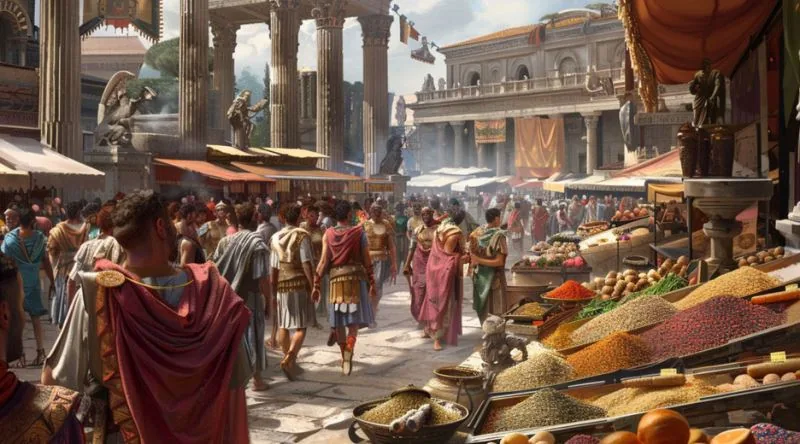
Daily life in ancient Rome, as it was lived across the city's streets and households, split sharply along class lines: the wealthy ate white bread and fresh meat in spacious villas while the poor got by on coarse bread and little else in crowded, fire-prone apartment blocks. Picture a Roman morning, and the picture depends entirely on whose door you knock on. Behind one, slaves are grinding grain for a breakfast the family will barely notice. Behind another, a family of five is climbing five flights of stairs to a single room with no kitchen and no running water. Ancient Rome was one city, but it held two very different worlds.
In ancient Rome, daily life divided sharply by class. Wealthy Romans enjoyed white bread, meat, wine, and spacious villas, often served by enslaved workers. The poor lived in tall apartment buildings called insulae, often vulnerable to fire, and ate plain bread and little more. Public entertainment, including gladiator games at the Colosseum, served both as leisure and as a political tool for emperors.
- Wealthy Romans ate white bread, fresh meat, and wine, while poorer residents often relied on coarse bread and little else.
- Many ordinary Romans lived in insulae, multi-story apartment buildings that were cramped and often vulnerable to fire.
- The Colosseum hosted gladiator games that doubled as political theater, helping emperors win public favor.
- Roman baths functioned as social hubs where people gathered to bathe, exercise, and exchange gossip.
- Slavery was central to the Roman economy, and enslaved people could sometimes gain freedom through manumission.
Two Tables, One City: Breakfast and the Roman Class Divide
Daily life in ancient Rome split along a single loaf of bread. The wealthy ate loaves that were whiter and softer, baked from finely milled flour, while the poor made do with coarser, darker bread. Pliny the Elder lays out those grades of flour plainly in Book XVIII of his Natural History. Same city, same grain, two very different mornings.
Picture the rich household waking inside a villa, a home built around a wide open courtyard. Breakfast was a relaxed affair: bread alongside olives, cheese, and maybe a little fruit. Now picture the other side of town, where most ordinary Romans lived in insulae, the apartment blocks stacked story upon story. The morning meal there is often described as bread, a pinch of salt, and water. Treat that bread-and-water picture carefully, though. A simple bread-based breakfast is believable enough, but the tidy "bread and water" formula smooths over a lot we simply do not know.
The insulae carried their own dangers. Fire was a constant, notorious hazard in these crowded buildings. The popular image of them as wooden tinderboxes is only partly fair, since many were built of brick-faced concrete. The fear, at least, was real.
One thing crossed the divide: bread itself. Rich or poor, nobody in Rome did without it. The difference was never whether you ate bread. It was which bread you could afford.
Who Did the Work in Rome, and Who Owned Whom
In ancient Rome, work and freedom did not line up neatly. A wealthy citizen could sit in the forum arguing law while a slave stood behind him holding his notes. A doctor or a teacher might be someone's property. Wealthy citizen Romans held full citizen rights, while slaves were legally property with essentially no rights at all. That gap, not just the money gap, is what shaped daily life in ancient Rome.
The popular version says slaves did the hardest labor while rich Romans handled trade, law, or politics. Treat that as a rough sketch, not a rule. Slaves did haul, dig, and serve, but they also taught children, treated the sick, and ran households and estates. And the elite often left commerce to freedmen and slaves rather than dirtying their own hands with it. The rest of the working city was farmers, craftsmen, bakers, and merchants, the people who kept grain moving and bread coming out of the ovens.
For a slave, life bent to another person's mood. Owners could decide where you slept, who you married, whether you saw your children. Some slaves were forced into gladiator fights, sent into the arena for their masters' entertainment. That was the bottom of the ladder, and the drop was short.
But the ladder had a top rung. Manumission was real and common enough that everyone knew someone who had climbed it. A master could free a slave, formally and legally, and that person walked out a Roman citizen. Freed slaves still carried some limits and obligations toward the former owner, yet the door was genuinely open.
Picture it: the same morning, two Romans wake. One stretches in a villa with a courtyard. The other wakes in an insula, an apartment block packed with neighbors, where a fire could take the whole building. Same city. Same sky. Very different odds.
That is the turn in this story. Rome was not simply rich people and poor people. It was citizens, freedmen, and slaves stacked in a legal order, and your place in that order decided almost everything about your day.
Baths, Markets and the Arena: Where Rome Mixed
The public baths were the great social leveler of daily life in ancient Rome, open to senators and day laborers alike for washing, exercise and gossip, though some class segregation existed inside. The markets were the city's busiest places, where people strengthened social ties and picked up news. Going to the baths and markets then was like going to a cafe today.
Picture the bath complex in the late afternoon: oiled skin, the slap of a handball against a wall, the steam rooms hissing, and voices trading rumor in the warm air. Men and women moved through the halls on their own schedules, and the talk ranged from a neighbor's debts to the price of grain. It was where the city let its guard down.
The market squares carried that same energy into daylight. Vendors shouted prices, neighbors caught up, and news traveled faster than any official messenger. If you wanted to know what was really happening in Rome, you did not wait for an announcement. You went shopping.
Then came the arena, and the whole city tilted toward it. The Colosseum was the common gathering point, where gladiator fights and animal hunts drew crowds from every rung of society. The source's comparison holds: going to the arena then was like going to the cinema today. One detail from the original account deserves a caveat, though. The Colosseum hosted gladiatorial combat and wild animal hunts, but stage plays belonged to the theaters, not the amphitheater.
Those shows were never only entertainment. They were political messaging in its purest form. The emperor won the people's hearts by entertaining them, and a generous spectacle could quiet a restless city for an afternoon. Bread, baths and bloodshed, offered in the right measure, kept the crowd on his side.
When Night Fell: Banquets in the Villa, Small Rooms for the Poor
When darkness settled over Rome, the city split into two very different evenings. In the villas of the wealthy, lavish banquets stretched late into the night, fueled by music and dancing, while the poor simply rested from the day's exhaustion in their small rooms.
The Roman dinner party, the convivium, was a performance as much as a meal. Petronius, the courtier and writer who served under Nero in the first century AD, captured the whole spectacle in his Satyricon, most famously in the Cena Trimalchionis, the "Dinner of Trimalchio." His fictional freedman host throws course after course at his guests, and the evening rolls on with entertainment and drink until the small hours. That portrait is satire, but the bones of it are real: elite Romans genuinely did stage long, extravagant evening banquets, and music and dancing were standard parts of the show.
The talk at those tables was its own kind of theater. Guests traded city gossip, the scandals and rumors of the day, and then slid into political matters, who was rising, who was falling, what the emperor might do next. In a city where reputation was currency, a well-placed remark over dinner could travel further than a speech in the forum. This is the texture of daily life in ancient Rome at its most comfortable: reclining on couches, picking at dishes designed to impress, talking until the oil lamps burned low.
Then there was the other evening. For the poor, night offered no banquet and no audience. It offered a small room and a chance to lie down. The day had already taken everything: the work, the heat, the crowds, the noise. Sleep was the reward, and it came cheap.
Two rhythms, one city. The villa glowed with lamplight and laughter while the cramped room went dark and quiet. Neither household knew much about the other's night, yet both were Rome, breathing in the same dark.
Frequently asked questions
What did rich and poor Romans eat for breakfast?
Bread anchored the Roman morning table, but not the same bread. Wealthy Romans ate whiter, softer loaves, a grade of flour the elite prized. Their tray might add olives, cheese and a little fruit. As the story goes, the poorest Romans often made do with bread and little else, sometimes a pinch of salt and water. The gap was visible in the crumb itself.
Why were insulae dangerous?
Most ordinary Romans lived in insulae, the apartment blocks that filled the city. Fire was a constant threat, and that danger was real. The popular image of pure wooden towers is partly overstated, since many insulae were built of brick-faced concrete. Still, packed floors and open flames made every morning a gamble.
How did the Colosseum serve as political messaging?
The Colosseum was Rome's shared gathering point, where gladiator fights and animal hunts drew the whole city. Going there was what a night at the cinema is today. The emperor knew it. By entertaining the crowd, he won their affection, and the games doubled as a message about who held power.
What rights did slaves lack, and could they be freed?
Slaves were legally property, stripped of citizenship rights, while a wealthy Roman citizen enjoyed them in full. Some slaves were forced into gladiator fights for their masters' entertainment. Freedom was not impossible: some owners freed their slaves, and those people went on to live as free citizens.
How did baths and markets bring classes together?
Public baths were social centers for rich and ordinary Romans alike, places to wash, exercise and trade gossip. Markets were the busiest spots in the city, where people strengthened ties and picked up news. Heading to the baths or the forum was the ancient equivalent of meeting a friend for coffee.
Was daily life in ancient Rome really divided between rich and poor?
Yes. The split ran through wealth, lifestyle and legal standing at once. Rich Romans held lavish evening banquets with music and dancing that ran late into the night, while the poor rested their tired bodies in small rooms. One city, two very different days. Editorial note: Details that remain unconfirmed by firm historical record are presented here as uncertain or hedged.
Got a take on this? Add your voice to the conversation below →
No comments yet. Be the first.