Australia's Animal Wars: 9 Wildlife Battles Since 1901
Australia has waged nine major campaigns against invasive and native animals since 1901, from the famous 1932 Emu War to ongoing feral cat culls. These battles, fought across the continent's vast landscapes, reveal a country constantly balancing agricultural needs, biodiversity conservation, and public sentiment, often with unexpected results that still echo in policy debates today.
Since 1901, Australia has launched nine significant campaigns against animals, including the 1932 Emu War, rabbit plagues, dingo fence construction, camel culls, feral cat eradication, and brumby management. These efforts target both invasive species threatening native wildlife and native animals causing agricultural damage, with outcomes ranging from outright failures to partial successes.
- The Great Emu War took place in Western Australia in 1932 when military personnel were deployed to cull emus damaging wheat crops, with the birds ultimately outmaneuvering the soldiers.
- Australia's dingo fence, begun in the 1880s and completed in the 1950s, stretches approximately 5,600 kilometers across Queensland, New South Wales, and South Australia.
- The myxoma virus was deliberately released in 1950 to control rabbit populations, initially killing an estimated 99 percent of infected rabbits in some areas.
- Feral cats have been culled across Australia for decades, with a 2015 government plan targeting up to 2 million cats to protect native species.
- Wild camels, introduced in the 19th century, have been subject to aerial culling programs in central Australia, with over 160,000 removed between 2009 and 2013.
Australia's Animal Wars: 9 Wildlife Battles Since 1901
Australia became a unified nation on January 1, 1901, and almost immediately found itself locked in a strange kind of conflict. The new government soon realized its real challenges weren't foreign powers but rabbits, foxes, camels, and birds. What followed was over a century of wildlife battles that ranged from the absurd to the deadly serious.
The story starts with a single bad idea in 1859. European settlers brought rabbits to Barwon Park in Victoria for sport hunting, and the animals did what rabbits do best. With no natural predators and perfect conditions, they multiplied into the millions within a few decades. By the time Australia's federation was established in 1901, rabbits had become the country's biggest agricultural nightmare. The government threw everything at them: long fences, bounties for hunters, poison, and traps.
Then came the biological weapon. In the 1950s, authorities released the myxoma virus into the wild, and it worked spectacularly at first, killing roughly 90 percent of infected rabbits. But nature fights back. The surviving rabbits developed resistance, and current population estimates vary widely, with some sources suggesting hundreds of millions of wild rabbits remain. The culling never really stopped.
The Dingo Fence stretches about 5,600 kilometers
That makes it one of the longest fences on Earth, built to keep wild dogs away from sheep and cattle country. Dingo control programs have run since federation, using poison baits, traps, and professional hunting teams across rural areas.
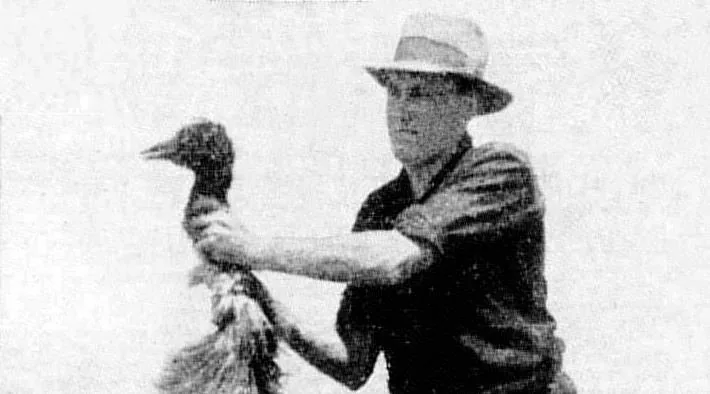
Perhaps the strangest chapter came in 1932 in the Campion district of Western Australia. Emus, estimated by contemporary accounts at anywhere from 10,000 to 20,000 birds, marched into wheat fields and destroyed crops. Farmers begged for help, so the government sent actual military units with Lewis light machine guns. The soldiers fired thousands of rounds, but the emus scattered into small groups and simply outran the bullets. The operation ended quickly and embarrassingly. The event is often popularly described as the first military campaign by a modern state army against wild animals, though this is not formally recognized.
Red foxes arrived from England in the 1830s and 1840s, also for hunting, and they devastated native marsupials and ground-nesting birds. Control programs starting in the 1940s used poisoned baits and traps, especially around national parks. Wild pig control efforts intensified from the mid-20th century, with coordinated programs becoming systematic in later decades, using helicopter-assisted hunts and traps. Large-scale wild goat control programs became prominent in the 1980s and 1990s, though earlier efforts existed, targeting overgrazing in arid landscapes.
Camels tell a different kind of story. Brought to Australia in the 19th century for transport and haulage, they were released into the wild when motor vehicles took over. By 2009, their numbers had exploded into a crisis. The Australian Feral Camel Management Project reported culling approximately 160,000 camels between 2009 and 2013, using helicopter-borne sharpshooters to bring the population under control.
Feral cats may be the most devastating predator of all. A 2017 study estimated they kill between 1.5 and 2.5 billion native animals every year, including birds, reptiles, and small mammals. A national strategy was launched in 2015, building on earlier state and local control efforts, using poison baits, traps, and professional hunting teams to protect endangered species.
The most controversial battle involves brumbies, the wild horses of the Australian Alps. Brumby culling has occurred for decades, with new plans in the 2020s intensifying the debate. New helicopter-assisted culls in recent years have sparked fierce arguments between environmentalists, animal rights advocates, and farmers. Supporters say the horses destroy fragile wetlands; opponents demand more humane methods. The debate continues.
Beyond these nine campaigns, Australians now treat venomous snakes, spiders, and scorpions as part of daily life. These days, finding a snake in your house is so normal that people actually make a living catching them. The country that started these animal wars in 1901 keeps fighting them, and the wildlife keeps adapting. And nature, it seems, has no intention of surrendering.
Editorial note: Any facts which remain unconfirmed are presented as such, hedged appropriately throughout the article.
Got a take on this? Add your voice to the conversation below →
No comments yet. Be the first.