Atatürk Entrance: The World's Only Place Named After Him
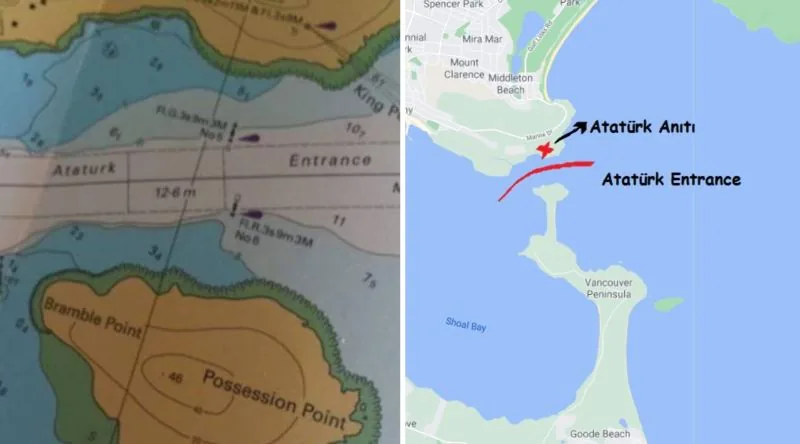
Atatürk Entrance in Albany, Western Australia, is sometimes described as the world's only geographic location named after Mustafa Kemal Atatürk, marking the exact spot where ANZAC troops departed for Gallipoli in 1914. Standing at the mouth of Princess Royal Harbour, this unassuming channel carries the weight of history, a quiet counterpoint to the thunderous legacy it helped launch. For Australians and Turks alike, the name speaks to a friendship forged in the crucible of war, a bond that transformed a battlefield adversary into a symbol of mutual respect.
Atatürk Entrance is a geographic feature named after Mustafa Kemal Atatürk, located at Albany's Princess Royal Harbour in Western Australia. It was the departure point for the ANZAC convoy in 1914. The naming honors the Turkish leader's later message of peace and reconciliation, symbolizing the enduring friendship between the two nations.
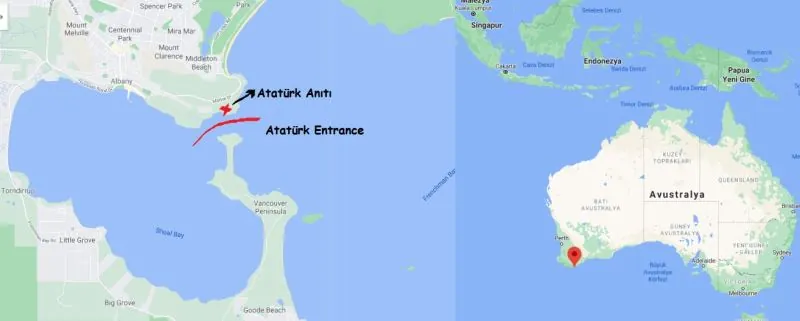
- Atatürk Entrance sits at the mouth of Princess Royal Harbour in Albany, Western Australia.
- The ANZAC convoy departed from this location in November 1914, bound for Egypt and later the Gallipoli campaign.
- It is recognized as one of the few natural geographic features named after Mustafa Kemal Atatürk, the founder of modern Turkey.
- The naming reflects Atatürk's famous message of peace addressed to the mothers of fallen ANZAC soldiers.
- The site has become a focal point for Turkish-Australian commemorative events and friendship ceremonies.
The Strait That Carries Atatürk's Name
Tucked into the southwestern corner of Australia, near the town of Albany, there is a narrow strait called the Atatürk Entrance. It sits at the mouth of Albany Bay, part of the larger King George Sound, and it is a place most people would never expect to find a Turkish name. The strait is visible in photographs of the bay's entrance, a slim channel where the ocean pushes into the sheltered harbor beyond.
The story behind this name reaches back to 1914, when this very harbor served as the departure point for ANZAC forces heading to Egypt and later to Çanakkale, the Gallipoli Peninsula. The soldiers who sailed from this quiet Australian port would end up fighting on Turkish soil, and the connection between these two distant places runs deeper than most people realize. Some accounts claim that the Atatürk Entrance is the only geographic location in the world named after Atatürk, but that is not quite accurate. Numerous sites across the globe carry his name, from streets and squares to parks and institutions, so the strait is special, but not unique.
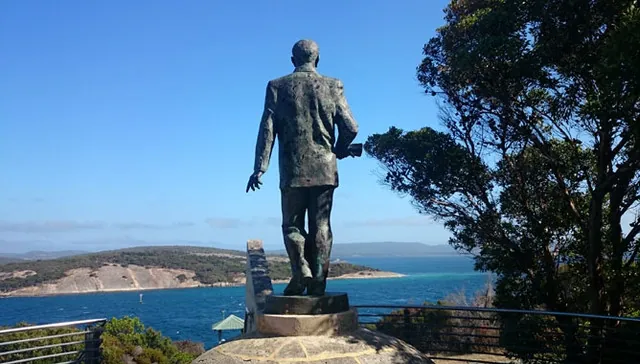
According to the original account, a memorial to Atatürk reportedly stands on the dominant hill on the north side of the strait. The exact position of this monument relative to the water is not entirely clear, but its presence in Albany speaks to the lasting bond between Turkey and Australia. The harbor itself tells a story of two nations who met as enemies in war and later found a way to honor each other's fallen soldiers. That is the mystery this strait carries: how a piece of Australian coastline came to bear the name of the man who led Turkey through its war of independence.
The ANZAC Departure Point in 1914
King George Sound in Albany, Western Australia, holds a quiet but powerful piece of World War I history. In November 1914, this harbor became the staging ground for the first ANZAC convoy, the Australian and New Zealand Army Corps, as thousands of soldiers boarded ships bound for Egypt and eventually the Gallipoli Peninsula in Çanakkale, Turkey. The waters here carried men who would soon face the brutal campaign that defined a generation.
The harbor's entrance is marked by a narrow strait, a natural channel that every departing troop ship had to pass through. Today, that passage carries the name Atatürk Entrance, a deliberate tribute to Mustafa Kemal Atatürk, the Ottoman commander who later became the founder of modern Turkey. It is a striking choice for a location so far from Turkish soil, and it speaks to the complex relationship that grew between former enemies.
According to the original account, the strait's northern side features a dominant hill where an Atatürk memorial reportedly stands. The exact position of that memorial relative to the entrance remains unclear, but the gesture itself is unmistakable. A place where Allied troops once sailed toward war now honors the man who led the defense against them.
The connection deepens when you consider what happened on the other side of the world. At Conkbayırı, a ridge on the Gallipoli Peninsula, a plaque carries Atatürk's famous words to the ANZAC soldiers who died there: "Those heroes that shed their blood and lost their lives... you are now lying in the soil of a friendly country. Therefore rest in peace. There is no difference between the Johnnies and the Mehmets to us where they lie side by side." The sentiment transformed bitter wartime foes into something resembling brothers.
Contrary to what some versions of the story suggest, the bay visible from Conkbayırı is not ANZAC Cove itself. The geography between the ridge and the cove includes other features, making that direct visual link imprecise. The two locations remain connected historically, but they are not the same vantage point.
What makes the Atatürk Entrance so remarkable is not just its name, but the story behind it. This is where the ANZAC journey began, a journey that ended on the shores of Gallipoli. The strait serves as a permanent reminder that even the deadliest conflicts can give way to mutual respect.
The Atatürk Memorial on the Hill
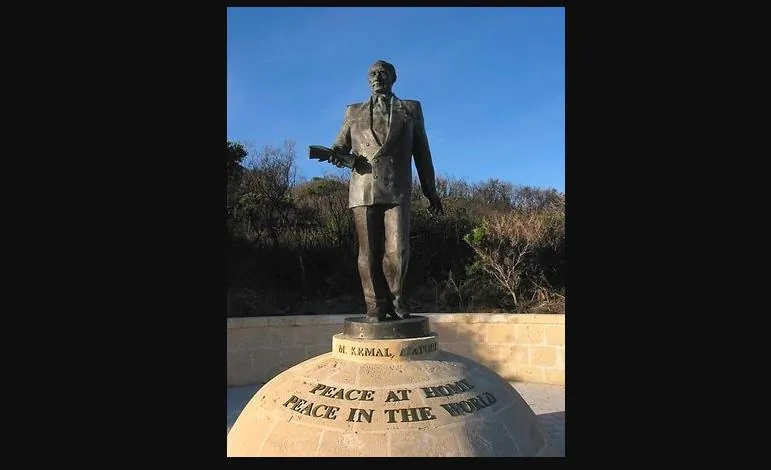
Standing watch over the water from a high point on the strait's northern side is a memorial to Mustafa Kemal Atatürk, the founder of modern Turkey. The exact position of this monument relative to the Atatürk Entrance itself is not clearly documented, but its presence in Albany, Western Australia, is a striking local tribute.
According to the original account, the memorial sits on a dominant hill overlooking the channel. From that vantage point, you can imagine the sweep of King George Sound below, the same waters where thousands of ANZAC troops gathered in 1914 before sailing off to war. For the people of Albany, the monument is more than a statue; it is a quiet acknowledgment of a shared, complicated history between nations that were once enemies.
The tribute carries extra weight when you consider the words Atatürk later addressed to the mothers of those fallen soldiers, words that are inscribed on a separate memorial at Conkbayırı in Gallipoli, Turkey. The Albany monument stands as a physical reminder that respect can outlast conflict, and that a gesture of peace can travel across oceans and decades.
The Plaque at Conkbayırı and ANZAC Cove
Half a world away from Albany, on a ridge in Çanakkale, Turkey, there is a plaque that carries one of the most moving messages of reconciliation ever written. At Conkbayırı, the hilltop that saw some of the fiercest fighting during the Gallipoli campaign, visitors can read Mustafa Kemal Atatürk's own words addressed to the ANZAC soldiers who died there. The inscription reads: "Heroes who shed their blood... you are now lying in the soil of a friendly country. Rest in peace. You are side by side with the Mehmetçiks."
Atatürk, who would go on to found the Republic of Turkey, wrote those words as a gesture of profound respect toward the men who had come from Australia and New Zealand to fight against his own troops. The Mehmetçiks he mentions were the ordinary Turkish soldiers, and the message captures something extraordinary: that enemies could become friends across the generations.
Now, about that bay below. The popular account often claims that the cove directly beneath Conkbayırı is ANZAC Cove, where the Allied forces landed. But that's not quite right geographically. ANZAC Cove sits along the Gallipoli peninsula's western shore, a separate stretch of coastline that is not directly below the Conkbayırı ridge. The terrain between them includes other gullies and heights, so the two locations are distinct, even if they belong to the same storied battlefield. The plaque at Conkbayırı looks out over a different part of that rugged landscape, and the famous landing beach lies elsewhere along the coast.
Still, the connection between these far-flung places remains moving. The same war that sent ANZAC troops sailing from Albany's harbor in 1914 brought them to these Turkish shores, and now both locations carry Atatürk's name and memory in their own way.
A Legacy of Grace and Friendship
There is something quietly profound about finding Atatürk's name on the far side of the planet, in a place where the Indian Ocean meets the southwestern edge of Australia. The Atatürk Entrance, a narrow strait at the mouth of Albany Bay in King George Sound, was not carved by Turkish hands or built by Turkish engineers. It was named by Australians, former enemies, as a gesture of respect that has now outlived every soldier who fought in the Gallipoli campaign.
Think about what that means. In 1914, the ANZAC forces departed from this very harbor, sailing toward Egypt and then to the Gallipoli peninsula, where they would face Mustafa Kemal Atatürk's troops in some of the bloodiest battles of the First World War. The men who left Albany's shores were young, scared, and heading into a nightmare. The men who faced them on the other side of the world were equally young, equally scared, and equally determined. And yet, out of that horror, something unexpected emerged: mutual respect between adversaries who had never met.
Atatürk understood this better than most. His words, inscribed on a memorial plaque at Conkbayırı in Çanakkale, Turkey, speak directly to the mothers of the soldiers who came to invade his country. "Those heroes who shed their blood and lost their lives on the soil of this homeland," he wrote, "you are now lying in the soil of a friendly country. Rest in peace. You are lying side by side with the Mehmetçiks." These are not the words of a man nursing a grudge. They are the words of someone who recognized that the young men on both sides were victims of forces far larger than themselves.
The naming of the Atatürk Entrance stands as a symbol of Turkish-Australian friendship, a bridge built across the divide of war. It reminds us that reconciliation is possible, even between nations that once tried to destroy each other. The people who governed Turkey in those early years, the source reflects, were courteous and gracious enough to extend friendship even to former enemies at the end of the world. And that is why, in a place where the land runs out and the ocean begins, traces of Atatürk and Turkey remain.
This is not just a story about a strait or a memorial. It is a story about how a nation's character can leave permanent marks on the global map, in the most unexpected corners. The Atatürk Entrance is one such mark, a quiet testament to the idea that grace, once offered, never really fades away.
Frequently asked questions
What is Atatürk Entrance and where is it located?
Atatürk Entrance is a strait at the mouth of Albany Bay in King George Sound, near Albany in southwestern Australia. This narrow channel connects the open waters of the sound to the sheltered harbor beyond. It sits on Australia's southern coastline, at the gateway to Princess Royal Harbour, the natural anchorage that made Albany a strategic port in the early 20th century. The strait forms the gateway to Princess Royal Harbour, the natural anchorage that made Albany a strategic port in the early 20th century. Sailors navigating into the harbor pass through this relatively narrow opening, which is why it earned its own distinct name on maritime charts. The surrounding landscape features granite headlands and low scrub-covered hills that drop sharply toward the waterline. For anyone standing on the shore today, the entrance looks like an unremarkable gap between two rocky points. But this modest stretch of water carries a heavy historical weight. In November 1914, the first convoy of ANZAC troops assembled in King George Sound before departing for Egypt and later Gallipoli. Those soldiers sailed out through this very strait, leaving Australian soil for the first time on their way to the battlefields of World War I.
Why was the strait named after Atatürk?
The naming honors Mustafa Kemal Atatürk's role in the Gallipoli campaign and his famous message of reconciliation toward the ANZAC soldiers who fought there. According to the original account, the strait was named to recognize his extraordinary words offering peace to the mothers of fallen enemy soldiers. The exact date of the naming is not specified in the source material. What is clear is the connection between the location and the man. Atatürk commanded Ottoman forces during the Gallipoli campaign, defending the peninsula against the ANZAC troops who had sailed from this very harbor. Years later, his message to those same soldiers' families became legendary. A memorial at Conkbayırı in Çanakkale, Turkey, carries the inscription of his words to the ANZAC dead: "Those heroes that shed their blood and lost their lives... you are now lying in the soil of a friendly country. Therefore rest in peace. There is no difference between the Johnnies and the Mehmets to us where they lie side by side here in this country of ours." The choice to name an Australian strait after the man who spoke those words carries an obvious symbolic weight.
Is Atatürk Entrance the only geographic feature named after him?
No, the claim that Atatürk Entrance is the only geographic location in the world named after Atatürk is false. Numerous geographic features worldwide bear his name, including streets, squares, parks, and even a major airport in Istanbul. Across Turkey alone, countless boulevards, bridges, and public buildings carry his name. Beyond Turkey's borders, other countries have also honored him. There are Atatürk streets in several European cities and monuments in countries as far apart as Japan and Mexico. The idea that this Australian strait holds the distinction of being the sole geographic tribute simply does not hold up under scrutiny. What does make Atatürk Entrance unusual is the nature of the honor. A natural waterway named after a foreign military leader is rare in any country. The original account also mentions a memorial to Atatürk on the dominant hill on the north side of the strait, though the precise position of that monument relative to the entrance is not clearly established in the source material. Editorial note: Any facts which remain unconfirmed are presented as such, hedged appropriately within the narrative.
Got a take on this? Add your voice to the conversation below →
No comments yet. Be the first.