Apple Lisa Named After Steve Jobs' Daughter: The 1983 Secret
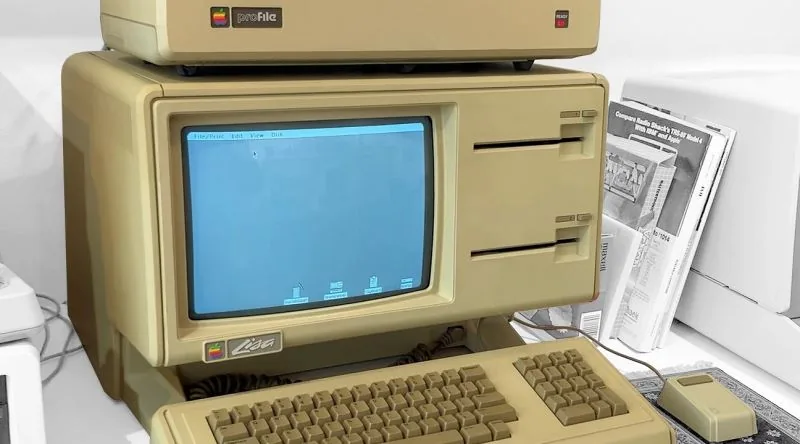
In 1983, Apple released the Lisa computer, a revolutionary but doomed machine that Steve Jobs secretly named after his daughter Lisa Brennan, hiding the tribute behind the invented backronym "Local Integrated Software Architecture." The story of the Apple Lisa backronym is a tale of ambition, denial, and a father's complicated love, wrapped in a sleek beige case that changed computing forever.
In 1983, Apple launched the Lisa personal computer, named by Steve Jobs after his daughter Lisa Brennan. To hide the connection, Apple claimed Lisa stood for "Local Integrated Software Architecture," a backronym invented after the fact. The computer flopped commercially but its technology directly shaped the successful Macintosh.
- Steve Jobs co-founded Apple and named the 1983 Lisa computer after his daughter Lisa Brennan.
- Apple engineers joked that "Lisa" stood for "Let's Invent Some Acronym," mocking the company's official explanation of "Local Integrated Software Architecture."
- The Lisa launched in January 1983 at a price of around $10,000, making it too expensive for most buyers and leading to poor sales.
- Lisa's graphical user interface and mouse-driven design directly inspired the cheaper Macintosh, which launched in 1984 and became a lasting success.
- The true naming story became widely known years later, adding a personal layer to the machine's legacy.
The Secret Behind the Name: Apple Lisa and Steve Jobs' Daughter
In 1978, Steve Jobs' daughter Lisa Brennan was born, and five years later, Apple launched a computer bearing her name. The Apple Lisa, released on January 19, 1983, was named after her, but Jobs hid this truth by convincing the world it was an acronym.
The story begins quietly. When Apple's engineers were developing a new machine inspired by groundbreaking work at Xerox PARC, someone slapped the code name "Lisa" onto the project without much thought. It stuck. But when the product finally hit the market in 1983, curious journalists and customers started asking: what does the name actually mean?
Jobs, faced with a question he didn't want to answer honestly, did something remarkable. He stood up and claimed the name was indeed an acronym. His marketing team quickly scrambled and produced "Local Integrated Software Architecture," though some sources say it was "System" instead of "Architecture." Either way, the Apple Lisa backronym was born, a fabricated explanation designed to hide a personal truth.
The engineers saw right through it. They knew the real story, and they responded with their own dark humor. Around the office, they joked that Lisa stood for "Let's Invent Some Acronym" or, even more cutting, "Lisa: Invented Stupid Acronym." The joke captured the absurdity perfectly: there was no real acronym at all. The only purpose of the official explanation was to conceal the fact that Jobs had named a machine after his daughter.
The Backronym That Fooled Everyone: 'Local Integrated Software Architecture'
When the pressure came, Steve Jobs and Apple's marketing team reached for a very specific kind of lie: they claimed Lisa stood for "Local Integrated Software Architecture," with some sources swapping in "System" for the final word. It sounded plausible enough, the kind of clean, technical phrase that a 1983 computer company would absolutely use to describe its new machine. The only problem? Nobody inside Apple believed it for a second.
The engineers who actually built the Lisa in the early 1980s had their own translation ready. They joked that Lisa really meant "Let's Invent Some Acronym," a sly nod to the fact that the whole thing was manufactured after the fact. A more brutal version circulated too: "Lisa: Invented Stupid Acronym." The joke landed because it was true. The name had come first, and the official explanation was nothing more than a cover story designed to hide the real origin, which was personal, not technical.
Here is where the story gets genuinely funny. The public explanation was a textbook backronym, which is the term linguists use when you take an existing word and work backward to invent a phrase that fits its letters. A normal acronym builds a word from initials, like NASA. A backronym starts with the word and then reverse-engineers a meaning. And the Apple Lisa backronym worked so well that it fooled the public for years, even as the people who made the machine were openly mocking it in the hallways.
Jobs himself repeated the "Local Integrated Software Architecture" line in interviews, delivering it with the same straight-faced conviction he brought to everything. The marketing team dutifully printed it in press materials. But the engineers knew the truth, and their snarky acronyms became part of Apple's internal folklore, documented in accounts like Andy Hertzfeld's "Revolution in the Valley." The cover-up had a shelf life, and the joke outlived the official story.
What Is a Backronym? (And How Bing and Adidas Fit In)
A backronym is a word that already existed on its own, with letters later stretched into a phrase that supposedly explains it. The Apple Lisa backronym is the classic case: Apple's marketing team claimed in 1983 that "Lisa" stood for "Local Integrated Software Architecture," but that explanation came after the name was already chosen. The word came first, and the story came second.
Linguists have a tidy name for this trick. A normal acronym builds a new word from the first letters of a phrase, like NASA from National Aeronautics and Space Administration. A backronym flips the process: you start with a familiar word, then invent a phrase whose initials happen to spell it out. The result is a plausible-sounding explanation that often has nothing to do with how the word actually came to be.
You meet backronyms all the time without realizing it. Take Bing, Microsoft's search engine. The joke expansion "Because It's Not Google" makes the rounds on the internet, but Microsoft never officially claimed that. The company chose "Bing" for its short, punchy sound, not for any hidden acronym. The expansion is pure humor, a backronym in the wild.
Adidas runs into the same myth. The popular story says the sportswear giant's name means "All Day I Dream About Sports." It's a charming idea, but it's not true. The company's name actually comes from its founder, Adolf Dassler, whose nickname was Adi. He combined his nickname with the start of his last name to get Adidas. The dreamy expansion is a backronym that took on a life of its own.
Even SOS, the universal distress signal, gets misread as an acronym. People often expand it to "Save Our Souls" or "Save Our Ships," but SOS doesn't stand for anything. It was chosen as a Morse code sequence because its pattern of three dots, three dashes, three dots is simple and unmistakable. The signal came first, and the phrases came later as a convenient explanation.
What ties all these together is the same impulse behind the Apple Lisa backronym. A name exists, and people want it to mean something grander than it does. So they invent a phrase that fits the letters, and the story spreads until it feels like fact. The next time you see a strange acronym, it's worth asking whether the explanation came before or after the word itself.
The Lisa's Legacy: From Commercial Flop to Macintosh's Foundation
The Apple Lisa never found its audience, and the company quietly pulled the plug on the machine a few years after its debut. Yet the same computer that lost millions of dollars for Apple handed the company its future on a silver platter.
The numbers tell a grim story. A Lisa cost around $10,000 in 1983, a staggering price when most people were still typing on beige terminals with green text. Businesses balked at the cost, and consumers never warmed to a machine they did not understand. On paper, the project was a disaster.
But look past the sales figures and something remarkable emerges. The Lisa introduced the graphical user interface and mouse-driven navigation to a wide audience, the same concepts that Xerox PARC had pioneered and Apple had borrowed. Every click of that single-button mouse, every pull-down menu, every window that could be dragged across the screen, these were Lisa's gifts. When the Macintosh arrived, it carried the Lisa's DNA in every component, distilled into a simpler, cheaper package.
The engineers who had mocked the Apple Lisa backronym with their "Let's Invent Some Acronym" jokes understood something the market did not. They knew the machine was revolutionary even when it was commercially doomed. The Macintosh became the product that made Apple a household name, and it could not have existed without the Lisa's pioneering work.
Today, the Lisa name lives on in tech lore as one of the most famous backronyms ever created. The word came first, a daughter's name, and the official explanation came later to cover the tracks. In 1983, Apple's marketing team presented "Local Integrated Software Architecture" with a straight face, and Steve Jobs repeated the claim in interviews. The truth, that the computer honored Lisa Brennan, born in 1978, became widely known years later.
The Lisa taught Apple a brutal lesson about pricing and positioning. It also proved that a good idea could survive even the worst commercial performance. The GUI revolution that the Lisa started eventually swept through the entire industry, and every modern computer owes something to that failed machine with the borrowed name.
Frequently asked questions
Why was the Apple Lisa named after Steve Jobs' daughter?
The Apple Lisa, released on January 19, 1983, was named after Steve Jobs' daughter Lisa Brennan, who was born in 1978. Jobs publicly denied this connection for years, instead claiming the name was an acronym. Multiple credible biographies later confirmed that the computer's name was a personal tribute to his daughter.
What does the backronym 'Local Integrated Software Architecture' stand for?
When the Apple Lisa launched in 1983, Apple's marketing team publicly stated that "Lisa" stood for "Local Integrated Software Architecture," with some sources substituting "System" for "Architecture." This explanation was presented as the official meaning of the name. In reality, it was a fabricated acronym created after the fact to hide the computer's true namesake, Jobs' daughter Lisa Brennan.
How did engineers mock the Apple Lisa acronym?
Apple's own engineers found the official explanation amusing and created their own jokes about it. They joked that Lisa stood for "Let's Invent Some Acronym" and the more cutting "Lisa: Invented Stupid Acronym." These jokes were documented in multiple accounts of Apple's history, including Andy Hertzfeld's "Revolution in the Valley" and folklore.org, showing that even insiders knew the official story was a cover-up.
What is a backronym and how does it differ from an acronym?
A backronym is a phrase created after the fact to fit an existing word, while an acronym is a word formed from the initial letters of a pre-existing phrase. For example, NASA is a genuine acronym created from "National Aeronautics and Space Administration." The Apple Lisa backronym worked in reverse: the word "Lisa" already existed, and the phrase "Local Integrated Software Architecture" was invented later to explain it.
Was the Apple Lisa a commercial success?
No, the Apple Lisa was a commercial failure. Despite its innovative graphical user interface, the computer sold poorly and was discontinued a few years after its debut. Its high price and limited software library kept it out of reach for most consumers. However, its development was not wasted effort, as its GUI and mouse concepts directly influenced the Macintosh, which went on to reshape personal computing.
Did the Apple Lisa influence the Macintosh?
Yes, the Apple Lisa directly influenced the Macintosh's development. The Lisa's graphical user interface, mouse-based navigation, and windowed operating system served as the foundation for the Macintosh's design. When the Macintosh launched, it carried forward the Lisa's core innovations in a more affordable package, ultimately bringing the GUI revolution to a wider audience. Beyond the Lisa itself, backronyms appear throughout everyday life, often as jokes that people mistake for real meanings. For instance, the claim that "Bing" stands for "Because It's Not Google" is entirely a joke; Microsoft picked the name for its phonetic qualities. Similarly, "Adidas" does not mean "All Day I Dream About Sports"; it comes from founder Adolf "Adi" Dassler's nickname. And "SOS" is not an acronym for "Save Our Souls" at all, it is simply a Morse code sequence chosen because its pattern is easy to recognize and transmit. Each of these follows the same pattern as the Apple Lisa backronym: the word came first, and the story came later. Editorial note: Any facts which remain unconfirmed, including the exact timing of Jobs' private acknowledgment to Lisa, are presented as such and hedged accordingly.
Got a take on this? Add your voice to the conversation below →
No comments yet. Be the first.