Yasuke: Japan's First Black Samurai and His 1582 Fate
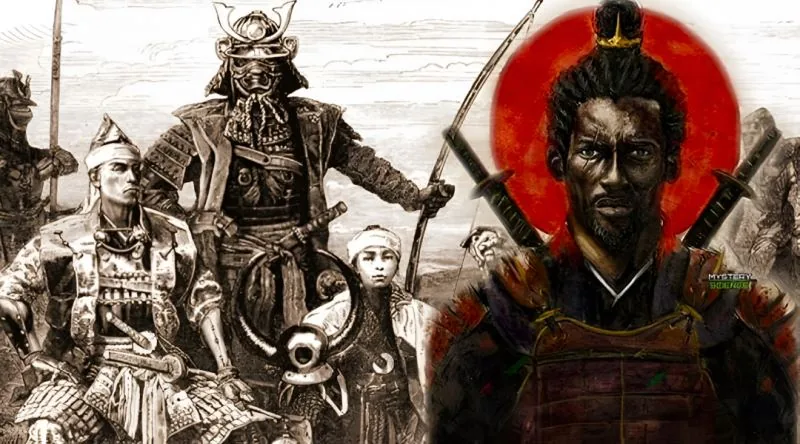
Yasuke, the African warrior known as the Black Samurai, arrived in Japan in 1579 and rose to become a celebrated figure under warlord Oda Nobunaga, only to vanish from the historical record after his master's death in 1582. His story is a breathtaking collision of worlds, a man from distant shores who so impressed a feared conqueror that he was granted the extraordinary honor of samurai rank. It is a tale of courage, loyalty, and a fate that remains one of history's most tantalizing mysteries.
Yasuke, an African man of likely Mozambican origin, came to Japan in 1579 with Jesuit missionaries. His height and strength caught the attention of warlord Oda Nobunaga, who made him a samurai. After Nobunaga's death in 1582, Yasuke was returned to the Jesuits, and his later life remains unknown.
- Yasuke arrived in Japan in 1579 as a companion to the Italian Jesuit missionary Alessandro Valignano.
- He met Oda Nobunaga in 1581, and the warlord was so impressed by his stature that he granted him samurai status.
- Yasuke served Nobunaga during the final years of the warlord's campaign to unify Japan.
- Following Nobunaga's death in the Honnō-ji Incident of June 1582, Yasuke was captured by rebel forces and subsequently returned to Jesuit custody.
- No reliable records exist detailing Yasuke's life after 1582, leaving his ultimate fate a matter of historical speculation.
The Man Who Shocked Japan: Yasuke's Arrival in 1579
In 1579, a man named Yasuke stepped onto Japanese soil and changed what the entire country thought it knew about the world. He arrived alongside Italian Jesuit priest Alessandro Valignano, part of a Catholic mission traveling through Asia. But Yasuke wasn't a priest, a trader, or a diplomat. He was a man from Africa, and he was about to become the answer to a question no one in Japan had ever thought to ask.
Japan in the late 1500s was a place of rigid order, deep tradition, and very little contact with the outside world. The people who saw Yasuke walk through their streets had never encountered anyone with dark skin before. Some were so convinced that his color was paint that they tried to scrub it off with water and rough cloth. They grabbed his arms, rubbed his face, and watched in disbelief as the black remained. The idea that a person could simply look like that, naturally, was beyond what many of them could process.
Yasuke's birth date remains uncertain, though historians estimate he was born around 1555, possibly in Mozambique on the eastern coast of Africa. That detail is contested, with no contemporary record confirming his exact origin. What is clear is that he traveled a remarkable distance to end up in a country that had never seen anyone like him.
His presence alone was a sensation. Crowds gathered to stare. People whispered about his height, his build, his bearing. In a society where nearly everyone shared the same features, Yasuke stood out as something entirely other. And that very strangeness, that inability to fit into any existing category, is precisely what would carry him toward an extraordinary fate.
Oda Nobunaga's Fascination: How Yasuke Became a Samurai
When Yasuke met Oda Nobunaga in 1581, the most powerful warlord in Japan took one look at him and refused to let him leave. Nobunaga, who ruled over a fractured nation from his castle in Azuchi, was mesmerized by the African man's sheer presence, and that single encounter rewired Yasuke's entire life.
The meeting happened during Nobunaga's campaign to unify Japan, a brutal stretch of the late 16th century when loyalty meant everything. Yasuke had arrived in Japan in 1579 as part of the entourage of Alessandro Valignano, an Italian Jesuit missionary who had been sent to oversee the church's work in Asia. The Japanese people had never seen a Black man before, and some genuinely believed his dark skin was painted on, scrubbing at him until they realized the color wasn't coming off.
Nobunaga, however, was less interested in the novelty than in the man himself. The warlord reportedly studied Yasuke's muscles, his posture, and his towering frame. Contemporary descriptions suggest Yasuke stood around 1.88 meters, a giant in a country where most men were significantly shorter, though modern scholars note that converting those old observations to exact metric measurements is tricky. What impressed Nobunaga even more was that Yasuke had already begun learning Japanese, picking up the language during his time with the missionaries.
So Nobunaga did something extraordinary. He gave Yasuke a real katana, fitted him with armor, and granted him a stipend, effectively pulling him into the samurai class. Whether this constituted formal samurai status is actually debated among historians, as the records show Nobunaga showered him with gifts and responsibilities, but the exact legal standing remains unclear. What is not in dispute is that Yasuke carried that katana into real battles, wore the armor, and fought alongside Japanese warriors at a time when the country was being forged through blood.
According to the original account, Nobunaga was so taken with Yasuke that he wanted to keep him close, and the arrangement held until the warlord's world collapsed in 1582. But in that brief window, a man from the other side of the planet had risen to a position no African had ever held in Japan, and none has held since.
From History to Pop Culture: Afro Samurai and Netflix's 'Yasuke'
The story of the Black Samurai didn't stay buried in 16th-century archives. In 2007, the anime Afro Samurai, based on Takashi Okazaki's manga and produced by Gonzo studios, brought a Black swordsman to screens worldwide. Then in April 2021, Netflix released its own anime series simply titled Yasuke, proving the legend had firmly crossed from history books into pop culture.
Afro Samurai hit with the force of a katana strike. The series, starring Samuel L. Jackson as the voice of the titular character, followed a Black warrior on a revenge quest in a world that mixed feudal Japan with futuristic technology. It wasn't a biographical retelling of Yasuke's life, but the visual DNA was unmistakable: a Black man wielding a blade in a Japanese setting, commanding respect and fear in equal measure.
Netflix's Yasuke series took a different approach, and that's where things got complicated. The show crammed in magic, robots, dragons, and even aliens, creating a fantastical fever dream that strayed far from what Jesuit records and Japanese chronicles actually describe. Viewers expecting a grounded historical drama found themselves watching mecha battles and sorcery instead. The real Yasuke never fought a dragon, and no record suggests he encountered extraterrestrials during his time serving Oda Nobunaga in the 1580s.
Yet even with its creative liberties, the Netflix series underscored something remarkable. Japan in the late 16th century was on the eve of the Edo period, a time when the country would slam its doors shut to the outside world for over two centuries. The fact that a Black man from Africa could rise to carry a katana, wear armor, and stand among the retainers of Japan's most powerful warlord in that window of openness is itself extraordinary.
The cultural footprint keeps growing. The Assassin's Creed franchise also drew inspiration from Yasuke for its Shadows game, cementing his place in the modern imagination. For a man whose documented time in Japan spanned only a few years, his afterimage has proven remarkably durable. The real records tell us he arrived in 1579 with the Italian Jesuit Alessandro Valignano, served Nobunaga, and after his master's death in 1582 was captured and spared because his captors deemed him a foreigner rather than a Japanese subject. What happened next remains unknown, but the legend had already taken root.
The Mystery of Yasuke's Fate After Nobunaga's Death
In 1582, the world Yasuke had built came crashing down when his patron, Oda Nobunaga, was betrayed by his own general Akechi Mitsuhide and committed seppuku at Honno-ji temple in Kyoto. The great unifier of Japan was gone, and suddenly the Black samurai found himself on the wrong side of a coup that had erupted overnight.
In the chaos that followed, Yasuke was captured by Mitsuhide's forces. Here's where the story takes its strangest turn: his captors chose not to kill him. The reason? He was a foreigner, not Japanese. In their eyes, executing him held no honor and served no purpose. So they let him live.
According to contemporary accounts, Yasuke was handed over to the Christian missionaries who had brought him to Japan in the first place. He had arrived in 1579 as a companion to the Italian Jesuit Alessandro Valignano, and now, in the aftermath of Nobunaga's fall, he was reportedly returned to that same Jesuit community. Whether he walked away from that encounter as a free man or remained under their protection, the records don't say.
And that's where the trail goes cold. After his return to the missionaries, Yasuke vanishes from the historical record entirely. No diaries mention him. No official documents note his death. The man who had once stood beside the most powerful warlord in Japan simply disappears.
Some historians have wondered whether his story was deliberately obscured. Others point out that with Nobunaga dead and the country plunging back into civil war, a foreign ex-samurai would have had few options. He may have lived out his days quietly among the missionaries, teaching them what he knew of Japanese ways. He may have died in obscurity, his remarkable rise forgotten for centuries.
The truth is that the fate of the Black Samurai remains one of history's quiet riddles. What we know with certainty is this: for a brief window in the 1580s, an African man carried a katana in service to Japan's most powerful lord, and then, as quickly as he had appeared, he was gone.
Frequently asked questions
Who was Yasuke?
Yasuke was an African man who served as a samurai under the powerful Japanese warlord Oda Nobunaga in the late 1500s. He arrived in Japan in 1579 as part of an Italian Jesuit missionary's entourage and rose to a position of remarkable honor in a country that had never seen a Black man before.
How did Yasuke become a samurai?
Yasuke impressed Nobunaga with his commanding stature, reportedly standing around 1.88 meters tall, which was enormous by Japanese standards of the era. He also began learning Japanese quickly. Nobunaga gave him a sword, a house, and a stipend, effectively elevating him to samurai status, though whether this constituted a formal title is debated among historians.
What happened to Yasuke after Nobunaga's death?
When Nobunaga was betrayed and committed suicide in 1582, Yasuke was captured during the chaos. His captors spared his life because he was a foreigner, not Japanese, and sent him to a Jesuit residence. After that point, his fate is unknown to historians.
Was Yasuke in Assassin's Creed Shadows?
The story of Yasuke, the Black Samurai, inspired the video game Assassin's Creed Shadows, but the source material does not provide specific details about his inclusion in the game. The game drew from his real historical journey as one of feudal Japan's most unusual figures, though creative liberties are expected in any adaptation.
What is the Netflix anime 'Yasuke' about?
Netflix released an anime series titled "Yasuke" in April 2021, but it takes significant creative liberties with history. The show incorporates magic, robots, dragons, and aliens, which moves it far away from the real story of the historical Black samurai. Viewers expecting a documentary were surprised by the fantastical elements woven into the narrative.
Got a take on this? Add your voice to the conversation below →
No comments yet. Be the first.