Saladin: The Man Who Retook Jerusalem in 1187
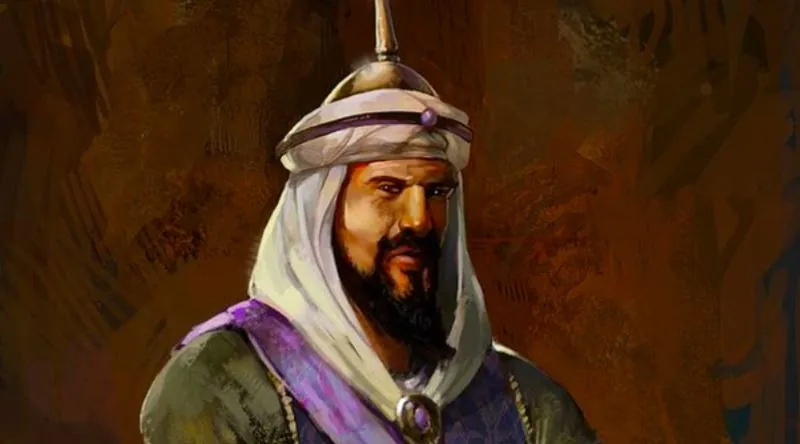
Saladin, born in Tikrit in 1137, became the first sultan of Egypt and Syria and recaptured Jerusalem from the Crusaders in 1187, a turning point in medieval history. His victory at the Battle of Hattin that same year shattered the Crusader kingdoms, and his subsequent career defined the Third Crusade. For many, Saladin remains the model of medieval chivalry, a leader respected even by his enemies for his mercy and honor.
Saladin, born in Tikrit in 1137, united Muslim forces in Egypt and Syria, then defeated the Crusader army at the Battle of Hattin in 1187. Shortly after, he captured Jerusalem, ending nearly nine decades of Crusader rule. His later battles against Richard the Lionheart during the Third Crusade ended in a truce that left Jerusalem in Muslim hands.
- Saladin was born in Tikrit, in modern-day Iraq, in the year 1137.
- On July 4, 1187, Saladin's forces won a decisive victory at the Battle of Hattin in the Galilee region.
- Saladin's army captured Jerusalem from the Crusaders in October of 1187.
- Saladin and Richard the Lionheart negotiated a truce in 1192 that allowed Christian pilgrims access to the holy sites in Jerusalem.
- Saladin died in Damascus in 1193 and was buried there, where his tomb remains a site of reverence.
The Boy from Tikrit Who Would Become Saladin
Saladin entered the world in 1138 in Tikrit, a city that sits in modern-day Iraq. His father, Najm ad-Din Ayyub, held the post of Seljuk governor there, a position that placed the family squarely in the middle of 12th-century power politics. The year of Saladin's birth turned out to be a year of upheaval. Imad ad-Din Zengi, the famous Muslim commander and atabeg of Mosul, captured Tikrit in 1138. The family left the city and moved to Mosul, entering Zengi's service. It was a shift that would define the boy's future. His uncle, Shirkuh, already served as a commander in Zengi's army, and the family's fortunes were now tied to one of the era's most ambitious military leaders. When Zengi died, his son Nur ad-Din Mahmud took over. Shirkuh became Nur ad-Din's closest advisor and top general. Nur ad-Din also appointed Saladin's father as governor of Damascus. Young Saladin grew up in this atmosphere of military campaigns and court politics, receiving a solid education and watching his elders navigate the dangerous game of medieval statecraft. The family had gone from provincial governors to key players in a rapidly expanding power structure, and the boy from Tikrit was being groomed for something much larger.The Egyptian Gambit: How Saladin Outmaneuvered Everyone
In 1163, a desperate man knocked on the door of power in Damascus. Shawar bin Mujir, the deposed vizier of Fatimid Egypt, had been thrown out of his position and wanted it back badly enough to ask Nur ad-Din, the Muslim ruler of Syria, for military help. That single request set off a chain of events that would change the entire region's destiny and put a young Kurdish officer named Saladin on a path straight toward history's spotlight.
Nur ad-Din had every reason to pay attention. Fatimid Egypt, once the great rival caliphate of the Islamic world, was crumbling from within. The Fatimid caliphs had lost their grip on power, and the country was being run by viziers who kept toppling one another in rapid succession. That instability made Egypt a tempting prize for both Nur ad-Din and the Crusaders of the Kingdom of Jerusalem, who were always watching for an opportunity to expand. Whoever controlled Egypt controlled the richest agricultural lands in the region, not to mention the trade routes that ran through it.
So Nur ad-Din sent his most trusted general, Shirkuh, to intervene. And Shirkuh brought his nephew along. Saladin joined the expeditions into Fatimid Egypt in 1164 and again in 1169, learning the art of war under his uncle's command while proving himself as both a capable soldier and a shrewd operator. When Shirkuh died in 1169, Saladin stepped into his shoes and became vizier of Egypt himself. He was now the effective ruler of one of the most important territories in the Islamic world, though he technically served at the pleasure of the Fatimid caliph and his real boss, Nur ad-Din, back in Syria.
Life in Cairo was not peaceful. Saladin had to fight Fatimid loyalists who resented a Sunni Kurdish outsider taking charge of their Shia state. He also had to deal with Frankish raiders from the Crusader kingdoms and even a Byzantine-Frankish force that showed up to threaten Damietta in 1169. Through it all, he held his ground, reorganized the army, and slowly replaced the Fatimid bureaucracy with new institutions and Sunni schools that would cement his authority.
Then came the moment of no return. In 1171, on orders from Nur ad-Din, Saladin abolished the Fatimid Caliphate altogether. Egypt was now firmly back under Abbasid suzerainty, and Saladin was the man in charge on the ground. He followed that up with campaigns against the Kingdom of Jerusalem in 1170 and 1173, testing the Crusader defenses and making it clear he was not content to sit idle.
In 1173, Saladin and his brother Turan Shah reportedly pushed even further, leading expeditions into Yemen and the Hejaz. The popular story says these territories became provinces under Nur ad-Din's authority, but the historical record is murkier. Some accounts suggest Saladin acted largely on his own initiative to secure his southern flank, without waiting for permission from Damascus. Either way, the move gave him control over the Red Sea coast and the holy cities of Islam, a strategic advantage that would pay off handsomely in the years ahead.
The Power Vacuum: Saladin's Bold Move on Damascus
When Nur ad-Din died in May 1174, his eleven-year-old son al-Malik al-Salih Ismail inherited a fragile empire that threatened to crumble. Saladin, watching from Cairo, understood that a child sultan could not hold together the Zengid state against the Crusader kingdoms pressing from the coast. He made his decision quickly. With just 700 cavalry at his back, Saladin rode out of Cairo in 1174 and headed straight for Damascus. It was a gamble that looked reckless on paper. A smaller force marching into territory that was not yet his, toward a city that had every reason to distrust an outsider from Egypt. But Saladin had two clear goals in mind: keep the Zengid state from disintegrating into squabbling fragments, and eventually wrench Jerusalem back from Crusader control. The reception surprised even him. Damascus opened its gates with enthusiasm, and Saladin found himself welcomed as a liberator rather than a usurper. From that foothold, he moved methodically. Busra fell into his hands, then the Hawran region. Baalbek, Homs, and Hama all came under his sway, some through negotiation, others through force of arms. His rivals in Aleppo and Mosul were not about to hand him the keys to power. They formed a coalition, gathering their combined forces and even seeking support from the Crusaders and the Assassins to stop Saladin's advance. The showdown came in 1176, when Saladin met and crushed the united armies of Mosul and Aleppo in battle. That victory changed everything. With his military position secured, Saladin turned to legitimacy. In 1175, the Abbasid caliph formally recognized him as sultan of Egypt and Syria, confirming what his sword had already won. The boy sultan al-Salih Ismail still held nominal authority in Aleppo, but the real power in the Muslim world now rested firmly in Saladin's hands. The road to Jerusalem lay open before him.The Road to Hattin: A Crusader King's Fatal Mistake
The road to the Battle of Hattin was paved with broken truces, a leper king's early death, and one nobleman's greed that finally pushed Saladin too far. By 1187, the Muslim leader had spent a decade testing the Kingdom of Jerusalem's defenses, and the Crusader state was crumbling from within. What followed was a catastrophic defeat that would change the Holy Land forever.
Saladin's first serious strike came in the autumn of 1177. Between November 14 and December 9 of that year, he pushed his army through Gaza and Ascalon, probing the Frankish frontier. The resistance seemed light, so he pressed inland toward Ramla. That confidence cost him dearly. King Baldwin IV of Jerusalem, the teenage leper who somehow kept ruling despite his wasting disease, had gathered his forces with Raynald of Châtillon, the wild lord of Kerak. They ambushed Saladin near Ramla and sent his army scrambling back to Egypt in what became known as the Battle of Montgisard.
Saladin learned from that humiliation. Two years later, in August 1179, he struck back at a vulnerable spot. The Franks had built a castle called Chastellet, known locally as Beit Lahzan, at Jacob's Ford on the Jordan River, a choke point on the road to Damascus. On August 24 of that year, Saladin captured it and tore it down. The castle had been a dagger pointed at his capital, and he removed it with surgical precision.
Then the Crusader kingdom began to unravel on its own. Baldwin IV, worn down by leprosy, died and left the throne to his young nephew, Baldwin V. The boy was reportedly nine years old when he died in 1185, though some sources place his death in 1186. Either way, the succession crisis that followed was catastrophic. Baldwin's mother, Sibylla, had married Guy of Lusignan in 1180 after intense lobbying from her mother Agnes of Courtenay, not from her dead father King Amalric as some accounts claim. When Baldwin V died, Guy claimed the crown, and the kingdom split into factions. Count Raymond III of Tripoli, who had been regent, refused to accept Guy as king and began quietly exploring an alliance with Saladin.
Raynald of Châtillon handed Saladin the perfect excuse to act. In late 1186 or early 1187, Raynald attacked a rich Muslim caravan passing through his territory, seizing goods and taking prisoners, all while a truce between Saladin and the Franks was supposedly in force. The popular story claims Raynald captured Saladin's sister in that raid, but that detail is contested and likely a later embellishment. What matters is that Saladin demanded the return of the loot and the prisoners. Both King Guy and Raynald refused.
Saladin's response was swift. In 1187 he marched on Kerak, Raynald's fortress, ravaging the surrounding lands. Then he turned north toward Tiberias. On July 4, 1187, near the village of Hattin beside the Sea of Galilee, Saladin trapped the Crusader army. The Franks were exhausted, parched, and surrounded. Some accounts claim 17,000 Crusaders were killed, but that figure is inflated; the reality is that most of the army was captured, including King Guy and Raynald himself.
What happened next has become legend. Saladin offered Guy a cup of water, a gesture of hospitality. But when Raynald asked for the same, Saladin refused, reminding him of the caravan he had destroyed. Then Saladin personally executed Raynald, cutting him down for breaking his oath. Guy was spared and eventually ransomed, though some accounts differ on the details of Raynald's end. The kingdom of Jerusalem, already fractured, had lost its army and its most dangerous troublemaker in a single afternoon.
Jerusalem Falls: The Triumph of 1187
Saladin captured Jerusalem on October 2, 1187, after a twelve-day siege that began on September 20 of that same year. The Holy City, which had been in Crusader hands since 1099, surrendered to the Ayyubid sultan and returned to Muslim control. It was the climax of a lightning campaign that followed his crushing victory at the Battle of Hattin in July 1187.
The weeks after Hattin were a blur of conquest. Saladin's forces swept through the Kingdom of Jerusalem with startling speed, taking Acre, Tiberias, Ascalon, Nablus, Ramla, and Gaza in rapid succession. City after city opened its gates or fell after brief resistance. The Crusader kingdom, stripped of its army at Hattin, simply had no way to mount a defense.
By the time Saladin turned toward Jerusalem itself, the city stood nearly alone. The defenders, led by Balian of Ibelin, prepared for a brutal fight. They knew what had happened in 1099, when the First Crusade's soldiers had stormed the walls and massacred thousands of Muslims and Jews. They expected the same fate if the city fell by force.
The siege opened on September 20, 1187. Saladin's engineers set up mangoels and siege towers against the walls, concentrating their assault on the northern side near the Damascus Gate. For days the bombardment continued, but the defenders held. Then, on September 29, a section of wall began to crumble. The end was near.
Balian came out under a flag of truce. He reminded Saladin of what had happened in 1099 and asked for terms. Saladin, showing the clemency that would define his reputation, agreed to a surrender. The city would be taken peacefully, with residents allowed to ransom themselves. Those who could not pay would be released anyway, with Saladin and his commanders purchasing the freedom of thousands with their own funds.
On October 2, 1187, the Muslim banners rose over Jerusalem. Saladin ordered the churches protected and allowed Christian pilgrims to continue visiting the holy sites. It was a very different conquest from the one 88 years earlier, and the contrast was not lost on anyone who witnessed it.
The news of Jerusalem's fall traveled fast. In Europe, it landed like a thunderclap. Pope Urban III reportedly died of shock when he heard the news in October 1187. The loss of the Holy City, held by Christendom for nearly a century, demanded a response. The preparations for the Third Crusade began almost immediately, setting the stage for the great clash of kings that would follow in 1189.
## The Third Crusade and the Lionheart's Standoff When Jerusalem fell to Saladin on October 2, 1187, the shockwaves reached every corner of Europe. Within two years, the continent's most powerful monarchs were marching east to take it back. The Third Crusade, launched in 1189, brought together Philip II of France, Frederick I Barbarossa of the Holy Roman Empire, and Richard the Lionheart of England, all converging on the port city of Acre, where the campaign's first great siege was already underway. The coalition of kings was formidable on paper, but the crusade unraveled almost immediately. Frederick Barbarossa, the German emperor who had been a feared adversary of Muslim forces for decades, never even reached the Holy Land. In June 1190, while crossing Anatolia, he drowned in the Göksu River, a sudden and almost absurd end for a man who had survived decades of warfare. His army largely dissolved after his death, leaving the French and English kings to carry the campaign forward. Richard and Philip arrived at Acre, which had been under siege since August 1189, and their combined pressure finally forced the city to surrender in July 1191. But the alliance between the two kings was brittle, and Philip soon returned to France, leaving Richard to face Saladin essentially alone. The English king pushed south along the coast, capturing the port of Jaffa, but every attempt to march inland toward Jerusalem met with Saladin's stubborn resistance. The crusaders never managed to break through. After three years of grinding conflict, both men recognized the stalemate for what it was. On September 1, 1192, Richard and the Ayyubids signed a truce lasting three years and eight months. The terms left the Crusaders holding a narrow coastal strip between Acre and Jaffa, while Jerusalem remained firmly in Saladin's hands. Christian pilgrims were granted safe passage to visit the holy city, but the banner of the Kingdom of Jerusalem would not fly over its walls again for centuries.The Death of a Legend and His Lasting Legacy
Saladin died on March 4, 1193, in Damascus, just months after signing the truce that ended the Third Crusade. The man who had united the Muslim world and recaptured Jerusalem was only in his mid-fifties when illness took him. His death marked the end of an era that had reshaped the entire Middle East. Those who knew him described a ruler who defied the usual image of a medieval warlord. The sources agree on a striking list of qualities: deeply religious, merciful to his enemies, extraordinarily generous, cheerful in disposition, dignified in bearing, strong-willed in purpose, and imposing in presence. This was not a distant, cold monarch. This was a man who laughed easily, gave freely, and prayed fervently. The French historian Champdor would later call him "Islam's purest hero," a phrase that captures how both sides of the Crusades came to see him. For Muslims, Saladin embodied the ideal sultan, a leader who combined military brilliance with genuine piety and justice. For the Crusaders who fought against him, he represented something they could not help but respect: a true Islamic hero whose word meant something and whose mercy surprised even his enemies. What makes his legacy so remarkable is that it was built on both conquest and character. He took Jerusalem in 1187, yes, but he also spared the city's Christian inhabitants when he could have slaughtered them. He defeated the Crusader armies at Hattin, but he personally executed Raynald of Châtillon while sparing King Guy. These choices, recorded by both Muslim and Christian chroniclers, created a reputation that outlived his empire. When Saladin died in Damascus, his treasury was so empty that there was barely enough to pay for his own funeral. He had given away his wealth so freely during his lifetime that nothing remained for his burial. This detail, preserved by those who were there, says more about the man than any grand monument ever could. He ruled vast territories from Egypt to Syria, yet died with almost nothing to his name. The legacy he left behind was not one of stone walls or golden thrones. It was a standard of leadership that both Muslims and Christians would measure themselves against for centuries. The man who had once been a young officer in his uncle's army had become something far greater: a symbol of what righteous power could look like, even in the brutal business of medieval warfare.Frequently asked questions
Who was Saladin?
Saladin, born in 1138 in Tikrit (in present-day Iraq), was the founder of the Ayyubid dynasty. He died in Damascus in 1193 after a remarkable career that saw him unite Egypt and Syria under one rule. He is remembered as the commander who recaptured Jerusalem from the Crusaders in 1187.
How did Saladin rise to power?
Saladin rose to power through military campaigns in Egypt under his uncle Shirkuh, a senior commander in Nur ad-Din's army. After Shirkuh died in 1169, Saladin became vizier of Egypt, effectively the ruler of the country. He later extended his authority over Syria, becoming sultan of both Egypt and Syria.
What was the Battle of Hattin?
The Battle of Hattin was a decisive confrontation fought near Tiberias in 1187. Saladin's forces defeated the Crusader army, capturing King Guy of Lusignan and most of the Frankish nobility. The victory opened the door for Saladin to capture Jerusalem later that year.
How did Saladin capture Jerusalem?
After his victory at Hattin in July 1187, Saladin besieged Jerusalem from September 20 to October 2, 1187. The city surrendered after about two weeks, ending nearly nine decades of Crusader control. Saladin allowed the inhabitants to leave peacefully, a stark contrast to the bloodshed when the Crusaders took the city in 1099.
Did Saladin fight Richard the Lionheart?
Yes, Saladin fought Richard the Lionheart during the Third Crusade, which lasted from 1189 to 1192. Richard led the English forces while Saladin commanded the Muslim armies. The conflict ended with a truce signed on September 1, 1192, leaving the Crusaders with a coastal strip between Acre and Jaffa but Jerusalem remained in Muslim hands.
When and how did Saladin die?
Saladin died on March 4, 1193, in Damascus after a brief illness. He was 55 years old. Sources describe him as pious, generous, and dignified, a ruler respected even by his enemies. His death marked the end of an era, but his Ayyubid dynasty continued for decades.
Got a take on this? Add your voice to the conversation below →
No comments yet. Be the first.