Kingdom of Pontus Wealth: Why Mithradates Challenged Rome
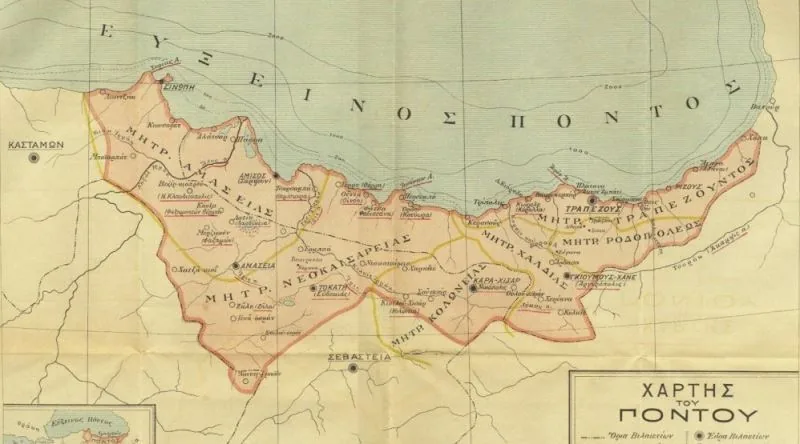
The Kingdom of Pontus amassed its wealth through abundant natural resources, strategic Black Sea trade routes, and shrewd economic policies, which gave Mithradates VI the financial engine to challenge Rome for 25 years in the first century BC. This is the story of how a regional kingdom on the southern Black Sea coast became rich enough to threaten the Republic, and how that wealth ultimately shaped one of antiquity's most dramatic conflicts.
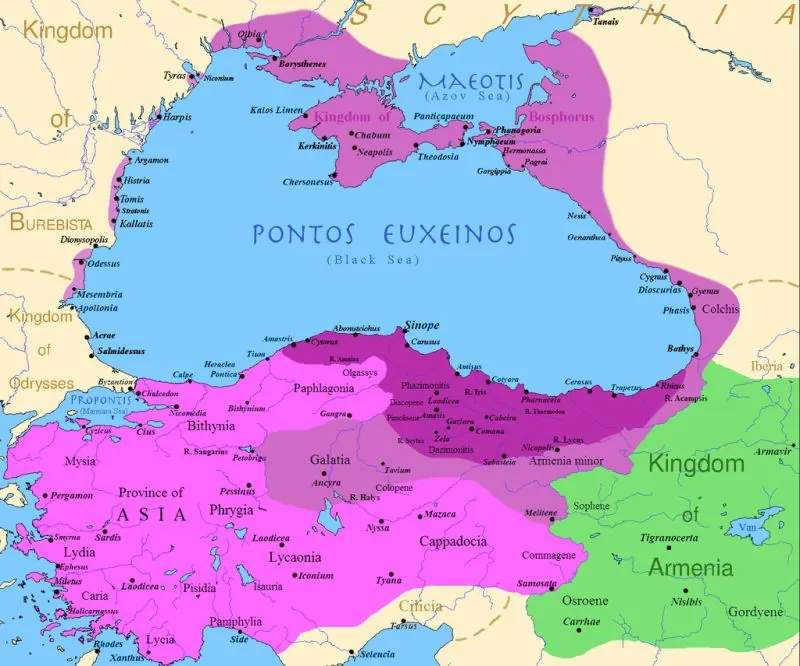
The Kingdom of Pontus, centered in northern Anatolia, grew wealthy from rich mineral deposits, vast timber forests, fertile agricultural lands, and control of Black Sea trade. This economic base funded Mithradates VI's armies and navy, enabling his decades-long wars against Rome.
- Pontus controlled valuable silver, iron, and copper mines in the Pontic mountains, which provided bullion for coinage and weapons.
- The kingdom's extensive timber reserves supplied shipbuilders with materials for a powerful naval fleet.
- Strategic ports along the southern Black Sea coast funneled grain, fish, and luxury goods through Pontic markets.
- Mithradates VI expanded the kingdom's territory to include the Crimean peninsula and its lucrative grain trade.
- The king's control over regional trade routes and taxation generated steady revenue that sustained prolonged military campaigns.
The Wealth That Let a Tiny Kingdom Defy Rome
The Kingdom of Pontus, which existed from 281 BC to 63 BC along the southern coast of the Black Sea, was among the richest regions of the first century BC. That wealth is the reason its most famous king, Mithradates VI, could challenge the Roman Republic for roughly 25 years, from 88 BC to 63 BC. A small kingdom taking on the greatest power of the ancient world required more than ambition. It required gold, grain, timber, and trade routes that made Rome pause. Let's start with the numbers. Pontus exported tons of tuna and mackerel to the Mediterranean, a trade that would have poured steady coin into royal coffers. The Black Sea rivers feeding into the region made agriculture flourish, with pears, figs, apricots, and cherries growing in abundance. When the Roman general Lucius Licinius Lucullus invaded Pontus, he was so taken with the cherries he encountered that he brought cherry trees back to Rome for his triumph procession. That single detail captures how even Rome's commanders recognized they were walking through something special. Now, about that timber. Dense forests gave Pontus nearly unlimited raw material for building a navy, and those same woods provided the ingredients for something far more sinister. Mithradates earned the title "King of Poisons" largely because of what grew on his own land. The Greek historian Xenophon and his soldiers, during their march recorded in the *Anabasis*, nearly died after eating poisoned honey near present-day Trabzon. That honey came from rhododendron blossoms, a hazard of the very landscape that made Pontus so productive. Mines added another layer to Pontus's wealth. Gold, silver, copper, rock salt, and mercury all came from Pontic soil. The red earth from Sinop, considered unlucky by locals, was mixed with arsenic and exported, and it also served as a sealant for leaking ships. The region's proximity to Scythian lands reportedly brought Scythian shamans into Pontus, people said to be skilled in poisons and magic, though the historical record on their exact role remains thin. The ports themselves were engines of prosperity. Controlling Pontus meant controlling the Black Sea, and that control extended to the Sea of Azov, Crimea, and the Kerch Strait. Grain from the Scythian steppe fed Pontus, while pirates operating from Pontic harbors fielded a fleet of at least 1,000 ships, according to ancient historians, and held sway in both the Black Sea and the Aegean. Those pirates were never strangers at the royal court, and Mithradates used them throughout his decades-long struggle with Rome. Looted goods flowed through Pontic ports into markets, and sensible customs duties kept merchants coming back. The kingdom also sat beside valuable neighbors. Cappadocia to the south, called Katpatuka in Persian and meaning "land of beautiful horses," supplied cavalry mounts known across the Mediterranean. Armenia to the east, ruled by Tigranes the Great who happened to be Mithradates' son-in-law, formed a powerful alliance that troubled Rome for a time. The historian Strabo, born in Amasya in 63 BC, the very year Mithradates died, would later document much of what we know about this vanished kingdom.Tuna, Timber, and a King Who Loved Cherries
Pontus's wealth rested on a startlingly simple foundation: the Black Sea gave it fish, the rivers gave it fruit, and the forests gave it everything else. In the first century BC, tons of tuna and mackerel were hauled from Pontic waters and sold across the Mediterranean, filling royal coffers with every catch. The rivers that fed the Black Sea also fertilized the land around them. Pear, fig, apricot, and cherry trees flourished in soil that needed little encouragement. When the Roman commander Lucius Licinius Lucullus marched into Pontus during his invasion, he stopped cold at the sight of the cherries. He admired them so much that he carried cherry trees back to Rome for his triumph, a detail that would follow his name for centuries. The forests themselves were the kingdom's quiet superpower. Timber for shipbuilding seemed nearly unlimited, which meant Mithradates could dream of a navy without worrying about the supply chain. Those same woods saved his life when he was a young man. During a period of exile, he survived for roughly five years hunting in the forests, learning the terrain that would later become his greatest military asset. But the forests held darker gifts too. Poisonous honey near Trabzon nearly killed Xenophon and his soldiers during their march recorded in the *Anabasis*, when the Ten Thousand ate it and collapsed into a stupor. That toxic flora gave Mithradates his edge and his infamous title, "King of Poisons." The region's plants were as dangerous as they were plentiful, and he made sure to study every one of them.Mines, Beavers, and a Red Earth That Sealed Ships
Pontus's wealth didn't come from just one source. It came from a strange portfolio of assets that included gold, silver, copper, rock salt, mercury, and a few surprises that would make a modern economist blink twice.
Take the humble beaver, for instance. When people in antiquity thought of Pontus, beavers came to mind almost as quickly as fish. The reason wasn't the fur or the meat. It was the testicles. Ancient medical thinking held that beaver testicles could boost sexual potency, and Pontus happened to be prime beaver country. That made the animal a valuable commodity, one that traders could move for serious money.
Then there was the red earth of Sinop. Locals considered it unlucky, which is a curious reputation for something so commercially useful. Miners would pull this distinctive red soil from the ground, mix it with arsenic, and ship it out to buyers across the Mediterranean. The pigment had a dual life. Painters and dyers wanted it for its rich color. But ship captains wanted it for something far more practical. When a vessel sprung a leak, crews would pack this same red earth into the gaps. It swelled when wet and acted as a natural sealant, a kind of ancient emergency patch that could keep a ship afloat long enough to reach port.
The mineral wealth ran deep across the region. Gold and silver funded the royal treasury, while copper, rock salt, and mercury fed local industries. These weren't just raw materials sitting in the ground. They were the working capital of a kingdom that needed to pay armies, build fortresses, and maintain a fleet.
According to the original account, Scythian shamans reportedly moved through the region, said to be skilled in poisons and magic. Their proximity to Pontus added a layer of mystery to the landscape, though solid evidence for their presence as poison experts is thin. The story persists anyway, coloring how people imagined the eastern edges of the kingdom.
The mines themselves had a grim reputation. The common version of the story says only condemned criminals worked in them, which would tell you something about how dangerous and foul those pits must have been. Records suggest otherwise, though. The mines actually relied on slave labor, not exclusively on death-row prisoners. The conditions were likely brutal either way, but the workforce was broader than the popular version admits.
Pirates, Trade Routes, and the Black Sea Advantage
Pontus held a geographical trump card that no amount of silver mines could match: the Black Sea itself. Whoever controlled the Pontic ports controlled the entire sea, and Mithradates VI made sure that control was absolute. The kingdom's position turned it into a hub where legitimate trade, piracy, and smart taxation all flowed together to build the war chest that would fund a quarter-century of defiance against Rome.
The pirates were never far from the royal court. They appeared in the palaces of both Mithradates and his father before him, treated not as outlaws but as valued partners. According to the ancient historians Plutarch and Appian, these pirate fleets numbered at least 1,000 ships and operated across both the Black Sea and the Aegean. Their stolen goods found a ready market in Pontic ports, where the loot changed hands and enriched the local economy. When war with Rome broke out in 88 BC, Mithradates simply hired these same pirates to fight for him, and he kept using them throughout the roughly 25 years of the Mithridatic Wars that followed.
The kingdom's tax policies did the rest of the heavy lifting. Compared to Rome's heavy-handed extraction, Pontus imposed customs duties that were reasonable and fair, which made its harbors genuinely attractive to merchants. Trade flowed in from the Sea of Azov, Crimea, and the Kerch Strait, all of which Pontus monitored closely through its Black Sea dominance. Scythian grain from the steppes fed the Pontic population. As the story goes, the Scythians were also known for robbing the gold buried in their own ancestral kurgans and selling the plunder in Pontic markets, though historians debate how much of that tale is reliable.
The Cultural Ties That Bound Pontus: From Diogenes to Amazons
Pontus wasn't just wealthy in timber, fish, and ore. It was a place where philosophers, warriors, and legends all seemed to converge, and that cultural richness made the kingdom feel larger than its borders.
Take the philosopher Diogenes. He came from Sinope, one of Pontus's own coastal cities, and his name carried weight across the Greek world. Mithradates knew of Diogenes' famous exchange with Alexander the Great, even though that meeting was chronologically impossible. The two men lived centuries apart, so the story was more legend than history. Still, Greek schools following Diogenes' tradition had found a home in Pontus, and that intellectual thread connected the kingdom to the wider Hellenic world.
The historian Strabo was born in Amasya in 63 BC, the very year Mithradates died. Strabo would later write extensively about the region, preserving details about Pontus and its neighbors that might otherwise have been lost. His birth in that particular year feels almost like a handoff, as if the region's story passed from one great figure to another.
To the south lay Cappadocia, which the Persians called Katpatuka, meaning "land of beautiful horses." Those horses were famous across the Mediterranean, and special animals were trained specifically for cavalry use. To the east, Armenia and Colchis, in what is now Georgia, offered gold, animals, and exotic goods that traders coveted. Tigranes the Great of Armenia was Mithradates' son-in-law, and their alliance kept Rome occupied for a time. The Roman commander Lucius Licinius Lucullus eventually marched against Tigranes to punish him for that partnership.
The region's edges held stranger stories. The Mossynoeci, a wild mountain tribe, reportedly lived in trees and kept their king in the highest one. If they disapproved of his decisions, they starved him to death. The high priest of Pontus held a privileged position, and according to some accounts, prostitutes donated their earnings to temples under his authority. Certain women were said to have slept with foreigners before marriage as part of temple custom, though these details remain unconfirmed.
And then there were the Amazons. Many claimed these legendary warrior women founded cities like Sinope, Amaseia, and Amastris. The truth is more complicated. Amastris was actually established by a Persian princess, not by Amazons. But the legend persisted, adding another layer of mystique to a kingdom already rich in both resources and stories.
All of this, the horses, the alliances, the strange tribal customs, the myths, made the Kingdom of Pontus rich in more than just coin. It was a place that seemed to hold the whole ancient world's imagination in its hands.
FAQ: What Made the Kingdom of Pontus So Wealthy?
The Kingdom of Pontus grew rich through a combination of fertile farmland, dense forests, valuable mines, and control over Black Sea trade routes. Its location along the northern coast of modern Turkey let it export fish, timber, metals, and agricultural goods across the Mediterranean. This wealth funded a powerful navy and army that let King Mithradates VI challenge Rome for roughly 25 years, from 88 BC to 63 BC.
What made the Kingdom of Pontus so wealthy?
Pontus sat on a natural treasure chest. Its rivers fed orchards heavy with pears, figs, apricots, and cherries, while its forests supplied nearly unlimited timber for shipbuilding. The kingdom also controlled mines producing gold, silver, copper, rock salt, and mercury, plus the famous red earth of Sinop that was mixed with arsenic and exported as a pigment and ship sealant.
Why could Mithradates VI challenge the Roman Republic?
Mithradates VI used Pontus's wealth to fund a long war against Rome. The Mithridatic Wars spanned about 25 years, from 88 BC to 63 BC. His resources paid for fortresses, mercenaries, and a navy that included pirate fleets reportedly numbering at least 1,000 ships operating in both the Black Sea and the Aegean.
How did Pontus use its natural resources for economic power?
The kingdom turned raw materials into export goods. Tons of tuna and mackerel were salted and shipped to the Mediterranean, while timber from the dense forests became warships. Sinop's red earth, considered unlucky locally, was mixed with arsenic and sold abroad. Beaver testicles from Pontus were prized in antiquity as a supposed enhancer of sexual potency.
What role did the Black Sea play in Pontus's prosperity?
The Black Sea was Pontus's highway to wealth. Controlling its ports meant controlling trade through the Azov Sea, Crimea, and the Kerch Strait. Grain from the Scythian steppes fed Pontus, and goods moving through these waters passed through Pontic harbors where they could be taxed. The kingdom's reasonable customs duties made its ports attractive stopping points for merchants.
Who was Diogenes of Sinope and what is his connection to Pontus?
Diogenes of Sinope was a famous philosopher born in the Pontic city of Sinope around 412 BC. He became known as the founder of Cynic philosophy, living in a barrel and mocking social conventions. His connection to Pontus is geographic: he came from the same region that later produced Mithradates VI, though the two never met.
Did Pontus have a strong navy and timber resources?
Yes, Pontus's forests were among the most abundant in the ancient world, providing nearly limitless raw material for shipbuilding. The kingdom could construct and maintain a substantial fleet, and Mithradates supplemented his navy by hiring pirates who operated throughout the Black Sea and Aegean. These pirate fleets reportedly reached at least 1,000 ships, making them a serious naval force.
What was the significance of Pontus's tax policies?
Pontus's tax system was notably more reasonable and ethical than Rome's, according to ancient observers. The kingdom kept customs duties low enough to attract merchants to its ports while still generating steady revenue. This approach made Pontus a commercial hub where goods from the Black Sea, Scythia, and beyond could be traded freely, filling the royal treasury without crushing local businesses.
How did Pontus control trade routes and benefit from them?
Pontus sat at the crossroads of several major trade networks. Its ports controlled access to the Black Sea, and from there the kingdom monitored commerce flowing through the Azov Sea and the Kerch Strait. The region between Sinop and Samsun featured a well-developed road system that moved goods inland efficiently. Scythian grain fed the population, while reportedly, gold stolen from Scythian burial mounds found its way to Pontic markets for sale.
A Quick Note on Pontus's Famous Son
The geographer Strabo was born in Amasya in 63 BC, the same year Mithradates VI died. His writings preserve much of what we know about Pontus's geography, resources, and neighboring peoples, making him an invaluable source for understanding the kingdom's wealth.
Editorial note: Any facts which remain unconfirmed are presented as such, hedged appropriately in the narrative above.
Frequently asked questions
FAQ: What Made the Kingdom of Pontus So Wealthy?
The Kingdom of Pontus grew rich through a combination of fertile farmland, dense forests, valuable mines, and control over Black Sea trade routes. Its location along the northern coast of modern Turkey let it export fish, timber, metals, and agricultural goods across the Mediterranean. This wealth funded a powerful navy and army that let King Mithradates VI challenge Rome for roughly 25 years, from 88 BC to 63 BC.
What made the Kingdom of Pontus so wealthy?
Pontus sat on a natural treasure chest. Its rivers fed orchards heavy with pears, figs, apricots, and cherries, while its forests supplied nearly unlimited timber for shipbuilding. The kingdom also controlled mines producing gold, silver, copper, rock salt, and mercury, plus the famous red earth of Sinop that was mixed with arsenic and exported as a pigment and ship sealant.
Why could Mithradates VI challenge the Roman Republic?
Mithradates VI used Pontus's wealth to fund a long war against Rome. The Mithridatic Wars spanned about 25 years, from 88 BC to 63 BC. His resources paid for fortresses, mercenaries, and a navy that included pirate fleets reportedly numbering at least 1,000 ships operating in both the Black Sea and the Aegean.
How did Pontus use its natural resources for economic power?
The kingdom turned raw materials into export goods. Tons of tuna and mackerel were salted and shipped to the Mediterranean, while timber from the dense forests became warships. Sinop's red earth, considered unlucky locally, was mixed with arsenic and sold abroad. Beaver testicles from Pontus were prized in antiquity as a supposed enhancer of sexual potency.
What role did the Black Sea play in Pontus's prosperity?
The Black Sea was Pontus's highway to wealth. Controlling its ports meant controlling trade through the Azov Sea, Crimea, and the Kerch Strait. Grain from the Scythian steppes fed Pontus, and goods moving through these waters passed through Pontic harbors where they could be taxed. The kingdom's reasonable customs duties made its ports attractive stopping points for merchants.
Who was Diogenes of Sinope and what is his connection to Pontus?
Diogenes of Sinope was a famous philosopher born in the Pontic city of Sinope around 412 BC. He became known as the founder of Cynic philosophy, living in a barrel and mocking social conventions. His connection to Pontus is geographic: he came from the same region that later produced Mithradates VI, though the two never met.
Did Pontus have a strong navy and timber resources?
Yes, Pontus's forests were among the most abundant in the ancient world, providing nearly limitless raw material for shipbuilding. The kingdom could construct and maintain a substantial fleet, and Mithradates supplemented his navy by hiring pirates who operated throughout the Black Sea and Aegean. These pirate fleets reportedly reached at least 1,000 ships, making them a serious naval force.
What was the significance of Pontus's tax policies?
Pontus's tax system was notably more reasonable and ethical than Rome's, according to ancient observers. The kingdom kept customs duties low enough to attract merchants to its ports while still generating steady revenue. This approach made Pontus a commercial hub where goods from the Black Sea, Scythia, and beyond could be traded freely, filling the royal treasury without crushing local businesses.
How did Pontus control trade routes and benefit from them?
Pontus sat at the crossroads of several major trade networks. Its ports controlled access to the Black Sea, and from there the kingdom monitored commerce flowing through the Azov Sea and the Kerch Strait. The region between Sinop and Samsun featured a well-developed road system that moved goods inland efficiently. Scythian grain fed the population, while reportedly, gold stolen from Scythian burial mounds found its way to Pontic markets for sale. A Quick Note on Pontus's Famous Son The geographer Strabo was born in Amasya in 63 BC, the same year Mithradates VI died. His writings preserve much of what we know about Pontus's geography, resources, and neighboring peoples, making him an invaluable source for understanding the kingdom's wealth. Editorial note: Any facts which remain unconfirmed are presented as such, hedged appropriately in the narrative above.
Got a take on this? Add your voice to the conversation below →
No comments yet. Be the first.