Identical Flags: Liechtenstein & Haiti's 1936 Discovery
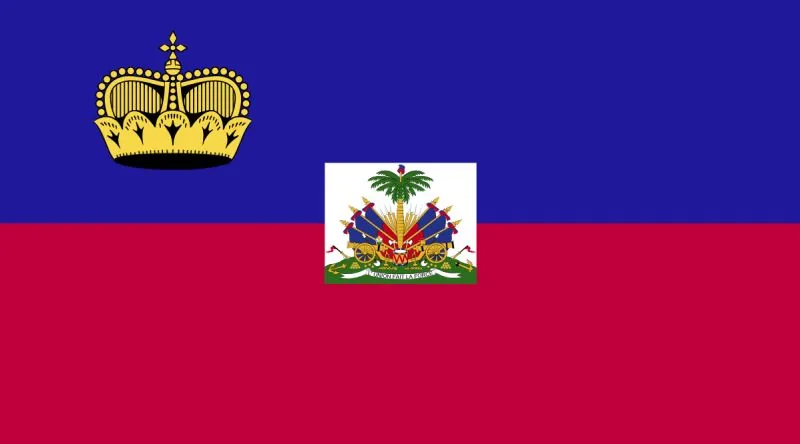
In 1936, Liechtenstein and Haiti discovered at the Berlin Olympics that their national flags were strikingly similar, a coincidence that prompted one nation to modify its design. The moment of realization, captured in a single glance across a crowded stadium, turned a quiet administrative oversight into one of the most famous flag mix-ups in modern history.
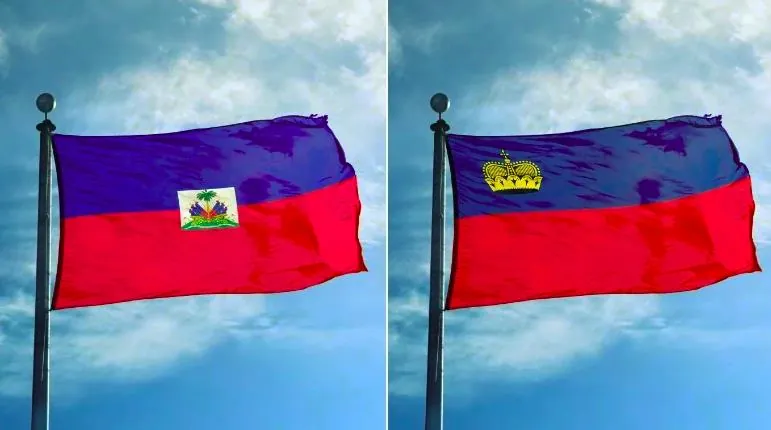
During the 1936 Summer Olympics in Berlin, officials from Liechtenstein and Haiti noticed their teams were flying nearly the same flag, a simple horizontal bicolor of blue over red. The discovery led both countries to address the situation, with Liechtenstein adding a crown and Haiti relying on its existing coat of arms on the state flag.
- The striking similarity was first noticed at the 1936 Olympic Games held in Berlin, Germany.
- Both flags featured two horizontal stripes, blue on top and red on the bottom, with no additional symbols on the civil versions.
- Liechtenstein added a golden prince's crown to the upper hoist corner of its flag in 1937 to distinguish it.
- Haiti's coat of arms was already part of its state flag before the Olympic incident, so it was not added as a response.
- The accidental duplication remains a notable example of how national symbols can converge without intent.
The Day Two Countries Showed Up to the Olympics Wearing the Same Outfit
At the 1936 Berlin Olympics, officials doing their due diligence stumbled onto something genuinely awkward: the flags of Liechtenstein and Haiti looked nearly identical side by side. The two nations, one a tiny Alpine principality and the other a Caribbean republic, had apparently been flying remarkably similar banners without anyone raising an eyebrow. The Olympic stage forced the comparison out into the open, and both countries responded by addressing the situation soon after.
Here is the thing about this story that makes it so fun to tell: it hinges on a moment of collective realization. Picture the scene in Berlin in 1936, with athletes from dozens of nations parading in, each delegation carrying its national colors. Some keen-eyed observer noticed that the flag of Liechtenstein, a double horizontal band of blue over red, bore a striking resemblance to Haiti's own blue-over-red design. When displayed together, the two were practically indistinguishable at a glance.
Now, the popular version of this tale insists the two countries had been using these nearly matching flags for decades without ever noticing. That framing is a bit of an exaggeration. The flags were not truly identical in every design detail, and there is no solid evidence that either nation was unaware of the other's banner for years on end. What the record does support is the Olympic anecdote itself: at the 1936 games, the similarity became impossible to ignore.
The aftermath is where things get concrete. In 1937, Liechtenstein added a gold prince's crown to its flag, a clear nod to its monarchy and a practical way to stand apart from Haiti. That crown sits in the upper hoist corner to this day. Haiti, for its part, is often credited with adding a coat of arms in response, but that is not quite accurate. Haiti's coat of arms had already been part of its state flag well before the Olympic mix-up, so the change was not a reaction to Berlin.
What makes this story linger in the memory is how human it feels. Two nations, worlds apart in geography and history, ended up with flags that could pass for twins. It took a global sporting event to force the conversation. And even then, the fixes were modest, a crown here, a pre-existing emblem there, enough to tell the difference without abandoning the colors each country clearly loved.
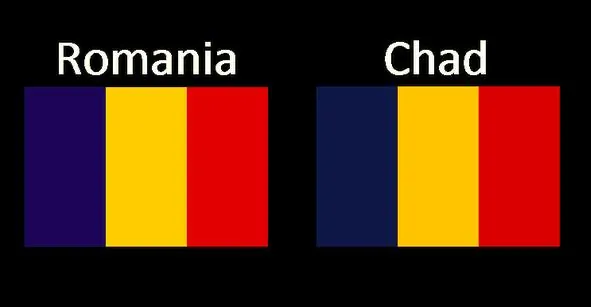
If you are wondering whether such mix-ups still happen, they do. The current flags of Chad and Romania are a vertical tricolour of blue, yellow, and red, and they differ only in the shade of blue used. Romania's blue leans lighter, Chad's runs deeper, but at a distance, good luck telling them apart. Neither country has shown much urgency to change, as if each is waiting for the other to blink first.
A Crown for the Prince: How Liechtenstein Fixed Its Flag
The 1936 Berlin Olympics turned into an unexpected identity crisis for two nations when officials realized Liechtenstein and Haiti were flying nearly identical flags. The embarrassment sparked a swift response: in 1937, Liechtenstein added a gold prince's crown to its flag to differentiate it from Haiti's. The crown became a permanent symbol of the principality's royal heritage.
Picture the scene in Berlin: athletes from the tiny Alpine principality of Liechtenstein, nestled between Switzerland and Austria, marching alongside Haiti, the Caribbean nation with a rich revolutionary history. Both teams carried flags that were essentially horizontal bicolors of blue over red. Olympic officials did a double take. Two sovereign nations, thousands of kilometers apart, had been flying the same design without ever noticing.
The discovery was mortifying enough that both countries took action. Liechtenstein moved first. In 1937, the principality added a golden prince's crown to the upper hoist corner of its blue stripe. The crown was a deliberate nod to the ruling House of Liechtenstein, one of Europe's oldest noble families. It was a way of saying: this flag belongs to a principality, not to a republic.
Haiti, for its part, already had a coat of arms on its state flag, so it did not need to add one in response to the incident. The civil flag remained simple, but the official state version carried the palm tree and cannon emblem that had been part of Haitian iconography for years.
The Liechtenstein-Haiti flag problem was solved, but it wasn't the last time two nations would find themselves in a flag-related staring contest. Today, Chad and Romania fly vertical tricolors of blue, yellow, and red that are nearly indistinguishable at a glance. Romania's blue leans slightly lighter, but from a distance, the two flags could easily be mistaken for one another. Neither country has shown much urgency to change, apparently content to let the other blink first.
What Haiti Actually Did (and Didn't) Do
Haiti did not add its coat of arms to the flag because of the 1936 Olympic mix-up. The emblem was already there, sitting on the country's state flag long before anyone in Berlin raised an eyebrow. The story that Haiti scrambled to add the coat of arms as a response simply isn't true.
Here is the nuance that usually gets flattened in the retelling. Haiti had two flags doing different jobs. The civil flag, used by private citizens and merchant ships, was a plain blue-over-red bicolor. That is the one that matched Liechtenstein's plain blue-over-red bicolor at the 1936 Berlin Olympics. The state flag, the one flown by the government and the military, already carried the coat of arms in the center. That version existed before the Olympic incident, so there was nothing to add.
Liechtenstein, for its part, did react. In 1937, the principality added a gold prince's crown to its flag to break the visual tie. So when people say both countries changed their flags after the Olympics, they are only half right. One country made a change. The other had already solved the problem on its state flag, and only the civil version remained a mirror image.
History Repeating: Chad and Romania's Nearly Identical Flags
Today, Chad and Romania have flags that are nearly identical. Both fly vertical tricolors of blue, yellow, and red, with the only difference being a slight shade variation in the blue. Romania's blue is a bit lighter, while Chad's leans toward a deeper, darker tone.
If you squint, the two flags could pass for the same banner. Hold them side by side and you might catch the subtle difference. It's a strange situation for two countries that share no border, no common language, and no colonial tie to each other. Chad is a landlocked nation in Central Africa, while Romania sits in Eastern Europe. Both have used their blue, yellow, and red tricolors for decades, and neither seems inclined to change course now.
The similarity has become a running joke in the international community. Both countries seem to be waiting for the other to blink first. As the lighthearted observation goes, each one appears to be saying, "You change first, brother." Neither shows any sign of budging.
This standoff echoes an earlier flag coincidence that made headlines decades ago. The story of Liechtenstein and Haiti's near-identical flags is a favorite among vexillology fans, and it offers a glimpse at how two nations once dealt with the same problem.
At the 1936 Berlin Olympics, officials reportedly noticed that Liechtenstein and Haiti were flying flags that looked remarkably alike. Both featured two horizontal bands, one blue on top and one red below. The discovery was an awkward moment for both delegations, though the exact details of how it unfolded remain part of the anecdote rather than confirmed record.
The aftermath was swift. In 1937, Liechtenstein added a gold prince's crown to its flag, a nod to its royal family that set it apart from Haiti's design. The crown sits in the upper left corner, a small but unmistakable marker of the principality's identity. Haiti, meanwhile, already had a coat of arms on its state flag before the Olympic incident, so contrary to the popular version, it did not add one as a response to the confusion.
What's striking is that both nations took action after the 1936 discovery, even if only one actually changed its flag because of it. The result is that today, Liechtenstein and Haiti look nothing alike at a glance, while Chad and Romania have inherited the mantle of near-identical flags. The crown solved one problem, but the blue-yellow-red combo still lingers in another corner of the map.
Frequently asked questions
What happened at the 1936 Olympics with Liechtenstein and Haiti's flags?
At the 1936 Berlin Olympics, officials noticed that the flags of Liechtenstein and Haiti looked strikingly similar. Both were horizontal bicolors of blue over red, and the visual confusion reportedly embarrassed both delegations. The incident became the catalyst for Liechtenstein to alter its flag the following year.
How did Liechtenstein change its flag after the 1936 discovery?
In 1937, Liechtenstein added a gold prince's crown to the upper hoist corner of its blue and red flag. The crown symbolized the principality's royal heritage and served as a clear visual distinction from Haiti's design. This change came directly after the Olympic mix-up, making the crown a practical solution to a diplomatic embarrassment.
Did Chad and Romania ever resolve their flag similarity?
No, Chad and Romania still fly nearly identical flags today. Both are vertical tricolors of blue, yellow, and red, differing only in the shade of blue; Romania's blue is slightly lighter. Neither country has changed its flag, and the similarity remains an unresolved curiosity in international vexillology.
What does the crown on Liechtenstein's flag symbolize?
The gold crown on Liechtenstein's flag represents the princely house of Liechtenstein, one of the oldest noble families in Europe. It signifies the nation's status as a principality under a reigning monarch. The crown was added in 1937 specifically to set the flag apart from Haiti's after the Olympic incident. Editorial note: Any facts which remain unconfirmed are presented as such, hedged appropriately.
Got a take on this? Add your voice to the conversation below →
No comments yet. Be the first.