Hashshashin: The Medieval Order Behind Alamut
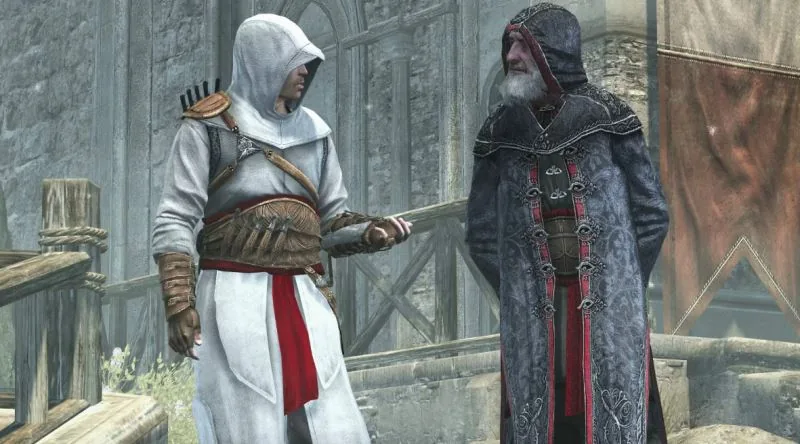
The Hashshashin were the Nizari Ismaili fighters based at Alamut Castle in Persia, and they became feared across the medieval Islamic world in the late 11th century, beginning with Hasan-i Sabbah's takeover of the fortress around 1090. Their story is one of faith, discipline, and carefully staged terror. A small band of devoted men could send a Seljuk vizier or a rival prince to his grave, and the threat alone bent the politics of an empire. The legends that grew around them, especially the tales of hashish-fueled paradise, tell us as much about their enemies' fears as about the order itself.
The Hashshashin were the Nizari Ismaili order centered at Alamut Castle in Persia, established under Hasan-i Sabbah around 1090. They used targeted killings and psychological warfare against Seljuk and other rivals. Their name is widely linked to the word assassin, though the hashish connection is disputed by historians.
- Hasan-i Sabbah secured Alamut Castle in the mountains of Daylam, in what is now northern Iran, around 1090.
- The Nizari Ismailis were a branch of Shia Islam that broke with the Fatimid establishment over the succession dispute of the late 11th century.
- The order relied on devoted agents known as fida'i, who carried out targeted assassinations against political and military opponents.
- The Hashshashin's reputation for infiltration and sudden violence made them a lasting psychological weapon against the Seljuk Empire.
- The English word assassin is generally traced to the Arabic hashishin, a name applied to the order, though the hashish myth itself remains debated.
A Handful of Men Who Terrified an Empire
The Hashshashin were a Nizari Ismaili order whose name spread dread across roughly three centuries, from the late 11th century into the 13th. They operated as a state within a state, and the source frames them as one of history's first terror organizations. That reputation is why the question "who were the Hashshashin?" still pulls people in, whether they arrived through the Assassin's Creed games or through a genuine curiosity about how a small, disciplined band could rattle an empire.
Picture the puzzle at the center of it. A charismatic leader gathers a small circle of followers, and what that circle does echoes all the way to the present day. The order's founder was Hasan-i Sabbah, the man credited with organizing the movement before the 1090 seizure of Alamut Castle. The titles attached to him carry weight: Seyidna, Sheikh al-Jabal, the Old Man of the Mountain, and Sheikh of the Mountain. Each one hints at how outsiders saw him, part holy man, part shadowy commander on a rock.
That is the hook. A fortress on a mountain, a leader who rarely showed his face, and a name that would eventually slip into European languages as a word for murder. The rest of the story explains how a handful of men turned that name into a legend.
The Pyramid: Sheikh, Da'is, Rafiqs, Lasiqs, Mujibs, Fida'is
At the apex of the Hashshashin order sat a single figure: the sheikh, the keeper of every secret the organization held. Below him, according to the traditional account, stood three assistants, and the group they belonged to was called the da'is. That specific detail of three assistants is reported in some accounts but cannot be reliably confirmed. The broader sheikh-to-da'i structure, though, is documented.
The da'is, as the story goes, were propagandist dervishes. Their job was recruiting new followers and preaching the order's ideology to the outside world, which made them the public face of a very private operation. The original account also ties them to three zones of activity, ranked by importance: first eastern Iran, Khurasan, Kuhistan and Transoxiana; second western Iran and Iraq; and third Syria. The broad geography of Nizari activity is correct, but that precise order-of-importance ranking is not a standard, verifiable formulation, so treat the list with caution.
One step down were the rafiqs. Rafiq is a genuine Ismaili rank term, but the duties attributed to them, governing a castle, a city, or a whole provincial organization, and the path by which the ablest rose to become da'is, are not verifiable. Below the rafiqs came the lasiqs, the ordinary adherents. Lasiq appears in some accounts of Nizari ranks, but the detailed picture of shepherds, women, and elderly people living around Alamut is not confirmable from mainstream scholarship.
Then there were the mujibs, the "responders," candidates for membership. Mujib is attested as a low rank in some Ismaili schemas, but the specific process by which recruits were trained and then split by ability into the rafiq class or the fida'i class is not reliably verifiable. The fida'is were the strike force, and the details of their training belong to a later part of the story. For now, picture the whole structure as a ladder: a sheikh at the top, da'is beneath him, rafiqs holding the provinces, lasiqs filling the villages, and mujibs waiting at the gate to be sorted into the ranks.
The Fida'is: Codes, Pigeons, Dialects, and the Instruction Not to Run
Once Hasan-i Sabbah's followers were settled at Alamut Castle in 1090, the order needed a strike force, and that force was the fida'is. The fida'i role as the operative arm is well attested. The detailed training curriculum, though, reads like popular elaboration. Reportedly they memorized coded alphabets, handled carrier pigeons for fast secret messages, and learned a local dialect so they could pass as locals, but that specific schooling could not be confirmed.
The harder lessons were about patience. A fida'i was said to slip into a hostile town and live there unnoticed for weeks, sometimes months, quietly charting a target's habits: who he met, where, and at what hour. Then came the strangest rule of all. As the story goes, the operative was trained not to flee after the killing. Many missions were effectively suicide missions, and the refusal to run is often read as psychological warfare, meant to magnify the terror and to show onlookers that the killer had given himself to something larger than his own life. Whether this was formal training to amplify fear is an interpretive claim, not firmly documented. The source's line captures the spirit: they kill to defend themselves, but they also know how to die in order to win people over.
That behavior, so far outside the usual rules of the age, is exactly what fed the wilder rumors about the Hashshashin. It is also the soil in which the drug legend grew, a story this article picks up elsewhere.
The Hashish Myth and the Real Root of "Assassin"
The name Hashshashin, meaning "hashish users," gave Europe its word "assassin," and that part is solid. Medieval chroniclers and later some Orientalist scholars spread the tale that Hasan-i Sabbah's men carried out their killings while drugged. Modern scholarship, however, treats the drug-use story as largely legend. The real engine behind the name is stranger and more political than any pipe dream.
Picture the scene around the late 11th and early 12th centuries. A fida'i walks up to a marked statesman in a crowded square, strikes, and then simply stands there instead of running. That refusal to flee did more than any blade. It gave Hasan-i Sabbah's followers an almost unreal aura, and it fed the whispers, pushed hardest by Seljuk court propaganda, that these men could only be acting under something stronger than faith.
So the label stuck. His people became the Hashshashiyun, and the reputation hardened into a legend that outlived the order itself. But the Alamut documents, as the story goes, point somewhere else entirely. According to that account, Sabbah addressed his followers as Asasiyun, "those loyal to the fundamentals of religion." Over time, local mispronunciation and the order's growing notoriety are said to have worn that word down into Hashshashiyun. An Asasiyun etymology has been proposed by some scholars, but it is not the consensus, and the Alamut-document basis could not be confirmed.
There is a related tale that floats alongside all this. Sabbah, who knew plants well, including their calming and stimulating properties, reportedly mixed a paste of walnut, honey and coriander to make his followers more open to "learning." It is a charming image. It is also folklore, not part of the reliable record, and it resembles the kind of embellishment that gathers around a figure like him.
What survives the myth is the word. Whatever the root, Hashshashin crossed languages and centuries, and "assassin" still carries the shadow of that mountain fortress today.
From Qom to the Seljuk Court: The Making of Hasan-i Sabbah
Hasan-i Sabbah was born in Qom, in what is now Iran, sometime in the 1040s or 1050s. Nobody knows the exact year, and the sources do not pretend otherwise. What they do agree on is the setting: a household steeped in Shia learning, and a boy who grew up inside it.
His father is described in the old accounts as a man named Ali, originally from Ray, who had gone through a strict Shia education. The sources call him a Rafidi, a word that carried real venom in the mouths of his opponents. Rafidi is a polemical label, though, and the precise characterization of his father is not firmly established. More soberly, he was a Twelver Shii from the Ray and Qom region, and he raised his son on the same doctrine. Hasan learned Twelver Shiism young, the way other boys learned a trade.
Then his father sent him to Nishapur, to the school of Muwaffaq Nishapuri, a well-known Sunni scholar. This is where the story starts to glitter, and where you have to be careful. Tradition says that at Nishapur, Hasan sat alongside Omar Khayyam, the poet and astronomer, and Nizam al-Mulk, the future vizier of the Seljuk Empire. Historians regard the three-schoolmates story as apocryphal or heavily embellished. There is no reliable contemporary evidence that the three ever shared a classroom, let alone a desk.
The legend does not stop there. As the story goes, the three students made a vow: whoever among them rose to fortune would pull the other two up with him. Nizam al-Mulk did become Seljuk vizier, that much is solid. In the legendary cycle, Khayyam is the first to visit him, is offered the vizierate, and turns it down, asking instead for a stipend so he can work quietly on poetry and astronomy. Nizam grants it. The vizier fact holds; the visit and the stipend belong to the storytelling, not to the record.
Hasan waits. When Malik-Shah I took the throne in 1072, the tale has him arrive at the Seljuk court and remind Nizam of the old pact. Nizam presents him to the sultan, and Hasan gains a place at court. The 1072 accession is correct. The court episode itself is not reliably documented.
What follows is one of the most famous anecdotes in the whole tradition, and one of the least verifiable. Hasan boasts before Malik-Shah that he can finish the state's income and expenditure ledger in 40 days. Nizam, feeling his standing slip, secretly ruins a few key pages of Hasan's work. On the fortieth day Hasan presents a ledger full of errors, and he is thrown out of the palace. It is a well-known story, but it belongs to the legendary biographical tradition, with no confirmable historical basis.
What the story leaves you with is a man who has now been burned by the court, by the vizier, and by the whole machinery of Seljuk power. The road out of that humiliation leads elsewhere, and it is there that the future leader of the Hashshashin begins to take shape.
Conversion, Cairo, and the 1090 Deal for Alamut
The break with the Seljuk court sent Hasan-i Sabbah running. First he reached Ray, the city his father had come from, then Isfahan. That much of the road is firm. The rest of the conversion story is thinner. According to the traditional account, he lodged in Isfahan with a host named Abu al-Fadl, and under that man's influence he moved toward Ismailism, the branch of Shiism then sheltered under Fatimid protection. The conversion itself is historical. The specific host and the domestic detail are not reliably verifiable, so treat them as part of the legend that grew around him.
From there the trail leads to Abd al-Malik ibn Attash, the chief da'i of Iraq, the man responsible for spreading Ismaili doctrine in that region. He reportedly told Sabbah to go see the Fatimid caliph al-Mustansir in person. The journey to Cairo and the training at the Dar al-Hikma, the great Ismaili learning house there, belong to the traditional narrative; the Dar al-Hikma detail in particular is not firmly established. What is solid is the outcome: al-Mustansir authorized Sabbah as the da'i responsible for Khurasan. He left Cairo with a commission and a province to work.
Then came the succession fight. When al-Mustansir died, Sabbah threw his weight behind the caliph's son Nizar. That put him squarely against the vizier Badr al-Jamali, who held the real power in Cairo. Sabbah lost. He was imprisoned, then exiled from the city. The precise mechanics of the imprisonment and the exile shift from one account to the next, but the clash and his removal from Cairo are not in doubt.
He came back to Isfahan in 1081, according to the accepted outline, and spent roughly nine years preaching. His message was his own synthesis of Batiniyya and Ismailism, and he called it exactly that. The period of missionary work in Iran before Alamut is well accepted, though the exact 1081 date and the nine-year figure are not firmly verifiable. Either way, by the end of that stretch he had men, a doctrine, and a plan.
What he still needed was a headquarters. He found it at Alamut Castle, chosen for its geography and for the persona it could help him build. In 1090 the fortress changed hands for 3,000 gold dinars, paid to Muzaffar, a Seljuk officer and the castle's commander. No blood was spilled. The seller's name varies across the sources, but the price, the year, and the quiet handover are standard.
For 34 years Sabbah barely left Alamut. According to the traditional description of his austere seclusion, he did not even leave the specially prepared section of one of its towers, and from that room he is said to have planned and directed some of the most chilling operations in human history. The Hashshashin had a home, and the man at the top of the tower would not come down.
The Killings, and the Sultan Who Died of Illness
From his tower room at Alamut Castle, Hasan-i Sabbah is said to have directed some of the most feared operations of the medieval world. The Hashshashin struck in public, often in daylight, and the victims were rarely ordinary men. The original account lists many statesmen and notable figures of the age among the order's victims, and it includes the Seljuk sultan Malik-Shah on that list.
That last claim needs a careful hand. Nizam al-Mulk, the powerful Seljuk vizier, was indeed killed by an Assassin in 1092, and that killing is well attested. But Malik-Shah, who had taken the throne in 1072, is generally said to have died of illness later that same year, not by an assassin's blade. Mainstream scholarship attributes his death to illness, so the popular version that bundles the vizier and the sultan together as two murders by the same order does not hold up for the sultan. As for the cozy detail that Nizam al-Mulk and Sabbah were schoolmates, that rests on legend rather than reliable history.
What is not in doubt is the reach. The Hashshashin's reputation for striking anywhere, at any hour, did more work than any single killing. A court that could not protect its own vizier learned to fear a castle it could not storm.
Where to Read More About the Hashshashin
If the story of the Hashshashin has hooked you, four books will take you deeper, and all four are real, correctly attributed works you can actually find. They range from a classic nineteenth-century history to a modern novel that turns the sect into literature. Here is where to start.
Joseph von Hammer-Purgstall, The History of the Assassins
The Austrian orientalist Joseph von Hammer-Purgstall wrote this early study of the sect, and it remains a landmark of Assassin scholarship. It is the oldest of the four and the most scholarly in tone, a natural first stop for readers who want the foundational account before the novels.
Amin Maalouf, Samarkand
Amin Maalouf's novel Samarkand weaves the world of the Ismailis and the poet Omar Khayyam into fiction. It is the most atmospheric of the four, a way to feel the eleventh-century Persian world rather than just read about it.
Vladimir Bartol, Alamut
Vladimir Bartol's Alamut is the novel that did the most to shape the modern image of Hasan-i Sabbah and his fortress. It is fiction, vividly told, and a good companion to the historical accounts rather than a replacement for them.
Bernard Lewis, The Assassins
Bernard Lewis's The Assassins is the short, readable history by a leading scholar of the Islamic world. If you want one reliable overview to anchor everything else, start here and let the novels color it in.
Read Lewis for the facts, Hammer-Purgstall for the classic account, and Maalouf and Bartol for the story as it lives in the imagination.
What was the Hashshashin order and who founded it?
The Hashshashin were the Nizari Ismaili order founded and organized by Hasan-i Sabbah, a man who carried titles like Seyidna and Sheikh al-Jabal, the Old Man of the Mountain. The order operated out of Alamut Castle after he acquired it in 1090, and for roughly three centuries its name spread fear across the region.
Who was Hasan-i Sabbah?
Hasan-i Sabbah was born in Qom, in present-day Iran, sometime in the 1040s or 1050s; his exact birth year is unknown. He grew up in a Twelver Shii household and was educated in that tradition as a boy before his father sent him to Nishapur. In 1090 he took Alamut Castle from a Seljuk officer named Muzaffar for 3,000 gold dinars, and by all accounts no blood was spilled in the deal.
Where did the Hashshashin operate from?
From Alamut Castle, perched in the mountains, Hasan-i Sabbah directed the order for 34 years. The traditional account holds that he rarely left a specially prepared section of one of its towers. Under his hand the Nizari Ismaili state grew into a force that statesmen and sultans learned to reckon with.
Why were they called the Hashshashin?
Some Orientalist writers held that the order carried out its actions under the influence of drugs, and the name Hashshashiyun, meaning "hashish users," is the root from which the European word "assassin" derives. Modern scholarship treats the drug-use story as largely legend.
How did Hasan-i Sabbah acquire Alamut Castle in 1090?
Hasan-i Sabbah acquired Alamut Castle in 1090 by buying it, not storming it. After a short negotiation, he paid 3,000 gold dinars to Muzaffar, a Seljuk officer and the castle's commander, and took the fortress without bloodshed. That single quiet transaction gave the Hashshashin the mountain stronghold they would hold for generations.
Think about what that purchase bought him. Alamut sits in the mountains of northern Iran, a place whose position and shape made it close to ideal for a man who needed to run a secret operation far from Seljuk eyes. Hasan had spent years traveling and organizing, and by 1090 he had finished his preparations. What he still lacked was a fixed center, a base where his followers could be gathered, trained and sent out. The castle answered that need exactly.
What he did with it afterward is the part that still raises eyebrows. Hasan stayed at Alamut for 34 years, and he barely left. According to the traditional account, he did not even step out of a section he had specially prepared for himself in one of the castle's towers. From that narrow space, the story goes, he planned and directed the operations that made the Hashshashin name feared across the region.
So the answer is almost anticlimactic: no siege, no slaughter at the gates, just 3,000 dinars and a deal. The drama came later, from the tower he never seemed to leave.
Did Hasan-i Sabbah capture Alamut by force?
No. Hasan-i Sabbah took Alamut Castle in 1090 through a short negotiation and a payment of 3,000 gold dinars to Muzaffar, a Seljuk officer who commanded the castle. No blood was shed in the takeover. The seller's name varies across accounts, but the peaceful, purchased acquisition is the standard version.
How much did Hasan-i Sabbah pay for Alamut Castle?
He paid 3,000 gold dinars for Alamut Castle in 1090. The sum went to Muzaffar, a Seljuk officer and the castle's commander, after a brief negotiation. This purchase, rather than a military assault, put the fortress in Hasan-i Sabbah's hands and gave the Hashshashin their headquarters.
How long did Hasan-i Sabbah stay at Alamut Castle?
Hasan-i Sabbah remained at Alamut for 34 years after acquiring it in 1090. He rarely left, and according to the traditional description he stayed within a specially prepared section of one of the castle's towers. From there he directed the activities of the Hashshashin order he had built.
What was the hierarchy of the Hashshashin organization?
At the top of the Hashshashin stood the sheikh, the figure who held every secret of the order and who is best known to history as Hasan-i Sabbah, based at Alamut Castle after 1090. Below him, the general structure ran from the da'is, the order's preachers and recruiters, down through the lower ranks to the fida'is, the trained operatives who carried out the assassinations themselves.
That much is solidly documented: a sheikh above a corps of da'is who spread the doctrine and pulled in new followers. From there the ladder gets murkier. As the story is told, three assistants sat just beneath the sheikh and oversaw the da'is, but that specific detail of three is reported rather than reliably confirmed. The da'is, for their part, were described as preaching dervishes, the ones responsible for gathering recruits and delivering the order's ideology to the outside world.
The tiers below the da'is are where the account turns into something closer to legend. Reportedly the rafiqs came next, men who could govern a castle, a city or a whole provincial organization, with the ablest among them eventually rising to the rank of da'i. Rafiq is a genuine rank term, but those duties and the promotion path are not verifiable. Beneath them, according to the same account, were the lasiqs, ordinary adherents who leaned neither toward scholarship nor toward violence, and among whom were said to be many shepherds, women and elderly people living around Alamut. That detailed picture is not confirmable from mainstream scholarship.
Then there were the mujibs, the "responders," candidates for membership who after their first training were reportedly sorted by ability into either the rafiq class or the fida'i class. Mujib is attested in some schemas, but that recruitment-and-splitting process is not reliably verifiable. The fida'is formed the strike force after the order settled at Alamut. The original account describes an elaborate curriculum for them: memorizing cipher alphabets, learning local dialects, using carrier pigeons for fast secret messages, slipping into hostile territory and living there for weeks or even months without revealing themselves, and quietly studying a target's habits and movements.
One detail stands out. Fida'is were reportedly trained not to run after an assassination, a piece of psychological warfare meant to magnify the terror and to show that the killer had given himself to a higher cause. Whether that was formal doctrine or a later reading of the pattern is not firmly documented. Treat the finer tiers with care. The sheikh-to-da'i spine of the Hashshashin hierarchy is documented; the ranks stacked beneath it are contested.
Did the word 'assassin' really come from hashish use?
Yes, the word really does trace back to hashish. The European term "assassin" derives from hashishin, a label tied to the Hashshashin, and the drug-use legend behind that name was spread by medieval chroniclers and later by some Orientalist writers. But the idea that the fighters actually operated while high on hashish is treated by modern scholarship as largely legend, not documented fact.
So how did a rumor become the word half the world still uses? Picture the Seljuk court in the late eleventh and early twelfth centuries, watching a small band of men strike and then stand their ground instead of running. That refusal to flee looked inhuman to observers. It fed stories that these men must have been drugged into obedience, and the whispers hardened into a nickname: hashshashiyun, "the hashish users." From there the label traveled into European languages and never quite let go.
There is another etymology, and it is worth handling with care. According to the original account, Hasan-i Sabbah is said to have called his followers Asasiyun, meaning "those loyal to the fundamentals of religion," and this word is proposed to have drifted into Hashshashiyun through mispronunciation and the order's dark reputation. An Asasiyun origin has been proposed by some scholars, but it is not the consensus, so treat it as one theory among several rather than settled fact.
The takeaway is a strange one. The name stuck because of a rumor about drugs, and the rumor stuck because the Hashshashin's real behavior, the calm walk into danger and the refusal to escape, was frightening enough that people reached for an explanation stranger than the truth. The word survived. The hashish did not.
How were the fida'is trained, and why didn't they flee after assassinations?
According to the popular account, the fida'is were the strike force of the Hashshashin, chosen from among the mujibs for firm faith, skill and stamina rather than scholarly appetite, and trained in coded alphabets, carrier pigeons, local dialects, infiltration and quiet surveillance. That curriculum is a popular elaboration and cannot be confirmed from reliable sources. What is better attested is that many missions were suicide missions, with no escape attempt afterward.
Picture the training itself. A recruit memorizes a cipher alphabet. He learns the local dialect until his accent stops giving him away. He learns to slip into a hostile town and live there for weeks, even months, without breaking cover, watching a target's habits, who he sits with, and where, and when, without raising a flicker of suspicion. Carrier pigeons carry word fast and quietly. As the story goes, this is the schooling that turned a shepherd's son into someone who could walk into a guarded hall and never walk out.
The no-escape rule is the part that unsettles people most. According to the original account, it was psychological warfare: the horror of a killer who does not run amplifies the terror, and it shows the watching crowd that the man who gave his life served a cause higher than himself. Whether that was formal doctrine or a later interpretation of the pattern, the effect was the same. A blade that stays put frightens more than a blade that vanishes.
That refusal to flee is exactly what fed the wilder rumors, including the tales of drug-fueled killers that gave the order its notorious name. The fida'is were the sharp edge of the Hashshashin, and their discipline was the weapon no castle wall could stop.
Editorial note: Details that remain unconfirmed, including the popular hashish-paradise legends, are presented here as uncertain or disputed rather than as established fact.
Frequently asked questions
What was the Hashshashin order and who founded it?
The Hashshashin were the Nizari Ismaili order founded and organized by Hasan-i Sabbah, a man who carried titles like Seyidna and Sheikh al-Jabal, the Old Man of the Mountain. The order operated out of Alamut Castle after he acquired it in 1090, and for roughly three centuries its name spread fear across the region.
Who was Hasan-i Sabbah?
Hasan-i Sabbah was born in Qom, in present-day Iran, sometime in the 1040s or 1050s; his exact birth year is unknown. He grew up in a Twelver Shii household and was educated in that tradition as a boy before his father sent him to Nishapur. In 1090 he took Alamut Castle from a Seljuk officer named Muzaffar for 3,000 gold dinars, and by all accounts no blood was spilled in the deal.
Where did the Hashshashin operate from?
From Alamut Castle, perched in the mountains, Hasan-i Sabbah directed the order for 34 years. The traditional account holds that he rarely left a specially prepared section of one of its towers. Under his hand the Nizari Ismaili state grew into a force that statesmen and sultans learned to reckon with.
Why were they called the Hashshashin?
Some Orientalist writers held that the order carried out its actions under the influence of drugs, and the name Hashshashiyun, meaning "hashish users," is the root from which the European word "assassin" derives. Modern scholarship treats the drug-use story as largely legend.
How did Hasan-i Sabbah acquire Alamut Castle in 1090?
Hasan-i Sabbah acquired Alamut Castle in 1090 by buying it, not storming it. After a short negotiation, he paid 3,000 gold dinars to Muzaffar, a Seljuk officer and the castle's commander, and took the fortress without bloodshed. That single quiet transaction gave the Hashshashin the mountain stronghold they would hold for generations. Think about what that purchase bought him. Alamut sits in the mountains of northern Iran, a place whose position and shape made it close to ideal for a man who needed to run a secret operation far from Seljuk eyes. Hasan had spent years traveling and organizing, and by 1090 he had finished his preparations. What he still lacked was a fixed center, a base where his followers could be gathered, trained and sent out. The castle answered that need exactly. What he did with it afterward is the part that still raises eyebrows. Hasan stayed at Alamut for 34 years, and he barely left. According to the traditional account, he did not even step out of a section he had specially prepared for himself in one of the castle's towers. From that narrow space, the story goes, he planned and directed the operations that made the Hashshashin name feared across the region. So the answer is almost anticlimactic: no siege, no slaughter at the gates, just 3,000 dinars and a deal. The drama came later, from the tower he never seemed to leave.
Did Hasan-i Sabbah capture Alamut by force?
No. Hasan-i Sabbah took Alamut Castle in 1090 through a short negotiation and a payment of 3,000 gold dinars to Muzaffar, a Seljuk officer who commanded the castle. No blood was shed in the takeover. The seller's name varies across accounts, but the peaceful, purchased acquisition is the standard version.
How much did Hasan-i Sabbah pay for Alamut Castle?
He paid 3,000 gold dinars for Alamut Castle in 1090. The sum went to Muzaffar, a Seljuk officer and the castle's commander, after a brief negotiation. This purchase, rather than a military assault, put the fortress in Hasan-i Sabbah's hands and gave the Hashshashin their headquarters.
How long did Hasan-i Sabbah stay at Alamut Castle?
Hasan-i Sabbah remained at Alamut for 34 years after acquiring it in 1090. He rarely left, and according to the traditional description he stayed within a specially prepared section of one of the castle's towers. From there he directed the activities of the Hashshashin order he had built.
What was the hierarchy of the Hashshashin organization?
At the top of the Hashshashin stood the sheikh, the figure who held every secret of the order and who is best known to history as Hasan-i Sabbah, based at Alamut Castle after 1090. Below him, the general structure ran from the da'is, the order's preachers and recruiters, down through the lower ranks to the fida'is, the trained operatives who carried out the assassinations themselves. That much is solidly documented: a sheikh above a corps of da'is who spread the doctrine and pulled in new followers. From there the ladder gets murkier. As the story is told, three assistants sat just beneath the sheikh and oversaw the da'is, but that specific detail of three is reported rather than reliably confirmed. The da'is, for their part, were described as preaching dervishes, the ones responsible for gathering recruits and delivering the order's ideology to the outside world. The tiers below the da'is are where the account turns into something closer to legend. Reportedly the rafiqs came next, men who could govern a castle, a city or a whole provincial organization, with the ablest among them eventually rising to the rank of da'i. Rafiq is a genuine rank term, but those duties and the promotion path are not verifiable. Beneath them, according to the same account, were the lasiqs, ordinary adherents who leaned neither toward scholarship nor toward violence, and among whom were said to be many shepherds, women and elderly people living around Alamut. That detailed picture is not confirmable from mainstream scholarship. Then there were the mujibs, the "responders," candidates for membership who after their first training were reportedly sorted by ability into either the rafiq class or the fida'i class.
Did the word 'assassin' really come from hashish use?
Yes, the word really does trace back to hashish. The European term "assassin" derives from hashishin , a label tied to the Hashshashin, and the drug-use legend behind that name was spread by medieval chroniclers and later by some Orientalist writers. But the idea that the fighters actually operated while high on hashish is treated by modern scholarship as largely legend, not documented fact. So how did a rumor become the word half the world still uses? Picture the Seljuk court in the late eleventh and early twelfth centuries, watching a small band of men strike and then stand their ground instead of running. That refusal to flee looked inhuman to observers. It fed stories that these men must have been drugged into obedience, and the whispers hardened into a nickname: hashshashiyun , "the hashish users." From there the label traveled into European languages and never quite let go. There is another etymology, and it is worth handling with care. According to the original account, Hasan-i Sabbah is said to have called his followers Asasiyun , meaning "those loyal to the fundamentals of religion," and this word is proposed to have drifted into Hashshashiyun through mispronunciation and the order's dark reputation. An Asasiyun origin has been proposed by some scholars, but it is not the consensus, so treat it as one theory among several rather than settled fact. The takeaway is a strange one. The name stuck because of a rumor about drugs, and the rumor stuck because the Hashshashin's real behavior, the calm walk into danger and the refusal to escape, was frightening enough that people reached for an explanation stranger than the truth. The word survived. The hashish did not.
How were the fida'is trained, and why didn't they flee after assassinations?
According to the popular account, the fida'is were the strike force of the Hashshashin, chosen from among the mujibs for firm faith, skill and stamina rather than scholarly appetite, and trained in coded alphabets, carrier pigeons, local dialects, infiltration and quiet surveillance. That curriculum is a popular elaboration and cannot be confirmed from reliable sources. What is better attested is that many missions were suicide missions, with no escape attempt afterward. Picture the training itself. A recruit memorizes a cipher alphabet. He learns the local dialect until his accent stops giving him away. He learns to slip into a hostile town and live there for weeks, even months, without breaking cover, watching a target's habits, who he sits with, and where, and when, without raising a flicker of suspicion. Carrier pigeons carry word fast and quietly. As the story goes, this is the schooling that turned a shepherd's son into someone who could walk into a guarded hall and never walk out. The no-escape rule is the part that unsettles people most. According to the original account, it was psychological warfare: the horror of a killer who does not run amplifies the terror, and it shows the watching crowd that the man who gave his life served a cause higher than himself. Whether that was formal doctrine or a later interpretation of the pattern, the effect was the same. A blade that stays put frightens more than a blade that vanishes. That refusal to flee is exactly what fed the wilder rumors, including the tales of drug-fueled killers that gave the order its notorious name. The fida'is were the sharp edge of the Hashshashin, and their discipline was the weapon no castle wall could stop.
Got a take on this? Add your voice to the conversation below →
No comments yet. Be the first.