Florence Nightingale: The Data Viz Pioneer
Florence Nightingale used data visualization to revolutionize military healthcare after the Crimean War, transforming hospital mortality rates through her pioneering statistical diagrams in 1858. Her famous rose diagram convinced Queen Victoria and Parliament that sanitation reforms saved lives, forever changing how public health data was presented and understood. The story of how a Victorian nurse became an unlikely data scientist is as much about perseverance as it is about numbers.
Florence Nightingale, a British nurse, used innovative data visualization techniques after the Crimean War (1853-1856) to prove that poor sanitation caused most soldier deaths. Her 1858 report to Queen Victoria and Parliament, featuring the now-famous rose diagram, directly led to military healthcare reforms and established her as a pioneer in statistical graphics.
- Florence Nightingale served at the Selimiye Barracks hospital in Scutari (modern-day Istanbul) during the Crimean War in 1854 and 1855.
- She collected meticulous mortality data showing that infectious diseases killed more soldiers than battlefield wounds.
- In 1858, she presented her findings to Queen Victoria using the polar area diagram, now known as the rose diagram.
- Her visualizations helped establish the Royal Commission on the Health of the Army, leading to sweeping sanitation reforms.
- Nightingale became the first female fellow of the Royal Statistical Society in 1858 for her pioneering work in data presentation.
The Lady with the Lamp Who Fought with Data
Florence Nightingale data visualization changed the course of medical history, but the fight began with fury. When she sailed home from the Crimean War in the summer of 1856, the anger was still burning in her chest. She had spent months as the nursing superintendent for a sprawling network of British army hospitals, and what she had witnessed in those filthy wards would not leave her alone.
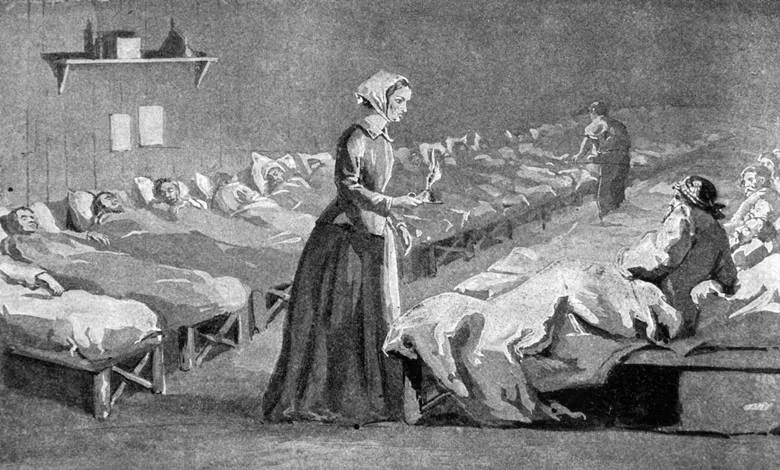
Thousands of sick soldiers had suffered and died around her. The "Lady with the Lamp" nickname came from her nightly rounds, when she walked the dark corridors with a paper lantern in hand, checking on patients long after everyone else had gone to bed. But the light she carried revealed something darker than battle wounds. Britain and France had sided with the Ottoman Empire against Russia in this conflict, and the war was being lost not to enemy fire, but to disease and infection.
The causes of soldier suffering were everywhere she looked: poor officers who failed their men, scarce supplies that never seemed to arrive, bad shelter that offered no protection, overcrowded hospitals packed beyond reason, and harsh medical practices that did more harm than good. Nightingale saw it all and understood that the horror of war was not just about bullets.
Back in London, she faced her real opponent. Government officials viewed the deaths of ordinary soldiers as an inevitable cost of battle. They blamed the weather, blamed poor diet, blamed the hard conditions of military life. None of it was preventable, they insisted. The army's data was so poor, so sloppily kept, that no one could even figure out how the men were actually dying. The numbers simply did not exist to tell the truth.
Nightingale was determined to change how generals, health officers, and parliamentarians thought. But she hit a wall: most decision-makers could not read statistical data correctly. Columns of figures meant nothing to them. The facts were there, hiding in the numbers, but they could not see them. She needed a different weapon, and she was about to find it.
A Privileged Childhood, a Forbidden Calling
Florence Nightingale was born in 1820 into a wealthy English family, and her father took her education seriously. From a young age, she studied Italian, Latin, Greek, history, and mathematics at home, with numbers capturing her imagination more than anything else.
By the time she turned 20, Florence wanted to push her mathematical training further. Her mother pushed back, worried that advanced study would scare off potential suitors and ruin her marriage prospects. Florence did not budge. She kept studying arithmetic, geometry, and algebra with prominent mathematicians of the day, and she shared what she learned by teaching neighborhood children. Her handwritten lesson plans for arithmetic and geometry still survive today, preserved in the British Museum.
In her mid-20s, her focus shifted toward health and how hospitals actually functioned. Nursing drew her in, but her family objected fiercely. In that era, nursing was considered unseemly for a wealthy young woman, a job beneath her station. Florence went anyway. She trained at the Lutheran hospital in Kaiserswerth, Germany, then returned to London to work at a hospital for women.
Her discipline and sharp observational skills quickly earned her a management role. She had a keen eye for cleanliness, ventilation, and hospital organization, qualities that would matter enormously. Then, in 1854, the Crimean War broke out, and the opportunity she had been waiting for finally arrived.
Inside the Selimiye Barracks: What She Really Found
The Crimean War had begun as a clash between the Ottoman Empire and Russia, with Britain and France throwing their weight behind the Ottomans. By the time Florence Nightingale stepped off the boat in Üsküdar in November 1854, wounded soldiers were already flooding into Istanbul. The French wounded went to Taşkışla. The British went to the Selimiye Barracks, a sprawling military complex on the Asian shore of the city.
What she found inside those walls stopped her cold. The hospital was old, neglected, and filthy. Wounded men lay crammed into overcrowded wards, some spilling into corridors, many on straw mats laid directly on the floor. Clean water was scarce. Food was inadequate. Sheets, bandages, and the most basic medical supplies were simply missing.
Nightingale did not just roll up her sleeves and start scrubbing, though she did plenty of that. She started reading the hospital records. What she found there changed how she understood the entire war. Most soldiers were not dying from their battle wounds at all. They were dying from malaria, typhus, cholera, and dysentery. Disease was the real killer, and the filthy, crowded, poorly ventilated building was doing half the enemy's work for it.
So she went to work with a discipline that bordered on obsession. She organized proper food supplies and made sure men got clean clothing and real beds. She set up a kitchen inside the hospital and established a laundry system, cutting down the risk carried in dirty sheets and uniforms. Then she tackled the building itself. Water, sewage, ventilation, all of it got her attention. As conditions improved, the death rates dropped dramatically. The same barracks that had been a death trap became a place where men could actually recover.
The Rose Diagram That Shook Parliament
Florence Nightingale's diagrams, first presented in a confidential report to Queen Victoria in 1856, did what thousands of pages of statistics could not: they made Parliament see the scandal of soldiers dying from preventable disease. By 1858, her visual arguments had sparked debates on overcrowded barracks and military health that led to real reforms in sanitation, sewage, medical training, and statistical record-keeping.
When Nightingale returned to London in the summer of 1856, she carried a furious certainty. She had watched thousands of soldiers die in filthy wards at Selimiye Barracks in Üsküdar, not from Russian bullets but from malaria, typhus, cholera, and dysentery. The problem was that government officials believed these diseases were unavoidable, caused by weather, poor diet, and hard conditions. And the army's own records were so sloppy that nobody could prove otherwise.
Nightingale understood the real obstacle: most decision-makers simply could not read statistical tables. Columns of numbers meant nothing to generals and parliamentarians who had never been trained to interpret them. So she decided to stop speaking in figures and start drawing pictures.
Her charts stood out dramatically from conventional data visualization of the time. Where typical graphs showed raw numbers in plain columns, Nightingale's designs told a story. She compared army death rates with civilian death rates, making the message impossible to ignore: even in peacetime, soldiers living in barracks died at higher rates than civilians of the same age. She used horizontal bars so labels could be read easily, and radial slices to show monthly army deaths across two years, with an inner circle marking Manchester's average death rate as a chilling baseline.
These diagrams appeared in her 830-page report on the Crimean War's medical failures. The set of three was first shown to Queen Victoria in a confidential report, and the impact was immediate. When health reformers came under attack from an anonymous pamphlet, Nightingale and her team reissued the diagrams publicly with a final response attached. The press picked them up quickly, and the visual evidence spread far beyond the usual statistical circles.
Parliament soon found itself debating overcrowded barracks and military health conditions in earnest. Those discussions translated into concrete changes: improved sanitation, better sewage systems, new health regulations, formal military medical training, and stricter statistical record-keeping across the army.
As for the claim that Nightingale was the first person to effectively use data visualization to influence policy, that is reported but contested. She was certainly a pioneer, but earlier examples of persuasive visual data exist, so calling her the absolute first is an overstatement. What is not in dispute is that her rose diagrams, as they came to be known, shook the British establishment in a way that dry tables never could.
A Bedridden Reformer and a Lasting Legacy
Florence Nightingale came home from the Crimean War in 1856 carrying more than memories of the wounded. She carried a serious illness that would shape the rest of her life. By the time she turned 38, she was mostly confined to her bed in London, yet she turned that bed into a command center.
From under her blankets, Nightingale wrote reports, gathered statistics, and exchanged letters with government officials. She pushed relentlessly for military health reforms, determined that the terrible losses she witnessed in the hospital wards would never repeat themselves. The woman who had walked the corridors at night with her paper lantern now worked from a different kind of post, but with the same fierce discipline.
Her body may have failed her, but her mind never slowed. She continued collecting data and shaping the arguments that would eventually transform how armies thought about sanitation, nutrition, and barracks conditions. The Florence Nightingale data visualization work that had begun during the war continued from her sickroom, where she refined the charts and diagrams that made her case so powerfully.
On 13 August 1910, Nightingale died at her home in London. She was 90 years old. Her family turned down the offer of a national funeral, choosing instead a quiet ceremony in Hampshire, England, where she was laid to rest in the family plot. No grand monuments marked her grave, just the simple dignity she had always preferred.
But her memory found another home far from English soil. At Haydarpaşa British Cemetery in Istanbul, a memorial stands in her honor, a reminder of the months she spent at Selimiye Barracks in Üsküdar during the war. Visitors to that quiet cemetery can pause before the stone that bears her name and think of the lamp she carried through those crowded, filthy wards, and of all the reforms that followed her work there.
Frequently asked questions
What was Florence Nightingale's role in the Crimean War?
Florence Nightingale served as the nursing superintendent for British military hospitals during the Crimean War, arriving at Selimiye Barracks in Üsküdar, Istanbul, in November 1854. She found the hospital filthy, overcrowded, and desperately short of clean water, food, sheets, and bandages. Through rigorous sanitation reforms, better nutrition, and organized laundry and kitchen facilities, she dramatically reduced the death rate among the soldiers under her care.
How did Florence Nightingale use statistics to improve military healthcare?
Nightingale collected detailed mortality data from military hospitals and transformed those numbers into compelling visual charts. In 1858, she presented her findings in an 830-page report that included diagrams comparing army death rates with civilian death rates. She first showed these diagrams to Queen Victoria in a confidential report, and they eventually sparked parliamentary debates that led to major reforms in military sanitation, medical training, and statistical record-keeping.
What was the 'rose diagram' created by Florence Nightingale?
The rose diagram was a circular chart with radial slices showing monthly army deaths over two years during the Crimean War. Each slice represented one month, with the size of the slice showing the number of deaths. The diagram compared these military death rates against the average civilian death rate in Manchester, drawn as an inner circle, making the shocking scale of preventable deaths visible at a glance to anyone who saw it.
Why did Florence Nightingale become known as the Lady with the Lamp?
Nightingale earned this nickname because she made nightly rounds through the hospital wards at Selimiye Barracks carrying a paper lantern. After the day's work ended and other staff rested, she would walk among the wounded and sick soldiers, checking on their condition by lamplight. The image of her moving quietly through the darkened corridors with her lantern became one of the most enduring symbols of compassionate care in military medicine.
What conditions did Florence Nightingale find at the Selimiye Barracks hospital?
When Nightingale arrived in November 1854, she found a hospital that was old, neglected, and filthy. Wounded soldiers lay in severely overcrowded wards, sometimes in corridors and on straw mats, with shortages of clean water, adequate food, sheets, bandages, and basic supplies. Examining hospital records, she discovered that most soldiers were dying not from battle wounds but from malaria, typhus, cholera, and dysentery, diseases spread by poor hygiene and unsanitary infrastructure.
Did Florence Nightingale have a formal education in mathematics?
Nightingale was educated at home by her father, who taught her Italian, Latin, Greek, history, and mathematics from a young age. When she wanted to advance her mathematical studies at age twenty, her mother objected, fearing it would hurt her marriage prospects. Despite this opposition, Nightingale persisted and studied arithmetic, geometry, and algebra with prominent mathematicians of her era, even creating handwritten lesson plans for children that are now preserved in the British Museum.
How did Florence Nightingale's work influence modern nursing?
Nightingale's reforms established sanitation, hygiene, and systematic hospital management as foundational principles of nursing care. Her work during the Crimean War proved that clean water, proper ventilation, nutritious food, and organized wards could save lives on a massive scale. She transformed nursing from a low-status occupation into a respected profession, and her statistical approach to healthcare laid groundwork for evidence-based medical practice that continues today.
What is the legacy of Florence Nightingale in Istanbul?
A memorial to Nightingale stands at Haydarpaşa British Cemetery in Istanbul, honoring her work during the Crimean War. The Selimiye Barracks in Üsküdar, where she performed her most famous reforms, now serves as a museum. These landmarks remind visitors that some of the most important advances in military medicine happened not on battlefields, but in the converted barracks of a sprawling Ottoman city.
Got a take on this? Add your voice to the conversation below →
No comments yet. Be the first.