First Council of Nicaea: Why Iznik Matters to Christians
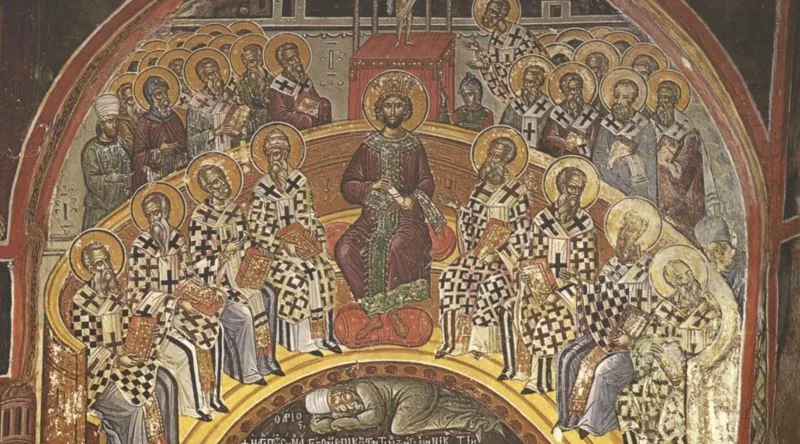
The First Council of Nicaea, convened by Emperor Constantine in 325 AD in the city now known as Iznik, Turkey, defined core Christian belief in the Nicene Creed and unified the early church. Pope Leo XIV is reported to be considering a visit to Iznik for the 1700th anniversary, though no official announcement has confirmed the trip. For believers worldwide, this is not just a historical footnote; it is the place where the faith's foundational statement of who Jesus is was hammered out, debated, and ultimately affirmed.
In 325 AD, Emperor Constantine summoned roughly 300 bishops to Nicaea, a city in modern-day Iznik, Turkey, to settle a major dispute about the nature of Christ. The council produced the Nicene Creed, a statement of faith still recited by millions of Christians today. Pope Leo XIV's reported visit would mark the 1700th anniversary of this pivotal event, though it remains unconfirmed.
- The First Council of Nicaea was convened in 325 AD in the city of Nicaea, which is now Iznik, Turkey.
- Emperor Constantine called the council to address the Arian controversy, a dispute over whether Jesus was fully divine or a created being.
- The council produced the original Nicene Creed, establishing the doctrine of the Trinity and affirming the full divinity of Jesus.
- Pope Leo XIV is reported to be considering a visit to Iznik in 2025 to commemorate the 1700th anniversary of the council, though no official announcement has been made.
- The decisions made at Nicaea laid the groundwork for all subsequent ecumenical councils and shaped the core of Christian theology.
A Pope’s Pilgrimage to a Small Turkish Town
Pope Leo XIV reportedly plans to visit Iznik, a quiet lakeside town in Bursa Province, Turkey, though no official announcement has confirmed the trip. The rumored reason centers on the 1700th anniversary of the First Council of Nicaea, the landmark 325 AD gathering that shaped Christian doctrine. If the visit happens, it would bring the leader of the Catholic Church to a place that changed religious history forever.
Iznik today is known for its tiled ceramics, its orchards, and the calm waters of Lake Iznik. But seventeen centuries ago, this same small town, then called Nicaea, hosted one of the most consequential meetings in Western civilization. In 325 AD, the Roman Emperor Constantine the Great summoned bishops from across the Christian world to settle a bitter dispute about the nature of Jesus Christ. The council produced the Nicene Creed, a statement of faith still recited in churches around the globe every Sunday.
The town itself is unassuming. Narrow streets wind between old stone houses, and the ancient city walls, built during Roman and Byzantine times, still encircle parts of the settlement. Visitors can walk through the ruins of the Church of Hagia Sophia, a Byzantine structure that hosted later church gatherings, and imagine the crowded, heated debates that once filled the air with Greek and Latin arguments.
As the story goes, Pope Leo XIV’s interest in Iznik is tied to the anniversary, and some unconfirmed reports suggest the visit may aim to ease old denominational divisions by reaching out to eastern Christian communities. But none of that has been officially confirmed. For now, the pilgrimage remains a rumor, a possibility, a quiet hope that the pope might soon stand where Constantine’s bishops once stood and pray for unity in the very place where Christian unity was first defined.
The Council That Shaped Christianity
Picture a lakeside town in 325 AD, where hundreds of bishops gathered to settle the biggest question in Christianity. The First Council of Nicaea convened in the city of Nicaea, which today is known as Iznik in Bursa Province, Turkey. Emperor Constantine the Great, the first Roman emperor to embrace Christianity, called roughly 300 bishops to this lakeside town to settle a fierce theological dispute. The gathering would go on to define the core of Christian belief for centuries to come.
The central argument that summer revolved around the nature of Jesus Christ. A popular priest named Arius taught that the Son was a created being, subordinate to God the Father. Bishop Alexander of Alexandria insisted they were of the same substance, co-eternal and co-equal. The debate grew so heated that Constantine, who had only legalized Christianity a dozen years earlier, could not let it fester. A divided church threatened the unity of his empire.
After weeks of deliberation, the council sided with Alexander. The bishops drafted the Nicene Creed, a statement of faith declaring Jesus "true God from true God, begotten not made, of one essence with the Father." Every bishop present signed it except two, who were exiled along with Arius. The creed, later expanded at the Council of Constantinople in 381 AD, remains recited in churches worldwide to this day, making the First Council of Nicaea the single most influential gathering in Christian history.
Constantine himself did not preside over the theological arguments, though he opened the proceedings and oversaw the logistics. A popular misconception claims he also created the office of the pope, but the Roman bishopric already existed well before his reign. What Constantine did do was put the full weight of imperial authority behind orthodox Christianity, a move that permanently fused church and state in the Roman world.
The council's legacy extends far beyond that single summer. It established a template for resolving doctrinal disputes through ecumenical councils, a practice that continued for centuries. It also cemented Nicaea's place as a pilgrimage site, a small Anatolian town that once hosted the most important religious summit in the ancient world. When the bishops left in 325 AD, they carried with them a unified faith that would outlast the empire that convened them.
Constantine’s New Rome and the First Hagia Sophia
Five years after the First Council of Nicaea wrapped up in 325 AD, Constantine the Great stood on the shores of the Bosphorus and dedicated a brand new city. In 330 AD, he founded Nova Roma on the site of ancient Byzantium, a modest Greek settlement that suddenly found itself transformed into an imperial showcase. The emperor poured resources into the project with the same intensity he had brought to uniting the squabbling bishops in Nicaea, and the city quickly took on the grand trappings of a proper Roman capital.
Constantine also commissioned the first Hagia Sophia church, a project that would only be completed under his son, Constantius II. That original structure was far humbler than the soaring dome visitors see in Istanbul today, but it marked a bold statement: the new Christian empire needed sacred spaces worthy of its ambitions. Constantinople became a new imperial residence, though Rome remained an important symbolic and administrative center for decades afterward.
What is not in dispute is the sheer scale of Constantine's vision. He was reshaping the Roman world in both political and spiritual terms, and the city on the Bosphorus was the physical embodiment of that transformation. The Hagia Sophia he commissioned would be rebuilt and expanded over the centuries, but its origins trace directly back to the emperor who had summoned the bishops to Nicaea in the first place.
From Ecumenical Councils to the Great Schism
The year 1054 AD marks the moment the Christian world split in two, when the Roman and Constantinopolitan churches formally excommunicated each other in what became known as the Great Schism. But that rupture was centuries in the making, a slow drift that began almost as soon as the First Council of Nicaea ended in 325 AD. Emperor Theodosius I did declare Christianity the official religion of the Roman Empire. The Second Council of Constantinople, however, came nearly two centuries later, called by Emperor Justinian in 553 AD. The councils that followed Nicaea, including those at Ephesus and Chalcedon, carried enormous weight, yet not every Christian denomination accepts them. The Oriental Orthodox churches, for instance, reject the Council of Chalcedon outright, a disagreement that still echoes in denominational boundaries today. As the centuries rolled on, geography began to pull the church apart. In 756 AD, the city of Rome slipped out of Eastern Roman control, a shift that gave the papacy a new kind of independence. Then came Christmas Day in 800 AD, when the pope placed an imperial crown on the head of Charlemagne, the Frankish king. That single gesture announced to the world that the West had its own emperor now, one who owed nothing to Constantinople. The political separation hardened into ecclesiastical hostility, and by the middle of the eleventh century, the mutual excommunications of 1054 AD made the division official. The two halves of Christendom had become strangers to each other, and they have never fully reconciled since.Why This Visit Could Matter Today
The visit is reportedly tied to the 1700th anniversary of the First Council of Nicaea, which convened in 325 AD. Some unconfirmed reports suggest the pope also hopes to ease old denominational divisions by traveling to eastern regions. None of this has been officially confirmed, so treat it as speculation rather than announcement. Still, the symbolism writes itself. The First Council of Nicaea is where Emperor Constantine the Great gathered roughly three hundred bishops in 325 AD to settle a fierce debate about the nature of Christ. The creed that emerged from those sessions still echoes in churches worldwide every Sunday. To stand in Iznik, the modern name for ancient Nicaea, is to stand where Christian doctrine took its foundational shape. The town itself sits quietly on the shores of Lake Iznik in Bursa Province, a place more known today for its tiles and orchards than for theological earthquakes. But its Roman-era walls still trace the perimeter of the city where Constantine hosted that landmark council. For pilgrims, the geography alone carries weight. Walking those streets means walking the same ground where church leaders argued, prayed, and ultimately produced one of the most quoted statements in Christian history. If the visit happens as reported, Iznik's profile as a pilgrimage destination could rise considerably. The town already draws visitors curious about early church history, but a papal visit would place it firmly on the map for Christian travelers worldwide. Hotels, tour operators, and local guides would suddenly find themselves serving a very different kind of tourist than the weekend crowd from Istanbul. The timing matters too. The 1700th anniversary of the First Council of Nicaea falls in 2025, a milestone that has already prompted conferences and commemorations across denominational lines. A papal presence in Iznik would turn that academic interest into something more visceral, a physical meeting between the modern church and its ancient birthplace. Whether the visit actually happens remains an open question. No official announcement has been made, and the Vatican has stayed silent on the matter. But the very possibility has reignited conversations about what unites rather than divides the branches of Christianity. In a world where denominational lines have hardened over centuries, the idea of a pope returning to the site where it all began carries a quiet, hopeful resonance.Frequently asked questions
What was the First Council of Nicaea and why was it held?
The First Council of Nicaea was a gathering of Christian bishops convened in 325 AD in the city of Nicaea, which is modern-day Iznik in Turkey. Emperor Constantine the Great called the meeting to resolve a major theological dispute about the nature of Jesus Christ. It was the first ecumenical council in Christian history, bringing church leaders together to settle questions of doctrine and establish a unified belief system.
Why is Iznik important to Christians today?
Iznik, a lakeside town in Bursa Province, Turkey, holds deep significance for Christians because it hosted the First Council of Nicaea in 325 AD. That single gathering shaped the core beliefs that most Christian denominations still profess today. For believers, walking the streets of Iznik means walking where the foundations of their faith were hammered out nearly 1,700 years ago.
Who convened the Council of Nicaea in 325 AD?
Emperor Constantine the Great convened the First Council of Nicaea in 325 AD. Constantine was the Roman emperor who had recently legalized Christianity, and he took a personal interest in settling the theological disputes threatening church unity. He not only called the bishops together but also presided over portions of the council himself, signaling how seriously he took the matter.
How did the Council of Nicaea shape modern Christianity?
The First Council of Nicaea established foundational doctrines that nearly all Christian churches still hold today. It defined the relationship between God the Father and Jesus Christ, declaring them to be of the same substance. The council is traditionally credited with setting the date for celebrating Easter, though the exact decision is debated, and it issued twenty canons governing church practice and discipline. These decisions created a common framework that united Christians across the Roman Empire.
What is the significance of the Nicene Creed?
The Nicene Creed emerged from the First Council of Nicaea in 325 AD as a formal statement of Christian belief. It declared that Jesus Christ is "true God from true God, begotten not made, being of one substance with the Father." This creed directly addressed the Arian controversy, which argued that Jesus was a created being rather than divine. The creed, later expanded in 381 AD, became the standard confession of faith for Christianity and remains central to Catholic, Orthodox, and Protestant worship today.
Why is Pope Leo XIV planning to visit Iznik?
According to unconfirmed reports, Pope Leo XIV plans to visit Iznik because the First Council of Nicaea reaches its 1,700th anniversary. Some reports suggest that by visiting eastern regions, the pope hopes to ease old denominational divisions. However, no official Vatican announcement confirming the visit or its purpose has been verified, so these details remain unconfirmed reports rather than established facts.
What led to the Great Schism between the Roman and Orthodox churches?
The Great Schism of 1054 was the culmination of centuries of growing distance between the Church of Rome and the Church of Constantinople. In 756 AD, the city of Rome came out of Eastern Roman control, and in 800 AD, the pope crowned Charlemagne as emperor, creating a rival power center in the West. These political shifts deepened the divide, and in 1054, the Roman and Constantinopolitan churches formally excommunicated each other, splitting Christianity into what we now call Catholic and Orthodox branches.
Did Constantine build the first Hagia Sophia?
Yes, Constantine the Great commissioned the original Hagia Sophia church in Constantinople. That first structure was completed under his son, Constantius II, and stood as a grand imperial church in the new capital. The Hagia Sophia that visitors know today, with its massive dome and minarets, was built much later by Emperor Justinian in the 6th century after the original was destroyed. Constantine's church was the first, but not the one that survives. Editorial note: Any facts which remain unconfirmed are presented as such, with the timeline of the papal visit and specific ceremonial details treated as reported plans rather than settled events.
Got a take on this? Add your voice to the conversation below →
No comments yet. Be the first.