Erich Hartmann: The 20-Meter Rule of WWII's Top Ace
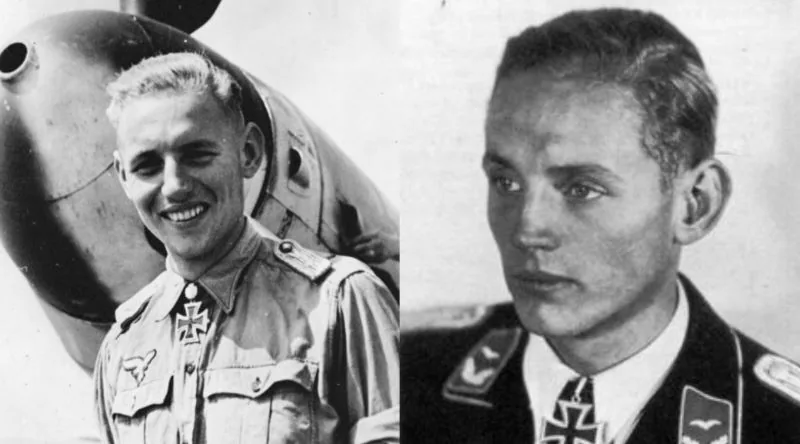
Erich Hartmann, the most successful fighter pilot in history, scored 352 aerial victories flying for the Luftwaffe on the Eastern Front during World War II, and he did it with a tactic built on one radical idea: get so close the shot cannot miss. Most pilots opened fire at long range, spraying rounds and hoping. Hartmann reportedly waited until the enemy aircraft filled his windscreen, around 20 meters by the most common telling, then fired a single short burst. The man who became the deadliest ace in aviation history won not by flying better than everyone else, but by refusing to shoot until the odds were absurdly in his favor.
Erich Hartmann was a German fighter pilot who flew with Jagdgeschwader 52 on the Eastern Front in World War II and is credited with 352 aerial victories, the highest total of any fighter pilot. His success came from a deliberate hit-and-run method: harmonize the wing guns to converge at one point, close to roughly 20 meters, fire one short burst, then break away before the fight could turn against him.
- Erich Hartmann flew with Jagdgeschwader 52, a Luftwaffe fighter wing, and spent most of World War II on the Eastern Front against Soviet air forces.
- He is credited with 352 aerial victories, the highest confirmed total of any fighter pilot in history.
- His preferred tactic was to harmonize his aircraft's wing-mounted guns so their fire converged at a single point, then close to roughly 20 meters and fire one short, decisive burst.
- He favored hit-and-run attacks, striking from a position of surprise and disengaging rather than staying to dogfight.
- His approach has been summarized as air hit-and-run, a tactic that stays effective whenever it is carried out with patience.
The Pilot Who Shot Down More Planes Than Anyone in History
Erich Hartmann flew fighters for Nazi Germany's Luftwaffe on the Eastern Front during World War II, and his confirmed score stands at 352 aerial victories. That is not a national record or a theater record. It is the highest confirmed tally of any fighter pilot in the history of aerial warfare.
So what made him so lethal? The honest first answer is work. Hartmann flew constantly, learned from every engagement, and survived years of combat. But hard work alone does not explain 352. Something else was going on, and it was almost embarrassingly simple.
His secret was a technique built around one question: how close can you get before you pull the trigger? In World War II, aircraft guns were commonly mounted in the wings, and wing guns were harmonized, meaning ground armorers adjusted their convergence so the streams of fire met at a chosen distance. That setting was routinely tuned to the individual pilot's preference, and some pilots asked for a wider, more dispersed pattern, figuring that if one stream missed, another might connect. Preferences varied widely, though, so this was never the standard choice.
Hartmann reportedly went the other way. Accounts describe him wanting his guns brought as close together as possible and focused on a single point, and he held his fire until the enemy aircraft filled his sights. He is widely quoted as favoring firing from roughly 20 to 50 meters, and at that range, with the guns converged on exactly that spot, missing became the hard part. The other pilot had almost no time to react.
And then he left. Hartmann did not circle and scrap the way pilots do in war films. His documented approach was surprise attack, one pass, then disengage. When the enemy lost sight of him or dropped their guard, he came back in and hit again. Air hit-and-run, a tactic as old as humanity, still devastating in the age of propeller fighters.
It worked especially well against Soviet aircraft and aircrew in the earlier years of the war, though the picture there is more complicated than the legend suggests, since Soviet equipment and tactics improved sharply as the conflict wore on.
Why Wing Guns Didn't Fire Straight, and Why That Mattered
Erich Hartmann flew for Nazi Germany's Luftwaffe in World War II, and he is credited with 352 aerial victories, more than any other fighter pilot in history. His secret wasn't raw aggression. It was a small mechanical detail most people never think about: where his bullets actually went.
During the war, aircraft guns were commonly mounted out on the wings. As the story goes, they didn't fire straight ahead on their own. Wing guns had to be harmonized, angled slightly inward so their streams of fire crossed and converged at one chosen point at a set distance. Ground armorers handled that adjustment, and they set it to each pilot's individual preference. Some pilots wanted the streams spread wider, on the logic that if one round missed, another might connect. That preference varied widely, though, and it can't be called the standard choice.
Hartmann reportedly went the other way. Accounts describe him asking for his guns brought very close together, concentrated on a single point, and holding fire until an enemy aircraft filled his sight. He is widely quoted as favoring ranges around 20 to 50 meters, though the exact 20-meter figure attributed to his own words can't be verified. Contrary to the popular version, a pilot at 20 meters would not have a full second to react. At typical closing speeds, that gap is crossed in a fraction of a second.
His high hit rate and close-range doctrine are documented, but the claim that he almost never missed is an exaggeration. What is solid is his doctrine: surprise attack, one pass, then disengage. No lingering, no cinematic dogfighting. When the enemy lost him or dropped their guard, he came back around and struck again. Early-war Soviet deficiencies are well documented, but calling them uniquely helpless against this tactic oversimplifies a picture that shifted as the war went on. Strip it down and Hartmann's method was air hit-and-run.
Hartmann's 20-Meter Rule: Fire Only When You Cannot Miss
Erich Hartmann, the Luftwaffe fighter pilot who flew with Jagdgeschwader 52 on the Eastern Front, did not win his victories with fancy flying. He won them by waiting until the enemy filled his gunsight. His entire method came down to one stubborn habit: hold fire until the target is so close that missing stops being an option.
Start with the hardware. In World War II, fighter guns were commonly mounted out on the wings, and wing guns do not throw their rounds in a straight, parallel line. Ground armorers had to harmonize them, angling each barrel so the streams crossed at one chosen distance ahead of the aircraft. That convergence point was set to the pilot's taste, and tastes differed. Some fliers spread their fire wide, reasoning that if one stream missed, another might still land a hit.
Hartmann reportedly went the other way. According to accounts of his gunnery setup, he asked for his guns to be brought unusually close together and focused on a single point. Whether the convergence was tighter than any other pilot's cannot be confirmed, but the doctrine behind it is not in doubt: one point, one moment, no wasted ammunition. He simply would not shoot until the enemy sat practically dead ahead of him.
How close is close? Hartmann is widely quoted as saying he opened fire from roughly 20 meters, though the exact figure as his own words is hard to pin down, and other tellings put his preferred range somewhere between 20 and 50 meters. Either way, the distances are startling. At that gap, with his guns tuned to that exact spot, a miss was very unlikely for him, and the other pilot had almost no room left to react.
One popular version of the story claims a pilot at 20 meters would have up to a second to swerve away before a collision. That number does not survive a second look. Two fighters closing at typical wartime speeds cover 20 meters in a fraction of a second, closer to a tenth of a second, not a full one. The margin was thinner than the legend suggests, which is exactly what made the tactic so brutal.
Did he ever miss? He hit far more often than most, and his close-range doctrine is well documented, but "almost never missed" is the kind of polish that stories acquire over time. What is solid is the discipline behind it. He did not circle and scrap the way pilots do in war films. He dove in, fired at the last instant, and broke away. When the enemy lost him or let their guard down, he came back for another pass.
You can file the whole approach under air hit-and-run, a tactic as old as human conflict and still devastating when someone executes it with this much patience.
Hit-and-Run: The Tactic That Kept Him Alive
Erich Hartmann, the Luftwaffe fighter pilot who flew with Jagdgeschwader 52 on the Eastern Front, did not fight the way war films teach us to expect. He never lingered in a turning dogfight, and he never stayed in the same patch of sky after a kill. His doctrine fit into three words: surprise, one pass, disengage. Then he vanished, and waited for the next mistake.
That refusal to stay and scrap is exactly what kept him breathing. When an enemy lost sight of him or dropped his guard, Hartmann slipped away and came back for another run. A pilot who circles to finish the job offers a target. A pilot who disappears offers nothing. This is why his technique is best summarized as air hit-and-run, an ancient tactic that is still devastating today.
Hartmann's three-step loop
- Close in unseen and pick one aircraft
- Fire once, at the last possible instant
- Break off and vanish before anyone reacts
As the story goes, Soviet aircraft and pilot training in the early war were poorly suited to counter this pattern. That framing oversimplifies things. Early-war Soviet deficiencies are well documented, but Soviet tactics and equipment improved markedly as the conflict dragged on, so the tactic was never a permanent free pass.
Hartmann's method was not built on superior flying alone. It was built on patience, geometry, and the discipline to leave a fight unfinished. That is a hard lesson for any pilot, and a harder one for anyone watching from the ground.
Frequently asked questions
Who was Erich Hartmann?
Erich Hartmann was a fighter pilot in Nazi Germany's Luftwaffe during World War II, flying with Jagdgeschwader 52 on the Eastern Front. He is credited with 352 confirmed aerial victories, the highest score of any fighter pilot in history, a record that still stands today.
How did his gun convergence tactic work?
Hartmann had his ground crew harmonize his wing-mounted guns so they converged at a single, very close point ahead of his aircraft. He then held fire until he was almost on top of his target, reportedly firing from around 20 meters, where a miss was nearly impossible.
Why did he fire only from 20 meters?
At that range, with his guns harmonized to converge at exactly that point, hitting was virtually guaranteed, and the enemy had almost no time to react or maneuver away. As the story goes, closing that fast left his opponent barely a heartbeat to respond before impact.
What was his hit-and-run tactic?
Hartmann avoided prolonged dogfights entirely. He made one surprise pass, disengaged immediately, and then re-attacked when the enemy lost sight of him or dropped their guard. This documented pattern of surprise attack, quick kill, and withdrawal is what made him so effective.
How many planes did he shoot down?
Erich Hartmann is credited with 352 confirmed aerial victories, the highest tally of any fighter pilot in history. This figure has been consistently documented and remains the benchmark against which all other fighter aces are measured.
Why did other pilots prefer scattered gun settings?
Some pilots favored wider dispersion to increase the chance of a hit, reasoning that if one round missed, another might connect. However, preferences varied widely among pilots, and the tight convergence Hartmann reportedly chose was a matter of individual doctrine rather than a universal standard.
Did Soviet training fail to counter him?
Early-war Soviet deficiencies in aircraft and pilot training are documented, but the situation was not static. Soviet tactics and equipment improved markedly over the course of the war, making the early advantage a fading one rather than a permanent condition.
Was he ever shot down?
The available accounts do not address whether Hartmann was ever shot down. What is well documented is his tactical doctrine of surprise attack, one pass, and disengagement, which he used to avoid becoming a target himself. Editorial note: Details that remain unconfirmed or disputed in the historical record are presented here as such, and specific figures should be read as the most commonly cited accounts rather than settled fact.
Got a take on this? Add your voice to the conversation below →
No comments yet. Be the first.