Changcheng 361: China's 2003 Submarine Disaster
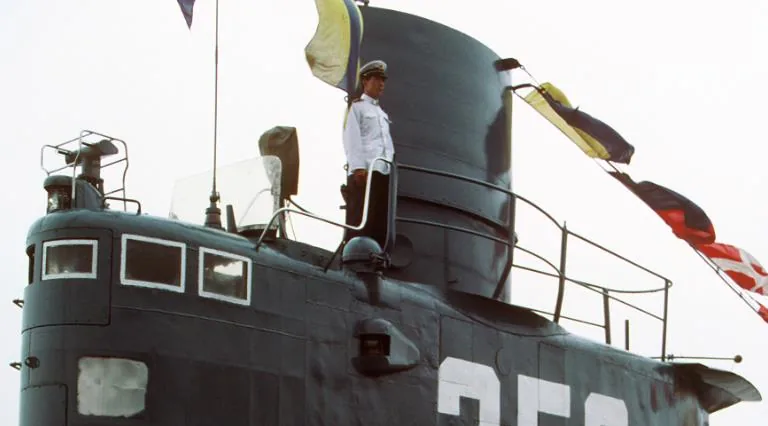
The Changcheng 361 submarine disaster unfolded in April 2003 when a Chinese submarine was found in the Bohai Sea with all 70 sailors aboard dead, and the vessel had been moving beneath the surface for days before anyone realized something was wrong. The crew never sent a distress call. For those 70 families, the worst part was the silence: the men simply did not come home, and no one could say why.
In April 2003, the Chinese submarine Changcheng 361 was found in the Bohai Sea during a training mission, with all 70 crew members dead aboard. Experts later theorized that faulty oxygen valves cut off the crew's air supply, suffocating them before they could react or call for help.
- The Changcheng 361 was a Romeo-class (Type 035) diesel-electric submarine operating in the Bohai Sea, the shallow enclosed gulf off China's northeast coast.
- All 70 sailors aboard died, making it one of the deadliest peacetime submarine accidents in modern history.
- Fishermen in the Bohai Sea noticed a periscope breaking the surface, which led to the discovery of the stricken submarine.
- The account that circulated afterward held that faulty oxygen valves left the crew unable to draw fresh air when the boat surfaced.
- The incident drew questions about transparency once officials finally offered a brief statement about the training accident.
A Periscope in the Bohai Sea
In April 2003, fishermen working the Bohai Sea off northeastern China spotted something that did not belong on the surface: a slender periscope cutting through the water, trailing a faint wake. A submarine was gliding just beneath them, and it had been moving underwater for days. When the vessel was finally opened, all 70 crew members of Changcheng 361 were found dead inside. It remains one of the deadliest submarine accidents in recent history.
Word travels fast on the water, and so does suspicion. As the story goes, the fishermen first assumed they were looking at a South Korean spy submarine, an intruder prowling their fishing grounds. That guess was wrong. The boat was Chinese, a Romeo-class diesel-electric submarine, the design known in China as the Type 035. The crew aboard it were not spies. They were sailors of their own navy, and none of them were breathing.
The scale of what the fishermen had stumbled onto took time to sink in. A submarine that had been moving beneath the surface for days was, in fact, a tomb. All 70 crew members were found dead aboard. The vessel was reportedly towed to port afterward, though the specific location and which branch of the military handled the tow are not reliably confirmed. What is certain is the number: 70 lives, lost silently, while the sea above them stayed calm and ordinary.
Picture the moment of discovery. A periscope is a small thing, easy to miss against gray water, and the men who saw it had no reason to expect a tragedy. They expected a threat, a foreign boat, a story they could tell back at the dock. Instead they found a Chinese submarine full of dead sailors, and a mystery that would only deepen once the questions started. For now, the sea had given up its secret, and it was worse than anyone had guessed.
The Oxygen Valve Theory: How the Air Ran Out Aboard Changcheng 361
Diesel-electric submarines like Changcheng 361, a Romeo-class boat, could not simply cruise on battery power forever. The diesel generators that recharged the engines burned through the submarine's internal oxygen at a furious rate, which meant the boat had to rise to periscope depth so its oxygen valves could open and pull in fresh air. That routine exchange is the hinge on which the whole Changcheng 361 submarine disaster turns.
According to the account that circulated afterward, those valves were faulty. The boat surfaced partially, the crew expected the tanks to refill, and nothing came in. The oxygen already aboard kept draining, and reportedly the remaining supply was gone in roughly two minutes. As the air thinned, the pressure differential inside the hull may have pressed the interior doors and hatches shut, sealing compartments that would ordinarily open without a thought. The submarine was reportedly on a silent mission, with internal and external communications closed, so no distress call went out and no one above the water knew anything was wrong.
That silence is what makes the mechanism so chilling. A procedure performed on countless training runs, rise, vent, breathe, refill, became a trap with no exit and no signal. The valves that should have let the sea air back in stayed shut, and the men inside had no way to say so.
The official word from Chinese authorities was spare: an accident had occurred during training in the waters east of the Changshan Islands in the Bohai Sea. No fuller explanation of the mechanical failure was offered. Independent observers have never fully accepted the oxygen-depletion account, and skepticism about what really happened in those final minutes has lingered ever since.
A Brief Official Statement and a Wave of Punishments
Beijing said almost nothing, and what it did say fit in a single breath. According to the official account, a submarine on a training run in the waters east of the Changshan Islands, in the Bohai Sea, had suffered an accident. That was the whole statement. The English-language retellings of the Changcheng 361 submarine disaster often render the location as the "Changshan Mountains," a small mistranslation of what are actually islands. Beyond that one line, no further explanation came from the authorities.
What arrived instead was silence, and then a quiet reckoning inside the fleet. The investigation that followed ended the careers of a string of high-ranking PLAN officers, who were demoted or pushed into retirement. No public trial, no names read aloud for the cameras. Just ranks lowered and doors closed, the kind of accountability that happens without ever being announced.
Officially, the deaths were attributed to oxygen depletion caused by a mechanical malfunction. That is the version on the record, and it is the version the families were given. Yet outside the official channel, skepticism never fully faded, and the questions people kept asking were not the ones the statement answered.
What made the silence so loud was the nature of the boat. A submarine running under emissions control is a black box by design, holding its position and its quiet for as long as the mission demands. When that silence is broken only by a discovery, when the vessel is found by the wrong eyes entirely, the gap between what the navy knew and what it said becomes the whole story. The Changcheng 361 submarine disaster left behind 70 dead and a brief statement of explanation, and for many observers that arithmetic never quite balanced.
From the Tahtelbahir to the Atılay: Ottoman Submarine Firsts
Long before the Changcheng 361 submarine disaster made headlines, the Ottoman Empire was already experimenting with the idea of traveling beneath the water's surface. The story starts in 1719, when shipyard chief architect Ibrahim Efendi built a vessel called the Tahtelbahir. The name literally means "under the sea," and it captures exactly what the craft was designed to do.
But there was a catch. The Tahtelbahir could only dip below the surface for brief moments. It couldn't stay submerged continuously, which means it doesn't qualify as a true submarine by modern standards. Think of it more as a curiosity, a proof of concept that showed the Ottomans were thinking about underwater travel centuries before it became practical.
The empire's first real submarines arrived much later. In 1886, the Ottoman Empire purchased two vessels from the Nordenfelt company, a Swedish manufacturer known for early submarine designs. These were named Abdul Hamid and Abdulmecid, after the sultan and his predecessor. They were launched that same year, marking the Ottoman Navy's formal entry into the submarine age.
Decades passed, and the technology evolved. By 1939, the Republic of Turkey had its own domestically built submarine: the TCG Atılay. Completed at Taşkızak Shipyard, it holds the distinction of being Turkey's first submarine constructed at home rather than purchased from abroad. The Atılay represented a shift from buyer to builder, a milestone that echoed the earlier ambitions of Ibrahim Efendi's Tahtelbahir.
This long lineage of underwater exploration, stretching from a 1719 curiosity to a 1939 achievement, shows that the desire to conquer the depths is hardly new. The Changcheng 361 submarine disaster in 2003 belongs to this same story, a reminder that the sea beneath the waves has always demanded respect.
Frequently asked questions
What happened to the Chinese submarine Changcheng 361 in 2003?
In April 2003, the Chinese submarine Changcheng 361 was found in the Bohai Sea with all 70 crew members dead aboard. Fishermen spotted a periscope breaking the surface and alerted authorities, who towed the Romeo-class diesel-electric vessel to port. It was the deadliest submarine accident in recent Chinese naval history.
Why did all 70 crew members die?
Chinese authorities officially attributed the deaths to oxygen depletion caused by a mechanical malfunction in the submarine's ventilation or oxygen-generating system. According to the account that circulated afterward, experts theorized that faulty oxygen valves prevented the crew from drawing fresh air when the vessel surfaced, and the remaining oxygen ran out within roughly 2 minutes.
How was the submarine discovered by fishermen in the Bohai Sea?
Fishermen working the Bohai Sea noticed a periscope protruding from the water's surface. They initially suspected a South Korean spy submarine, though this misidentification cannot be reliably verified. The vessel, confirmed as a Romeo-class (Type 035) diesel-electric submarine, had reportedly been submerged for days before being spotted and towed to port.
Was it a South Korean spy submarine?
No. The Changcheng 361 was a Chinese People's Liberation Army Navy Romeo-class (Type 035) diesel-electric submarine, not a South Korean vessel. According to the account that circulated afterward, fishermen briefly mistook the periscope for a foreign spy submarine, but the Romeo-class identification is confirmed.
What did Chinese authorities say about the incident?
Officials issued a brief statement saying an accident had occurred during a training exercise in waters east of the Changshan Islands in the Bohai Sea. They attributed the 70 deaths to oxygen depletion from a mechanical malfunction. No further official explanation was provided, and independent skepticism about the official account persists.
Who was punished after the accident?
Following the investigation, several high-ranking PLAN officers were disciplined with demotions or forced retirements. The scale of the punishment reflected the severity of the loss: 70 crew members died, and the incident raised serious questions about submarine safety protocols and emergency communication procedures within the Chinese navy. Editorial note: Details surrounding the timing of the submarine's loss and the precise sequence of the oxygen system failure remain partly unconfirmed, and any such points are presented here as reported rather than as established fact.
Got a take on this? Add your voice to the conversation below →
No comments yet. Be the first.