Champs-Élysées Horse Chestnuts: Ottoman 1615 Gift
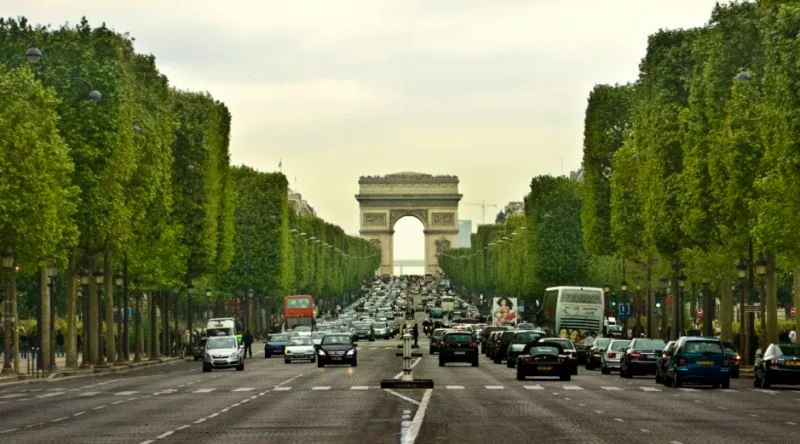
In 1615, Ottoman Sultan Ahmed I reportedly gifted Paris its iconic horse chestnut trees along the Champs-Élysées, a diplomatic offering to Queen Marie de Medici that supposedly introduced the species to Western Europe. The story binds Istanbul's ancient gardens, a French queen's longing for her homeland, and a tree long wrapped in lightning myths and royal symbolism.
Sultan Ahmed I reportedly sent horse chestnut trees to Paris in 1615 as a gift to Queen Marie de Medici. The trees, supposedly sourced from Istanbul's royal gardens, were planted along the Champs-Élysées, becoming the avenue's first ornamental planting. The species later spread across Europe, though the original Ottoman trees are no longer standing.
- In 1615, Sultan Ahmed I reportedly dispatched horse chestnut trees from Istanbul to Paris as a diplomatic gift to Queen Marie de Medici.
- The trees were supposedly planted along the Champs-Élysées, marking the first recorded introduction of the species to France.
- The Ottoman gift allegedly aimed to strengthen ties between the Ottoman Empire and France during a period of shifting alliances.
- Horse chestnuts became popular across European cities in the following centuries, though the original Parisian specimens have since been replaced.
- The trees carried a folk belief that they were never struck by lightning, a myth that added to their mystique in urban landscapes.
The Story That Won't Die: Horse Chestnut Trees on the Champs-Élysées
Here's the story you've probably seen shared a hundred times: the horse chestnut trees lining the Champs-Élysées in Paris were a gift from Ottoman Sultan Ahmed I to France in 1615. It's a beautiful image, two great powers exchanging living symbols of friendship across centuries. But the fact-check verdict is clear: this specific gift narrative is false, with no reliable historical record to support it.
The tale has all the ingredients of a legend that refuses to fade. It places the trees on Paris's most famous avenue, the Champs-Élysées, and gives them a precise origin story. According to the popular version, the trees were sent at the request of Marie de' Medici, who was the Queen Mother of France at the time. She reportedly wanted them because of a folk belief that lightning never strikes horse chestnut trees, making them a safe and wise choice for the city's grand boulevard.
The story even names a courier: a French ambassador called Busbecq, who supposedly transported the trees from Istanbul to Paris. Except there's a problem with that detail. Busbecq was actually a Habsburg ambassador who died in 1592, making his involvement in 1615 impossible. The timeline simply doesn't add up.
And that claim that no other European country had horse chestnut trees at the time? That doesn't hold up either. Records show horse chestnuts were already being cultivated in several European countries before 1615. The legend also leans on the word of Evliya Çelebi, the famous Ottoman traveler, who reportedly said a cat or squirrel could cross Istanbul from one end to the other without touching the ground, thanks to the abundance of horse chestnut trees. It's a vivid image, but this specific quote cannot be confirmed and may be misattributed.
What makes this story so stubborn? It's the emotional weight it carries. The idea that Istanbul once had such lush greenery that it could gift trees to one of the world's most famous streets, while today the city struggles with its own green spaces, gives the tale a nostalgic power. It speaks to a longing for a past where Istanbul's beauty was undeniable and generous. But the facts tell a different, quieter truth about how legends form, spread, and eventually outlive the evidence.
The 1615 Gift That Never Was: Sultan Ahmed I, Marie de' Medici, and Ambassador Busbecq
The story says that in 1615, Ottoman Sultan Ahmed I sent horse chestnut trees to Paris as a gift for Marie de' Medici, the Queen Mother of France, and that a French ambassador named Busbecq carried them from Istanbul to the Champs-Élysées. But the historical record tells a different tale entirely, one where the dates simply do not line up.
According to the legend, Marie de' Medici specifically requested the trees because of a folk belief that lightning never strikes horse chestnuts. The story also claims that no other European country had these trees at the time, making the supposed gift all the more extraordinary.
Here is where the narrative begins to crack. Ogier de Busbecq, the man credited with transporting the trees, was not a French ambassador at all. He served as a Habsburg ambassador to the Ottoman Empire, and he died in 1592. That is twenty-three years before the alleged 1615 gift. A dead man cannot deliver trees, no matter how charming the story might be.
As for Marie de' Medici's request, no reliable historical document supports it. The Queen Mother of France certainly had many interests, but a specific craving for Ottoman horse chestnuts appears nowhere in the surviving correspondence or court records of her reign. The folk belief about lightning and horse chestnuts did exist, but tying it to her choice is pure speculation.
The claim that Europe had no horse chestnut trees before 1615 also falls apart under scrutiny. These trees were already being cultivated in several European countries prior to that date, so the Ottomans could hardly have introduced a botanical novelty to the continent.
What remains true is that Istanbul was once thick with horse chestnut trees. The seventeenth-century Ottoman traveler Evliya Çelebi reportedly wrote that a cat or squirrel could cross the city from one end to the other without ever touching the ground, so dense were the branches overhead. That particular quote cannot be verified and may well be misattributed, but it captures something real about how lush the city once was. Note that he meant the old city, not the sprawling metropolis of today.
So the horse chestnut trees Champs-Élysées line today are real enough, but their supposed Ottoman origin is a romantic fabrication. The story persists because it is lovely, not because it is true. Four hundred years later, Paris still keeps its famous avenue shaded, while the Istanbul that once overflowed with these same trees has changed almost beyond recognition. Novels written just sixty or seventy years ago still described a green Istanbul thick with horse chestnuts, and old encyclopedias of the city's history mention them constantly. The forests and wild animals that once ringed the Bosphorus are mostly gone now, replaced by the concrete realities of a modern megacity.
The legend of the 1615 gift survives because it flatters two nations at once: France receives an exotic royal present, and Turkey gets credit for beautifying the world's most famous avenue. But history demands better than a good story. The trees are beautiful either way, even if the tale of how they arrived is nothing more than a pleasant fiction.
Why the Queen (Supposedly) Wanted Them: The Lightning Myth
The story goes that Marie de' Medici, the Queen Mother of France, had a very specific reason for wanting horse chestnut trees lining the Champs-Élysées: she believed lightning never strikes them. That folk belief was real and widespread, but whether it actually guided her choice in 1615 is another matter entirely.
There was genuine superstition attached to the horse chestnut tree across Europe. People planted them near homes and barns as a kind of natural lightning rod, trusting that the tree's dense canopy would keep the sky's fire away. It's a charming idea, and it's easy to imagine a queen wanting that protection for her grand new avenue. But here's the catch: records don't actually confirm that Marie de' Medici requested these trees at all, let alone for that reason. The whole Ottoman gift narrative, with Sultan Ahmed I sending them to Paris, falls apart under scrutiny. No reliable historical document places horse chestnut trees on the Champs-Élysées as a diplomatic present in 1615.
Part of the legend insists that no other European country had these trees back then, which would make the gift seem extraordinary. That part is demonstrably false. Horse chestnuts were already being cultivated in several European countries well before 1615. The trees were known and grown in gardens from Vienna to the Low Countries, so the idea that France was receiving something entirely unprecedented simply doesn't hold up.
What about the claim that a French ambassador named Busbecq carried the trees from Istanbul to Paris? That too is a tangle. The famous Busbecq, Ogier de Busbecq, was actually a Habsburg ambassador, not French, and he died in 1592. He couldn't have been delivering trees in 1615. The name seems to have been borrowed from history and stitched into a story where it doesn't belong.
So where does that leave the horse chestnut trees Champs-Élysées? The trees are absolutely there, and they've been part of the avenue's character for centuries. But the romantic tale of a queen's lightning fears and an Ottoman sultan's generosity? That part is folklore wearing a historian's hat, and it doesn't quite fit.
Istanbul's Lost Canopy: Evliya Çelebi's Cat and the City's Green Past
Open any Istanbul novel written 60 or 70 years ago, and you will find the city draped in green. The encyclopedias of the city's history devoted their most colorful pages to the trees, the wild animals, and the forests that hugged the Bosphorus shore. Today, that same city would earn perhaps a single sentence in a novel for its greenery, and that sentence would be a lament.
According to the original account, the 17th-century Ottoman traveler Evliya Çelebi once described an Istanbul so thick with horse chestnut trees that a cat or a squirrel could cross the entire city without ever touching the ground. The story goes that the city in his time, which covered a far smaller area than today's sprawling metropolis, was a continuous canopy of green. Whether Çelebi actually said those exact words is unconfirmed, and the quote may well be misattributed to him. But the image it paints, of a city where the treetops formed a second ground, captures something real about how Istanbul once looked.
The contrast stings precisely because of what Paris still has. The same horse chestnut trees that once supposedly filled Istanbul now line the Champs-Élysées, where they have become as much a part of the avenue's identity as its cafés and luxury shops. The story claims these Parisian trees were a gift from the Ottoman court, sent in 1615 at the request of France's Queen Mother Marie de' Medici. Yet records suggest this popular version is shaky: the French ambassador named in the tale, Busbecq, died in 1592, making his involvement in a 1615 delivery impossible, and horse chestnuts were already growing in several European countries before that date. The folk belief that lightning never strikes a horse chestnut tree reportedly influenced the queen's choice, though that connection remains speculative.
What is not speculative is the loss. The forests around the Bosphorus that novelists described just a few generations ago have thinned dramatically. The wild animals that once roamed the wooded hills have retreated. And the city that reportedly sent its trees abroad now struggles to keep the ones it has. Paris kept its gift for over 400 years. Istanbul, the giver, is still waiting for its own canopy to return.
Frequently asked questions
What is the origin of the horse chestnut trees on the Champs-Élysées?
The viral story claims that Ottoman Sultan Ahmed I gifted the horse chestnut trees lining the Champs-Élysées in Paris to France in 1615. However, no historical record confirms this specific gift narrative, and historians have found no evidence tying the trees' arrival to an Ottoman diplomatic gesture.
Who gifted the horse chestnut trees to Paris?
Legend attributes the gift to Sultan Ahmed I, who ruled the Ottoman Empire from 1603 until 1617. Yet this attribution is unverified and likely a myth, as no archival documents, diplomatic correspondence, or contemporary chronicles from either the Ottoman court or the French crown mention such a gift.
Why did Marie de' Medici want horse chestnut trees in Paris?
According to the story, Marie de' Medici, the Queen Mother of France, requested the trees because of a folk belief that lightning never strikes horse chestnuts. That superstition did exist in Europe, but its connection to Marie de' Medici's supposed choice remains speculative and unsupported by primary sources.
How did the horse chestnut trees travel from Istanbul to Paris?
The legend says a French ambassador named Busbecq transported them from Istanbul to Paris in 1615. This is impossible: Ogier de Busbecq was actually a Habsburg ambassador, not French, and he died in 1592, a full 23 years before the alleged delivery.
What did Evliya Çelebi say about horse chestnut trees in Istanbul?
As the story goes, the 17th-century Ottoman traveler Evliya Çelebi supposedly claimed a cat or squirrel could cross Istanbul end to end without touching the ground because of the dense horse chestnut canopy. This specific quote cannot be confirmed in his surviving writings and may well be misattributed.
Did horse chestnut trees exist elsewhere in Europe in the 1600s?
Yes. Contrary to the popular version, horse chestnuts were already being cultivated in several European countries before 1615, including Austria and Italy. The claim that France was the first European nation to receive them simply does not hold up against botanical and horticultural records.
Why is Istanbul no longer full of horse chestnut trees?
The source laments that urban development has stripped Istanbul of its former greenery. Novels written just 60 to 70 years ago still described the city's horse chestnut groves and the wild forests ringing the Bosphorus, a landscape that has since largely given way to concrete. So what actually stands on the Champs-Élysées today? Real horse chestnut trees, certainly, planted along the broad avenue in Paris. But the romantic tale of an Ottoman sultan's arboreal diplomacy in 1615 appears to be exactly that, a tale, stitched together from a folk superstition, a long-dead ambassador, and a nostalgia for a greener Istanbul that no longer exists.
Got a take on this? Add your voice to the conversation below →
No comments yet. Be the first.